Blog
In a field that evolves daily, staying ahead means staying informed.
Explore in-depth articles designed to help you solve complex challenges,
maximize your machine’s ROI.
Stay ahead in a competitive market.


In a field that evolves daily, staying ahead means staying informed.
Explore in-depth articles designed to help you solve complex challenges,
maximize your machine’s ROI.
Stay ahead in a competitive market.
News | Sep-4-2026
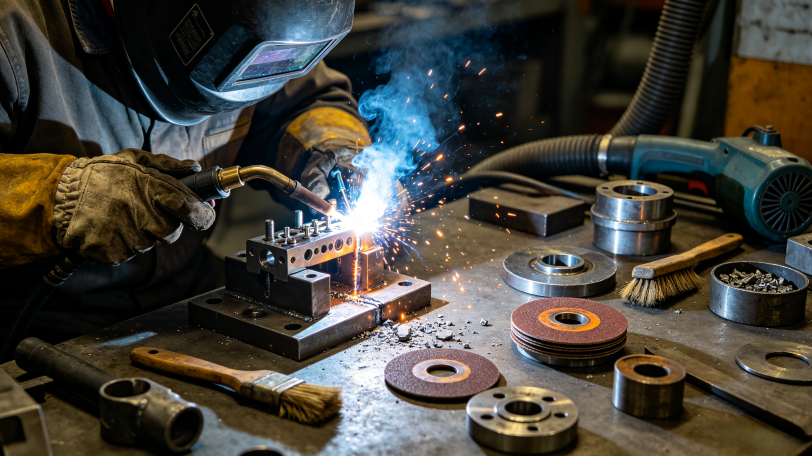
If you’re reading this, chances are you’re dealing with precision welding challenges. Maybe your parts are getting smaller. Maybe your materials are heat-sensitive. Or maybe you’re just tired of dealing with distortion, spatter, and all that post-weld cleanup that comes with traditional methods. Whatever your specific situation, you’re probably looking for a more controlled, cleaner way to join materials.
That’s exactly where precision laser welding comes in.
It’s no longer something limited to highly specialized manufacturing environments. Today, laser welding is used for everything from metal fabrication and automotive components to jewelry and repair work—especially when you need strong, clean welds without putting excessive heat into the surrounding material.
So, what makes laser welding different? How does it actually work? And is it really better for precision applications? Let’s take a closer look.
Think of precision laser welding as a super-focused, high-energy “light knife.” It’s a non-contact welding process that uses a concentrated laser beam to melt and fuse materials together.
Unlike traditional welding methods that can introduce heat over a relatively large area, a laser beam concentrates energy directly where the weld needs to happen. That gives you much greater control over heat input and the size of the affected area.
And that’s a big deal when you’re working with thin metal, intricate components, or parts that need to maintain their original dimensions.
The goal isn’t simply to make a weld. It’s to make a controlled weld while minimizing unnecessary heat, distortion, and damage to the surrounding material.
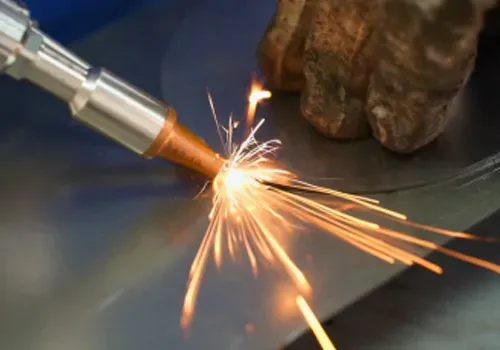
The basic principle is surprisingly simple.
A laser source generates a concentrated beam of light, and an optical system directs and focuses that beam onto the material surface. The laser energy is absorbed by the material, creating a small molten pool at the joint.
As the laser moves along the welding path, the molten material cools and solidifies behind it. That creates the metallurgical bond between the two pieces.
There are two basic welding modes you may encounter:
| Welding Mode | Characteristics | Typical Applications |
| Conduction-Limited Welding | Lower energy density, producing relatively shallow and wider welds | Thin materials and applications where a clean surface seam is important |
| Keyhole Welding | Higher energy density creates deeper penetration and a narrower weld | Applications requiring deeper penetration and stronger joints |
The exact welding mode depends on factors such as laser power, material type, thickness, welding speed, and process settings.
So while the principle is simple, getting a consistently good weld still comes down to finding the right combination of parameters.
You might be wondering—why switch from a welding method you’re already comfortable with?
Well, the advantages of laser welding become pretty obvious once you start looking at what happens around the weld itself.
And perhaps the biggest practical advantage? You don’t have to spend as much time fixing problems created by the welding process itself.
You might associate laser welding with large industrial factories, but its applications are actually much broader.
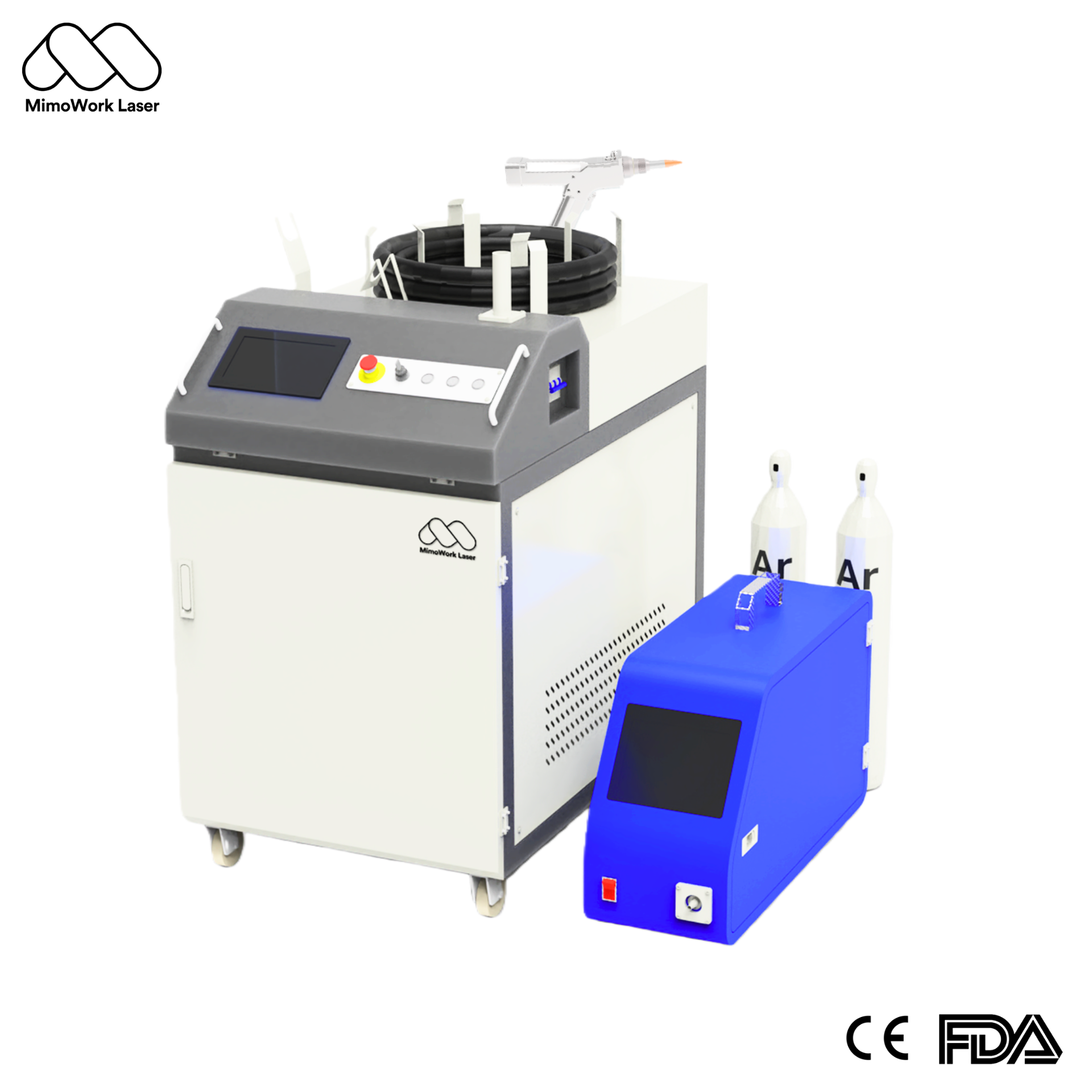
Handheld laser welding is becoming increasingly useful for general metal fabrication and repair work.
Instead of positioning every component inside a fixed welding system, operators can move the welding head directly to the workpiece. That’s particularly useful for large components, repair jobs, and applications where flexibility matters.
Automotive manufacturing involves a huge variety of metal components that need strong and consistent joints.
Laser welding can be used for different automotive parts where high welding speed, controlled heat input, and repeatability are important.
Here’s where precision really starts to matter.
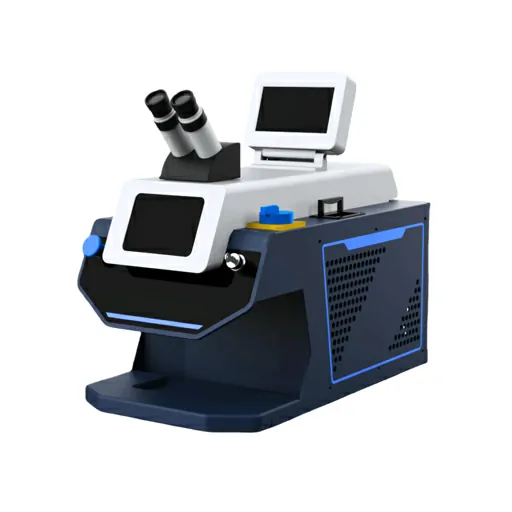
Jewelry components can be small, intricate, and made from valuable metals. Excessive heat can damage nearby areas or affect the appearance of the finished piece.
That’s why pulsed laser welding is particularly useful for delicate jewelry welding and repair applications. MimoWork’s jewelry laser welding machine, for example, is designed for precision welding of precious metals such as gold and silver.
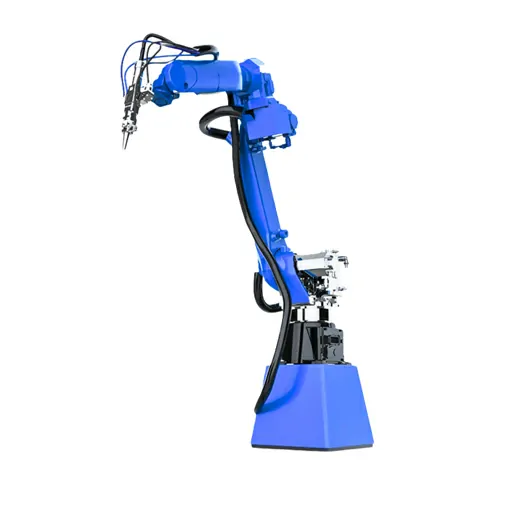
When the same welding operation needs to be repeated again and again, automation becomes much more valuable.
Laser welding systems can be integrated with gantry systems, robotic arms, and other automated equipment to provide repeatable welding paths and consistent production.
One of the reasons laser welding is so widely used is its ability to work with many different metals.
Stainless steel is one of the most common materials and is widely used in equipment, fabrication, and industrial components.
Carbon steel can also be processed using laser welding for fabrication and structural applications.
Aluminum is more challenging because of its thermal properties, but laser welding provides concentrated heat input that can be useful for aluminum components and sheet metal.For a more detailed look at the process, see our guide on how to laser weld aluminum alloys.
Copper presents another challenge because it has high thermal conductivity and reflects laser energy strongly. Proper laser power and process parameters are particularly important when welding copper.
Other metals and alloys, including titanium and various specialty alloys, can also be laser welded when the process is properly configured.
So, can one laser welding machine handle everything? Not exactly.
The material, thickness, joint design, and required welding speed all influence the parameters you need.
This is probably one of the most common questions if you’re considering making the switch.
The short answer is: neither technology is automatically better for every application.
Laser welding has some clear advantages when you need concentrated heat input, high welding speed, minimal distortion, and reduced post-weld finishing.
TIG welding, on the other hand, remains extremely useful for applications where manual control and accessibility are more important.
Here’s a quick comparison:
| Factor | Laser Welding | TIG Welding |
| Heat input | Highly concentrated | More broadly distributed |
| Welding speed | Generally higher | Generally slower |
| Heat-affected area | Relatively small | Relatively larger |
| Spatter | Minimal with proper settings | Low, but depends on process |
| Post-weld finishing | Often reduced | May require more finishing |
| Automation | Highly suitable | Possible |
| Flexibility | Excellent with handheld systems | Excellent for manual welding |
The better choice ultimately depends on what you’re welding and what your production process requires.
Here’s an important point: not every laser welder is automatically a precision laser welder.
Precision comes from the entire system—not just the laser source.
The laser power, beam delivery, welding head, focusing system, motion control, wire feeding, and process parameters all contribute to the final result.
For example, a handheld laser welding machine can give operators greater flexibility while still providing a focused laser beam and controlled heat input.
For repetitive production, a gantry or robotic system can provide greater consistency by controlling the welding path automatically.
So the question isn’t simply “How powerful is the laser?”
It’s more like: “How well does the entire system match what I’m trying to weld?”
We understand that “precision” isn’t just a buzzword—it’s something that needs to show up in the finished weld.
MimoWork offers different laser welding configurations for different applications, including handheld laser welders, jewelry laser welding machines, gantry systems, and robotic welding solutions.
For handheld applications, our fiber laser welders are designed for materials such as stainless steel, carbon steel, aluminum, and copper. Depending on the configuration, an integrated wire feeder can also be used when additional filler material is needed.
For more automated applications, gantry and robotic systems can help maintain repeatable welding paths and provide more consistent results across production runs.
The right setup ultimately depends on the material, thickness, welding geometry, production volume, and level of automation you need.
Laser welding provides a more concentrated heat source, which can result in faster welding, a smaller heat-affected area, and less distortion in suitable applications. TIG welding remains a strong choice for many manual welding applications where accessibility and operator control are priorities.
Precision laser welding can be used with a wide range of metals, including stainless steel, carbon steel, aluminum, copper, titanium, and other alloys. The appropriate welding parameters depend on the specific material and thickness.
Modern handheld laser welding systems are designed to be relatively straightforward to operate. However, achieving consistent results still requires understanding basic welding principles and selecting suitable parameters for the material and application.
Not necessarily. Laser welding can produce clean weld seams with minimal spatter, which can significantly reduce grinding and polishing compared with some conventional welding processes. Whether post-weld finishing is required depends on the application and the desired appearance of the finished part.
Laser welding can produce strong metallurgical joints with good penetration when the appropriate laser power, welding speed, material, and joint configuration are used. Weld strength ultimately depends on the specific application and process parameters.
So, is precision laser welding worth considering?
If you’re dealing with thin materials, distortion problems, demanding weld quality, or too much post-weld cleanup, it’s definitely a technology worth looking at.
The biggest advantage isn’t simply that a laser is powerful. It’s that the energy can be focused and controlled exactly where it’s needed.
That means less unnecessary heat, cleaner welds, faster processing in suitable applications, and greater control over the finished joint.
And you don’t necessarily need a huge automated production line to take advantage of it. Handheld laser welders can provide the flexibility needed for fabrication and repair, while gantry and robotic systems offer greater automation for repetitive production.
Ultimately, the right precision laser welding solution comes down to your material, thickness, welding requirements, and production workflow.
News | Sep-1-2026
News | Aug-19-2026
News | Aug-7-2026