Blog
In a field that evolves daily, staying ahead means staying informed.
Explore in-depth articles designed to help you solve complex challenges,
maximize your machine’s ROI.
Stay ahead in a competitive market.


In a field that evolves daily, staying ahead means staying informed.
Explore in-depth articles designed to help you solve complex challenges,
maximize your machine’s ROI.
Stay ahead in a competitive market.
News | Sep-1-2026
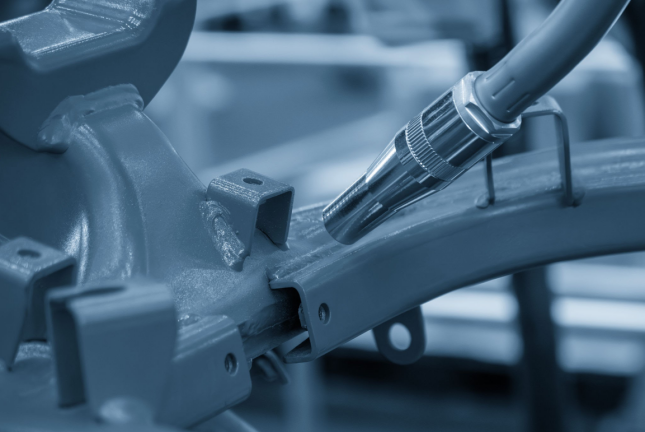
Automotive manufacturing requires welding processes that can deliver consistent strength, dimensional accuracy, and production efficiency. As vehicle structures become more complex and manufacturers work with materials such as high-strength steel, aluminum alloys, and copper, conventional welding methods may not provide enough flexibility for every application.
Automotive laser welding uses a concentrated laser beam to generate localized heat and fuse metal components with high precision. Depending on the component geometry, material, thickness, and production volume, laser welding can be configured as a handheld system, gantry-based system, or robotic welding solution.
For manufacturers working with automotive components, understanding how laser welding works—and how the equipment is configured—is essential for selecting the right welding system.
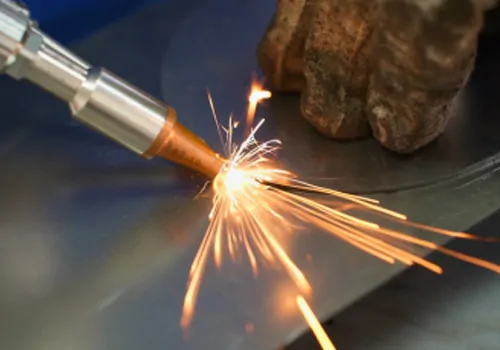
Automotive laser welding works by directing a high-energy laser beam onto the joint between two metal components. The concentrated beam rapidly heats the material until a localized molten pool forms. As the laser moves along the programmed welding path, the molten metal cools and solidifies, creating a permanent joint.
Compared with conventional welding methods that use electrodes or an electric arc, laser welding delivers energy through a focused, non-contact beam. This allows the welding process to be precisely controlled and makes it suitable for automated processing of complex automotive components.
A typical automotive laser welding process includes four basic steps:
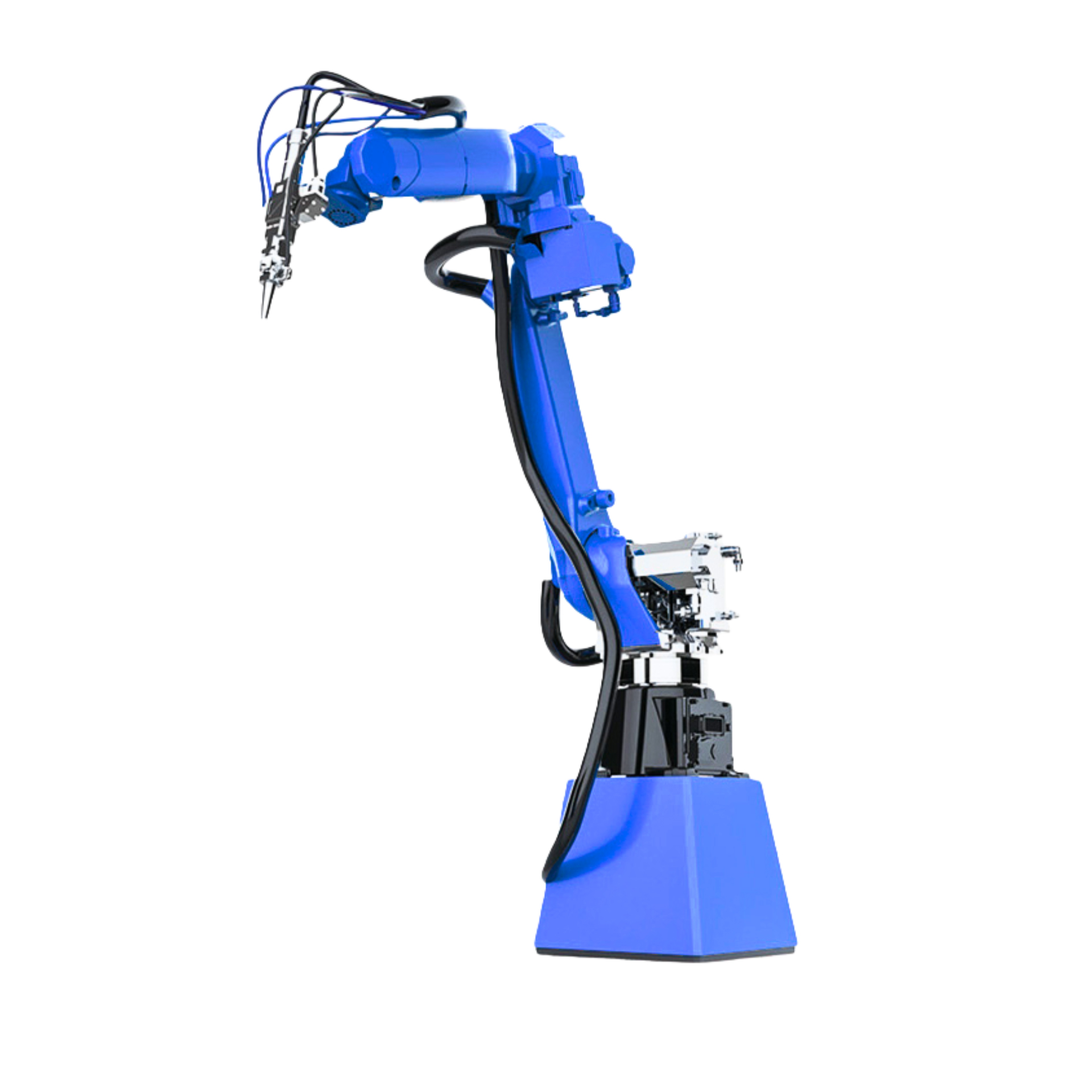
For complex three-dimensional automotive structures, robotic systems can move the laser welding head along multiple axes to reach different welding positions. MimoWork’s Manipulator Laser Welding Machine, for example, combines a continuous-wave fiber laser with a 6-axis industrial robotic arm for large and complex 3D components.
The welding mode depends primarily on laser power density, material properties, joint design, and the required penetration depth.
In heat conduction welding, the laser melts the surface material without creating a deep vapor cavity. Heat is transferred into the surrounding material through thermal conduction.
This approach can be useful when manufacturers require controlled, shallow welds and a clean surface appearance, particularly on thinner components.
When the laser reaches a sufficiently high power density, part of the material vaporizes and creates a narrow cavity known as a keyhole. The laser energy is absorbed within this cavity, allowing the weld to penetrate deeper into the material.
Keyhole welding is particularly useful for structural metal components where deeper penetration and a narrow weld profile are required.
The actual welding mode should be determined through material testing rather than selected from laser power alone. Material type, thickness, joint geometry, focal position, welding speed, shielding gas, and beam characteristics all affect the final weld.
Automotive laser welding can be applied to a wide range of metal components and production processes. The specific application determines whether a handheld, gantry, or robotic laser welding system is the most appropriate configuration.
Automotive body structures contain numerous metal joints that require repeatable positioning and consistent weld quality.
Laser welding can be used for selected body components, structural assemblies, brackets, reinforcement parts, and other metal components where controlled heat input and accurate weld paths are important.
For larger three-dimensional structures, robotic laser welding provides greater freedom of movement. MimoWork’s Manipulator Laser Welding Machine is specifically designed for complex 3D components and is positioned for applications including automotive frame assembly.
Beyond complete vehicle structures, laser welding can be used for individual automotive components made from steel, stainless steel, aluminum, copper, and other metals.
Applications may include:
The appropriate laser source and machine configuration depend on the material combination, component dimensions, weld thickness, and production requirements.
Not every automotive welding application requires a fully automated production cell.
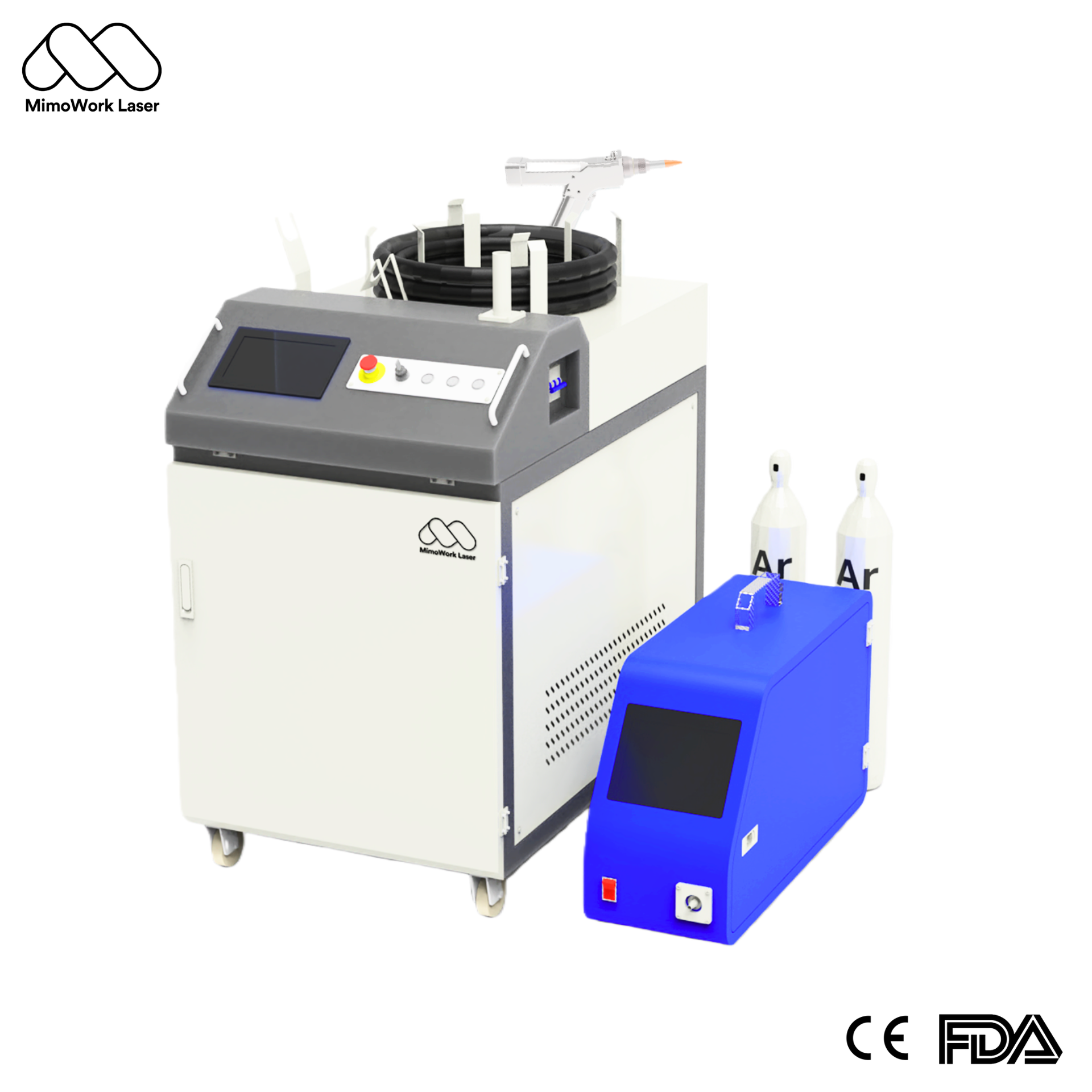
For repair operations and smaller fabrication tasks, a handheld laser welding machine provides greater flexibility. MimoWork’s handheld system is designed for applications including automotive body shops and can process materials such as steel, aluminum, and copper alloys. It uses a 1000–1500W continuous or modulated fiber laser source and can be equipped with an integrated wire feeder.
This makes handheld laser welding particularly useful when components are too large or impractical to move into a fixed automated welding system.
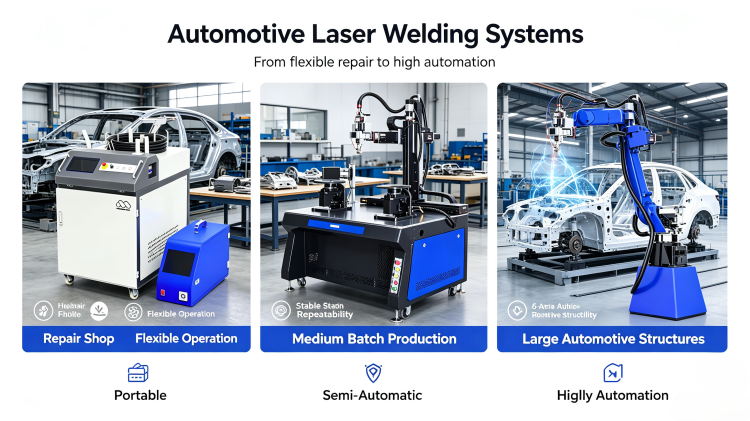
There is no single laser welding machine that is suitable for every automotive application. Machine selection should be based on component size, geometry, welding volume, material, and the required level of automation.
| Laser Welding System | Best Suited For | Key Characteristics |
| Handheld Laser Welding Machine | Automotive repair, body shops, flexible fabrication | Portable operation, 1000–1500W fiber laser, wire feeding option |
| 4-Axis Gantry Laser Welding Machine | Small to medium batch components | Programmable X/Y/Z/rotary movement and repeatable welding paths |
| Manipulator Laser Welding Machine | Large automotive structures and complex 3D components | 6-axis robotic movement, 1000–4000W fiber laser, large working envelope |
MimoWork currently offers these three laser welding configurations as part of its laser welding solutions. The 4-Axis Gantry Laser Welding Machine is designed for automated, high-precision welding of small to medium batch parts, while the Manipulator system is intended for large and complex 3D components.
Consistent weld quality depends on more than laser power. Automotive manufacturers should evaluate several process parameters before integrating a laser welding machine into production.
Laser power determines the amount of energy available for melting the material. MimoWork’s welding systems cover different power ranges according to their intended applications.
For example, the handheld system is specified at 1000–1500W, while the Manipulator Laser Welding Machine is available with 1000–4000W continuous-wave fiber laser sources.
Higher power does not automatically mean better welding. The appropriate power must be matched to material type, thickness, joint design, and welding speed.
Welding speed affects heat input and production cycle time. Increasing speed can reduce heat accumulation, but excessive speed may result in insufficient penetration.
The optimal combination of laser power and welding speed should therefore be established through application testing.
The position of the laser focus affects energy density at the workpiece. A properly selected focal position helps control penetration, weld width, and overall weld stability.
Shielding gas protects the molten weld pool from atmospheric contamination and oxidation. Gas type and flow should be selected according to the material and welding process.
The main advantage of laser welding is its ability to deliver concentrated, controllable energy to a specific joint.
Compared with conventional welding technologies, automotive laser welding can offer several production advantages:
| Advantage | Benefit for Automotive Manufacturing |
| Focused heat input | Helps limit unnecessary thermal exposure around the weld |
| Non-contact processing | No welding electrodes are required at the joint |
| High repeatability | Suitable for CNC and robotic automation |
| Flexible weld paths | Can process complex component geometries |
| Low distortion potential | Helps maintain dimensional accuracy when properly configured |
| Automation compatibility | Can be integrated with robotic motion, positioning, and monitoring systems |
| Material flexibility | Suitable for various steel, aluminum, copper, and alloy components |
The benefit is not simply faster welding. For automotive production, the larger value comes from combining precise laser energy delivery with automated positioning, process control, and repeatable production.
For high-volume automotive manufacturing, automation is often more important than the laser source alone.
A robotic laser welding cell can combine:
MimoWork’s Manipulator Laser Welding Machine integrates a continuous-wave fiber laser, 6-axis industrial robot, welding tool, process control cabinet, chiller, and offline programming capabilities. Optional closed-loop weld monitoring can also track process information such as penetration and provide traceable quality records.
This type of configuration is particularly relevant when automotive manufacturers need to weld large components, complex 3D structures, or multiple part geometries within the same production environment.
Laser welding is not intended to replace every conventional welding process. The better approach is to evaluate which joining technology provides the best combination of quality, productivity, flexibility, and investment for a particular component.
| Factor | Laser Welding | Conventional Welding |
| Heat concentration | Highly localized | Generally broader |
| Processing method | Non-contact | Often contact or arc-based |
| Automation | Highly compatible | Compatible depending on process |
| Complex 3D paths | Excellent with robotic systems | Depends on equipment |
| Electrode consumption | No welding electrodes | Some processes require consumable electrodes |
| Weld control | Precisely programmable | Varies by welding method |
| Initial system complexity | Higher for automated cells | Varies |
| Best use case | Precision, automation, complex components | Broad range of general joining applications |
The right choice ultimately depends on the production requirements rather than the welding technology alone.
Before purchasing an automotive laser welding machine, manufacturers should evaluate the complete production process rather than focusing only on laser wattage.
Consider the following factors:
Identify the exact materials to be welded, including steel, stainless steel, aluminum, copper, or mixed-material combinations.
Large or complex 3D components may require robotic movement, while smaller components can often be processed using a gantry-based system.
High-volume manufacturing generally benefits from automated loading, positioning, robotic movement, and process monitoring.
Determine whether the application requires deep penetration, narrow welds, low distortion, cosmetic appearance, or traceable process data.
Consider whether the machine needs to work as a standalone system or integrate into an existing production line.
Before final equipment selection, application testing is strongly recommended. MimoWork provides material testing and application consulting to evaluate actual materials, processing requirements, and production goals before investment.
Laser welding can process many automotive metals, including carbon steel, stainless steel, aluminum and aluminum alloys, copper and copper alloys, titanium, and other engineered alloys. The exact material combination and thickness should be tested before production.
Yes. Laser welding can be integrated with CNC positioning, gantry systems, industrial robots, vision systems, offline programming, and weld monitoring. Robotic configurations are particularly useful for complex 3D automotive components and high-volume production.
Yes. Handheld laser welding systems can be used for automotive body shops, component repair, and other flexible metal fabrication applications. MimoWork’s handheld system is designed for portable welding of materials including steel, aluminum, and copper alloys.
Automotive laser welding combines concentrated laser energy, precise motion control, and flexible automation to join metal components with high repeatability. Its applications range from automotive repair and component fabrication to automated welding of large and complex 3D structures.
The most suitable system depends on the application: handheld laser welding can provide flexibility for repair and fabrication, gantry systems offer repeatable automated processing for smaller components, while robotic laser welding systems are better suited to large and complex automotive structures.
For manufacturers evaluating laser welding for automotive production, the most reliable approach is to start with the material, component geometry, weld requirements, and production workflow, then select the laser power and automation configuration accordingly.
News | Aug-19-2026
News | Aug-6-2026