Blog
In a field that evolves daily, staying ahead means staying informed.
Explore in-depth articles designed to help you solve complex challenges,
maximize your machine’s ROI.
Stay ahead in a competitive market.


In a field that evolves daily, staying ahead means staying informed.
Explore in-depth articles designed to help you solve complex challenges,
maximize your machine’s ROI.
Stay ahead in a competitive market.
News | Sep-25-2026
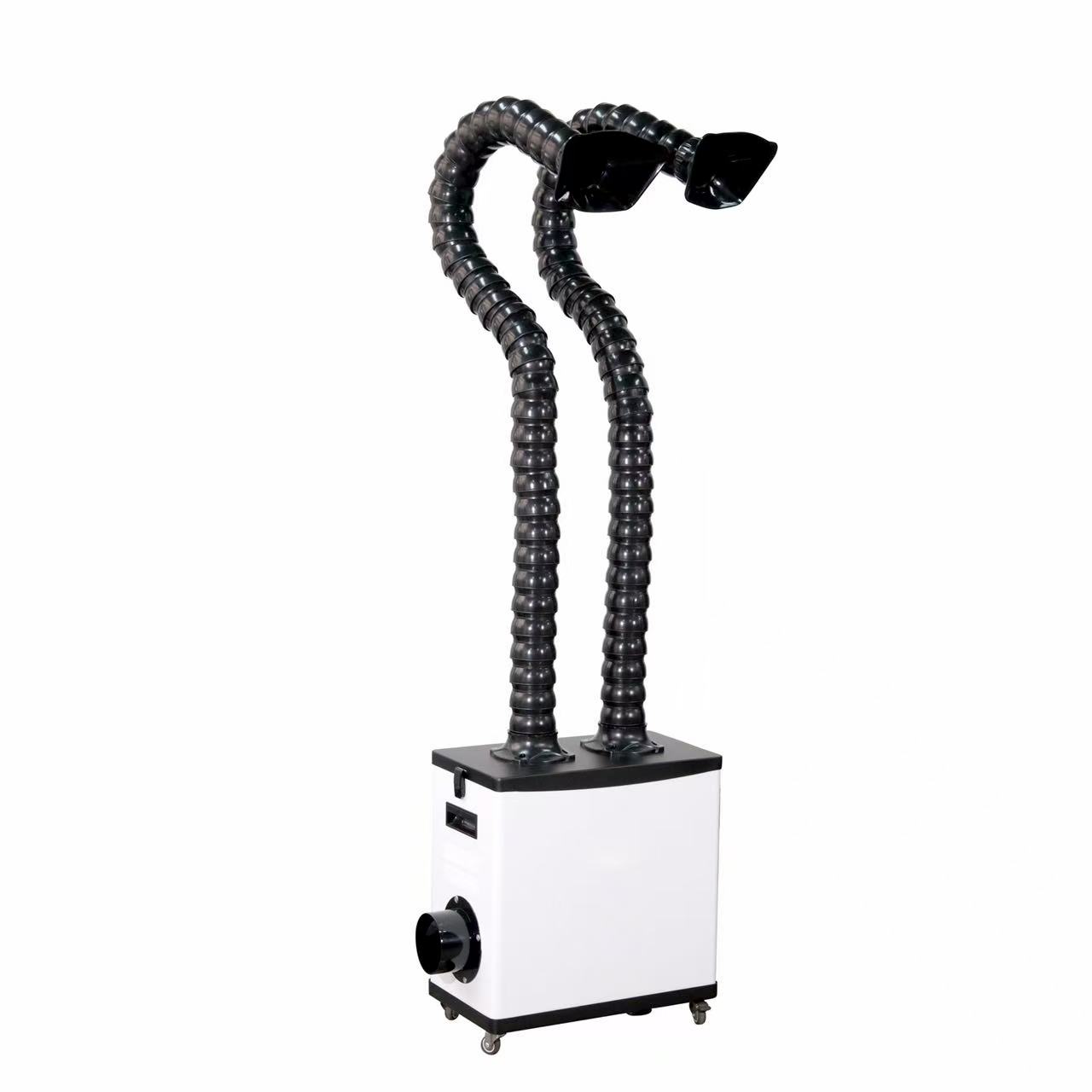
Laser welding has become increasingly popular in metal fabrication due to its high precision, fast processing speed, and ability to create clean welds. However, like traditional welding processes, laser welding can generate fumes, fine particles, and potentially harmful airborne contaminants during operation.
For manufacturers, investing in a laser welding fume extractor is not only about improving workplace cleanliness. It is an important part of creating a safer working environment, maintaining production efficiency, and protecting operators who work with laser welding equipment every day.
During laser welding, the intense heat of the laser beam melts and vaporizes metal materials. This process can release microscopic particles and fumes that may remain suspended in the workplace air if they are not properly controlled.
A suitable fume extraction system captures these contaminants close to the source, helping maintain cleaner air around the welding area.
Laser welding uses concentrated laser energy to join metal materials. Because the energy density is extremely high, part of the material may evaporate during the welding process.
When these metal vapors cool down, they can form very small airborne particles known as welding fumes.
The amount and composition of fumes depend on several factors, including:
| Factor | Influence on Welding Fume Generation |
| Material Type | Different metals produce different types and amounts of particles |
| Welding Parameters | Power, speed, and process settings affect vapor generation |
| Surface Condition | Coatings, oil, or contaminants may increase fumes |
| Production Volume | Longer operating hours increase exposure potential |
Materials commonly processed in laser welding applications include stainless steel, carbon steel, aluminum, copper, and other industrial metals.
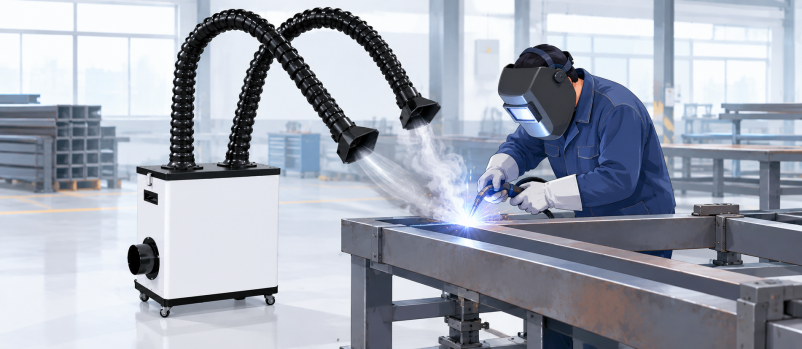
Many manufacturers focus on laser welding machine performance, but the working environment around the equipment is equally important.
A laser welding fume extractor helps control airborne contaminants by collecting fumes before they spread throughout the workspace.
Operators working near welding equipment may spend many hours in environments where airborne particles are generated.
A properly designed extraction system helps reduce direct exposure by capturing contaminants at the source instead of allowing them to circulate in the workshop.
This creates a cleaner and more comfortable working environment for employees.
Without effective extraction, welding fumes may settle on:
Over time, this can affect workplace cleanliness and increase maintenance requirements.
A fume extraction system helps maintain a more controlled production environment.
Industrial production requires stable working conditions.
Excessive airborne contamination may affect sensitive manufacturing environments, especially when laser welding is performed near precision equipment or in facilities with strict cleanliness requirements.
A laser welding fume extractor typically operates by capturing contaminated air near the welding source, filtering harmful particles, and returning cleaner air to the workspace or exhausting it appropriately.
The extraction process generally includes several stages:
| Stage | Function |
| Capture | Collects fumes generated during laser welding |
| Filtration | Removes particles and contaminants from the airflow |
| Airflow Control | Maintains effective extraction performance |
| Clean Air Output | Releases filtered air according to system design |
The closer the extraction point is to the welding area, the more effectively it can capture airborne contaminants before they disperse.
Selecting a suitable fume extractor requires more than checking airflow capacity. Manufacturers should consider the complete welding environment and production requirements.
The filtration system is one of the most important parts of a fume extractor.
Different welding applications may generate different particle sizes and contaminant types. A suitable filtration design helps capture fine welding particles effectively.
Manufacturers should consider:
The extractor needs enough airflow to capture fumes effectively from the welding area.
The required capacity depends on:
A system that is too small may not capture fumes efficiently, while an oversized system may increase unnecessary operating costs.
Laser welding applications vary significantly between industries.
Some manufacturers use handheld laser welding systems, while others integrate welding equipment into production lines.
A suitable fume extraction solution should match the actual workspace layout.
General workshop ventilation can improve overall air circulation, but it does not always effectively capture contaminants generated directly at the welding point.
| Solution | Advantages | Limitations |
| General Workshop Ventilation | Improves overall air movement | May not capture fumes at the source |
| Local Exhaust System | Removes contaminants near the source | Requires correct positioning |
| Laser Welding Fume Extractor | Designed specifically for welding processes and localized extraction | Requires proper equipment selection |
For laser welding applications, source capture is usually more effective because it removes contaminants before they spread.
Metal fabrication workshops often use laser welding for customized parts, stainless steel structures, and precision components.
A fume extractor helps maintain a cleaner environment during frequent welding operations.
Automotive components often require accurate and repeatable welding processes.
Fume extraction supports cleaner production areas where welding operations are performed regularly.
Industries producing stainless steel equipment, furniture, and industrial components often require both welding quality and workplace cleanliness.
A suitable extraction system helps manage fumes generated during fabrication.
Before purchasing a fume extraction system, manufacturers should evaluate their actual application requirements.
The following factors are important:
| Selection Factor | Consideration |
| Welding Material | What metals are being processed? |
| Welding Frequency | Occasional use or continuous production? |
| Workspace Layout | Where should extraction be positioned? |
| Air Quality Requirements | What level of filtration is needed? |
| Maintenance | How easy is filter replacement and cleaning? |
Choosing the right system helps ensure effective extraction performance without unnecessary operating costs.
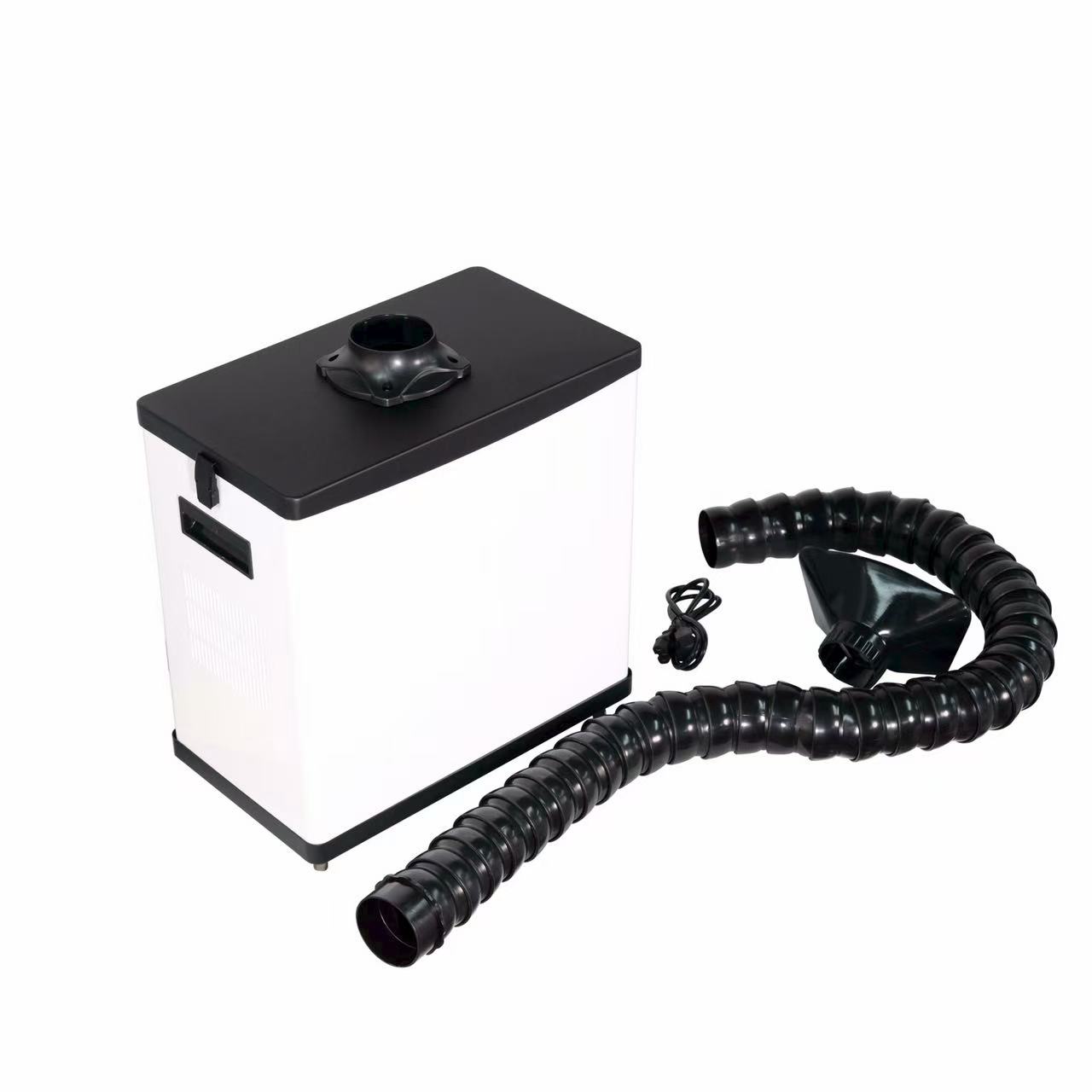
For laser welding applications, effective fume extraction is essential for maintaining a safer and cleaner working environment. MimoWork’s W-Series Fume Extractor is designed for laser welding and laser cleaning processes, providing localized fume capture near the processing area.
Equipped with a flexible extraction arm and multi-stage filtration system, the W-Series helps remove welding fumes and fine particles generated during metal processing. With a filtration efficiency of up to 99.97% at 0.3 μm, it provides a practical solution for manufacturers looking to improve workplace air quality and operator protection.
| Feature | W-Series Fume Extractor |
| Application | Laser welding & laser cleaning |
| Airflow | 690 m³/h |
| Filtration Efficiency | 99.97% at 0.3 μm |
| Extraction Method | Localized source capture |
For manufacturers using laser welding equipment, combining a suitable fume extractor with the welding system helps create a cleaner, safer, and more efficient production environment.
Related Guide: Fume Extractor Laser: Complete Guide to Laser Fume Extraction Systems for Cleaner and Safer Laser Processing
Laser welding can generate fine particles and fumes during the heating and melting process. A fume extractor helps capture these contaminants close to the source and improves workplace air quality.
A suitable extraction system can significantly reduce airborne contaminants, but performance depends on factors such as welding material, extraction position, filter design, and operating conditions.
Many metals, including stainless steel, carbon steel, aluminum, and coated materials, may generate fumes during laser welding and may require appropriate extraction solutions.
The choice depends on the application. Portable systems provide flexibility for different workstations, while fixed systems may be suitable for dedicated production areas.
Filter replacement depends on usage frequency, welding materials, and contamination levels. Regular inspection helps maintain extraction efficiency.
A laser welding fume extractor plays an important role in maintaining a safer and cleaner welding environment.
As laser welding becomes more common in industrial manufacturing, companies need to consider not only welding speed and precision but also effective fume management.
By capturing welding fumes at the source, a suitable extraction system helps protect operators, improve workplace cleanliness, and support more efficient production processes.
For manufacturers using laser welding equipment, choosing the right fume extraction solution is an important step toward building a safer and more reliable manufacturing environment.
News | Aug-14-2026