Blog
In a field that evolves daily, staying ahead means staying informed.
Explore in-depth articles designed to help you solve complex challenges,
maximize your machine’s ROI.
Stay ahead in a competitive market.


In a field that evolves daily, staying ahead means staying informed.
Explore in-depth articles designed to help you solve complex challenges,
maximize your machine’s ROI.
Stay ahead in a competitive market.
News | Oct-14-2026
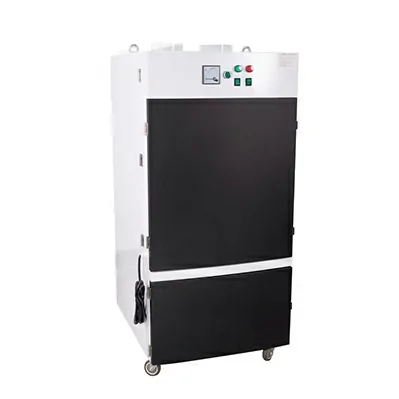
Laser cutting, engraving, marking, and welding can generate smoke, fine particles, and process-specific airborne contaminants. Without effective extraction, these byproducts may accumulate around the machine, contaminate optical components, affect the working environment, and increase cleaning and maintenance demands.
A laser dust collector helps capture and remove airborne particles generated during laser processing. However, not every extraction system is suitable for every application. CO2 laser engraving, fiber laser metal processing, and high-volume industrial production can have very different extraction requirements.
This guide explains how to choose a laser fume extractor based on airflow, filtration, material compatibility, operating conditions, and maintenance needs, with practical guidance for workshops and industrial laser operations.
A laser dust collector is an extraction and filtration system designed to collect airborne particles, smoke, and other process byproducts produced during laser processing. Depending on its design, the system may use ductwork, flexible extraction hoses, a capture hood, or a connection to an enclosed laser machine.
A suitable laser fume extractor can help:
Different materials produce different contaminants. Cutting wood, engraving acrylic, processing coated metals, and laser welding can release substances with different physical and chemical properties. An extraction system must therefore be selected according to the actual process, not simply the laser’s power rating.
Related guide: https://www.mimowork-laser.com/blog/laser-fume-extractor-buying-guide
Airflow, usually expressed in cubic meters per hour (m³/h) or cubic feet per minute (CFM), indicates how much air a system can move. Static pressure describes its ability to overcome resistance from hoses, ducts, filters, and other components.
A higher advertised airflow does not automatically mean better extraction at the laser cutting area. Actual performance depends on the complete system, including duct diameter, hose length, bends, filter loading, and the machine’s enclosure design.
When comparing specifications, check:
For a small desktop laser, compact extraction equipment may be sufficient. Larger machines, multiple workstations, and continuous production may require higher-capacity equipment or a centralized extraction system.
A laser dust collector may combine several filtration stages to address different contaminants.
| Filtration component | Main function | What to check |
| Pre-filter | Captures larger particles and debris | Dust-holding capacity and replacement frequency |
| Fine-particle filter | Captures smaller airborne particles | Filter efficiency, test conditions, and compatibility |
| Activated carbon or other gas-phase media | Adsorbs certain gases and vapors | Media type, contaminant compatibility, and replacement requirements |
A multi-stage system can improve contaminant control, but the number of stages alone does not establish overall performance. Filter efficiency, sealing, airflow, media capacity, and the nature of the contaminants all matter.
A filter rated for fine particles does not necessarily remove gases or vapors. Likewise, activated carbon is not a universal solution for every chemical contaminant. Confirm that the selected media is suitable for the specific materials being processed.
These terms describe different types of contaminants. Dust consists of solid particles, smoke may contain fine particles and condensed substances, and fumes or vapors may include gaseous contaminants.
A suitable system must address the contaminants generated by the actual laser process. For example, wood engraving can generate smoke and particulate residue, while metal processing may produce fine metallic particles and other process-specific emissions.
Material safety data and equipment guidance should inform the extraction design. Some materials require additional controls or should not be laser processed at all. Filtration should not be assumed to make every emission safe.
Where contaminants cannot be adequately controlled by filtration, a properly designed exhaust-to-outdoors arrangement or additional engineering controls may be necessary. Follow applicable workplace requirements and the laser manufacturer’s instructions.
Extraction equipment operates alongside the laser, so its physical design affects everyday usability.
Consider the following:
For a small workshop, compact equipment with straightforward filter access may be more practical than an oversized industrial unit. A production facility, however, should prioritize stable extraction performance, maintenance planning, and the ability to support all connected machines.
The best configuration depends on the material, contaminant load, laser process, and production volume.
CO2 lasers are commonly used to process materials such as wood, paper, selected plastics, and textiles. Cutting and engraving can generate smoke, fine dust, and residue, making effective extraction particularly important.
When choosing the best laser dust collector for CO2 laser engraving, evaluate the machine’s exhaust requirements, the materials processed, and how frequently the system will operate.
A suitable setup should provide adequate airflow at the machine, effective particle filtration, and gas-phase filtration where required. For enclosed machines, a properly connected extraction outlet can help remove contaminants from the processing area.
Material compatibility is essential. Certain plastics, including PVC-containing materials, can release highly hazardous corrosive gases when processed with a laser and should not be cut or engraved. Always verify material suitability before operation.
Fiber lasers are widely used for marking, engraving, and processing metals. Depending on the substrate, coating, and process, these operations may generate fine metallic particles, smoke, or chemical emissions.
To determine how to choose a laser fume extractor for a fiber laser, consider the metal or coating being processed, the laser’s operating parameters, the enclosure, and the expected contaminant load.
A system intended for wood dust may not provide the filtration media or containment needed for metal-processing emissions. Select equipment designed for the specific application and check whether it supports the particle sizes and chemical contaminants involved.
For industrial metal cutting, a dedicated extraction arrangement may be required to manage higher dust loads and maintain consistent collection performance.
Laser welding and related metalworking processes can generate fine particulate matter and process-specific fumes. Contaminants vary with the base metal, filler material, coatings, and welding conditions.
A suitable extraction system should capture emissions close to the source whenever practical. Depending on the workstation, this may involve an extraction hood, an enclosed welding cell, or a dedicated extraction connection.
Before choosing a system, assess the welding process, required capture position, airflow, filter compatibility, and expected operating duration. Do not assume that a general-purpose laser engraving extractor is suitable for welding fumes without verifying its design and performance.
Industrial laser production may involve larger machines, multiple processing stations, long operating hours, or higher contaminant loads.
An industrial laser fume extraction system should be evaluated as part of the entire production setup. Important factors include:
A centralized system can serve multiple machines when properly engineered. However, shared extraction requires careful airflow balancing and consideration of cross-contamination between processes.
| Application | Main selection priority | Configuration to evaluate |
| Desktop CO2 engraving | Compact design and suitable smoke filtration | Small-workshop fume extractor |
| CO2 cutting and engraving production | Adequate machine airflow and filter capacity | Dedicated laser cutting dust collection system |
| Fiber laser marking | Fine-particle capture and process-specific filtration | Metal-processing fume extractor |
| Laser welding | Source capture and contaminant compatibility | Dedicated welding fume extraction |
| Multi-machine production | System capacity, airflow balance, and maintenance | Engineered industrial extraction system |
A conventional workshop dust collector is often designed primarily for bulk dust, such as sawdust and larger particles from woodworking equipment. Laser processing can generate finer particles, smoke, and gaseous contaminants that require a different approach.
| Feature | Standard workshop dust collector | Laser dust collector or fume extractor |
| Typical application | Woodworking and general material handling | Laser cutting, engraving, marking, and other compatible processes |
| Main design priority | Collection of bulk dust and debris | Capture and filtration of process-generated contaminants |
| Fine-particle filtration | Depends on system configuration | Should be selected according to the laser process |
| Gas and vapor control | Usually not the primary function | May include suitable gas-phase filtration |
| Connection method | Often ducted to machinery | May connect directly to an enclosed laser or extraction hood |
The distinction is not absolute: some industrial dust collection systems can be engineered for laser applications. What matters is whether the complete system is suitable for the actual contaminant profile, capture requirements, and operating conditions.
A standard dust collector should not be assumed to control laser smoke or hazardous fumes simply because it has a powerful fan.
Look for an extractor with an airflow rating appropriate for the laser machine and a filtration configuration suited to the materials being processed.
Secure connections, compatible ducting, effective source capture, and proper filter sealing are just as important as the filter specification. For fine particles, check the stated filtration efficiency and the conditions under which it was tested.
For frequent or continuous operation, consider the system’s duty rating, filter-loading behavior, airflow stability, and maintenance requirements.
Useful features may include differential-pressure indicators, filter condition monitoring, overload protection, and alarms. Their availability varies by model, so confirm which functions are included rather than assuming every extractor offers them.
Filters gradually accumulate contaminants and may become less effective or restrictive as they load. A practical design should make inspection and replacement straightforward.
Before purchasing, verify replacement-filter availability, recommended service intervals, disposal requirements, and the cost of consumables. Maintenance schedules should reflect the manufacturer’s guidance and actual operating conditions.
MimoWork’s extraction solutions can be considered alongside its laser processing equipment, with the configuration matched to the application.
The C-Series is relevant to evaluating extraction solutions for CO2 laser engraving applications. When selecting a configuration, consider the engraving machine’s exhaust requirements, the materials being processed, the expected smoke and dust load, and the filtration stages needed.
The F-Series is relevant to extraction planning for fiber laser cutting applications. Metal-processing emissions can differ significantly from the smoke generated by CO2 engraving, so the selected system should be checked for suitable particle capture, filtration compatibility, and required airflow.
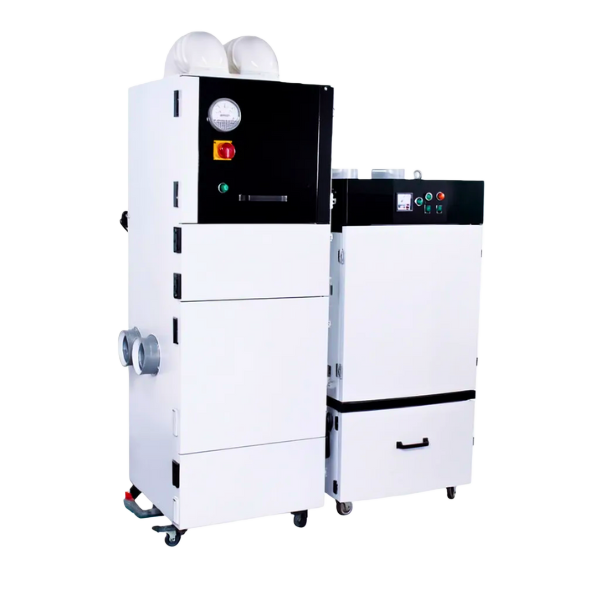
For either series, confirm the specific model’s rated airflow, filter configuration, operating conditions, and compatibility with the intended machine before making a final selection.
To identify a suitable setup, prepare your laser type, machine model, processing materials, working hours, and existing exhaust arrangement. MimoWork can then help assess the extraction requirements and identify an appropriate solution.
The cost of a laser dust collector depends on its capacity, filtration design, application, and operating requirements. A compact workshop extractor generally involves a different investment from a high-capacity industrial system.
The main cost factors include:
Rather than comparing purchase prices alone, calculate the expected total cost of ownership over the planned service period. A lower initial price may not represent better value if the system requires frequent filter changes or cannot maintain adequate extraction performance.
Request a quotation based on your laser equipment, materials, operating hours, and required filtration. This makes it easier to compare systems with equivalent specifications.
Most laser cutting and engraving applications require effective extraction to control smoke, particles, and other process-generated contaminants. The exact system depends on the material, laser type, machine enclosure, and operating environment.
Use the machine manufacturer’s extraction requirements as a starting point. Additional ventilation or specialized filtration may be necessary for certain materials and processes.
Start with the airflow requirement specified by the laser machine manufacturer. Then account for duct resistance, hose length, filter loading, the number of connected machines, and the expected production schedule.
Do not select an extractor using laser wattage alone. Two machines with similar power ratings may require different extraction arrangements because of their enclosure designs, materials, and processing methods.
There is no universal replacement interval. Filter life depends on the contaminant load, operating hours, filter type, and maintenance conditions.
Follow the manufacturer’s service recommendations and monitor indicators such as airflow reduction or differential pressure where available. Replace filters when their condition or the manufacturer’s criteria indicate that they can no longer perform as required. Dispose of used filters according to the contaminants they contain and applicable regulations.
Choosing a laser dust collector starts with understanding what your laser produces, how much airflow the machine requires, and which filtration methods are suitable for the resulting contaminants.
For small workshops, compact extraction equipment may provide a practical solution. CO2 laser engraving, fiber laser processing, laser welding, and high-volume industrial production each require a closer assessment of capture performance, filtration, and maintenance.
Before selecting a system, confirm material compatibility, airflow under operating conditions, filter specifications, and the manufacturer’s installation requirements.
Planning a laser cutting or engraving setup? Contact MimoWork to discuss your laser type, processing materials, and production needs. A material test and cutting-file evaluation can help you assess the processing requirements before choosing a laser machine and its compatible extraction solution.
News | Oct-7-2026