Blog
In a field that evolves daily, staying ahead means staying informed.
Explore in-depth articles designed to help you solve complex challenges,
maximize your machine’s ROI.
Stay ahead in a competitive market.


In a field that evolves daily, staying ahead means staying informed.
Explore in-depth articles designed to help you solve complex challenges,
maximize your machine’s ROI.
Stay ahead in a competitive market.
News | Oct-9-2026
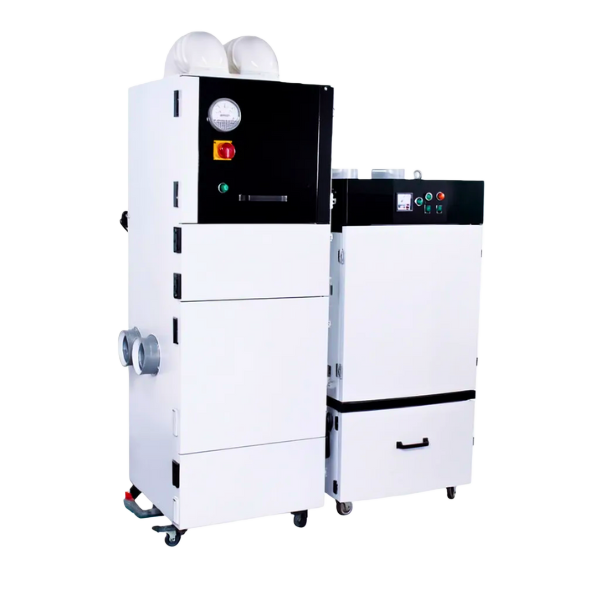
A Fume Extractor helps capture smoke, dust, fine particles, and material residue produced during laser cutting and engraving. By removing these contaminants at the source, it helps keep the laser machine cleaner and prevents airborne particles from spreading throughout the workspace.
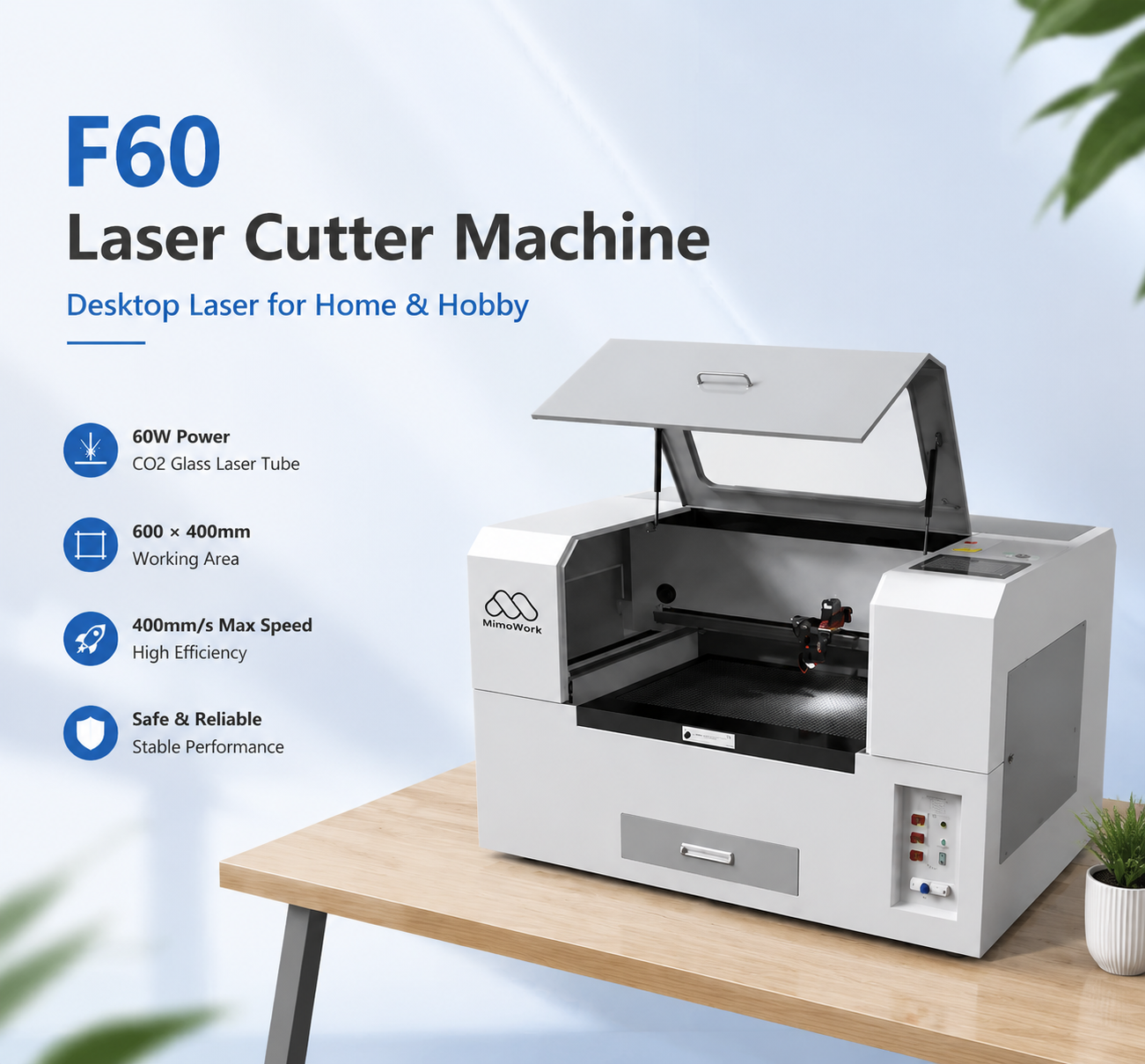
If you are researching how to choose a laser dust collector, start with the application rather than the laser’s wattage. Material type, machine enclosure, extraction points, airflow, static pressure, filtration, and production volume all affect how well the system performs.
This guide explains how laser extraction works, which specifications matter, and how to select a suitable system for different laser applications.
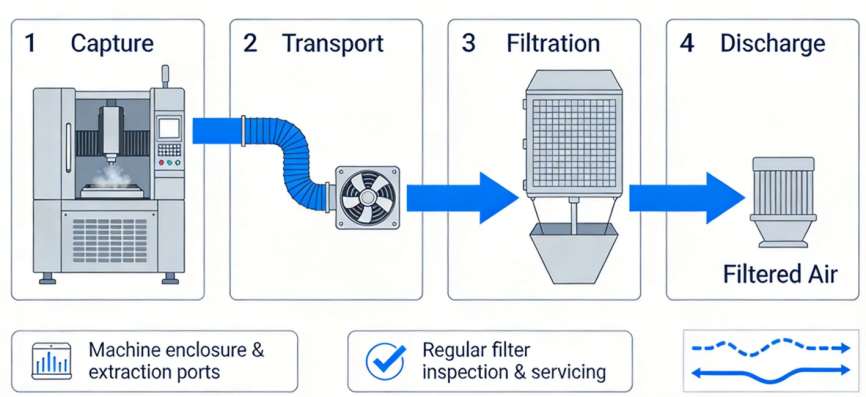
A laser dust collection system removes contaminated air from the processing area and passes it through a filtration system.
The process generally includes four stages:
1. Capture: Smoke and airborne particles are drawn away from the laser working area.
2. Transport: An extraction fan moves contaminated air through a hose or duct.
3. Filtration: Filters separate dust and fine particles from the airstream.
4. Discharge: Filtered air is handled according to the system and installation requirements.
Filters also require regular inspection and servicing as contaminants accumulate.
The machine enclosure and extraction ports are part of the overall system. Even a powerful collector may perform poorly if the extraction route is inefficient.
Extraction is most effective when contaminants are captured close to where they are generated.
A large machine with multiple extraction ports may require a different airflow arrangement from a compact engraving machine. Long hoses, narrow ducts, and sharp bends can also increase resistance.
For this reason, the collector should be selected together with the machine and extraction layout.
The type and amount of contaminants depend on the material and laser process.
Wood, plywood, and MDF can generate smoke, fine dust, and cutting residue. Frequent production cutting creates a greater contaminant load than occasional engraving, making airflow and filter capacity important considerations.
Acrylic and other plastics can generate smoke, fine particles, and odors during laser processing. Different materials can behave differently, so the extraction system should be selected according to the actual materials being processed.
Leather, fabric, and similar materials can produce smoke and fine airborne particles. If one machine processes several materials, consider the full range of contaminants rather than sizing the collector around only one material.
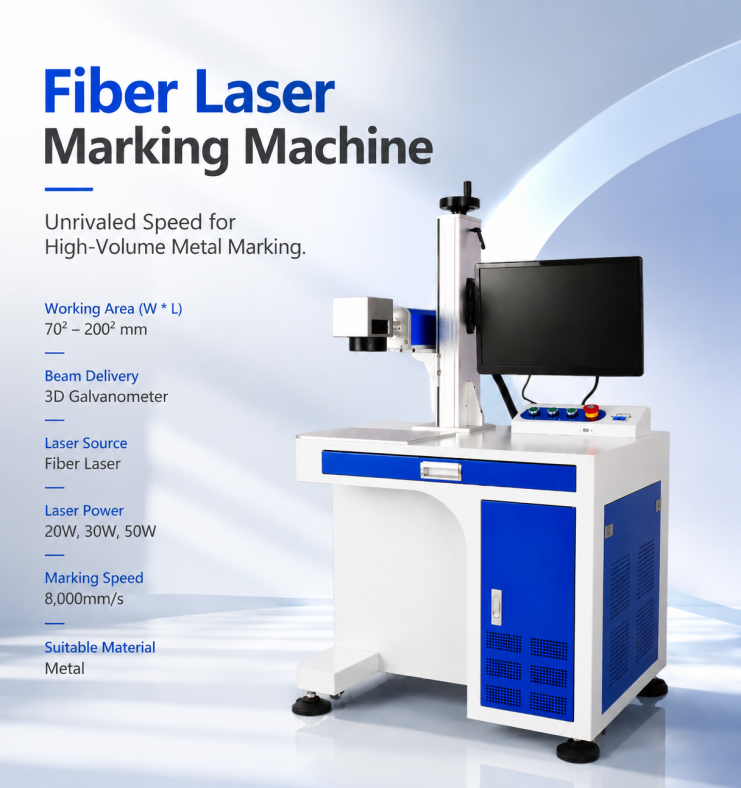
Fiber laser cutting can generate fine metal particles and fumes. An industrial dust collector for laser metal processing therefore needs to be evaluated according to the characteristics of the metal application rather than treated the same as a system for wood or acrylic.
Related Guide: https://www.mimowork-laser.com/blog/laser-marking-fume-extractor-guide
The question what size dust collector do I need for a laser cutter cannot be answered by laser wattage alone.
The key is whether the collector can deliver sufficient airflow at the actual extraction point after accounting for system resistance.
A larger enclosure may have different extraction requirements from a compact engraving machine.
Check the machine’s enclosure, exhaust connections, and recommended extraction requirements before selecting a collector.
Some laser machines use one extraction port, while others have multiple ports.
If several ports are connected to one collector, airflow distribution and the total extraction requirement need to be considered together.
Long hoses, narrow ducts, sharp bends, connectors, and loaded filters all increase resistance.
As resistance increases, the airflow available at the machine can decrease. Therefore, maximum airflow on a specification sheet should not be treated as the actual airflow delivered during operation.
A laser used continuously for production can generate significantly more contaminants than one used occasionally for prototyping.
For high-volume applications, consider both extraction performance and filter capacity.
When comparing systems, look beyond maximum fan airflow.
| Specification | Why It Matters |
| Airflow | Indicates how much air the system can move |
| Static pressure | Shows how well the system handles extraction resistance |
| Filter efficiency | Indicates how effectively particles are captured |
| Filter capacity | Affects service frequency and continuous operation |
| Connection size | Must match the machine and extraction layout |
| Noise level | Matters during long production shifts |
| Maintenance access | Affects filter servicing and downtime |
Airflow and static pressure should be considered together.
A collector may have a high maximum airflow rating, but actual performance can change once hoses, ducts, filters, and machine connections are added.
When comparing a laser cutting dust collector, look for performance under realistic operating conditions rather than relying only on the highest advertised airflow.
Filtration determines how effectively airborne contaminants are separated from the extracted air.
The required filtration depends on the material and process. Fine particles from laser processing may require a different filtration approach from larger particles.
Filter efficiency is only part of the selection process.
A collector used for continuous production needs enough filter area and capacity to handle the expected contaminant load without frequent service interruptions.
Easy filter access also matters because maintenance becomes part of routine operation.
A laser engraving dust collector and a laser cutting dust collector may belong to the same equipment category, but their actual requirements depend on how the machine is operated.
| Application | Typical Contaminants | Main Considerations |
| CO2 laser engraving | Smoke, fine particles | Filtration and airflow |
| CO2 laser cutting | Smoke, dust, residue | Airflow and filter capacity |
| High-volume cutting | Higher contaminant load | Continuous extraction and filter capacity |
| Fiber laser processing | Fine metal particles and fumes | Appropriate particle filtration |
| Mixed materials | Varying contaminants | Material compatibility and filtration |
A dust collector for CO2 laser cutting should be selected according to the material, cutting volume, machine enclosure, extraction route, and operating hours.
For production machines, filter capacity can become especially important because the system may operate continuously.
Laser processing does not always produce dry dust alone. Depending on the material and process, it can also generate smoke, odors, and fine airborne contaminants.
A dust and fume extractor may therefore be more suitable when an application produces both particulate and smoke.
The distinction is straightforward:
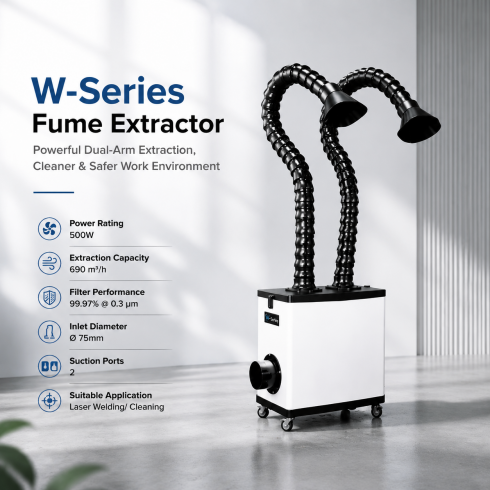
Laser welding is a separate application because emissions are concentrated around the welding point. A dedicated welding exhaust fume extractor should be evaluated according to source capture, extraction position, airflow, and filtration.
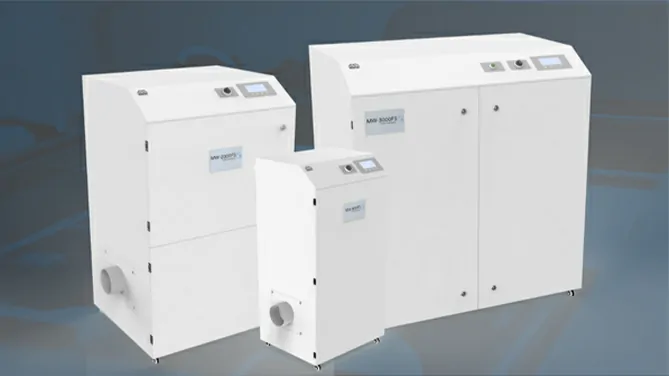
MimoWork offers laser extraction systems designed for different laser processes, materials, and contaminant types. For CO2 laser cutting and engraving, the C-Series Fume Extractor is designed to handle smoke, fine particles, and organic fumes from non-metal materials such as wood, acrylic, leather, and fabric. For fiber laser cutting, the F-Series Fume Extractor is designed for fine metal particles, fumes, and residues generated during metal processing.
Choosing between these systems should be based on the material being processed, contaminant load, required airflow, extraction points, duct resistance, and filtration requirements—not simply the laser power.
| Laser Process | Typical Materials | Recommended MimoWork Series | Main Extraction Focus |
| CO2 laser cutting & engraving | Wood, acrylic, leather, fabric, plastics | C-Series | Smoke, fine particles, organic fumes |
| Fiber laser cutting | Steel, stainless steel, aluminum, and other metals | F-Series | Fine metal particles, fumes, and residues |
For detailed specifications and configuration options, see 👉🏻MimoWork’s Laser Fume Extractor solutions.
Start with the material and laser process. Then evaluate the machine enclosure, extraction points, airflow, static pressure, filtration, filter capacity, production hours, and duct layout.
The required size depends on the machine’s extraction area, material, production load, duct resistance, and required airflow at the capture point. Laser wattage alone is not enough.
Yes. A dust collector for CO2 laser cutting can be suitable when its airflow, filtration, and filter capacity match the machine and materials being processed.
Not automatically. Cutting and welding produce different emission profiles and use different capture arrangements. Laser welding generally requires a system designed around source capture at the welding point.
There is no universal replacement interval. Service life depends on material, contaminant concentration, operating hours, filter capacity, and working conditions. Monitor filter loading and follow the manufacturer’s maintenance recommendations.
A laser dust collector should be selected as part of the complete extraction system rather than as an isolated piece of equipment.
For CO2 laser cutting and engraving, consider the material, smoke and dust load, airflow, extraction route, and filter capacity. For fiber laser processing, filtration suitable for fine metal particles becomes particularly important.
Before purchasing, compare airflow, static pressure, filtration, filter capacity, extraction layout, and maintenance requirements together. For applications producing both particulate and smoke, a dust and fume extractor may be more appropriate. For laser welding, evaluate a dedicated welding exhaust fume extractor based on source capture and filtration requirements.
News | Oct-8-2026
News | Sep-25-2026
News | Sep-30-2026