Blog
In a field that evolves daily, staying ahead means staying informed.
Explore in-depth articles designed to help you solve complex challenges,
maximize your machine’s ROI.
Stay ahead in a competitive market.


In a field that evolves daily, staying ahead means staying informed.
Explore in-depth articles designed to help you solve complex challenges,
maximize your machine’s ROI.
Stay ahead in a competitive market.
News | Sep-15-2026
Choosing the right CO2 Laser Cutter comes down to your material, laser power, working area, and production needs.
This guide explains how to match a CO2 Laser Cutter to the materials you process, the thickness you cut, and your daily workload—so you can choose the right machine for your application.
A CO2 laser cutter uses a focused beam of infrared laser energy to cut, engrave, or process materials without physical contact.
Unlike a mechanical blade, the laser does not wear against the material during cutting. Instead, concentrated heat removes or separates material along a programmed path.
This makes CO2 laser cutting particularly useful for non-metal materials such as:
Many machines can also perform both cutting and engraving.
That flexibility is one reason a CO2 laser machine can serve several production purposes within the same workshop.
A sign manufacturer, for example, may use one machine to cut acrylic letters, engrave wood panels, and produce customized promotional products.
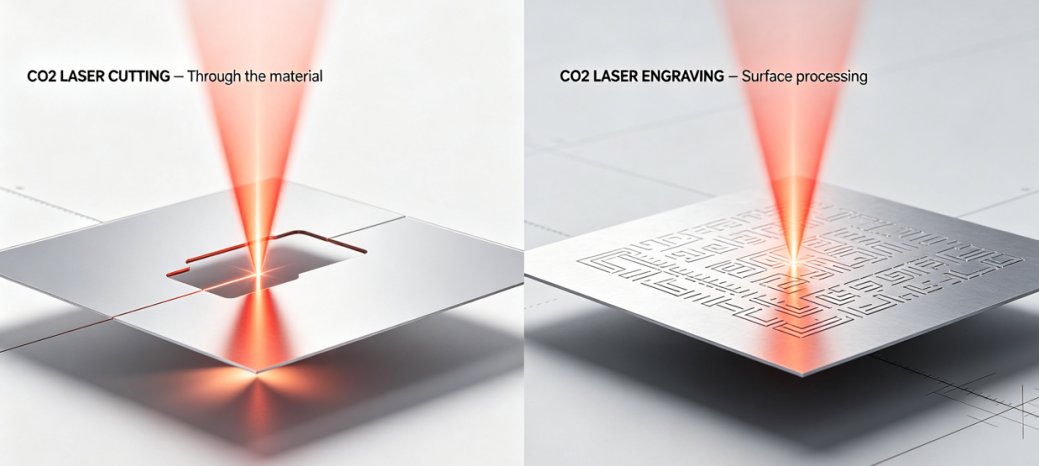
If you only think of a laser as a cutting machine, you may underestimate what one system can do.
CO2 laser engraving uses controlled laser energy to remove or alter a surface layer rather than cutting completely through the material.
The same machine can therefore be used for:
Cutting and engraving use different power and speed settings, so the right configuration depends on the actual application.
For businesses producing customized products, having both functions available can be useful because one machine can support several product types without changing to a separate production process.
CO2 lasers are particularly well suited to non-metal materials.
But “can a laser cut it?” is not the same as “will this machine produce the result you need?”
Material density, thickness, coatings, moisture, color, composition, and required edge quality can all affect performance.
Wood is one of the most common CO2 laser applications.
A lower-power machine can handle many craft and signage applications, while higher-power systems are more appropriate for thicker boards and larger production jobs.
If your business focuses on wood products, the best CO2 laser cutter for wood and acrylic may not be the same machine used for small personalized gifts.
A larger working area and higher power can become more valuable as products get bigger or production volume increases.
Acrylic is another common CO2 laser material.
Laser cutting can produce clean, polished-looking edges, making it useful for:
For thicker acrylic, higher laser power can provide additional cutting headroom, but power alone does not determine edge quality.
Focus, optics, speed, air assist, and material formulation still matter.
CO2 lasers can also process many textile materials.
For apparel and soft-material applications, the production challenge is often less about raw cutting power and more about material handling.
Roll feeding, vacuum tables, conveyors, vision systems, and automatic alignment can have a bigger impact on productivity than simply increasing wattage.
CO2 systems are also used for leather goods, packaging, paper products, rubber components, and compatible plastics.
The important point is to test the actual material before committing to a machine.
Material testing can reveal cutting speed, edge appearance, smoke generation, and whether the required production quality is realistic.
More power can mean more cutting capacity, but it does not automatically mean a better machine.
The right power depends on the material, thickness, desired speed, and production workload.
A useful way to think about power is:
Higher power gives you more processing headroom. It does not guarantee proportionally higher productivity.
60W or 80W can be practical for smaller workshops and general cutting. Around 100W–150W, the focus often shifts toward more demanding production, thicker materials, or larger-format applications.
At the higher end, 300W, 500W, and 600W systems become relevant when manufacturers need to process demanding materials or maintain higher throughput.
MimoWork’s current CO2 laser range spans from the 60W F60 and 60W/80W F100 through 60W–150W F130 and large-format systems reaching 600W.
For many small businesses, yes.
If you mainly produce:
A compact or mid-size machine can offer enough capability without moving into an industrial setup.
The important distinction is that power and working area solve different problems.
If your cuts are already fast enough but your products no longer fit on the bed, buying a stronger laser will not solve the problem.
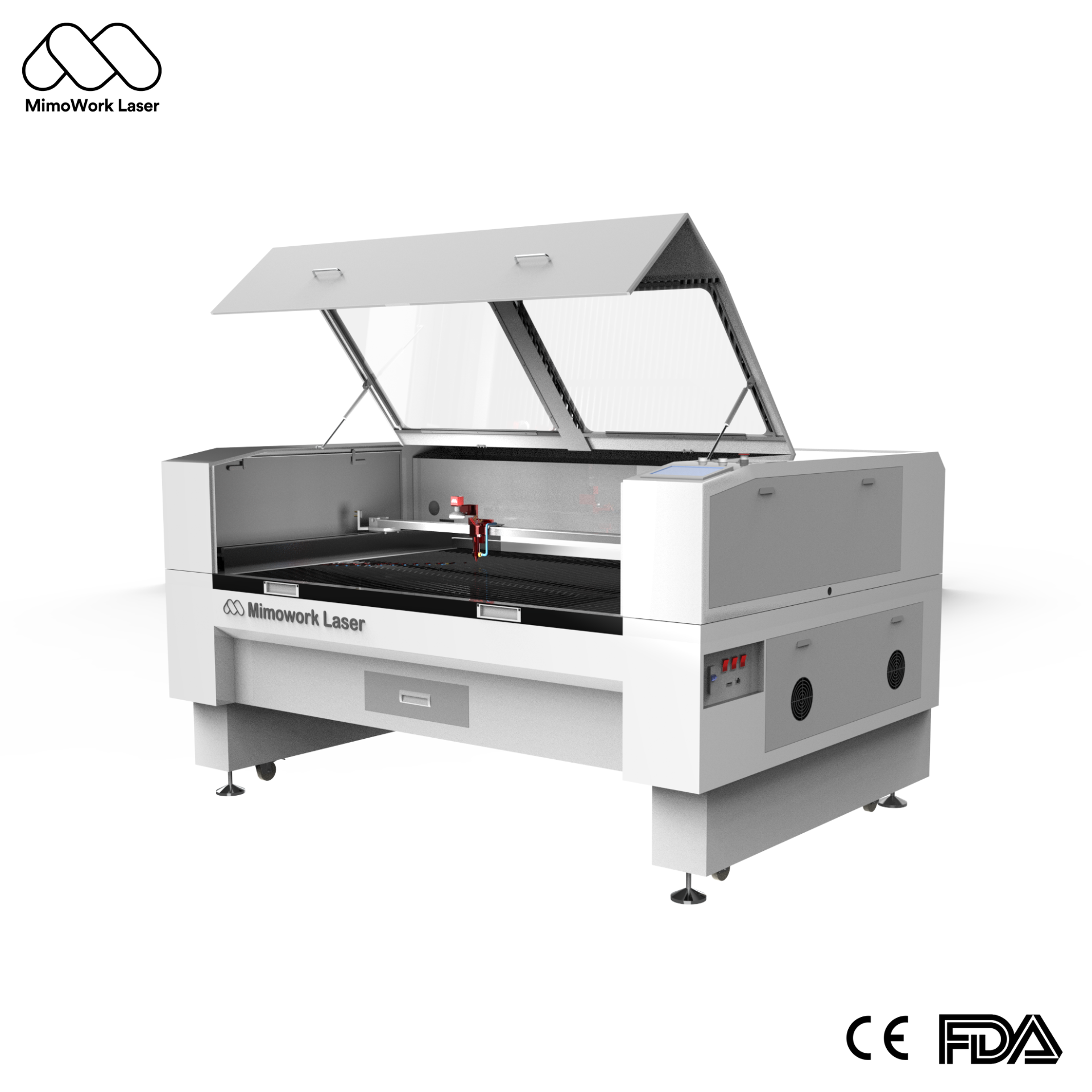
A 100W–150W CO2 laser cutter makes more sense when you regularly cut thicker materials, need faster cutting speeds, or handle higher production volumes where additional power can improve overall processing efficiency.
You may benefit from this range when:
MimoWork’s F130 is listed with a 1300 × 900 mm working area and 60W–150W power options, making it suitable for applications involving larger wood and acrylic products.
For a deeper comparison between 100W and 150W, see:
Related Guide:https://www.mimowork-laser.com/blog/100w-vs-150w-co2-laser
Related Guide:https://www.mimowork-laser.com/blog/laser-cutter-or-cnc-router-woodworking
Related Guide:https://www.mimowork-laser.com/blog/wood-laser-engraver-and-cutter-guide
High-power systems are a different purchasing decision.
Once production reaches the point where the laser is expected to process thick materials, large sheets, or long production runs, the machine needs more than a powerful laser source.
The motion system, cooling, optics, air assist, extraction, material handling, and working area all become increasingly important.
MimoWork’s F130-L is listed with a 1300 × 2500 mm working area and 100W–600W CO2 laser options. It is designed for large-format wood and acrylic processing and includes a servo-driven motion system and integrated ball transfers for handling large sheets.
This is where a co2 laser cutting machine should be evaluated as a complete production system rather than simply by its laser tube.
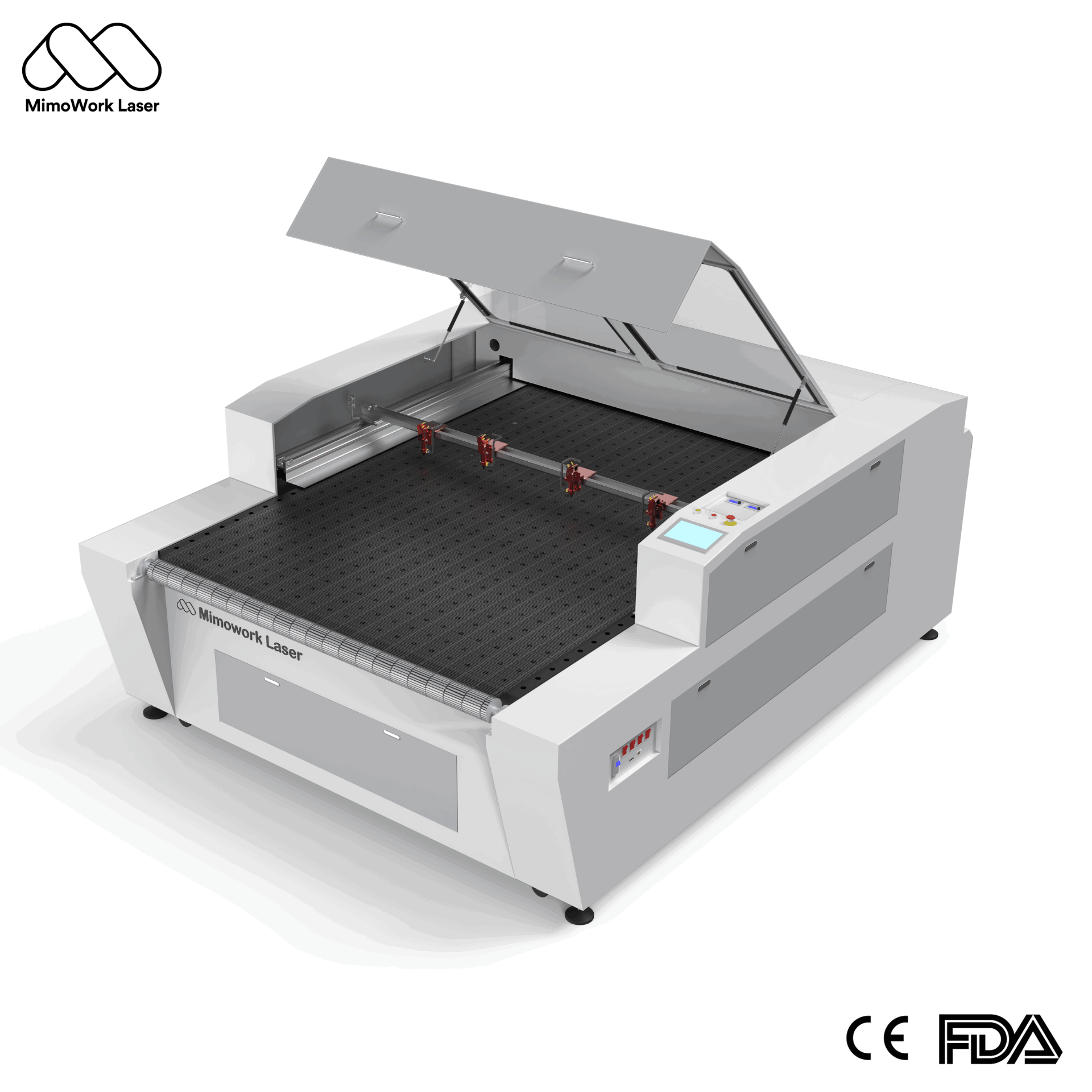
A 500W CO2 laser is mainly for production that has outgrown lower-power machines. It makes more sense when you are cutting thicker materials, running larger jobs, or need the machine to handle longer production cycles without becoming a bottleneck.
Typical applications include:
MimoWork’s F180-L comes with 150W–600W CO2 laser power options, including 500W configurations. It is built for large-format production and continuous material processing, with a wide working area and material-handling systems for demanding workflows.
For this type of production, the extra wattage is only part of the picture. A 500W laser needs a motion system, cooling, air assist, optics, and fume extraction that can handle the higher power and longer operating time. Material feeding also matters when you are processing large sheets or continuous rolls.
So, if a 100W or 150W machine is already meeting your cutting requirements, moving to 500W may not give you much practical benefit. But when cutting capacity, material thickness, or daily output has become the limiting factor, a 500W CO2 laser can provide the extra capacity needed for industrial production.
Related Guide:https://www.mimowork-laser.com/blog/500w-co2-laser-machine-industrial-use
For some materials and product sizes, a larger working area can have a greater impact on how efficiently you work.
The working area affects:
For large sheets, reducing repositioning can save significant production time.
MimoWork’s current range illustrates this difference: the F100 offers a 1000 × 600 mm bed, the F130 offers 1300 × 900 mm, while the F130-L expands to 1300 × 2500 mm for full-sheet processing.
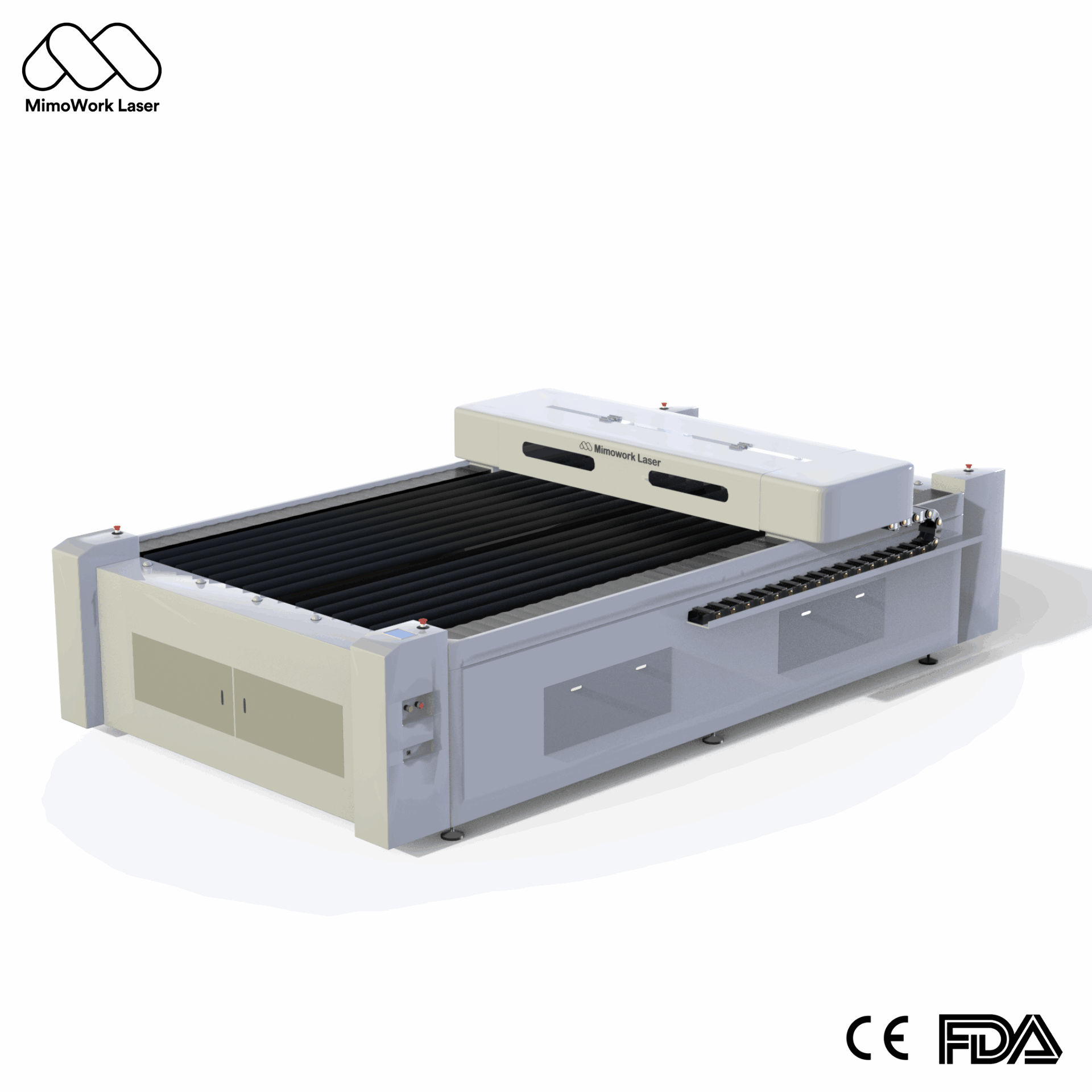
A flatbed CO2 laser cutter uses a fixed working bed to process individual sheets or workpieces. Unlike a conveyor or roll-to-roll system, the material stays on the cutting bed while the laser moves across the work area.
This setup works well for materials such as wood, plywood, MDF, and acrylic, especially when you need to cut larger sheets without repeatedly repositioning the material.
MimoWork’s F130-L is a large-format flatbed CO2 laser cutting machine with a 1300 × 2500 mm working area and 100W–600W laser power options. The larger bed provides enough space for large wood and acrylic sheets, while the servo-driven motion system and integrated ball transfers make it easier to position and move heavier workpieces.
For this type of machine, the working area is just as important as laser power. A larger bed can reduce repositioning when you are cutting full-size panels or multiple parts from the same sheet. Higher laser power, meanwhile, can provide more cutting capacity for thicker materials and higher-volume production.
So when comparing a flatbed CO2 laser cutting machine, look beyond the word “flatbed.” Check the working area, laser power, motion system, material loading, and the type and size of material you process.
Related Guide:https://www.mimowork-laser.com/blog/co2-laser-cutter-buying-guide-2
There is no single meaningful price for a CO2 laser system.
Two machines can both be described as “100W CO2 lasers” while having very different working areas, motion systems, automation, cooling, extraction, software, and material-handling capabilities.
That is why CO2 laser cutter price should be evaluated together with production capacity.
A cheaper machine may make sense for occasional work.
A more expensive system can make financial sense when it reduces:
The purchase price matters, but it is only one part of the investment.
Several components can significantly change the price of a machine.
Higher-power laser sources generally require more substantial supporting systems.
A larger bed requires a larger frame and motion system and may increase material-handling requirements.
Industrial applications may require more robust drive systems, higher acceleration, and better repeatability.
Automatic feeding, conveyors, vacuum tables, cameras, and vision systems can reduce manual work.
Higher-power or continuous-production systems may require more capable cooling and fume extraction.
Production environments may also benefit from nesting, workflow integration, camera recognition, or automated file processing.
The best machine is therefore rarely the one with the lowest initial price.
It is the one whose configuration makes sense for the work you actually sell.
The right CO2 laser format depends on what you cut, how the material is loaded, and how much production you need to handle. MimoWork offers different machine configurations for these production needs.
For smaller workpieces and general-purpose applications, the F60 and F100 are practical options.
They are well suited to:
The F60 provides a 600 × 400 mm working area, while the F100 offers a larger 1000 × 600 mm working area and supports LightBurn for laser control.
When production involves individual sheets, panels, or larger workpieces, a flatbed CO2 laser cutting machine offers a larger fixed working area.
The F130 provides a 1300 × 900 mm working area, while the F160 expands the working area to 1600 × 1000 mm. These configurations are suitable for processing larger individual pieces without requiring continuous material feeding.
When material size becomes a production limitation, a large-format CO2 laser can make a significant difference.
The F130-L provides a 1300 × 2500 mm working area and supports 100W–600W laser power. Its large working area is designed for oversized sheets and applications where materials such as 4 × 8 ft acrylic, plywood, or MDF need to be processed with fewer repositioning steps.
For continuous fabrics, printed textiles, and other flexible materials, a conveyor-based system is more suitable than a fixed flatbed.
MimoWork’s F180-L is designed for industrial textile production, with 150W–600W options and continuous material handling. For printed or patterned materials, the C160-L combines a conveyor system with a vision camera for registration-mark detection and contour cutting.
The key is to match the machine format to the material workflow. A larger working area is not automatically better. The better choice is the configuration that fits how your material is loaded, positioned, cut, and moved through production.
| Production Need | Recommended Model | Key Advantage |
| Small products & general cutting | F60 / F100 | Compact format for cutting, engraving, and small-batch work |
| Individual sheets & workpieces | F130 / F160 | Larger flatbed working areas |
| Oversized sheets | F130-L | 1300 × 2500 mm large-format working area |
| Continuous textile production | F180-L | Conveyor-based continuous material handling |
| Printed or patterned textiles | C160-L | Vision-assisted registration and contour cutting |
If the machine will be part of a daily manufacturing process, reliability and workflow become just as important as cutting power.
An industrial CO2 laser should be evaluated across the complete system.
The machine should maintain repeatable movement during long production runs.
The cooling system needs to support the selected laser source and operating conditions.
The optical path and focusing system affect how effectively the available laser power reaches the material.
Proper airflow can help control the cutting process and improve edge quality.
Effective fume extraction is essential for maintaining a cleaner working environment and protecting machine components.
Large sheets and continuous rolls can require conveyors, vacuum tables, ball transfers, automatic feeding, or other handling systems.
Production software should fit the team’s existing workflow rather than create another unnecessary bottleneck.
For most standard CO2 cutting applications, the focus is on non-metal materials.
Wood, acrylic, leather, fabric, paper, rubber, and compatible plastics are much more typical CO2 applications.
If your primary requirement is cutting bare metal, a fiber laser is generally the more appropriate technology.
That distinction matters when comparing laser technologies because buying a higher-powered CO2 system does not automatically turn it into a metal-cutting machine.
Instead of comparing twenty specifications at once, narrow the decision down to the few that affect your production directly.
| What matters | Why it matters |
| Laser power | Determines available cutting capacity |
| Working area | Determines product and sheet size |
| Motion system | Affects speed and repeatability |
| Material handling | Affects loading and continuous production |
| Cooling | Supports stable operation |
| Air assist & extraction | Affect cutting conditions and working environment |
| Software | Determines how easily jobs move from design to production |
| Automation | Reduces manual steps for repeat production |
Before upgrading, identify what is actually limiting production:
Is it cutting speed, material size, loading time, or inconsistent results?
Which specification is currently limiting production?
MimoWork’s current CO2 laser range covers several different production levels.
The F60 provides a compact 600 × 400 mm working area with 60W power. The F100 moves to 1000 × 600 mm with 60W or 80W options, while the F130 provides 1300 × 900 mm with 60W–150W configurations.
For larger-format production, the F130-L reaches 1300 × 2500 mm and supports 100W–600W configurations.
For industrial textile applications, the F180-L is offered with 150W–600W configurations and is designed around continuous textile processing, material handling, and vision-assisted production.
A 60W desktop system and a 600W large-format machine are solving very different production problems.
The best co2 laser cutter is the machine that removes the biggest limitation from your current workflow without adding unnecessary cost or complexity.
For a small custom-product business, that might mean a compact machine with enough power and a manageable footprint.
For a sign manufacturer, working area and cutting speed may matter more.
For a textile manufacturer, continuous feeding and vision alignment can be more important than raw wattage.
For an industrial fabricator, high power, heavy-duty motion, cooling, extraction, and material handling may all need to work together.
The right decision is therefore less about buying the “most powerful” machine and more about buying enough capability for the work you actually need to complete.
CO2 lasers are commonly used for wood, acrylic, plywood, MDF, leather, fabric, paper, rubber, and compatible plastics. The actual cutting result depends on the material composition, thickness, machine configuration, and processing parameters.
There is no universal wattage. Lower-power machines can be suitable for small products and moderate materials, while higher-power systems become more useful for thicker materials, larger formats, and higher production volumes.
No. Higher power only helps when the application can use it. If your main limitation is working area, loading, or workflow, spending more on laser power may not solve the actual problem.
They use the same basic laser technology, but cutting and engraving apply the laser differently. Many modern CO2 systems combine both functions.
Not necessarily. A flatbed configuration is particularly useful for sheet and piece-based production. The better choice depends on material format, product size, production volume, and workflow.
For industrial applications, evaluate the complete system rather than laser wattage alone. Motion accuracy, cooling, optics, air assist, extraction, material handling, automation, and software can all affect production performance.
The best CO2 Laser Cutter should match your material, product size, and production volume without giving you more capacity than you actually need. Power and working area matter, but so does how well the machine fits into your day-to-day workflow.
Once those requirements are clear, compare MimoWork’s CO2 Laser Cutter options based on your application—not simply by wattage, bed size, or machine format. If you’re still weighing different configurations, contact MimoWork to discuss your materials and production needs.
News | Sep-8-2026
News | Sep-1-2026
News | Aug-17-2026