Blog
In a field that evolves daily, staying ahead means staying informed.
Explore in-depth articles designed to help you solve complex challenges,
maximize your machine’s ROI.
Stay ahead in a competitive market.

In a field that evolves daily, staying ahead means staying informed.
Explore in-depth articles designed to help you solve complex challenges,
maximize your machine’s ROI.
Stay ahead in a competitive market.
News | Jul-24-2026
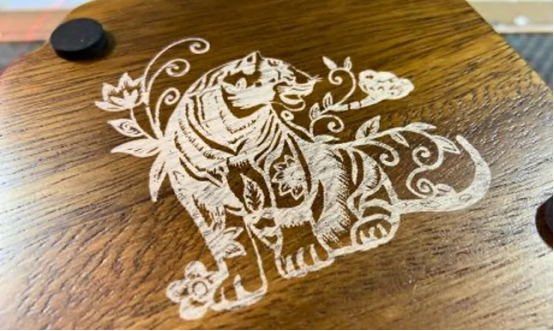
Choosing the right CO2 laser engraver is an important decision for businesses looking to improve production efficiency and expand their product capabilities.
A suitable laser system can help your business:
However, selecting a laser machine is not only about laser power.
The best choice depends on several factors, including:
This buying guide explains how CO2 laser technology works, what materials it can process, how different laser systems compare, and what factors you should consider before investing.
A CO2 laser engraver works by converting electrical energy into a focused laser beam that precisely removes, cuts, or modifies material surfaces. CO2 laser engraving technology enables businesses to create detailed designs, permanent markings, and accurate cuts on materials such as wood, acrylic, glass, leather, fabric, and plastics.
Inside the laser tube, a mixture of carbon dioxide, nitrogen, and helium gases is electrically stimulated to generate a CO2 laser beam. The beam is then guided through a mirror system and focused onto the material surface using a precision lens.
When the focused laser energy reaches the material, it creates different processing effects depending on the power settings, speed, and material properties.
To help you choose the right laser solution, we’ve compared the key features of diode, CO2, and fiber lasers below.
| Laser Type | Suitable Materials | Precision | Best For |
| CO2 Laser | Wood, acrylic, leather, fabric, plastic | Very high | Non-metal material applications |
| Fiber Laser | Stainless steel, aluminum, industrial parts | Extremely high | Industrial applications |
| Diode Laser | Wood, coated materials, small projects | High | Hobbyists |
A CO2 laser system is usually the better choice when your business requires:
Suitable for larger sheets and production materials.
Unlike many entry-level engraving systems, CO2 lasers can both engrave and cut.
Ideal for businesses working with multiple non-metal materials.
Suitable for repeated manufacturing and customized orders.
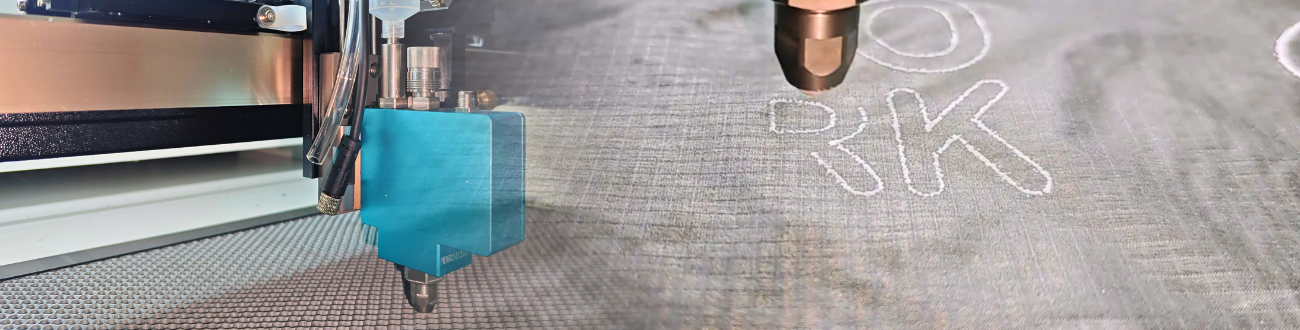
How to Choose Laser Marking Machine? | MimoWork Laser
MimoWork CO2 laser engravers are designed for processing a wide range of non-metal materials used in manufacturing, customization, and commercial production. From wood and acrylic to fabric, leather, glass, and coated surfaces, CO2 laser technology provides precise and flexible processing solutions.
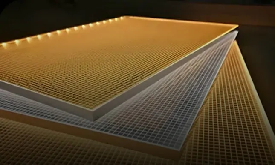
Wood, acrylic, and MDF are among the most widely used materials for CO2 laser engraving and cutting applications.
They are commonly found in industries such as:
Compared with traditional cutting methods, CO2 laser technology offers cleaner processing, higher accuracy, and greater design flexibility.
The focused CO2 laser beam produces smooth cutting edges with minimal post-processing requirements.
This makes it suitable for:
A CO2 laser engraver allows businesses to create permanent designs directly on materials, including:
No additional cutting tools, molds, or mechanical contact are required.
Because designs are controlled through digital files, manufacturers can quickly update patterns and switch between different projects.
This makes CO2 laser processing ideal for:
For businesses producing wooden products or acrylic applications, a wood laser engraver or acrylic laser cutting solution can significantly improve production efficiency and design flexibility.
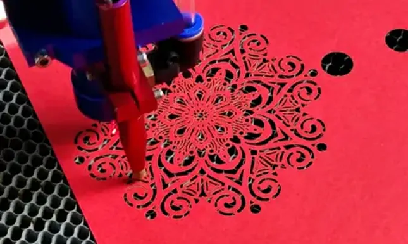
CO2 lasers are widely used in textile, leather, and packaging industries because they process materials without physical contact.
Unlike traditional cutting tools, laser processing helps avoid common issues such as:
Common applications include:
During cutting, the laser can heat-seal synthetic fabric edges, helping reduce fraying and improving product quality.
Computer-controlled movement allows manufacturers to create complex shapes and detailed patterns with high repeatability.
New designs can be produced simply by modifying the digital file, making laser processing ideal for flexible manufacturing.
For fashion, textile, and accessory businesses, a leather laser engraving machine provides an efficient solution for customized production and small-batch manufacturing.
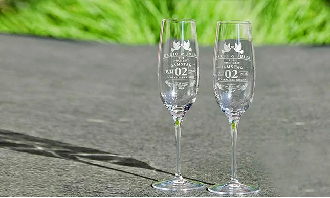
Although CO2 laser engravers are primarily designed for non-metal materials, they can also create unique engraving results on certain hard surfaces with proper settings and accessories.
Typical applications include:
These applications are commonly used in:
With the right configuration, a CO2 laser engraving machine allows businesses to expand their product range and create high-value customized products.
From creative customization to commercial manufacturing, MimoWork provides CO2 laser solutions designed for different workspace requirements, production volumes, and application goals.
| Model | Best For | Key Advantages |
| F60 | Businesses starting laser production, makers, and creative studios | Compact design, easy operation, flexible material compatibility |
| F100 | Growing businesses focused on product quality and efficient production | High-resolution engraving, bidirectional engraving technology, LightBurn compatibility |
| F130 | Businesses handling larger products and higher-volume production | Larger working area, pass-through capability, flexible configurations |
| G Series Galvo Laser Marking System | High-speed marking and batch processing applications | Up to 15,000 mm/s marking speed, fast processing, efficient product identification |
The F60 is a compact CO2 laser cutter designed for makers, small businesses, creative studios, and workshops.
With an easy-to-use design and flexible material compatibility, it is ideal for starting laser production and creating personalized products.
Best for:
A practical choice for users who need professional laser cutting and engraving capability in a compact format.
The F100 and F130 are designed for businesses that need more workspace and higher production flexibility.
The F100 focuses on high-quality engraving and efficient workflow, while the F130 provides a larger working area and pass-through capability for bigger materials.
Best for:
These models help growing businesses improve efficiency while expanding their product range.
The G Series galvo laser marking system is built for high-speed marking applications.
With marking speeds up to 15,000 mm/s, it is designed for businesses that need fast, efficient processing for identification, coding, and product customization.
Best for:
When processing speed and high-volume marking are the main priorities, the G Series provides an efficient solution.
Beyond standard cutting and engraving, MimoWork CO₂ laser engravers can be equipped with optional features to improve accuracy, simplify operation, and support more production needs.
These upgrades help users achieve better results across different materials, product shapes, and production workflows.
Accurate positioning is essential when working with printed or patterned materials.
The MimoVISION CCD Camera System uses a high-resolution camera mounted directly on the laser head to automatically scan fiducial marks on the material.
By recognizing these reference points, the system automatically adjusts the cutting position and eliminates the need for manual alignment.
Key benefits include:
The Rotary Device expands laser engraving capabilities beyond flat materials.
It enables users to create seamless designs on cylindrical and conical objects, including:
This accessory is ideal for personalized product creation and helps businesses explore more custom engraving applications.
Different materials and products require different focus distances.
The Auto-Focus system automatically adjusts the laser head to the optimal focal position, reducing manual adjustment and helping achieve consistent processing results.
The Motorized Lifting Table allows users to work with objects of different heights, including thicker materials, stacked materials, and pre-made products.
Together, these features provide:
For production environments where efficiency matters, the Shuttle Table helps reduce downtime during loading and unloading.
The system uses two interchangeable platforms:
While one table is inside the machine for processing, operators can unload finished parts and prepare new materials on the second table.
After processing is complete, the platforms switch positions to maintain a smoother production workflow.
Benefits include:
These factors help you evaluate your options and choose a system that fits your actual production needs.
Choosing a laser supplier is not only about comparing machine specifications. Manufacturing experience, application knowledge, and technical support all play an important role in selecting the right equipment.
With over 20 years of experience in laser technology, MimoWork designs and manufactures industrial laser systems for cutting, marking, engraving, welding, and cleaning applications.
Our experience comes from working with real production challenges, including:
MimoWork uses this experience to recommend laser solutions that match your materials, applications, and workflow.
Every material reacts differently during laser processing. The settings that work for one application may not deliver the same results for another.
Before investing in a laser system, testing your own materials helps confirm the right machine configuration and processing parameters.
MimoWork provides sample testing and live machine demonstrations based on your actual application.
You can send your materials or design files for evaluation. The testing process helps determine:
Material testing is especially valuable for businesses working with:
By testing real samples before purchase, you can better understand how a MimoWork laser system performs with your application.
A laser machine requires proper setup, operation, and maintenance to achieve consistent results over time.
MimoWork provides technical support throughout the machine’s service life, including:
Our technical team works with customers to help operators understand the equipment, solve operational issues, and maintain stable production.
Reliable after-sales support helps businesses get started faster and keep their laser systems running smoothly.
CO2 laser technology is widely used because it can process a broad range of non-metal materials.
From custom products to commercial manufacturing, the same laser platform can support different industries with the right configuration.
For businesses creating customized products, CO2 lasers provide the flexibility to produce unique designs without molds or additional tooling.
Common applications include:
Laser processing is ideal for:
Sign manufacturers need clean edges, accurate details, and efficient production.
CO2 laser systems are commonly used for:
Advantages include:
Clean Results
Laser cutting creates smooth edges with minimal finishing work.
Flexible Design Changes
Digital files can be modified quickly for different customer requests.
Efficient Production
A single machine can handle both cutting and engraving tasks.
CO2 lasers allow woodworking businesses to create detailed designs and customized products.
Applications include:
Compared with traditional processing methods, laser technology offers:
CO2 lasers are also widely used for soft materials.
Typical applications include:
Benefits include:
A CO2 laser engraver and a CO2 laser cutter use the same laser source technology.
The difference is how the laser energy is applied.
Engraving removes a controlled layer from the material surface to create designs, patterns, or text.
Cutting uses higher power settings to completely separate the material.
Many CO2 laser systems combine both functions, allowing users to cut and engrave with one machine.
Cutting capability depends on several factors:
The best setup depends on your specific application. Material testing is recommended when working with new materials or demanding applications.
Modern CO2 laser systems are designed to make laser processing easier for new users.
You do not need previous laser experience to get started. Most beginners can quickly learn the basic workflow:
MimoWork provides operation guidance and technical support to help new users become familiar with the machine.
For many businesses, starting with simple projects and gradually expanding to more advanced applications is an effective way to build experience with laser processing.
Software compatibility depends on the laser machine model and controller configuration.
MimoWork CO2 laser systems can be integrated with commonly used laser design and control workflows. Selected models, such as the F100, support LightBurn, a widely used software for laser cutting and engraving.
Before purchase, it is recommended to confirm software requirements with the MimoWork team to ensure compatibility with your existing workflow.
The right laser system depends on your materials, product size, production volume, and future growth plans.
Use the checklist below to evaluate your needs:
What materials do you plan to process?
• Wood
• Acrylic
• Leather
• Fabric or other non-metal materials
What size products do you need to handle?
• Small products
• Medium projects
• Large-format materials
Do you need any extra functions?
• Rotary device
• Camera system
• Automation options
MimoWork’s application specialists can help evaluate your requirements and recommend a suitable CO₂ laser configuration based on your actual application.
News | Jul-22-2026
News | Jul-17-2026
News | Jul-15-2026