Blog
In a field that evolves daily, staying ahead means staying informed.
Explore in-depth articles designed to help you solve complex challenges,
maximize your machine’s ROI.
Stay ahead in a competitive market.


In a field that evolves daily, staying ahead means staying informed.
Explore in-depth articles designed to help you solve complex challenges,
maximize your machine’s ROI.
Stay ahead in a competitive market.
News | Oct-31-2026 | Mimowork
To get clean results when engraving painted wood, choose a compatible, fully cured coating, test the actual paint and wood combination, and control heat input to prevent charring beneath the paint. Suitable paper masking tape can help protect the surrounding finish, while consistent focus, effective air assist, and properly configured fume extraction help improve process consistency. For sign makers, the goal is not simply to remove paint—it is to produce repeatable lettering and graphics without wasting finished panels or redoing customer orders.
A custom sign can look perfect before engraving and still become unsellable after one pass. Dark halos around lettering, chipped paint at the edges, and uneven coating removal are more than cosmetic defects. They can mean repainting a panel, repeating the engraving job, missing a delivery deadline, or replacing a custom piece that cannot easily be resold.
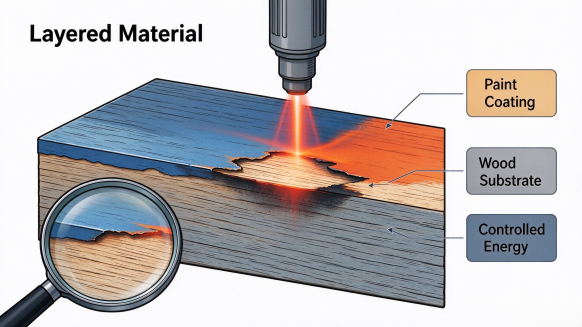
The problem is that painted wood is a layered material. The laser must remove or alter the coating without unnecessarily damaging the wood beneath it. A setting that clears the paint quickly may also char the exposed wood, while a setting that is too conservative may leave patches of coating behind.
For businesses producing painted signs, decorative panels, branded displays, and personalized products, consistency matters as much as the quality of a single sample. The more pieces you process, the more expensive small variations become.
Excessive heat beneath the coating. Once the paint has been removed, continued energy delivery can darken or char the exposed wood. This is especially noticeable around small letters and tightly spaced graphics.
Weak or brittle paint adhesion. If the coating has not cured properly or is already lifting from the substrate, engraving can expose the weakness and leave chipped boundaries.
Inconsistent processing conditions. Variations in focus, panel flatness, coating thickness, and air assist can make identical designs look different across a batch.
These problems are not solved by buying a higher-wattage machine alone. The more useful buying question is whether the complete laser system can deliver the control, working area, and supporting airflow your production actually needs.
Paint chemistry matters because coatings respond differently to heat. However, a broad paint category is not enough to establish whether a particular product is safe or suitable for laser processing.
| Paint or coating type | What to know before engraving |
| Water-based paint | Can be a practical starting point for testing, but pigments, binders, and additives vary. Water-based does not automatically mean laser-safe. |
| Acrylic paint | Some acrylic paints can produce workable results on wood, but formulation, film thickness, and curing affect edge quality. Check the specific product documentation. |
| Nitrocellulose lacquer | Requires particular caution because of its solvent-based formulation and potential fire and fume hazards. Do not laser process it unless the exact coating has been assessed and confirmed suitable by the relevant manufacturer guidance. |
| Unknown or specialty coatings | Do not assume compatibility from appearance or marketing labels. Identify the formulation and review its safety data before testing. |
Water-based and acrylic paints are not mutually exclusive categories: many acrylic paints are water-based. The distinction is therefore less useful than knowing the actual binder, additives, and application instructions.
Before production, review the coating’s safety data sheet (SDS) and technical documentation. If the composition is unclear, ask the supplier. Do not engrave a coating simply because a small sample appears to process cleanly; hazardous emissions may not be visible.
A reliable workflow separates coating preparation, laser processing, and cleanup. This makes it easier to identify the cause of a defect before an entire batch is affected.
Use a sample from the same type of wood and prepare it with the same paint, application method, and curing time as the production pieces.
Test representative elements from the final artwork, including small text, narrow lines, and sharp corners. A large filled shape may look acceptable while fine lettering reveals dark edges or coating flakes.
Evaluate three outcomes: whether the paint is removed evenly, whether the exposed wood remains acceptably clean, and whether the surrounding finish stays attached. Record the conditions that produced the best result so they can be repeated.
More laser power does not automatically produce a better painted-wood engraving. Excessive energy can char the substrate after the coating has been removed, while insufficient energy may leave residue or require additional passes.
Start with a conservative test setting appropriate for the machine and material. Adjust speed and power in controlled steps, changing one variable at a time where practical. If the paint clears but the wood becomes too dark, investigate whether the heat input can be reduced. If the coating remains in patches, check focus and coating consistency before increasing power.
The best setting is the one that removes the coating consistently while keeping edge damage within your acceptable production limits.
An uneven panel or warped board can change the distance between the laser head and the surface. That can lead to differences in engraving width, depth, or contrast across the same design.
Secure the panel without forcing it into an unnatural shape, and follow the machine manufacturer’s focusing procedure. For larger sign blanks, inspect the surface for height variation before starting a full job.
When evaluating a machine, ask how focus is set and maintained, how repeatable the motion system is, and whether the working area matches the size of your typical panels. These details can be more important to consistent results than wattage alone.
Masking is a practical option for some painted-wood applications, especially when residue on the surrounding surface is a concern. Suitable paper masking or transfer tape can help protect areas around the engraving and may make cleanup easier.
For masking for painted wood laser engraving, test the complete combination of coating, tape, and wood before production. Use only a masking product confirmed suitable for the intended laser process. Some adhesives can leave residue, while unsuitable films or plastic materials may melt, ignite, or release hazardous fumes.
Apply the tape smoothly without wrinkles or trapped air. After engraving, allow the piece to cool and remove the masking carefully, following the tape manufacturer’s recommendations. Check that the tape has not lifted the paint or left adhesive behind.
Masking is not a substitute for controlling heat input. If the wood is already charred or the paint is poorly bonded, tape alone will not fix the underlying issue.
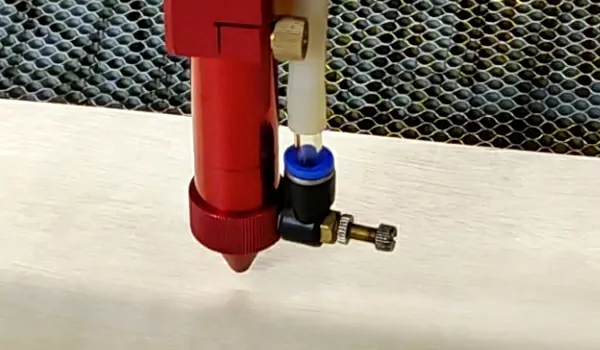
Air assist and fume extraction perform different jobs. Air assist directs airflow near the processing point and can help manage combustion and residue, depending on the setup. Fume extraction removes smoke and airborne contaminants from the work area.
Poorly controlled smoke can settle back onto the surface, leaving marks that resemble coating failure. However, more airflow is not automatically better for every application; the appropriate setup depends on the machine, material, and process.
When comparing equipment, confirm which airflow and extraction features are included, which are optional, and whether the proposed configuration suits painted wood. Do not assume every machine has the same air-assist or extraction arrangement.
Let the workpiece cool, then inspect the engraving before attempting cleanup. A soft brush or another gentle method compatible with the coating may remove loose residue.
Avoid aggressive scraping and unverified solvents. They can dull the finish, soften the paint, or lift the edges you are trying to preserve. If the boundary remains ragged after gentle cleaning, return to the coating condition and test settings rather than trying to hide the defect.
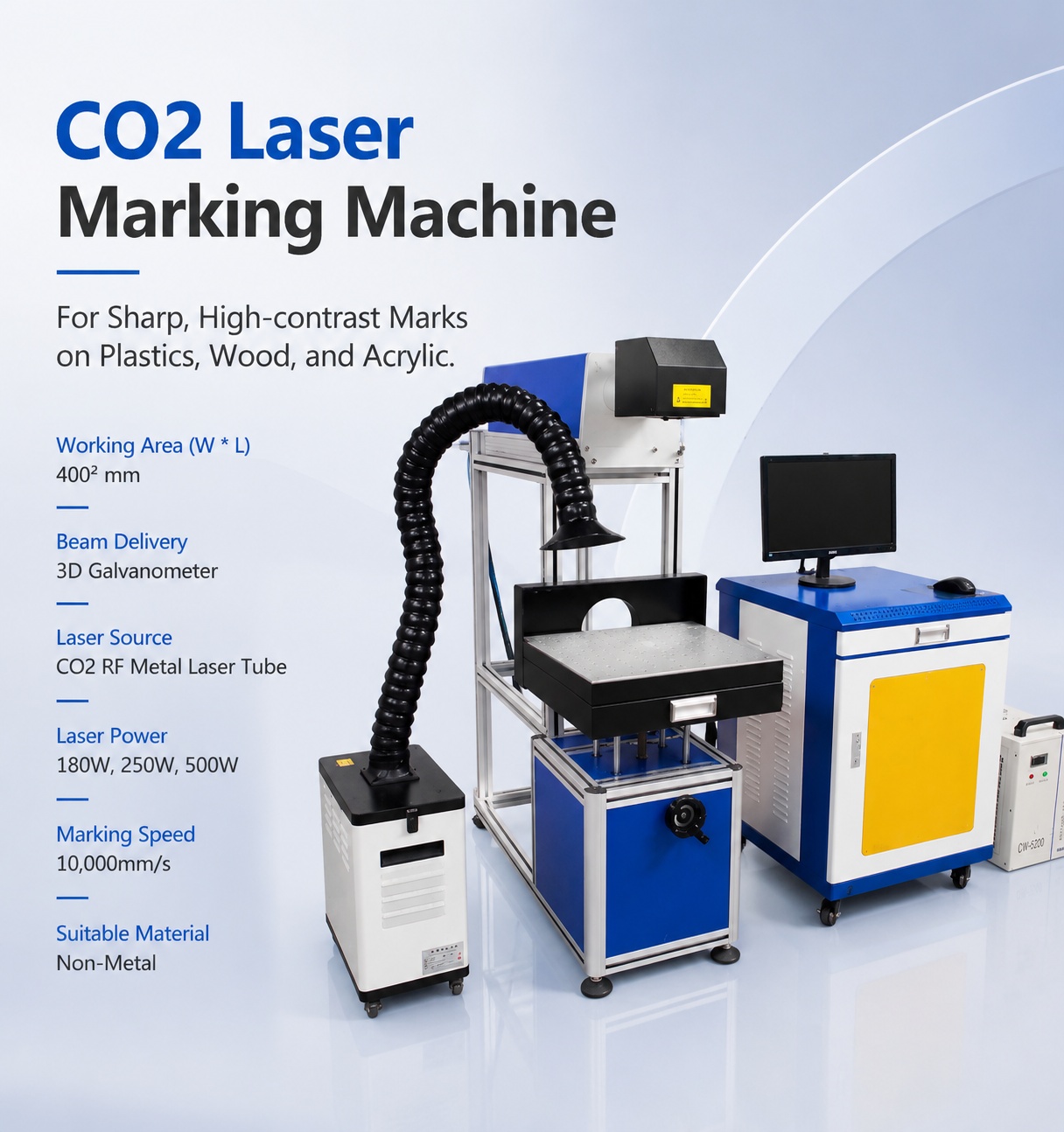
For sign makers, a laser system should be evaluated by how consistently it produces the required result—not simply by its maximum power rating.
Consistent motion and beam delivery. Repeatable motion and properly maintained optics help the machine follow the intended design. Ask the supplier how the system is configured for detailed text, fine graphics, and repeated jobs. Do not assume that every CO2 machine uses a galvanometer scanning head; gantry and galvo systems are different configurations designed for different workflows.
Reliable focus control. Correct focus helps maintain predictable engraving detail. If your products use flat panels of varying sizes or thicknesses, consider how focus is established and how material height is managed.
Appropriate air assist and extraction. These supporting systems can help manage smoke, residue, and processing conditions. Their actual value depends on the airflow configuration and the materials being processed, so confirm the available setup rather than relying on a generic feature claim.
A suitable working area and power range. A small workshop producing personalized plaques has different needs from a sign manufacturer processing large painted panels in batches. A larger working area may reduce repositioning, while higher power may be useful for other cutting tasks. Neither guarantees cleaner paint removal by itself.
Related guide:Best Laser Engraver for Wood in 2026: How to Choose the Right Machine for Clean, Precise Results
The right laser power for painted wood depends on the coating, wood surface, design detail, and production volume. Higher wattage does not automatically mean cleaner engraving. Too much energy can char the exposed wood, while insufficient energy may leave uneven coating removal.
For businesses focused on detailed logos, decorative patterns, and surface marking on wood, a CO2 laser marking system is worth considering. MimoWork’s CO2 Laser Marking Machine uses a 3D galvanometer beam delivery system and offers 180W, 250W, and 500W laser options, with a listed marking speed of up to 10,000 mm/s. The system is designed for non-metallic materials, including wood, although the suitability of a particular painted surface should be confirmed through application testing.
The best configuration depends on your actual workload. Before choosing a power level, test your painted wood to compare coating removal, edge quality, and the appearance of the exposed substrate. This is especially important when producing custom signs, branded wooden products, or decorative panels where a small edge defect can lead to rework.
Explore MimoWork’s CO2 Laser Marking Machine to review the available configuration and discuss whether it suits your painted-wood engraving application.
Yes, some painted wood can be processed with a suitable laser system, but the exact coating and substrate must be assessed first. Confirm the coating’s composition and safety information, then test the actual combination before production.
Use a properly prepared, fully cured coating with sound adhesion. Test the actual material, control heat input, and consider suitable paper masking when appropriate. If the paint is already peeling, correct the surface-preparation problem before engraving.
Suitable paper masking tape can help protect the surrounding surface and reduce residue, depending on the application. Verify that the tape is appropriate for laser processing and test whether its adhesive affects the coating. Do not use unverified plastic films or vinyl masking.
The answer depends on the machine, artwork, production volume, and other materials you need to process. Higher wattage does not automatically create cleaner edges. Ask the supplier to test your actual painted wood and compare the result with your production requirements.
Some water-based and acrylic coatings may be suitable after the specific formulation has been assessed. Nitrocellulose lacquer requires particular caution because of potential solvent, fire, and fume hazards. Do not rely on the paint category alone; consult the SDS and relevant manufacturer guidance before processing.
For a sign-making business, clean painted-wood engraving means fewer rejected panels, less repainting, and more predictable delivery times. The most effective approach combines a suitable coating, controlled laser settings, consistent focus, appropriate airflow, and a machine configuration matched to the actual production workload.
News | Oct-26-2026
News | Oct-18-2026