Blog
In a field that evolves daily, staying ahead means staying informed.
Explore in-depth articles designed to help you solve complex challenges,
maximize your machine’s ROI.
Stay ahead in a competitive market.


In a field that evolves daily, staying ahead means staying informed.
Explore in-depth articles designed to help you solve complex challenges,
maximize your machine’s ROI.
Stay ahead in a competitive market.
News | Nov-14-2026 | Mimowork
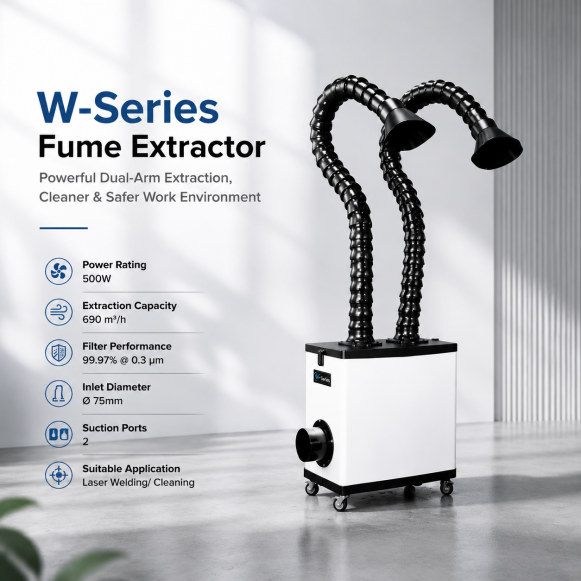
A workbench fume extractor should capture contaminants directly at their source, rather than allowing smoke and fumes to spread throughout the room. Its primary job is to collect smoke, gases, and fine particulates before they enter the operator’s breathing zone or settle on nearby tools and work surfaces.
This makes the type of work being performed the starting point for choosing a suitable unit. Laser welding and surface cleaning generate concentrated, localized plumes that require targeted extraction. Heat-press sublimation, on the other hand, releases gases and particulates over a wider area, creating a risk of residue re-deposition, ghosting, and color contamination.
The right extractor should therefore match the fume source, capture area, and working conditions rather than simply fit the available bench space.
The capture method should correspond to how fumes are generated. Point extraction is generally more suitable for concentrated plumes, while a localized clean-air zone works better for processes that release gases and particulates across a wider area.
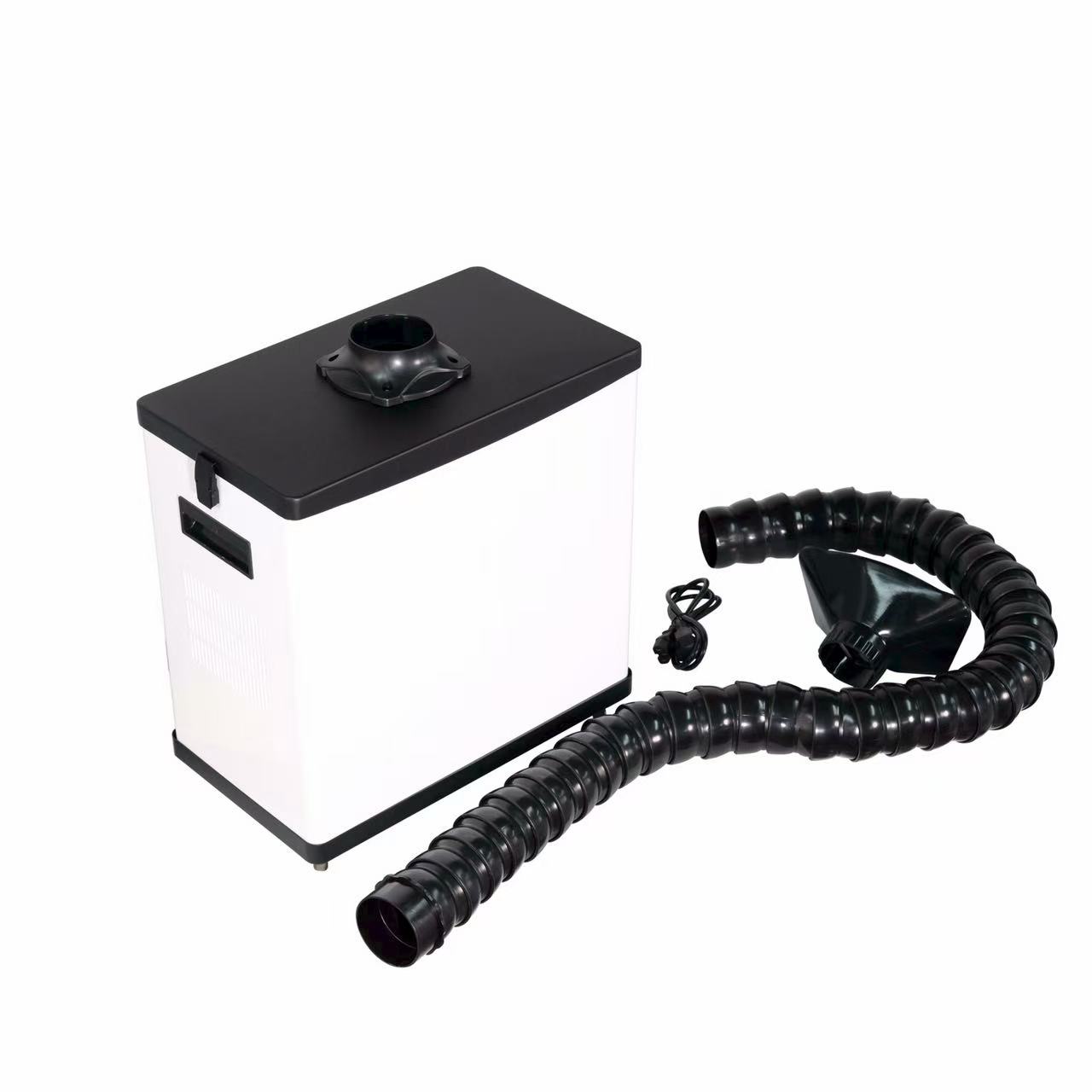
A table top fume extractor performs best when its hood, arm, or inlet is positioned close enough to the source to capture contaminants without obstructing the operator’s hands or line of sight.
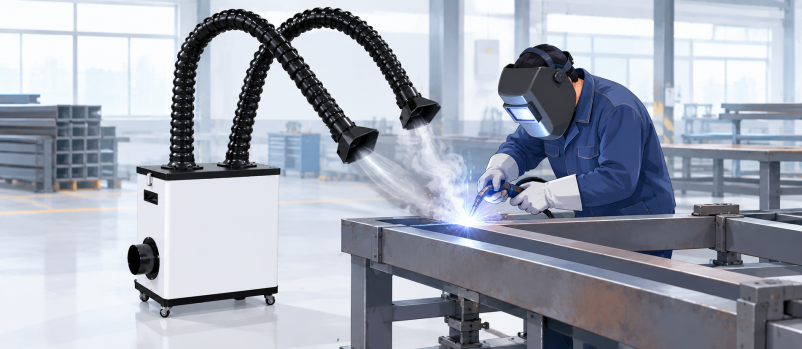
Point extraction is suitable for laser welding, spot cleaning, and soldering, where fumes are generated in a relatively concentrated area.
An articulated extraction arm allows the inlet to be positioned precisely near the welding or cleaning point.
Capturing fumes directly around the weld area helps reduce gas interference and the risk of porosity, supporting consistent weld quality.
For electronics work, the best table top fume extractor for soldering should keep the inlet close to the soldering joint without interfering with component placement or visibility.
A localized clean-air zone is more suitable for heat-press sublimation, powder handling, and other bench processes that release contaminants across a broader working area.
Capturing gases and particulates around the heat press helps prevent airborne dyes from contaminating nearby products.
Maintaining cleaner air around the press reduces the risk of ghosting, blurred images, and unintended color stains.
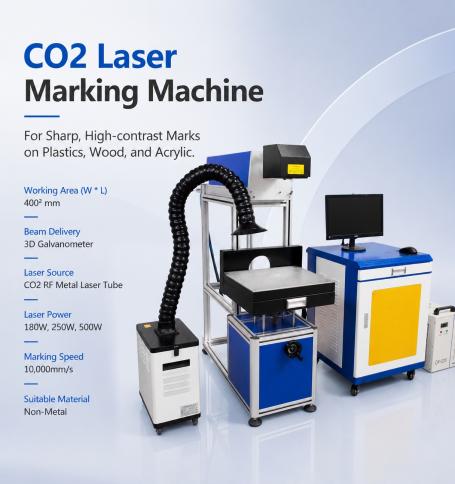
A table top fume extractor for laser marking should also prioritize source-focused capture, helping prevent marking fumes from obscuring the lens area or settling on nearby work surfaces.
The following comparison illustrates how extraction priorities differ across common workbench applications. It is intended as a practical selection guide rather than a product ranking.
| Bench Task | Capture Priority | MimoWork Capability Reference |
| Laser welding and surface cleaning | Targeted point extraction at the fume source while keeping the work area clear | W-Series features an articulated arm for precise positioning and is designed to handle high-volume smoke and spatter. |
| Sublimation heat pressing | Capture gases and particulates around the press to prevent residue re-deposition | S-Series captures sublimation gases and particulates while helping maintain a clean-air zone for color accuracy. |
| Mixed workshop fume sources | Select an extractor configuration based on the process, contaminant load, and operating time | MimoWork’s industrial fume extractor range includes pulse, stainless steel, movable, and universal-arm configurations. |
Filter selection should start with identifying the contaminants generated by the process. Smoke, oil mist, sublimation dyes, fine powder, and mixed particulates may require different filtration arrangements.
A table top fume extractor with HEPA filter can be a useful starting point when fine particulate removal is a priority. However, the pre-filter and main filter must also be compatible with the actual contaminants. Otherwise, filters may become clogged prematurely, reducing airflow and overall extraction performance.
For a small fume extractor for jewelry workshop applications, consider both close-range capture and filter accessibility. Soldering, engraving, and polishing can produce different types of fumes and debris, so the filtration system should reflect the specific tasks performed at the bench.
Similarly, when choosing a portable fume extractor for 3D printing, position the inlet near the printer enclosure or filament processing area. Check whether the filtration system is suitable for the particulate and odor-control requirements of the materials being used.
The key is to avoid choosing a filter based on its name alone. Actual filtration requirements depend on the material, process temperature, contaminant composition, and expected operating conditions.
A suitable workbench extractor should maintain effective fume capture without interfering with the operator’s workflow. It should leave enough room for hand movements, preserve a clear sightline, and prevent fumes from passing through the operator’s breathing zone.
The inlet must be positioned close enough to the source to collect fumes before they disperse. If a hood or extraction arm is placed too far away, contaminants can escape into the surrounding workspace.
Filters require regular inspection and replacement. A unit with difficult-to-access filters can make routine maintenance more time-consuming. In addition, loaded filters may restrict airflow and reduce extraction efficiency.
Consider how long the extractor will run during a typical shift. Short, intermittent tasks and continuous production runs place different demands on extraction equipment. The selected unit should be suitable for the expected workload.
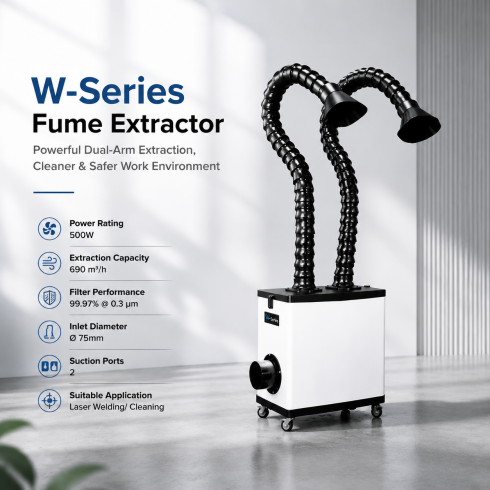
Visibility is another important consideration, particularly for precision applications. MimoWork’s W-Series is designed to capture smoke and harmful byproducts at the source, helping keep the immediate work area clear for detailed operations.
For sublimation applications, the S-Series addresses a different challenge: controlling dye-related gases and particulates around the heat press to help protect work surfaces and maintain color consistency across production.
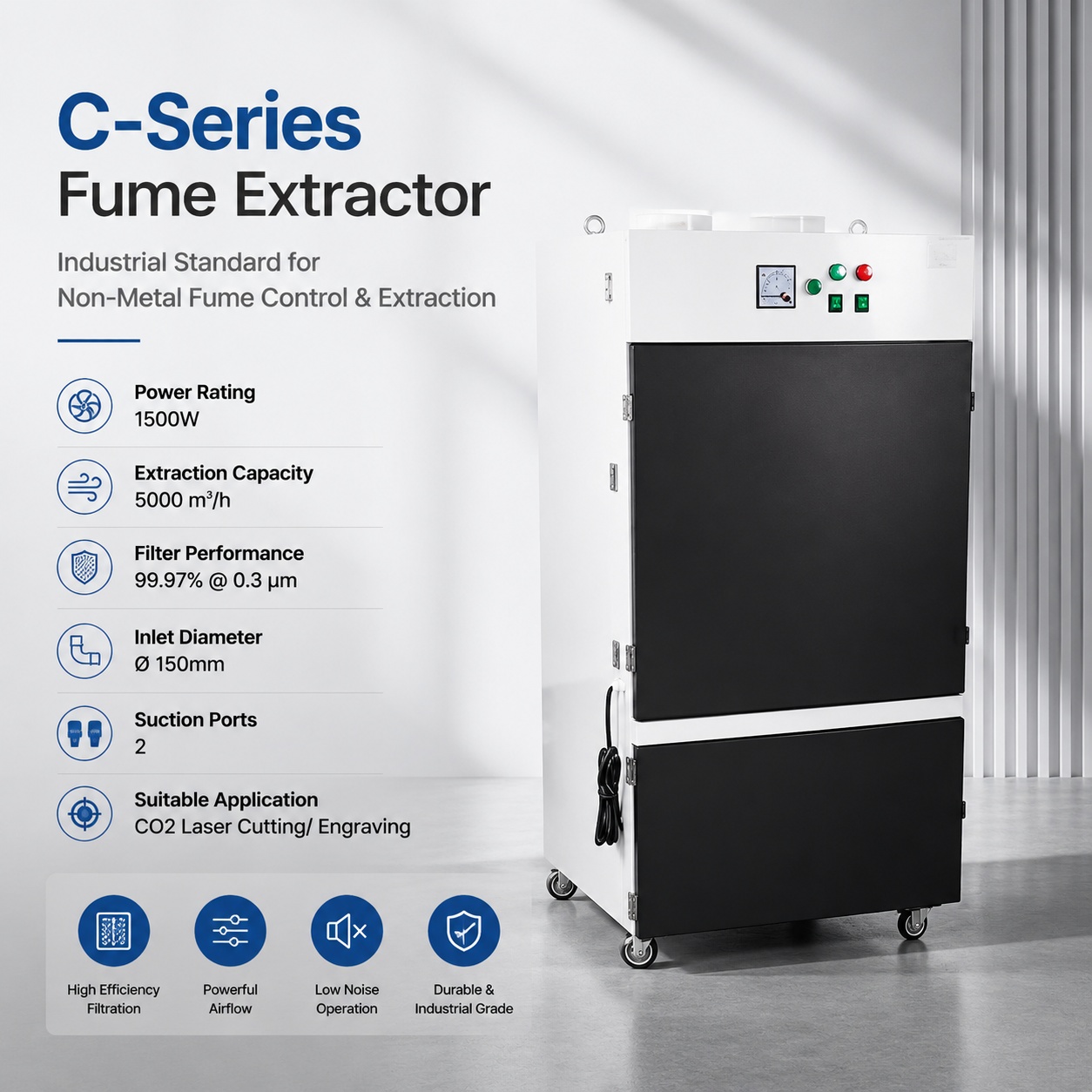
MimoWork offers process-oriented fume extraction solutions for different workshop requirements. Rather than relying on a single configuration for every application, its industrial fume extractor range includes pulse, stainless steel, movable, and universal-arm options.
For welding and surface cleaning workbenches, the W-Series is a relevant option. Its articulated extraction arm supports targeted fume capture, while the system is designed to handle high-volume smoke and spatter generated during demanding operations.
For sublimation and heat-press applications, the S-Series is designed to capture sublimation gases and particulates. Its focus on maintaining a cleaner working environment helps reduce the risk of dye residue affecting nearby products and subsequent production jobs.
Choosing between these configurations ultimately depends on four factors:
The type and concentration of fumes generated by the process.
The distance between the extraction inlet and the fume source.
The accessibility and maintenance requirements of the filtration system.
Whether the extractor will operate intermittently or throughout extended production shifts.
Evaluating these factors before specifying a unit helps ensure that the extraction system matches the actual workbench requirements, rather than relying on cabinet size or airflow specifications alone.
Not necessarily. Soldering generally requires close-range extraction around the joint, while laser marking requires effective source capture to prevent fumes from spreading toward the lens area and surrounding work surfaces.
A single unit may support both applications if its capture arrangement and filtration system are suitable for each process. However, the inlet position and extraction requirements may need to be adjusted.
No. HEPA filtration is useful when fine particulate removal is required, but it is not automatically the right solution for every fume source.
The pre-filter and main filter should be selected according to the contaminants being generated. A filtration system that is poorly matched to the process may clog quickly and lose airflow, even when its final filter has a high filtration efficiency.
The inlet should be positioned according to the direction in which fumes rise or travel. The goal is to capture contaminants before they cross the operator’s breathing zone.
For point extraction applications, position the hood or arm close to the welding, cleaning, or soldering area while keeping it clear of the operator’s hands and line of sight.
Ghosting can occur when airborne dye particles or gases are redeposited onto materials during the heat-press process.
An extraction system designed for sublimation should capture gases and particulates around the press and help maintain a cleaner working zone. MimoWork’s S-Series is designed for this application, helping reduce the risk of residue contamination and color inconsistencies.
These details make it easier to evaluate whether a table top fume extractor is suitable for the application and identify the appropriate capture configuration.
If you are planning a new workbench extraction setup, share your bench layout, fume type, and expected operating time with MimoWork for a more application-specific recommendation.
News | Oct-14-2026