Blog
In a field that evolves daily, staying ahead means staying informed.
Explore in-depth articles designed to help you solve complex challenges,
maximize your machine’s ROI.
Stay ahead in a competitive market.


In a field that evolves daily, staying ahead means staying informed.
Explore in-depth articles designed to help you solve complex challenges,
maximize your machine’s ROI.
Stay ahead in a competitive market.
News | Jun-30-2026
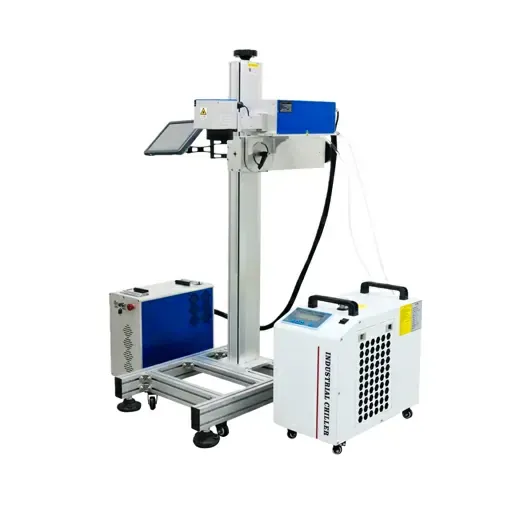
A UV laser marking machine uses a 355nm ultraviolet laser source to create permanent, high-precision markings through a photochemical process rather than relying primarily on heat. This “cold marking” capability makes UV laser technology the preferred solution for plastics, medical devices, electronics, glass, semiconductors, and other heat-sensitive materials where marking quality, contrast, and dimensional stability are critical.
A UV laser marking machine is a high-precision laser system that uses ultraviolet laser energy to create permanent markings on a wide range of materials. Unlike conventional laser technologies that generate marks primarily through thermal effects, UV lasers interact with materials through a photochemical process that minimizes heat accumulation and material deformation.
This unique characteristic has made UV laser technology one of the most important solutions in industries where precision, surface quality, and traceability are essential. Manufacturers in electronics, medical devices, semiconductors, consumer products, and precision engineering increasingly rely on UV laser marking because it can generate high-resolution text, logos, serial numbers, QR codes, Data Matrix codes, and traceability markings without compromising the integrity of the material.
As product miniaturization and traceability requirements continue to increase, UV laser marking has become the preferred technology for applications where conventional fiber and CO2 lasers may introduce excessive heat or damage.
UV laser marking systems typically operate at a wavelength of 355 nanometers, which is significantly shorter than the wavelengths used by fiber lasers and CO2 lasers. This shorter wavelength allows the laser energy to be absorbed more efficiently by a broader range of materials, particularly plastics, glass, ceramics, and specialized industrial coatings.
The marking process is often described as a photochemical reaction rather than a purely thermal process. Instead of heating the material until it burns, melts, or vaporizes, the ultraviolet photons directly break molecular bonds on the material surface. Because less thermal energy is introduced into the workpiece, the surrounding area experiences minimal heat-affected zones.
This mechanism explains why UV laser marking is commonly referred to as “cold processing.” Materials that might discolor, melt, deform, crack, or develop burrs under conventional laser systems can often be marked cleanly with UV technology. For manufacturers working with delicate components such as medical plastics, semiconductor wafers, or transparent packaging materials, this level of precision is particularly valuable.
Although all three technologies are used for marking applications, they serve different purposes and material categories.
| Technology | UV Laser | Fiber Laser | CO2 Laser |
| Wavelength | 355 nm | 1064 nm | 10.6 μm |
| Processing Method | Photochemical | Thermal | Thermal |
| Heat Impact | Very Low | Moderate | High |
| Plastic Marking Quality | Excellent | Moderate | Good |
| Glass Marking | Excellent | Limited | Moderate |
| Metal Marking | Good | Excellent | Poor |
| Semiconductor Applications | Excellent | Limited | Limited |
| Medical Device Marking | Excellent | Good | Moderate |
Fiber lasers remain the dominant choice for direct metal marking because metals efficiently absorb 1064nm laser energy. CO2 lasers excel in cutting and engraving organic materials such as wood, paper, fabric, and acrylic. UV lasers occupy a unique position because they offer exceptional versatility across heat-sensitive materials while maintaining outstanding marking quality.
For manufacturers producing products that contain both plastics and metals, UV laser systems often provide greater flexibility than traditional marking technologies.
When evaluating a UV laser marking machine, it is important to look beyond laser power alone. In industrial applications, marking performance is determined by the combined effect of multiple technical parameters, including beam quality, stability, accuracy, and system lifetime.
These specifications directly influence marking precision, production efficiency, and long-term operational reliability. As a result, UV laser systems should be evaluated as complete optical and motion control systems, rather than single-power laser sources.
While laser power is one of the most visible specifications, it is not the most important factor in determining marking quality. In many cases, a lower-power UV laser system with superior beam quality can produce significantly better results than a higher-power system with weaker optical performance.
| Parameter | Typical Range | Functional Impact |
| Laser Wavelength | 355 nm | Determines photochemical interaction capability with materials |
| Output Power | 3W / 5W / 10W / 15W | Influences processing speed and application range |
| Marking Speed | Up to 10,000 mm/s | Affects production throughput efficiency |
| Beam Quality (M²) | < 1.2 | Critical for spot size and fine detail resolution |
| Minimum Character Size | 0.1 mm | Determines micro-marking capability |
| Positioning Accuracy | ±0.01 mm | Impacts alignment precision and consistency |
| Repeatability | ±0.003 mm | Ensures long-term marking stability |
| Expected Laser Lifetime | 20,000–30,000 hours | Affects long-term operational cost |
Among all technical parameters, beam quality (M² value) is one of the most critical factors for UV laser performance. A lower M² value indicates a more focused and stable laser beam, which directly results in:
This is particularly important for industries such as electronics, medical devices, and semiconductor manufacturing, where micro-scale marking accuracy is required.
Each specification does not function independently; instead, UV laser performance is the result of system-level interaction between optics, motion control, and laser source stability.
For example:
Therefore, evaluating a UV laser system requires understanding how these parameters work together in real production environments.
From a procurement perspective, not all parameters carry equal weight. Industrial buyers typically prioritize:
This means that optical quality and system stability are often more important than raw laser power, especially in precision plastic marking applications.
A UV laser marking machine is not simply a high-speed engraving tool, but a precision optical manufacturing system designed for micro-scale processing.
Its performance is defined by the balance of:
For manufacturers processing high-value products, prioritizing system stability and beam quality over raw power output is essential for achieving consistent industrial-grade marking results.
A UV laser marking system consists of several critical components that determine overall performance and reliability.
The UV laser source is responsible for generating the 355nm wavelength beam. High-quality laser sources typically provide superior beam stability, longer service life, and more consistent marking performance. The galvanometer scanning system controls beam movement and directly influences marking speed and accuracy. Faster and more precise galvo systems improve throughput while maintaining fine detail resolution.
Field lenses determine the working area and spot size. Selecting the appropriate lens configuration helps balance marking speed and precision requirements. Motion platforms, vision systems, and automation interfaces further enhance productivity by enabling automatic positioning and production-line integration.
The control software acts as the operational center of the entire system. Advanced software platforms support variable data marking, serialization, QR code generation, database integration, and communication with MES and ERP systems, allowing manufacturers to implement comprehensive traceability solutions.
One of the key advantages of UV laser marking technology is its broad material adaptability combined with minimal thermal impact. Because UV lasers operate at a short wavelength of 355 nm and rely primarily on photochemical reactions rather than heat-based processing, they can effectively mark a wide range of materials that are difficult to process using conventional CO₂ or fiber laser systems.
This makes UV laser technology particularly valuable in industries that require precision marking, material integrity preservation, and high-contrast identification across diverse substrates.
UV laser marking is widely regarded as one of the most effective solutions for plastic processing, especially for engineering and high-performance polymers.
Common compatible materials include:
Unlike fiber lasers, which rely on thermal energy and may cause melting, burning, or discoloration, UV lasers interact with plastics through a photochemical mechanism (cold marking process). This allows the laser to modify molecular structures at a microscopic level without excessive heat accumulation.
As a result, UV laser marking provides:
This makes UV laser systems particularly suitable for:
In these industries, both visual quality and functional traceability are critical requirements.
UV laser technology is also highly effective for precision glass marking applications, where traditional laser systems often struggle due to thermal stress and cracking risks.
Typical applications include:
Glass is highly sensitive to thermal shock. CO₂ or fiber lasers can generate excessive heat concentration, which may result in microcracks, edge chipping, or structural weakening.
UV lasers, however, use a low-thermal energy interaction process, enabling:
This makes UV laser systems ideal for industries where both durability and appearance are essential.
UV laser marking is also widely used for advanced engineering materials such as ceramics and sapphire-based substrates, which are commonly found in electronics and industrial applications.
Typical use cases include:
These materials often have high hardness and low thermal conductivity, making them difficult to process using conventional methods. UV lasers provide a controlled energy input that enables:
Rather than being limited to a single material category, UV laser marking systems function as a cross-material precision processing platform.
Their effectiveness is driven by:
This combination allows UV laser systems to outperform traditional laser technologies in applications where material sensitivity, micro-precision, and surface quality are critical.
Although UV lasers are often associated with plastics and glass, they can also mark many metal materials effectively. Stainless steel, aluminum, titanium, copper, gold, and coated metals can all be marked using UV laser systems, particularly when fine detail and minimal heat impact are required.
The primary advantage of UV laser marking on metals is precision. Small serial numbers, medical device identifiers, micro QR codes, and semiconductor-related markings can be produced with exceptional clarity. In applications where conventional fiber lasers might generate excessive oxidation or thermal discoloration, UV systems often deliver cleaner results.
Specialized materials such as silicon wafers, flexible electronic substrates, thin-film coatings, lithium battery components, and advanced composite materials also benefit from UV laser processing. As electronic devices continue to shrink in size, the ability to create precise markings on delicate materials becomes increasingly valuable.
UV laser marking technology is widely used in industries that require high-precision identification, permanent traceability, and non-contact processing of sensitive materials. Because UV lasers operate with minimal thermal impact and extremely fine beam control, they are particularly suitable for advanced manufacturing environments where accuracy, reliability, and product safety are critical.
Rather than being a general-purpose marking solution, UV laser systems are typically deployed in high-value and high-precision industries where traditional ink or mechanical marking methods are no longer sufficient.
The electronics and semiconductor industry is the largest and most critical application area for UV laser marking technology.
Modern electronic components are becoming smaller, more integrated, and more sensitive to heat. This creates a strong demand for marking systems that can produce micro-scale, high-resolution identifiers without damaging functional structures.
UV laser marking solves this challenge through a cold marking process that avoids thermal stress and preserves material integrity.
UV laser marking enables:
As semiconductor manufacturing continues to evolve toward miniaturization and automation, UV laser marking has become a core enabling technology for precision electronics production.
The medical industry requires extremely strict standards for product identification, sterilization resistance, and regulatory compliance.
Medical devices often undergo sterilization processes such as autoclaving, chemical cleaning, and radiation exposure. Traditional ink or label-based marking systems cannot reliably withstand these conditions.
UV laser marking provides a permanent, contamination-free marking method that does not compromise product safety or material performance.
UV laser marking supports:
Because of these advantages, UV laser technology has become a standard solution in regulated medical manufacturing environments.
UV laser marking is increasingly used in industries where both visual quality and traceability must coexist.
Unlike CO₂ lasers that are mainly used for bulk packaging coding, UV lasers can produce extremely fine, high-contrast markings without damaging surface aesthetics, making them ideal for premium branding applications.
UV laser marking enables manufacturers to:
In addition to performance benefits, UV laser marking also supports environmentally friendly manufacturing by eliminating:
This aligns with global trends toward sustainable and low-waste production systems.
Across all industries, UV laser marking is not simply a labeling method—it is a precision manufacturing enabler.
It is most valuable in environments where:
For this reason, UV laser marking has become a foundational technology in electronics, medical, semiconductor, and high-end consumer manufacturing ecosystems.
A UV laser marking machine is not only a standalone marking device but also a scalable production platform that can be continuously upgraded to improve throughput, stability, safety, and automation capability. In modern manufacturing environments, system configuration upgrades often have a greater impact on productivity than changing the laser source itself.
To fully maximize performance, manufacturers typically optimize UV laser systems in three key areas: safety protection, thermal stability, and production line integration.
In industrial environments, laser marking systems are increasingly required to meet strict safety and workplace compliance standards. Upgrading to a fully enclosed laser marking system is one of the most effective ways to improve both safety and production stability.
A safety enclosure is not only a protective structure but also a process stability enhancement system. It helps maintain consistent marking conditions by isolating the working environment from external disturbances.
Modern enclosed systems often include integrated safety interlocks, observation windows, and smoke extraction systems, making them suitable for continuous industrial use.
For manufacturers deploying multiple marking stations, enclosure systems also simplify compliance management and reduce operational risk across production facilities.
Thermal stability is one of the most critical but often overlooked factors in UV laser performance. UV laser sources are highly sensitive to temperature fluctuations, and even small variations can affect beam stability, marking consistency, and component lifespan.
Efficient thermal management ensures that the laser source operates within an optimal temperature range during long production cycles. Without proper cooling, system performance may degrade over time, leading to inconsistent marking quality and increased maintenance frequency.
Industrial-grade water chillers are commonly used in high-throughput production lines where temperature stability directly affects yield and operational efficiency.
As manufacturing shifts toward Industry 4.0 and smart factory systems, UV laser marking machines are increasingly integrated into fully automated production environments rather than operated as isolated workstations.
Integration transforms the laser system from a marking tool into a real-time production data node within the manufacturing ecosystem. This significantly improves traceability, efficiency, and process control.
When fully integrated, UV laser marking becomes part of an automated workflow where:
This creates a closed-loop manufacturing process that significantly reduces human error, improves traceability accuracy, and increases overall production efficiency.
In high-volume manufacturing environments, productivity improvements are often achieved not by changing the laser technology itself, but by optimizing the surrounding system architecture.
A well-upgraded UV laser marking system can achieve:
For this reason, system configurability is often a key decision factor in industrial laser equipment selection.
UV laser marking is called a cold process because it relies primarily on photochemical reactions rather than heat. The 355nm wavelength directly breaks molecular bonds with minimal thermal impact. This reduces melting, deformation, discoloration, and edge burning, making UV lasers ideal for sensitive plastic materials.
Yes. UV laser systems can effectively mark plastics, glass, ceramics, silicon wafers, coated materials, and many metals. This versatility makes them suitable for manufacturers processing multiple material types within the same production environment.
The appropriate power level depends on production requirements. A 3W system is typically suitable for fine marking and low-volume applications. A 5W configuration offers a balance between speed and precision and is often the most popular option. A 10W system is generally preferred for higher throughput production environments where faster cycle times are required.
Most industrial UV laser sources have an expected service life of approximately 20,000 to 30,000 operating hours. Actual lifespan depends on operating conditions, cooling efficiency, maintenance practices, and production workload.
Initial equipment costs are often higher for UV laser systems. However, for heat-sensitive materials such as plastics, glass, medical devices, and semiconductors, UV technology frequently delivers superior marking quality and reduces the risk of product damage, making it a cost-effective investment over time.
UV laser marking technology has become the industry standard for high-precision, low-thermal-impact marking applications. By utilizing a 355nm wavelength and a photochemical processing mechanism, UV laser systems can create permanent, high-contrast markings on plastics, glass, ceramics, metals, semiconductors, and many specialized materials without compromising product quality.
As traceability requirements, product miniaturization, and automation initiatives continue to evolve, UV laser marking machines provide manufacturers with a flexible and future-ready solution. Whether applied in electronics, medical devices, semiconductor production, or consumer packaging, UV laser technology delivers the precision, reliability, and material versatility required by modern industrial manufacturing.
News | Jun-25-2026
News | Jun-5-2026
News | Jun-15-2026