Blog
In a field that evolves daily, staying ahead means staying informed.
Explore in-depth articles designed to help you solve complex challenges,
maximize your machine’s ROI.
Stay ahead in a competitive market.

In a field that evolves daily, staying ahead means staying informed.
Explore in-depth articles designed to help you solve complex challenges,
maximize your machine’s ROI.
Stay ahead in a competitive market.
News | Jun-25-2026
Choosing the best laser marking machine for your production line is one of the most consequential equipment decisions you’ll make. The right system delivers permanent, high-contrast marks at high speed — with no consumables, no inks, and no tooling wear. The wrong choice leads to poor mark quality, material damage, and costly downtime. This guide walks you through every major laser marking technology, its key specifications, material compatibility, and how to match the right system to your specific application.
A laser marking machine directs a focused beam of light energy onto a material surface. Depending on the laser type and parameters, this process either vaporizes or ablates the surface layer, anneals the metal to change its color, or alters the material’s structure — all without physical contact. The result is a permanent, tamper-proof mark that cannot be rubbed off, washed away, or faded by chemicals.
Because the process is entirely non-contact, there is no mechanical pressure on the workpiece. This means fragile or precision components remain dimensionally unchanged after marking, which is critical in industries like medical device manufacturing and aerospace.
Laser marking consistently outperforms conventional methods such as inkjet printing, pad printing, and mechanical engraving in several key areas. While inkjet printing requires ongoing consumables (inks, solvents, and print heads) and produces marks that can degrade over time, laser marking is consumable-free and produces marks that last the lifetime of the product. Mechanical engraving is slow and creates tooling wear, whereas laser systems like fiber markers can reach speeds of up to 8,000 mm/s with no moving parts touching the workpiece.
| Attribute | Laser Marking | Inkjet Printing | Mechanical Engraving |
| Mark Permanence | Lifetime | Moderate | Lifetime |
| Consumables Required | None | Yes (ink, solvent) | Yes (tools) |
| Max Marking Speed | Up to 8,000 mm/s | Moderate | Slow |
| Contact with Material | None | None | Physical contact |
| Suitable for Metal | Yes | Limited | Yes |
| Suitable for Plastics | Yes (type-dependent) | Yes | Limited |
The laser source is the single most important factor in determining what a marking machine can do. Each wavelength and pulse architecture is optimized for a different set of materials and applications.
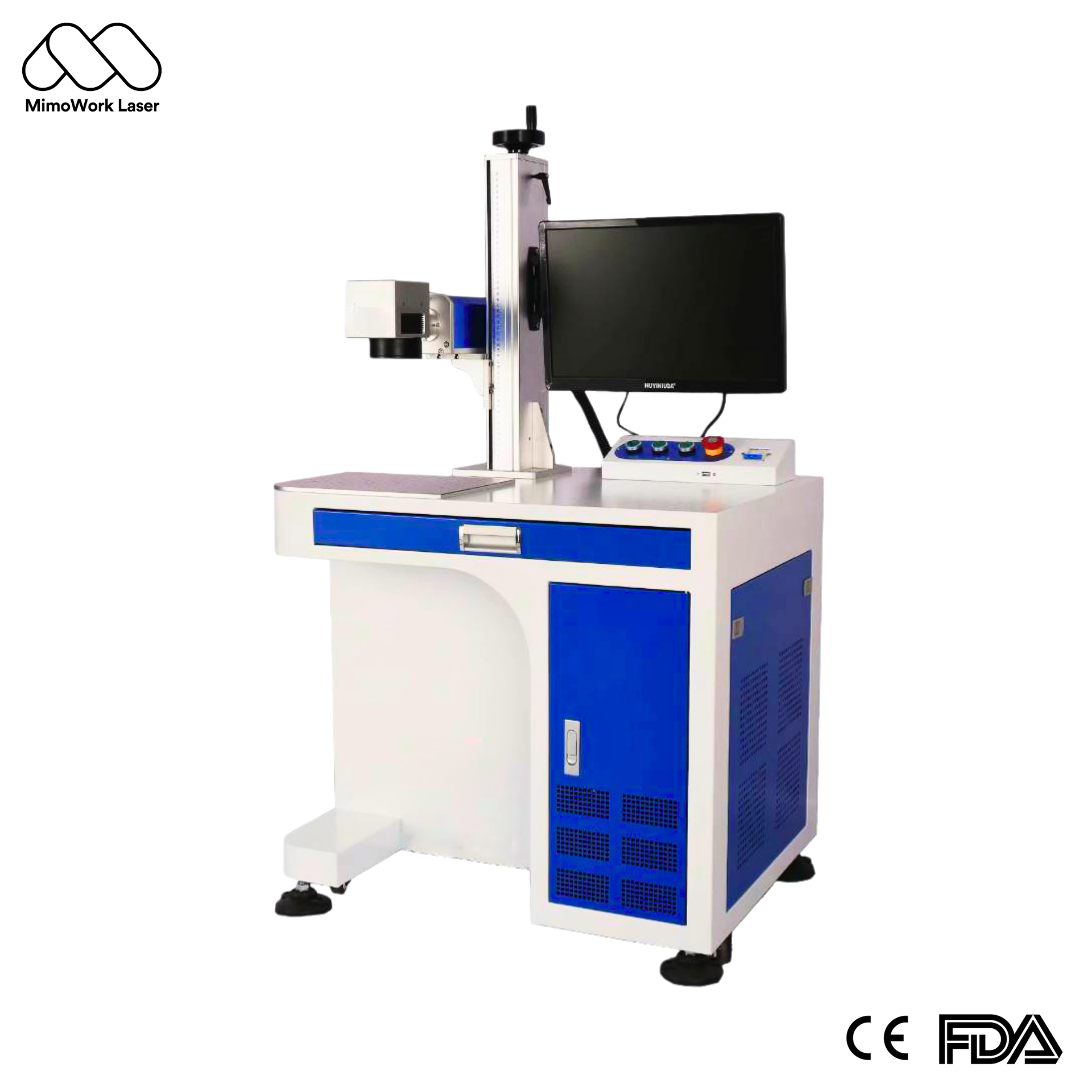
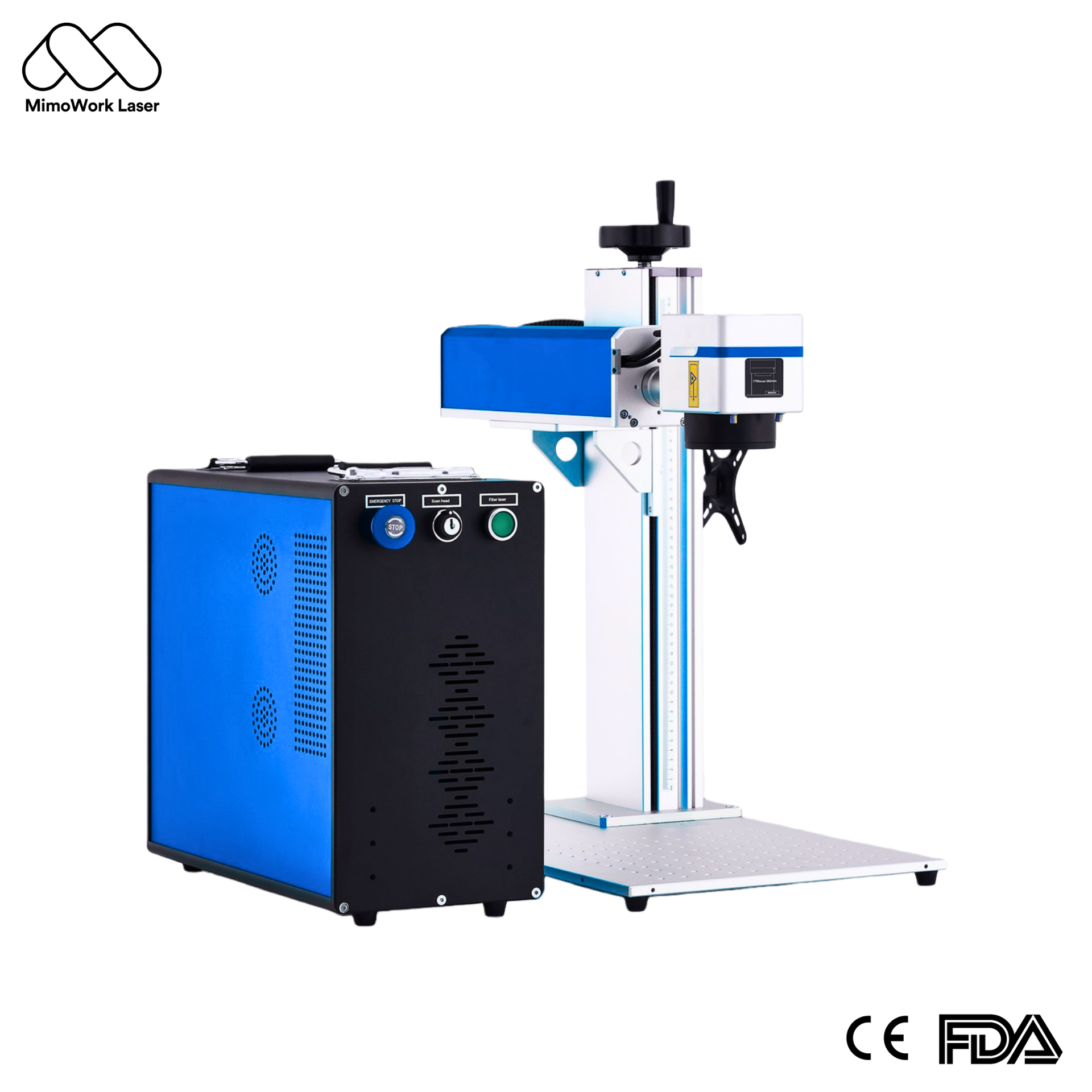
The fiber laser marking machine is the most widely deployed system in industrial manufacturing. It uses a solid-state fiber laser source to generate a 1064 nm wavelength beam, which is highly absorbed by metals and engineered plastics.
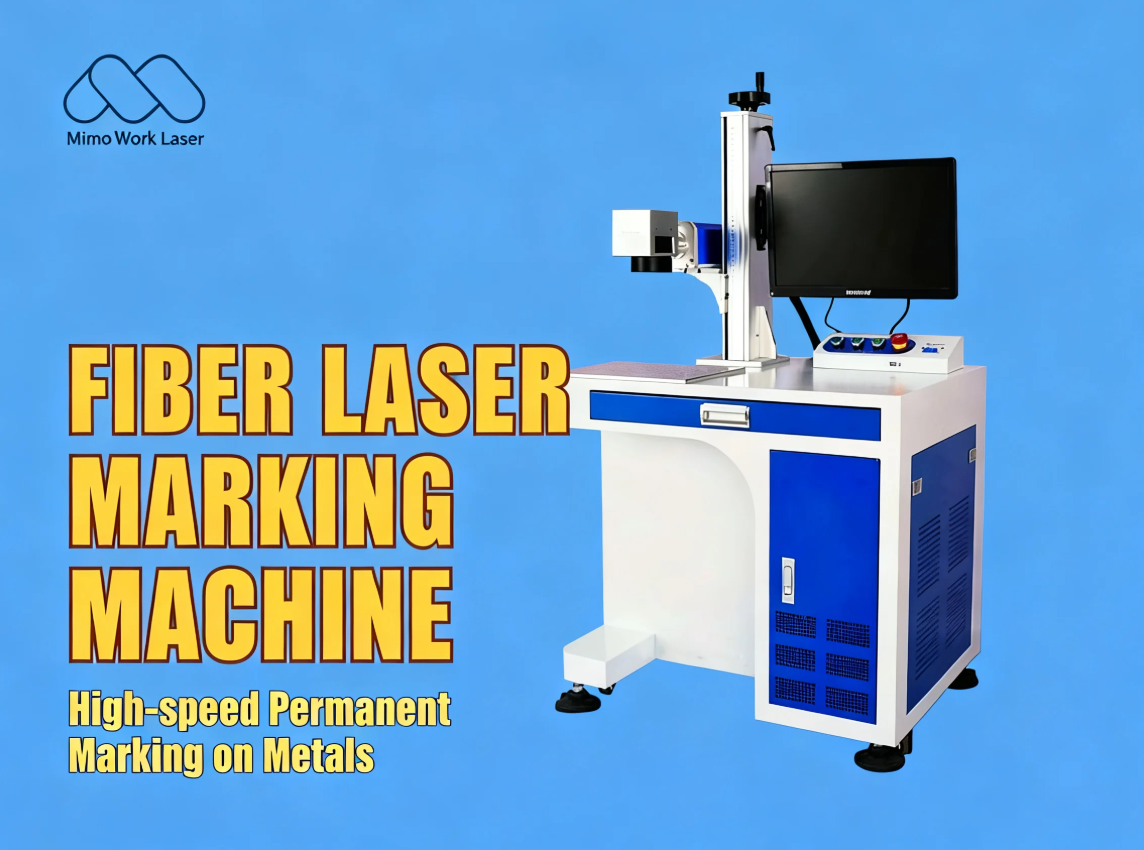
Key characteristics of a fiber laser marker:
Engineered for high-speed, permanent marking of metals , including stainless steel, aluminum, titanium, copper, and gold/silver
The fiber laser marker is the go-to solution for industrial traceability, part serialization, and branding applications where reliability and throughput are non-negotiable. It marks metals cleanly and permanently, and its solid-state design results in minimal maintenance requirements.
The MOPA laser marking machine builds on fiber laser technology by adding independent control over pulse width and frequency — a capability that fundamentally expands what a single machine can do.
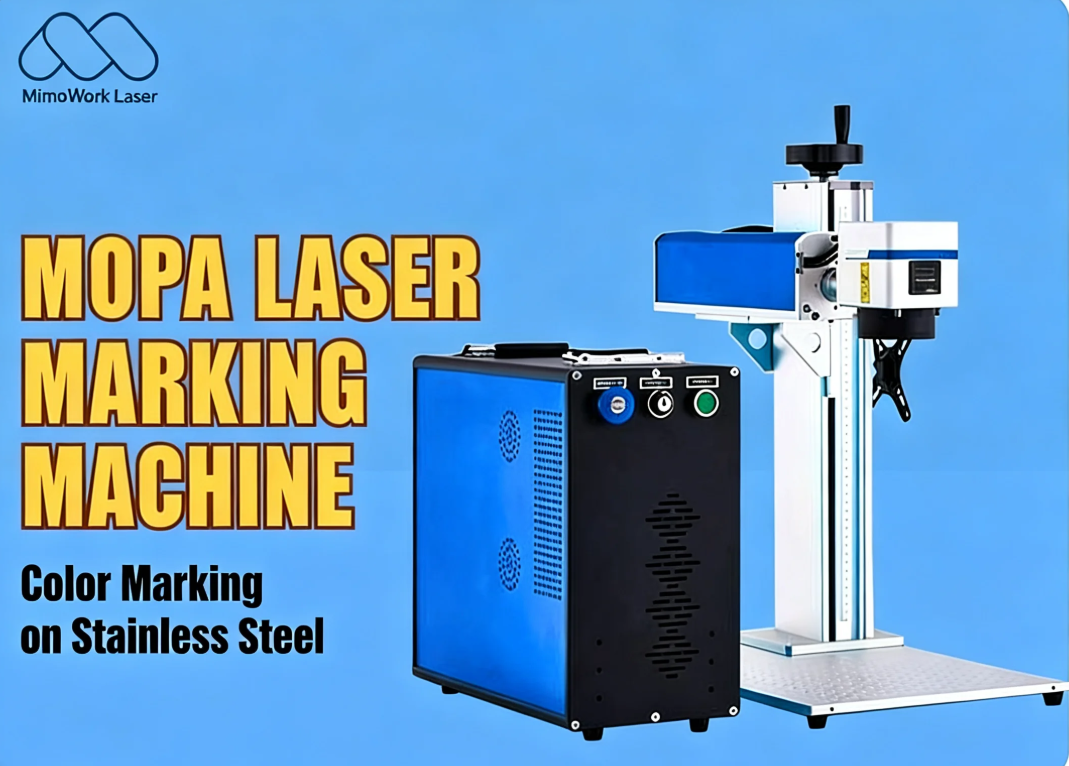
What makes MOPA different from a standard fiber laser:
The MOPA system is particularly valuable in high-end product branding, medical instrument marking, consumer electronics decoration, and any application where visual aesthetics are as important as mark durability. Its air-cooled design means no external water chiller is needed in most standard configurations.
The UV laser marking machine operates at a 355 nm wavelength, which gives it a fundamentally different interaction with materials compared to fiber and MOPA systems. UV lasers use photochemical reactions rather than thermal energy to mark surfaces — a characteristic referred to as “cold processing.”
Why UV lasers are chosen for delicate applications:
UV laser marking is the standard choice for applications on fragile substrates where any heat impact is unacceptable. For glass marking specifically, the UV wavelength delivers clean, finely detailed results that CO2 systems cannot match in precision.
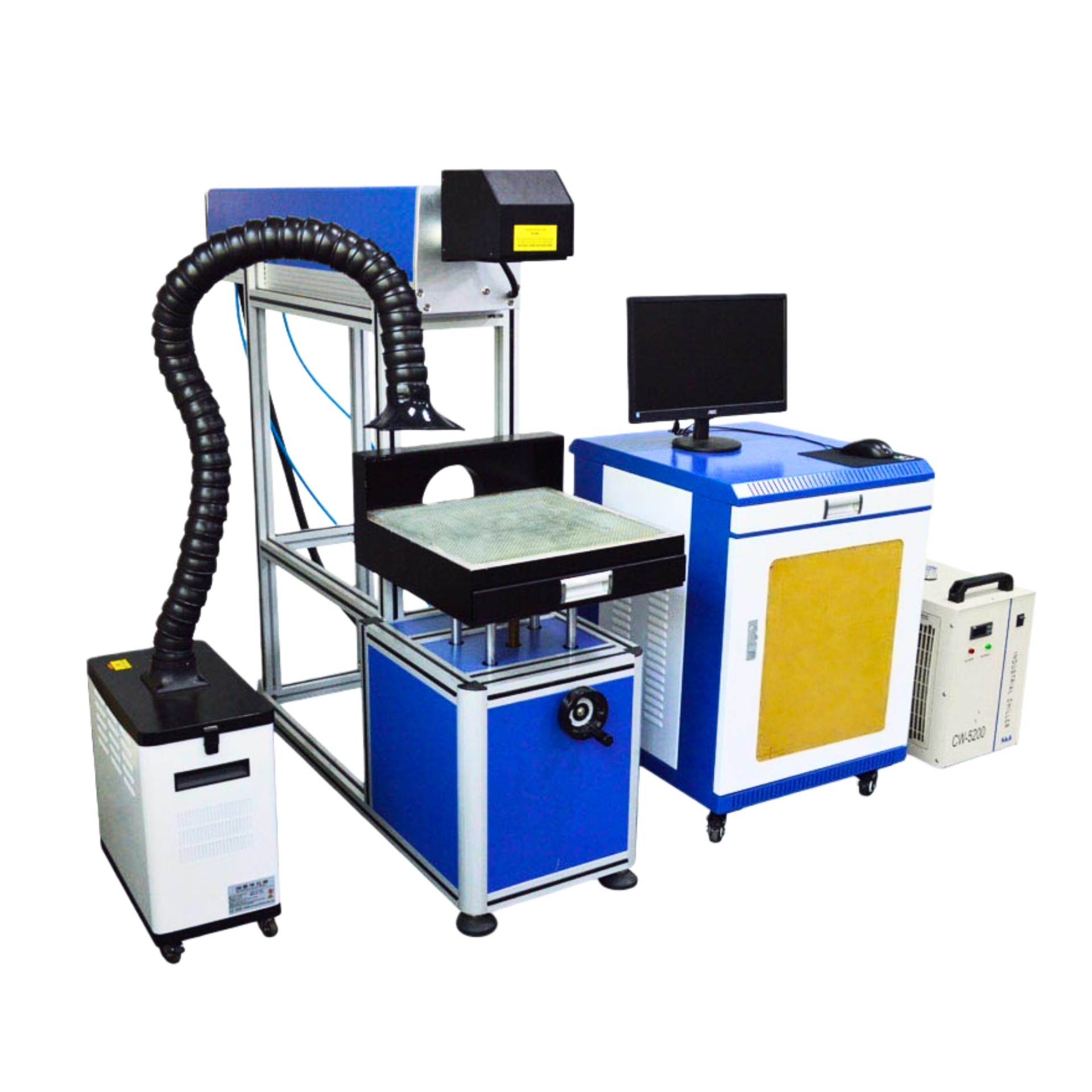
The CO2 laser marking machine generates a 10.6 μm wavelength beam, which is highly absorbed by organic and non-metallic materials. This makes it the natural choice for applications involving wood, acrylic, paper, leather, fabric, and most plastics.
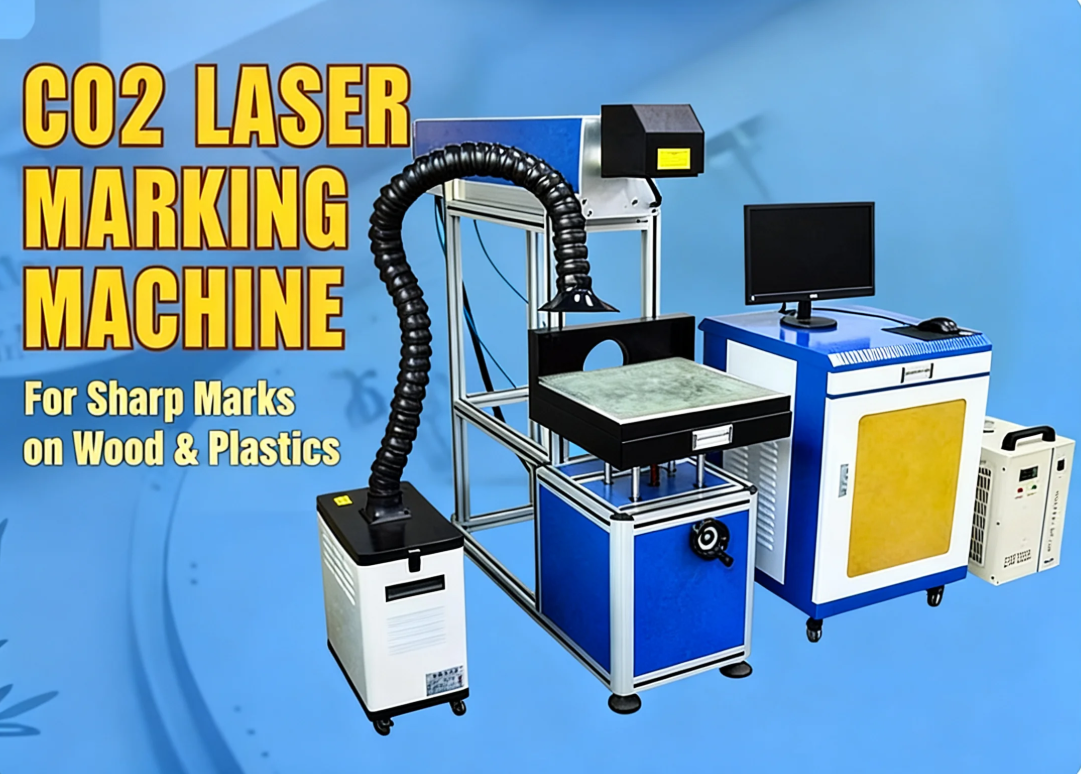
CO2 laser markers are widely used for:
While CO2 laser markers are less effective on bare metals, they perform excellently on painted or coated metal surfaces and on a broad range of non-metallic industrial and consumer substrates.
The green laser marking machine operates at a 532 nm wavelength — a critical specification that sets it apart from both fiber and UV systems. The green wavelength is exceptionally well-absorbed by highly reflective metals such as gold, silver, and copper, as well as by white and transparent plastics like HDPE and PMMA, which are notoriously difficult for standard fiber lasers to mark clearly.
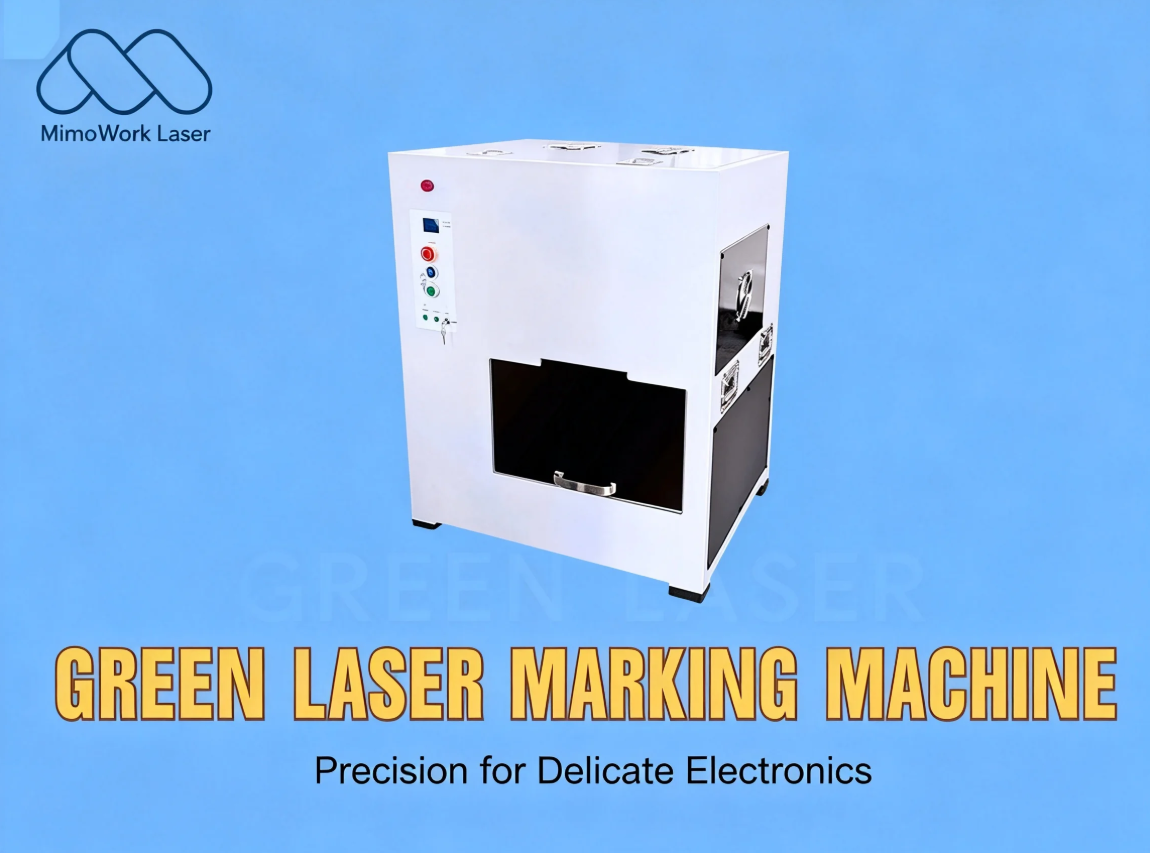
Defining capabilities of the green laser marking system:
Available in multiple configurations, including enclosed box systems for small glass and crystal items, and large-format industrial gantry systems for architectural glass and display applications up to several meters in size
| Feature | Green Laser (532 nm) | Fiber Laser (1064 nm) | UV Laser (355 nm) |
| Best for Reflective Metals | Yes | Limited | Moderate |
| Subsurface Glass Engraving | Yes (3D) | No | No |
| Suitable for Transparent Plastics | Yes | Limited | Yes |
| Cooling Required | Water cooling | Air cooling | Air cooling |
| Typical Power Range | 5W – 20W | 20W – 50W | 3W – 10W |
Understanding the technical data helps you match machine performance to your production requirements. Below is a side-by-side comparison of the key specifications across the laser marking systems covered in this guide.
| Specification | Fiber Laser | CO2 Laser | MOPA Laser | UV Laser | Green Laser |
| Laser Power | 20W, 30W, 50W | 180W, 250W, 500W | 60W | 3W, 5W, 10W | 5W, 10W, 15W, 20W |
| Marking Speed | 8,000 mm/s | 10,000 mm/s | 7,000 mm/s | High pulse frequency | 3,500 points/s |
| Beam Delivery | 3D Galvanometer | 3D Galvanometer | 3D Galvanometer | Galvanometer | 3D Galvanometer |
| Working Area | 70² – 200² mm | 400² mm | 175² mm | Configurable | 400×600×120 mm |
| Cooling | Air | Air | Air | Air | Water |
| Primary Material | Metal | Non-Metal | Metal | Glass, Plastics | Reflective Metals, Glass |
The galvanometer (galvo) beam delivery system is a common thread across all these platforms. Rather than moving the entire machine head, the galvo system uses two precision mirrors driven by galvanometer motors to steer the laser beam at extremely high speeds — this is what enables the rapid marking speeds you see in industrial systems.
Material compatibility is the most practical starting point when narrowing down your options. Different laser wavelengths interact with materials in fundamentally different ways, so the workpiece material should drive your decision before any other factor.
For metals, three systems are relevant, each with a distinct strength:
For non-metals, the selection logic shifts based on the specific material:
Glass and crystal: The green laser system enables subsurface 3D engraving inside the material, while the UV laser delivers fine surface marking. CO2 lasers can mark glass surfaces , but with less precision than UV.
A laser marking machine is more than just its light source. The performance of the complete system depends on the quality and configuration of each core component, and the right upgrade options can transform a standard workstation into a high-volume production cell.
Galvo Scanner (Galvanometer)
F-Theta Flat Field Lens
Laser Source
Safety Enclosure System
Fume Extraction (M-Series)
When a laser marking machine processes certain materials — particularly PVC, PTFE/Teflon, and some plastics — it generates hazardous fumes and fine particulate matter. A dedicated fume extractor is not optional in these situations; it is a safety and quality requirement. The M-Series fume extractor is purpose-built for laser marking stations. It captures 99.97% of airborne particles as small as 0.3 microns using HEPA filtration, preventing soot and residue from redepositing on the workpiece or the laser’s optical components. Its compact footprint allows direct integration into the marking workstation without consuming excessive floor space.
In-Line Production Integration
Handheld Laser Marking System (available for Fiber)
Industrial Gantry System (available for Green Laser)
The versatility of laser marking technology means that a single platform — configured correctly — can serve a broad range of industries. Understanding where each laser type excels helps align equipment investment with real production needs.
Permanent part identification is a regulatory and operational requirement across automotive, aerospace, and general manufacturing. Fiber laser marking machines for metal parts are the standard platform for this work, producing data matrix codes, serial numbers, and part codes on components that must remain traceable through decades of service life. The marks survive heat treatment, surface finishing, and harsh operating environments without degradation.
MOPA laser marking for stainless steel takes industrial marking a step further, adding the ability to produce color-coded identification marks or high-contrast black marks on precision components without altering the surface texture — a critical requirement for parts where surface finish specifications are tight.
In medical device manufacturing, laser marking is used to apply UDI (Unique Device Identification) codes, lot numbers, and logos onto surgical instruments and implantable devices. The marks must be permanent, biocompatible, and achievable without affecting the instrument’s dimensional tolerances. MOPA and fiber systems both serve this sector, with MOPA’s smooth, pigment-free color marks being particularly valued for high-end instrument identification.
Consumer electronics manufacturers use laser engraving machines for industrial use to apply logos, regulatory marks, and serial numbers onto aluminum housings, polycarbonate panels, and anodized surfaces. The MOPA system’s ability to produce multiple colors on the same machine — by adjusting pulse parameters rather than changing equipment — makes it especially efficient for this type of varied marking work.
For the awards, gifts, and promotional products industries, the green laser’s 3D subsurface glass engraving capability opens a category of high-margin, personalized products that no other laser technology can produce. Three-dimensional images and text created inside glass or crystal without any surface damage deliver a visual impact that commands premium pricing.
A fiber laser marking machine uses a fixed pulse architecture, which is well-suited for standard metal traceability tasks such as serial numbers and barcodes. A MOPA laser marking machine uses an independently adjustable pulse width and frequency, which enables advanced applications including permanent color marking on stainless steel and anodized aluminum, deep black marking on aluminum, and gentler marking on delicate plastics — all on the same machine without changing the laser source.
Yes, but the suitability depends heavily on the laser type. A fiber laser marks metals and many engineered plastics well. A MOPA laser adds color marking capability on metals and handles delicate plastics more gently. A UV laser excels on plastics and glass. For maximum material versatility across metals and non-metals, the application requirements should be reviewed against each laser’s material compatibility chart before selecting a system.
For many standard metal marking applications, fume generation is minimal. However, when marking materials such as PVC, PTFE/Teflon, or certain coated surfaces, the process generates hazardous fumes and fine particulates. In these cases, a purpose-built fume extractor with HEPA filtration is mandatory — both for operator safety and to protect the laser’s optical components from contamination. A compact M-Series fume extractor designed specifically for laser marking workstations is the recommended solution for these applications.
A standard galvanometer system steers the laser beam in two axes (X and Y) across a flat marking field. A 3D galvanometer adds a dynamic Z-axis focus adjustment, which allows the laser to maintain a consistent focal point while marking on curved, stepped, or uneven surfaces. This is essential for applications like marking cylindrical parts or components with complex geometry without mechanically repositioning the workpiece.
For surface marking on glass with high precision and no thermal cracking risk, a UV laser marking machine is the preferred choice. For creating three-dimensional images and text inside glass or crystal — subsurface engraving — the green laser marking machine is the only technology that can achieve this effect. The green laser’s 532 nm wavelength passes through the glass surface and focuses internally, creating the 3D mark without any surface damage, making it ideal for awards, artistic glassware, and high-end promotional items.
Selecting the best laser marking machine ultimately comes down to your material and your mark requirements. A fiber laser marking machine covers the majority of industrial metal traceability needs. A MOPA laser marking machine adds permanent color marking on stainless steel and anodized aluminum. A UV laser marking machine handles sensitive plastics and glass with minimal heat impact. A green laser marking machine solves the unique challenges of reflective metals and 3D subsurface crystal engraving.
Beyond the laser source, the quality of every component — galvo scanner, F-Theta lens, fume extraction, and automation integration — determines real-world performance. If you are planning a new marking line, start with a clear application review: match your materials and production goals to the right platform before committing to any investment.
News | Jun-15-2026
News | Jun-5-2026
News | May-14-2026