Blog
In a field that evolves daily, staying ahead means staying informed.
Explore in-depth articles designed to help you solve complex challenges,
maximize your machine’s ROI.
Stay ahead in a competitive market.


In a field that evolves daily, staying ahead means staying informed.
Explore in-depth articles designed to help you solve complex challenges,
maximize your machine’s ROI.
Stay ahead in a competitive market.
News | Jun-29-2026
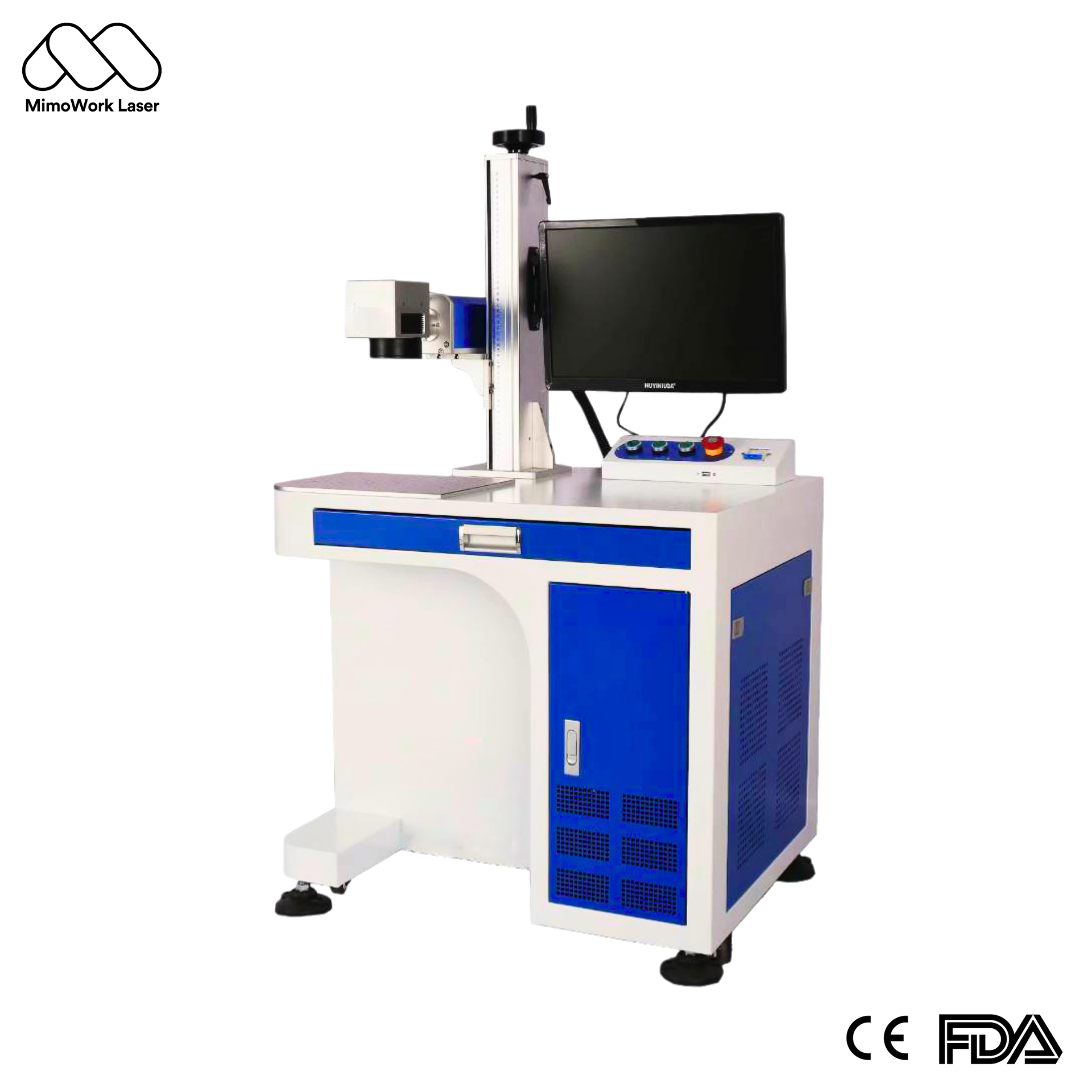
Choosing the right laser marking machine for plastic is not simply a matter of selecting the highest laser power. The quality of the mark depends on the interaction between laser wavelength and plastic material. While UV lasers are often the preferred solution for achieving high-contrast, damage-free markings on ABS, polycarbonate, and other engineering plastics, CO₂ and fiber laser systems can provide advantages in specific production environments. Whether the goal is product traceability, anti-counterfeiting, UDI compliance, or automated manufacturing, understanding how different laser technologies perform on plastic materials is the first step toward selecting the most effective and cost-efficient marking solution.
When selecting a laser marking machine for plastic, the most important factor is not laser power, but how effectively the laser wavelength interacts with the plastic material. Different plastics absorb laser energy differently, meaning that the same machine can produce excellent results on one material and poor results on another.
The three primary laser technologies used for plastic marking are UV lasers, CO₂ lasers, and fiber lasers. Each offers distinct advantages depending on the material, marking quality requirements, production volume, and budget.
For most plastic marking applications, UV laser technology is generally considered the best overall solution because it provides high-contrast markings, exceptional precision, and minimal thermal damage. However, CO₂ and fiber lasers can be more suitable for specific materials and manufacturing environments.
| Feature | UV Laser | CO₂ Laser | Fiber Laser |
| Wavelength | 355 nm | 10.6 μm | 1064 nm |
| Plastic Compatibility | Excellent | Good | Moderate |
| Marking Precision | Excellent | Good | Good |
| Thermal Impact | Very Low | Moderate | Medium to High |
| QR Code & Micro Marking | Excellent | Good | Good |
| Electronics Applications | Excellent | Moderate | Moderate |
| Medical Device Applications | Excellent | Limited | Limited |
| Packaging Applications | Good | Excellent | Limited |
| Engineering Plastics | Excellent | Moderate | Good |
| Initial Investment | Higher | Medium | Medium |
Selecting the right laser marking machine for plastic is not only about choosing the laser type, but also about evaluating how well the system matches material behavior, production requirements, and long-term operational goals. Because different plastics respond differently to laser energy, a systematic evaluation is essential to ensure consistent marking quality, production stability, and cost efficiency.
Below are the key criteria manufacturers should consider when selecting a plastic laser marking solution:
The most critical factor is whether the laser system is compatible with the specific plastic materials used in production. Plastics such as ABS, polycarbonate (PC), nylon (PA), PET, and PBT respond well to UV laser marking, while materials like PP and PE may require parameter optimization or laser-sensitive additives.
A mismatch between wavelength and material can lead to:
For this reason, material testing is often a necessary step before final machine selection.
High contrast is essential for both human readability and machine scanning (QR codes, Data Matrix codes). Good marking quality should maintain sharp edges, consistent density, and stable optical contrast across different production batches.
UV lasers typically provide the highest contrast on most plastics due to their photochemical (cold marking) process, while CO₂ and fiber lasers may require additional parameter tuning or material additives to achieve similar results.
Excessive heat is one of the most common causes of poor plastic marking quality. It can lead to deformation, discoloration, edge burning, or structural damage.
Laser technologies differ significantly in thermal impact:
For heat-sensitive or precision plastic components, minimizing thermal impact is essential to maintain both aesthetics and structural integrity.
Production speed directly affects overall manufacturing efficiency. High-volume industries such as packaging and consumer goods require fast marking cycles without sacrificing readability.
CO₂ lasers typically offer the highest marking speed for large-area applications, while UV lasers prioritize precision over raw throughput. Fiber lasers provide balanced performance but are more application-dependent in plastics.
Modern manufacturing increasingly relies on product traceability systems such as QR codes, Data Matrix codes, and serialized identifiers.
A suitable laser marking system should ensure:
This is especially important in regulated industries such as medical devices, automotive components, and electronics manufacturing.
For industrial-scale production, laser marking systems should integrate seamlessly with automated workflows, including:
Machines with strong automation compatibility reduce labor costs, improve consistency, and enable smart factory (Industry 4.0) deployment.
Total cost of ownership (TCO) is a key consideration beyond initial equipment price. CO₂ and UV laser systems generally require low maintenance compared to inkjet or labeling systems.
Key cost factors include:
Laser systems eliminate consumables such as ink, solvents, and labels, significantly reducing long-term operational costs.
Certain industries require permanent and readable product identification for compliance purposes. These include:
Laser marking systems must support:
Compliance readiness is a critical factor in industries with strict quality and traceability regulations.
While each criterion depends on specific application needs, UV laser marking systems generally provide the most balanced performance across plastic materials in terms of:
However, CO₂ lasers remain highly effective for packaging applications, and fiber lasers are suitable for selected engineering plastics and hybrid production environments.
Plastic laser marking technology is a non-contact process that uses controlled laser energy to permanently modify the surface or internal structure of plastic materials. Unlike traditional printing methods that apply ink or labels onto a surface, laser marking directly alters the material itself, creating permanent, high-contrast identifiers that become part of the plastic component.
Because the mark is embedded within or formed from the material structure, it is highly resistant to abrasion, chemicals, UV exposure, and long-term mechanical wear. This makes laser marking widely used in industries that require durable product identification and full lifecycle traceability.
Laser marking on plastic is based on the interaction between laser energy and polymer materials. When a laser beam is focused onto a plastic surface, it generates localized energy absorption that causes controlled physical and chemical changes in the material.
Depending on the material composition and laser parameters, several different marking effects may occur:
The laser heats localized areas of the plastic, causing carbon elements within the material to form dark, high-contrast markings. This is commonly used for light-colored plastics such as ABS and polycarbonate.
Laser energy creates microscopic gas bubbles within the material, resulting in a raised, light-colored marking. This method is often used in automotive interior components where tactile visibility is important.
In certain plastics, particularly when using UV laser systems, the laser triggers a photochemical reaction that changes the molecular structure of the material without significant thermal damage. This produces clean, high-contrast markings with minimal surface deformation.
The laser removes a thin layer of material to create engraved markings. This method is suitable for applications requiring deep, permanent identification such as industrial parts or mold tracking.
In some advanced applications, laser energy modifies the molecular structure beneath the surface without visible surface damage, enabling highly precise and durable micro-marking.
Unlike mechanical engraving, laser marking is a completely non-contact process. There is no physical tool pressure applied to the material, which eliminates tool wear and ensures consistent marking quality over long production cycles.
Compared with inkjet printing or labeling systems, laser marking provides several critical advantages:
This makes laser marking particularly suitable for high-volume manufacturing environments where consistency and uptime are critical.
Modern laser marking machines are capable of generating a wide range of high-precision identifiers used for traceability and branding purposes, including:
With advanced beam control and scanning systems, modern laser marking equipment can achieve extremely high resolution, enabling micro-scale marking with fine detail and excellent readability, even on small or complex plastic components.
Plastic laser marking offers a fundamentally different approach to product identification compared with inkjet printing and adhesive labels. Instead of applying ink or attaching external materials to the surface, laser marking permanently modifies the plastic itself. This creates a durable, maintenance-free identification method that is increasingly preferred in modern manufacturing environments focused on traceability, automation, and cost efficiency.
While inkjet printing and labels are still widely used due to their lower initial investment, they introduce ongoing operational costs, higher maintenance requirements, and potential reliability issues in harsh production environments.
Key Differences Between Laser Marking, Inkjet Printing, and Labels
| Factor | Laser Marking | Inkjet Printing | Labels |
| Permanence | Permanent, integrated into material | Prone to fading or smearing | Can peel, fade, or detach |
| Consumables | None required | Ink, solvents, printheads | Adhesive labels |
| Environmental Resistance | High resistance to heat, chemicals, UV, abrasion | Moderate resistance | Low resistance |
| Maintenance Requirements | Low, periodic system check | High, frequent cleaning & replacement | Medium, labeling system upkeep |
| Production Efficiency | High once integrated into line | High but dependent on consumables | Moderate, manual or semi-automatic application |
| Traceability Reliability | High, stable machine-readable codes | Medium, risk of fading over time | Medium, risk of label damage |
| Long-Term Operating Cost | Low total cost of ownership | High due to consumables | Medium to high |
The shift toward laser marking is not only driven by marking quality, but also by long-term production economics and traceability requirements.
Inkjet systems require continuous supply of consumables such as ink cartridges, solvents, and maintenance components. Over time, these recurring costs accumulate significantly, especially in high-volume production environments. In addition, print quality can degrade due to nozzle clogging, ink drying, or environmental conditions.
Label-based systems introduce another set of limitations. Labels may peel off under high temperature, humidity, or chemical exposure, which can compromise product identification. This is particularly problematic in industries such as automotive, medical devices, and electronics manufacturing, where permanent traceability is required.
In contrast, laser marking eliminates consumables entirely. Once the system is configured and integrated into the production line, ongoing costs are primarily limited to electricity and routine maintenance. This significantly reduces total cost of ownership (TCO) and improves long-term production stability.
The choice between laser marking, inkjet printing, and labels is often determined by application requirements:
From a manufacturing perspective, laser marking is increasingly aligned with Industry 4.0 and smart factory development. Its ability to generate stable, machine-readable codes supports automated inspection systems, MES integration, and full supply chain traceability.
As a result, many manufacturers are gradually transitioning away from ink-based and label-based systems in favor of laser marking solutions, particularly in electronics, automotive, medical device, and high-end packaging industries.
Laser absorption behavior varies significantly across plastic materials because each polymer has a unique molecular structure, pigment composition, and optical transmission characteristics. These differences determine how effectively a material converts laser energy into heat or photochemical reactions, which directly affects marking quality, contrast, and thermal impact.
In plastic laser marking, the most critical factor is not laser power, but wavelength compatibility with the material. A mismatch between wavelength and polymer structure often leads to poor contrast, surface damage, or unstable marking results.
When a laser beam interacts with a plastic surface, the energy can be:
The dominant behavior depends on:
For this reason, two plastics that look similar externally may behave completely differently under the same laser system.
The following table shows typical compatibility between plastic materials and different laser wavelengths:
| Material | UV Laser (355 nm) | CO₂ Laser (10.6 μm) | Fiber Laser (1064 nm) | Typical Behavior |
| ABS | Excellent | Good | Good | High contrast, stable marking |
| Polycarbonate (PC) | Excellent | Moderate | Moderate | Sensitive to heat, UV preferred |
| Polypropylene (PP) | Good | Limited | Limited | Requires additives or tuning |
| Polyethylene (PE) | Good | Limited | Limited | Low absorption, challenging |
| Nylon (PA) | Excellent | Good | Good | Good balance of strength & marking |
| Acrylic (PMMA) | Good | Excellent | Poor | CO₂ performs best due to IR absorption |
A common misconception in plastic laser marking is that higher laser power produces better results. In reality, wavelength compatibility is far more important than power level.
For example:
This is why UV laser systems are widely preferred for precision plastic applications, especially in electronics, medical devices, and high-value consumer products.
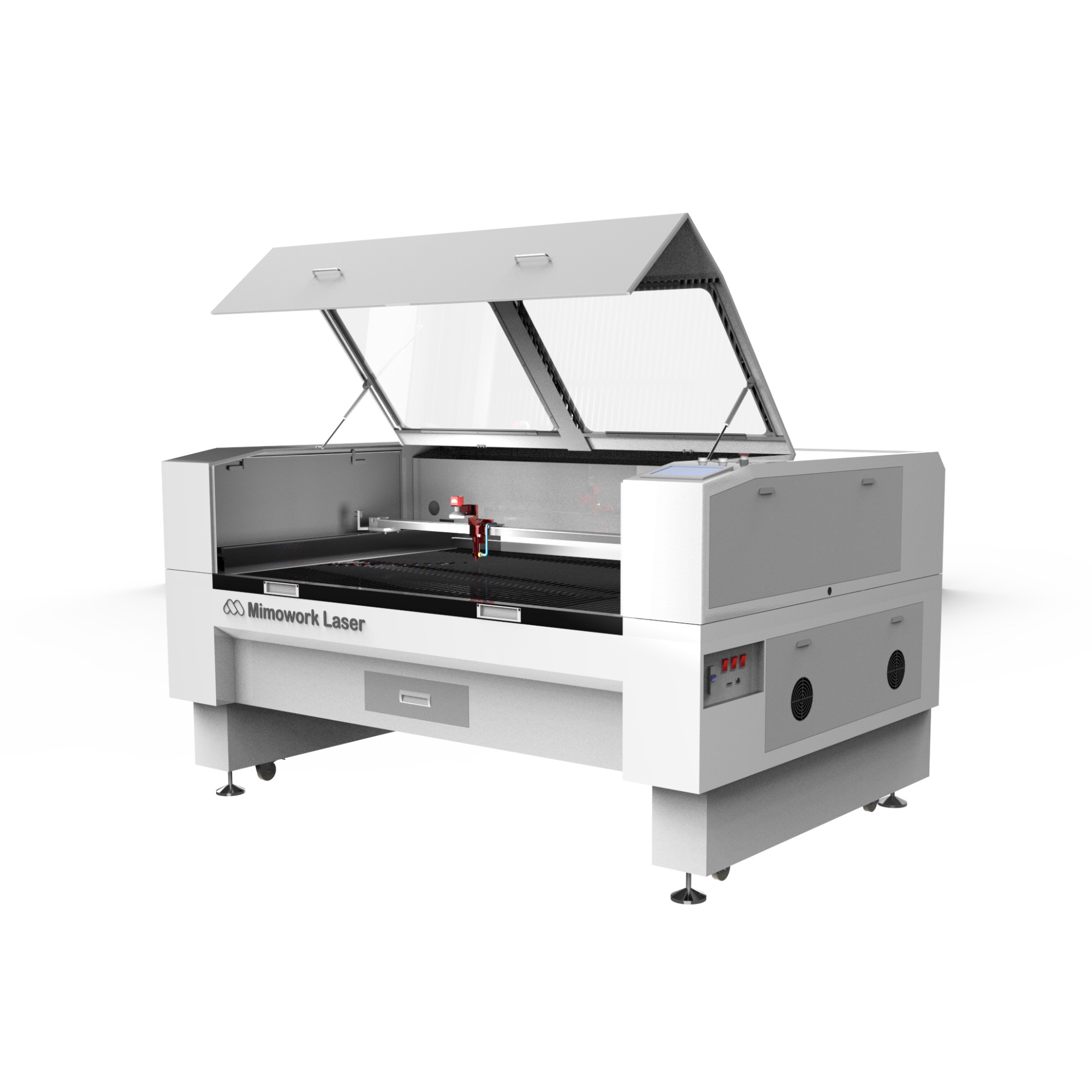
Laser marking machines for plastic are typically divided into three main categories: CO₂ laser, UV laser, and fiber laser systems. Each technology interacts with plastic materials differently based on its wavelength, which directly affects marking quality, thermal impact, and material compatibility.
Among these options, UV and CO₂ laser marking machines are the most commonly used for plastic processing, while fiber lasers are typically used for specific engineering plastics or hybrid applications involving both metal and plastic components.
CO₂ laser marking systems operate at a wavelength of approximately 10.6 μm, which falls within the infrared spectrum. This wavelength is strongly absorbed by many organic materials, making CO₂ lasers highly effective for a wide range of packaging and non-metal applications.
CO₂ laser systems are widely adopted in industrial production environments because they offer:
These characteristics make CO₂ lasers particularly suitable for high-throughput manufacturing environments where speed and efficiency are more important than ultra-fine precision.
CO₂ laser marking machines are commonly used for:
In these applications, CO₂ lasers provide fast, clear marking results, especially for batch coding, production dates, and simple identification marks.
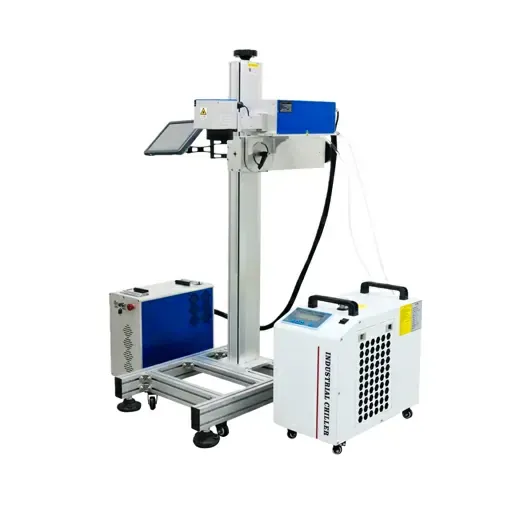
UV laser marking systems operate at a wavelength of 355 nm, which belongs to the ultraviolet spectrum. Unlike CO₂ or fiber lasers that rely heavily on thermal energy, UV lasers primarily use a photochemical process often referred to as “cold marking.”
This allows UV lasers to modify the material at a molecular level with minimal heat influence, making them ideal for heat-sensitive and high-precision plastic applications.
UV laser technology is widely regarded as the industry standard for precision plastic marking due to the following advantages:
Because of these characteristics, UV lasers deliver superior performance when marking complex or high-value plastic components.
UV laser marking machines are widely used in industries with strict quality and traceability requirements, including:
In these sectors, marking quality, precision, and material safety are more important than production speed alone.
From a manufacturing perspective, the choice between CO₂ and UV laser systems should not be based solely on cost or power, but on the interaction between wavelength and material behavior.
In most precision plastic marking applications, UV laser technology is considered the more advanced and future-proof solution, while CO₂ laser systems remain highly efficient for packaging and high-throughput industrial coding.
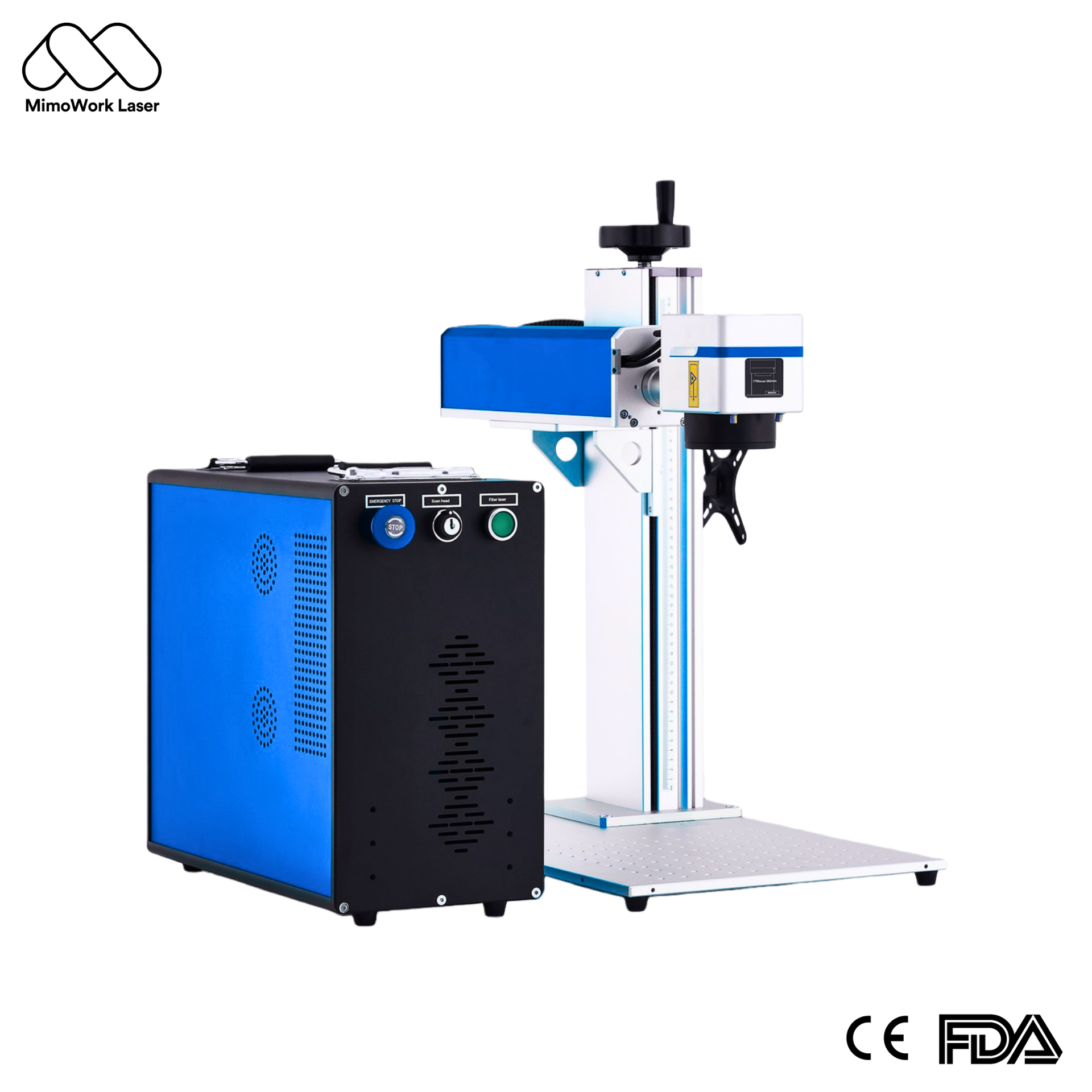
Fiber lasers operate at a wavelength of approximately 1064 nm, which is primarily optimized for metal marking applications. When applied to plastics, their performance depends heavily on the material’s optical absorption characteristics and whether the plastic contains laser-sensitive additives.
Unlike UV or CO₂ laser systems, fiber lasers interact with plastics mainly through thermal effects rather than photochemical reactions. This fundamental difference directly impacts marking quality, contrast, and material safety.
Fiber lasers are not universally suitable for plastic marking because most standard polymers have low absorption at the 1064 nm wavelength. As a result, laser energy is often not efficiently converted into controlled marking effects.
This leads to several common limitations:
Because of these constraints, fiber laser performance on plastics is highly application-dependent rather than universally stable.
Despite their limitations, fiber lasers can be effective in specific plastic marking scenarios, particularly when the material is engineered or modified for laser compatibility.
Common suitable applications include:
In these applications, fiber lasers can provide stable marking results when material formulation and process parameters are properly optimized.
When applied under suitable conditions, fiber laser systems offer several advantages:
These characteristics make fiber lasers particularly attractive for industrial manufacturers who require flexible production lines rather than purely plastic-optimized marking systems.
Laser marking enables durable identification on electronic plastic components without affecting product appearance.
Applications include:
Typical markings:
Automotive manufacturers use laser marking to ensure permanent traceability throughout the product lifecycle.
Common parts include:
Laser-generated Data Matrix codes support:
Laser marking provides permanent, high-speed coding for packaging materials and plastic containers.
Typical applications:
Benefits include:
Optimizing laser marking parameters for plastic is a critical step in achieving stable marking quality, high contrast, and minimal material damage. Unlike metal processing, plastic materials are highly sensitive to heat accumulation and wavelength interaction, meaning that even small parameter changes can significantly affect marking results.
Successful optimization is not based on a single parameter, but on the balance between power, speed, focus, and thermal control.
Laser power and scanning speed are the two most influential parameters in plastic marking quality because they directly control the amount of energy delivered to the material surface.
In practice, these two parameters must always be adjusted together rather than independently.
A stable optimization process typically follows a controlled iteration approach:
This iterative approach is especially important for engineering plastics where material composition varies between suppliers.
In addition to power and speed, optical focus and auxiliary airflow play a crucial role in determining marking consistency and quality.
Proper focal alignment ensures that the laser energy is concentrated at the correct point on the material surface. Even slight deviations from the optimal focus position can significantly reduce energy density and lead to:
Air assist introduces a controlled airflow during the marking process. This serves several important functions:
Together, correct focus and air assist configuration significantly improve repeatability and overall marking quality.
| Material | Power Level | Speed Setting | Key Considerations |
| ABS | Medium | Medium to High | Provides strong contrast and stable absorption |
| PP (Polypropylene) | Low to Medium | High | Requires careful control to avoid melting |
| PE (Polyethylene) | Low | High | Difficult to mark, sensitive to heat accumulation |
Plastic laser marking performance is determined by a combination of material properties, laser wavelength compatibility, and process optimization strategies. To achieve stable, high-quality results in industrial production, manufacturers must consider not only material selection but also additives, parameter tuning, and system integration.
Most engineering plastics and industrial polymers can be successfully laser marked when the correct wavelength and system configuration are applied. Compatibility depends primarily on how well the material absorbs laser energy and how it reacts to thermal or photochemical stimulation.
Common laser-markable plastics include:
Among these materials, ABS, PC, PA, PET, and PBT typically offer the most stable marking performance across industrial applications.
Plastic formulation plays a critical role in determining marking results. Even within the same polymer type, differences in pigments, fillers, and additives can significantly affect laser absorption behavior.
Laser additives, also known as laser marking masterbatches, are commonly used in industrial production to improve consistency and contrast. These additives can:
As a result, material formulation is often just as important as machine selection.
Some plastics such as PP and PE are more challenging to mark due to low laser energy absorption and higher sensitivity to heat. In these cases, successful marking typically requires a combination of wavelength selection, parameter optimization, and material modification.
In industrial environments, the most effective results are often achieved by combining material engineering with laser system optimization rather than relying on machine power alone.
Laser marking has become the preferred identification method for plastic manufacturing because it offers significant advantages in cost efficiency, durability, and production integration compared to ink-based or label-based systems.
One of the primary advantages of laser marking is the elimination of consumables. Unlike inkjet printing or labeling systems, laser marking does not require ongoing purchases of ink, solvents, printheads, or adhesive labels.
Over time, these advantages significantly reduce total cost of ownership (TCO), especially in high-volume manufacturing environments.
Laser marking creates permanent identification by modifying the material itself rather than applying an external layer. This ensures that markings remain readable throughout the entire product lifecycle, even under harsh environmental conditions.
These characteristics make laser marking particularly suitable for industries requiring strict quality control and lifecycle traceability.
Modern laser marking systems are designed to support smart manufacturing and Industry 4.0 environments. They can be seamlessly integrated into automated production lines to improve efficiency, consistency, and traceability.
As manufacturing moves toward fully automated and data-driven production, laser marking has become a core technology for product identification and traceability management.
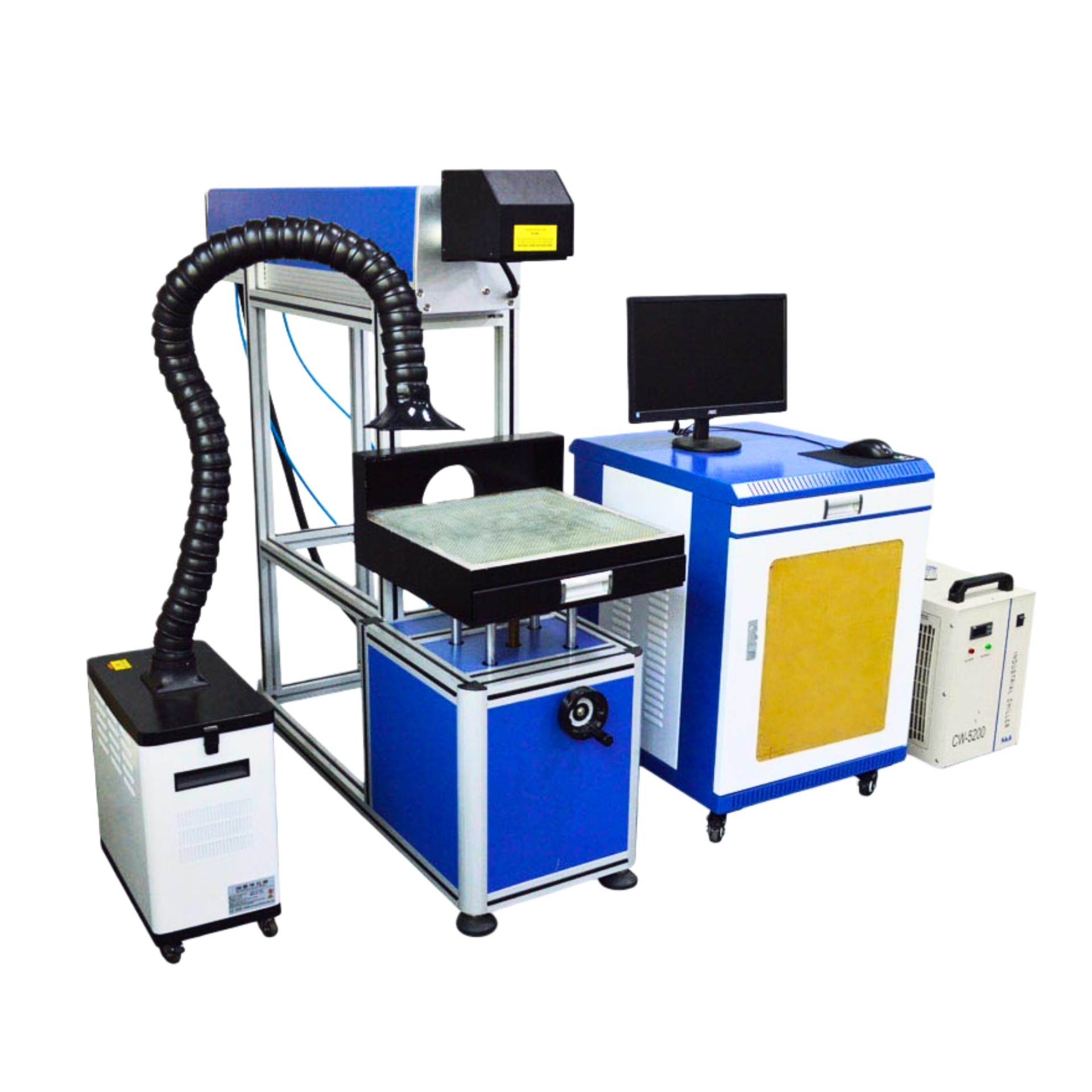
MimoWork provides industrial laser marking solutions designed to meet the diverse requirements of plastic processing across different industries and production environments.
For manufacturers selecting a laser marking machine for plastic, MimoWork offers scalable solutions tailored to electronics, automotive, packaging, and industrial manufacturing applications, ensuring both marking quality and production efficiency.
The best laser machine for plastic marking depends on the required precision and material type. In most industrial applications, UV laser marking machines are considered the optimal choice because they offer high-resolution marking, excellent material compatibility, and minimal thermal impact. CO₂ lasers are widely used for packaging materials, while fiber lasers are suitable for specific engineering plastics and hybrid production environments.
Blurry marks, surface burning, or yellowing typically result from improper laser parameters or material mismatch. Common causes include excessive laser power, incorrect focus position, unsuitable wavelength selection, or low-quality material composition without laser-reactive additives. These issues can usually be resolved through parameter optimization or selecting a more appropriate laser wavelength.
Yes. Laser marks are permanent because they are created by modifying the surface or molecular structure of the plastic itself rather than applying an external layer. As a result, properly optimized laser markings are resistant to abrasion, chemicals, moisture, and long-term UV exposure, making them suitable for lifecycle traceability applications.
Yes. Modern laser marking systems are widely used for high-precision traceability marking, including QR codes, Data Matrix codes, serial numbers, barcodes, logos, and regulatory identification. These markings are machine-readable and can achieve high accuracy even on small or complex plastic components.
In most industrial production environments, laser marking is more cost-effective over the long term because it eliminates consumables such as ink, solvents, printheads, and labels. It also reduces maintenance requirements and production downtime, resulting in a lower total cost of ownership (TCO), especially in high-volume manufacturing.
A laser marking machine for plastic is a highly reliable and industrial-grade solution for permanent product identification, traceability, and high-precision marking across a wide range of manufacturing applications.
Among available technologies, UV laser marking systems provide the best overall performance for most plastics, particularly in industries requiring high precision, clean marking quality, and minimal thermal damage, such as electronics, medical devices, and high-end consumer products. CO₂ laser systems remain highly effective for packaging materials and acrylic processing, while fiber lasers are better suited for specialized engineering plastics and hybrid metal-plastic manufacturing environments.
Selecting the right system should not be based solely on machine price or power level, but on a combination of key factors including:
In modern manufacturing environments driven by Industry 4.0 and smart factory systems, laser marking has become a core technology for product identification and supply chain traceability.
For manufacturers evaluating a laser marking machine for plastic, industrial solution providers such as MimoWork offer scalable systems designed to support CO₂, UV, and fiber laser applications across electronics, automotive, packaging, and industrial production sectors, enabling both operational efficiency and long-term production stability.
News | Jun-25-2026
News | Jun-15-2026
News | Jun-5-2026