Blog
In a field that evolves daily, staying ahead means staying informed.
Explore in-depth articles designed to help you solve complex challenges,
maximize your machine’s ROI.
Stay ahead in a competitive market.


In a field that evolves daily, staying ahead means staying informed.
Explore in-depth articles designed to help you solve complex challenges,
maximize your machine’s ROI.
Stay ahead in a competitive market.
News | Jul-22-2026
Choosing the right laser cutting machine is an important decision for businesses that need efficient, accurate, and reliable material processing. Whether you are producing customized products, manufacturing textiles, creating acrylic displays, or processing wood components, the right cutting system can directly impact production speed, product quality, and operating efficiency.
When searching for a CO2 laser cutter for sale, many buyers focus only on laser power. However, choosing the best machine requires considering multiple factors, including working area, material compatibility, production volume, cutting accuracy, and future expansion needs.
A CO2 laser cutter provides a flexible solution for cutting and engraving a wide range of non-metal materials. With powerful laser output, non-contact processing, and excellent edge quality, CO2 laser systems are widely used in industries such as signage, apparel, furniture, packaging, and product customization.
This guide explains how CO2 laser cutters work, how they compare with other cutting technologies, what materials they can process, and how to select the right machine for your business.
A CO2 laser cutter is a laser processing machine that uses a carbon dioxide laser source to generate a high-energy laser beam for cutting, engraving, and marking materials.
Unlike traditional cutting methods that require physical contact between tools and materials, a CO2 laser cutter uses thermal energy to process materials without mechanical pressure. The laser beam focuses on a small area, heating the material until it is vaporized, melted, or removed.
The main components of a CO2 laser cutting machine include:
Because of its high efficiency and versatility, CO2 laser technology has become one of the most popular solutions for processing non-metal materials.
Before purchasing a laser cutting machine, many buyers compare CO2 lasers with diode lasers and CNC routers. Each technology has different advantages depending on materials, production requirements, and application goals.
| Feature | CO2 Laser Cutter | Diode Laser System | Traditional CNC Router |
| Cutting Method | Non-contact thermal cutting | Low-power laser processing | Mechanical cutting with rotating tools |
| Energy Source | CO2 gas laser tube | Semiconductor diode | Spindle motor and cutting bits |
| Typical Power Range | 60W-600W+ | 5W-40W | Mechanical spindle power |
| Material Contact | No physical contact | No physical contact | Direct tool contact |
| Cutting Speed | High-speed production cutting | Suitable for light processing | Depends on tool and material |
| Edge Quality | Smooth and clean edges | Suitable for engraving and thin materials | May require additional finishing |
| Tool Wear | Minimal mechanical wear | Low maintenance | Cutting bits require replacement |
| Best Materials | Acrylic, wood, fabric, leather, plastics | Paper, thin wood, surface engraving | Wood, foam, rigid materials |
For businesses requiring consistent production performance, CO2 laser cutters provide several advantages:
For manufacturers and growing businesses, a CO2 laser cutting machine offers a balance between productivity, precision, and application flexibility.
Production efficiency is one of the most important factors when selecting a cutting machine.
A CO2 laser cutter can process materials quickly because the laser beam moves at high speed without physical resistance. This allows manufacturers to complete more jobs while maintaining consistent cutting quality.
Applications that benefit from high-speed CO2 laser cutting include:
One of the biggest advantages of CO2 laser technology is its ability to process various non-metal materials.
A CO2 laser cutter can cut and engrave:
Compared with diode laser systems, CO2 laser machines provide stronger cutting capability for thicker materials and production applications.
Because laser cutting does not involve physical contact, there is no cutting blade friction or tool deformation during operation.
This provides several benefits:
For industries requiring detailed designs and repeatable results, CO2 laser systems provide reliable performance.
Different materials and production requirements need different laser power levels.
A low-power machine may be suitable for small businesses, while industrial applications often require higher power configurations.
Common CO2 laser power ranges include:
| Laser Power | Suitable Applications |
| 60W | Small businesses, crafts, engraving |
| 80W-150W | General production and commercial applications |
| 200W-300W | Faster cutting and thicker materials |
| 400W-600W | Industrial production requirements |
Choosing the correct laser power helps achieve better cutting speed, quality, and operational efficiency.
When choosing a CO2 laser cutter for sale, the right machine configuration depends on your materials, working size, and production requirements.
Mimowork Laser provides different CO2 laser cutting solutions designed for businesses ranging from small workshops to industrial manufacturers. Each model is configured with different working areas and laser power options to support various applications.
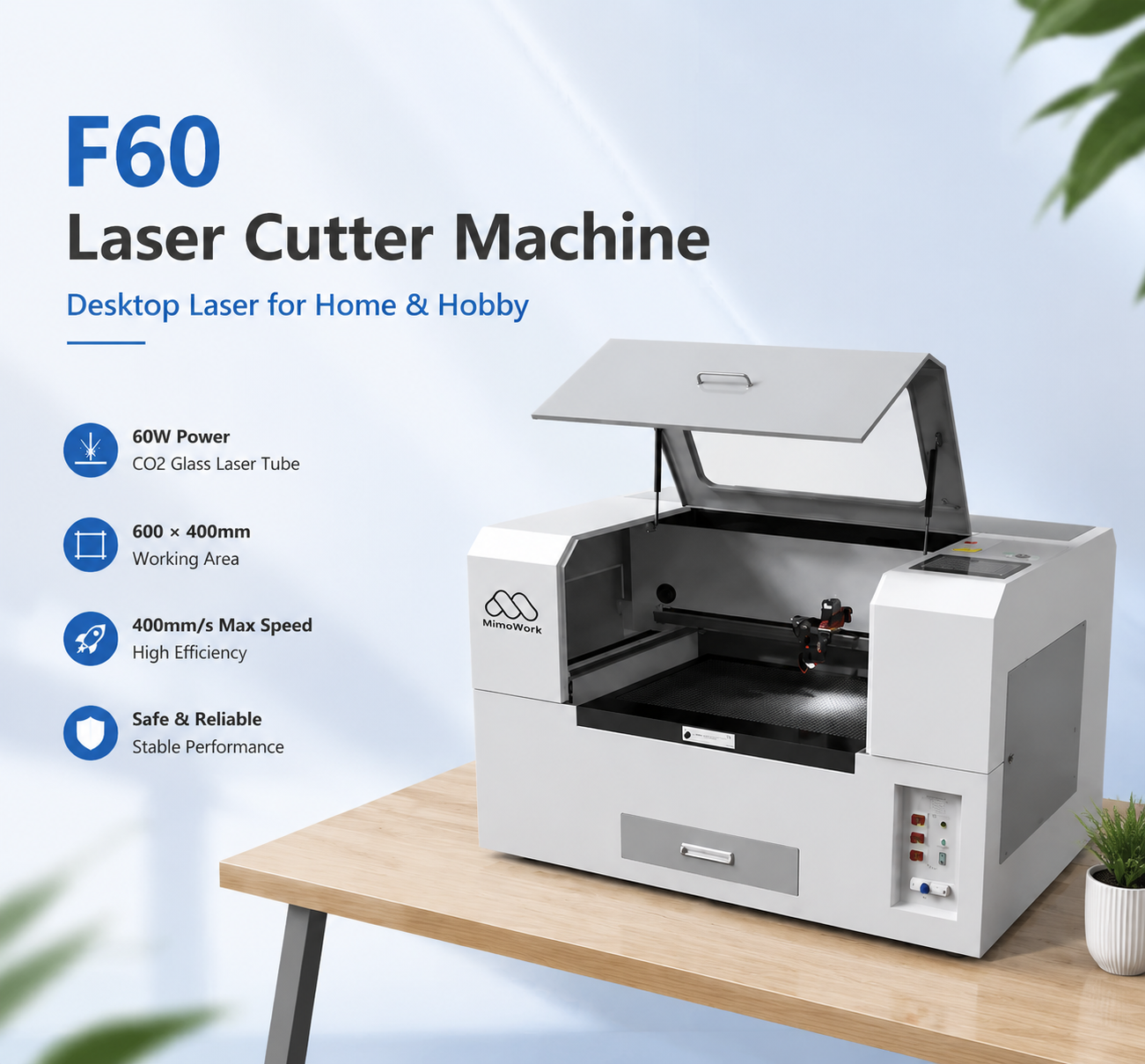
For startups, makers, and small businesses, a compact CO2 laser cutter provides an efficient solution for customized products and low-to-medium volume production.
A desktop laser cutting machine is suitable for applications such as:
| Feature | Specification |
| Working Area | 600 × 400mm |
| Laser Power | 60W |
| Laser Source | CO2 Glass Laser Tube |
| Suitable Applications | Small business, crafts, engraving |
The compact design makes it suitable for businesses that need professional laser cutting capability while saving workspace.
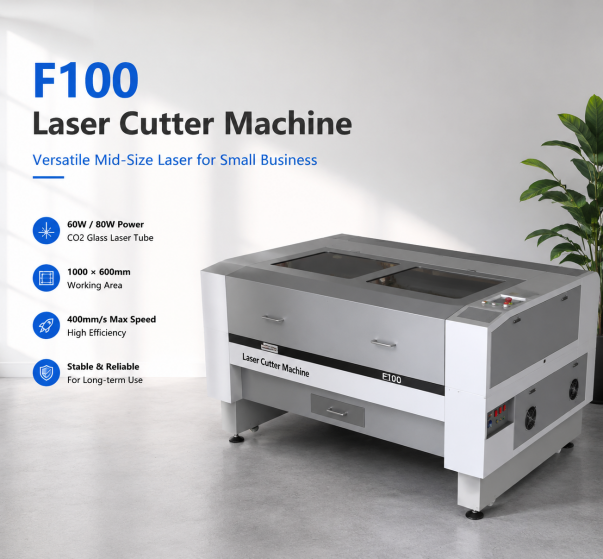
For businesses requiring higher productivity, a medium-format CO2 laser cutter provides a larger working area and stronger processing capability.
These systems are commonly used for:
| Feature | Specification |
| Working Area | 1000 × 600mm |
| Laser Power | 60W-80W |
| Application Focus | Commercial cutting and engraving |
The larger working area allows users to process bigger materials while maintaining high cutting accuracy and efficiency.
For manufacturers with higher production demands, an industrial CO2 laser cutter provides larger working areas, higher power options, and improved automation capability.
Industrial laser cutting systems are commonly used in:
| Feature | Specification |
| Working Area | 1300 × 900mm |
| Laser Power | 60W-150W |
| Application Focus | Industrial and commercial production |
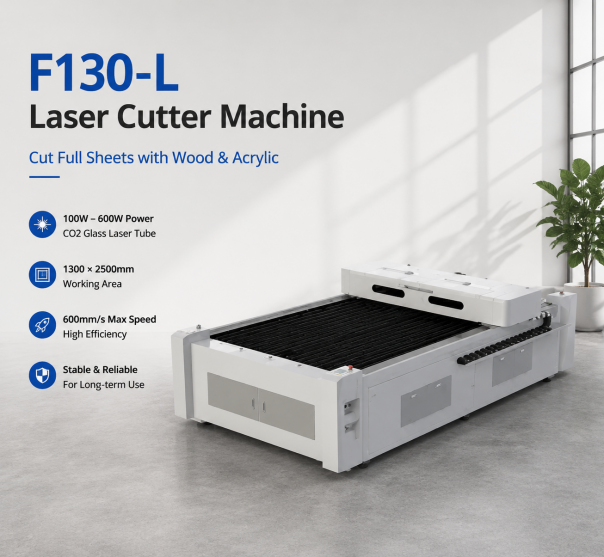
| Feature | Specification |
| Working Area | 1300 × 2500mm |
| Laser Power | 100W-600W |
| Drive System | Servo Motor Drive & Gear Rack System |
| Application Focus | Large-format industrial cutting |
The large working area allows manufacturers to process bigger sheets and improve production efficiency.
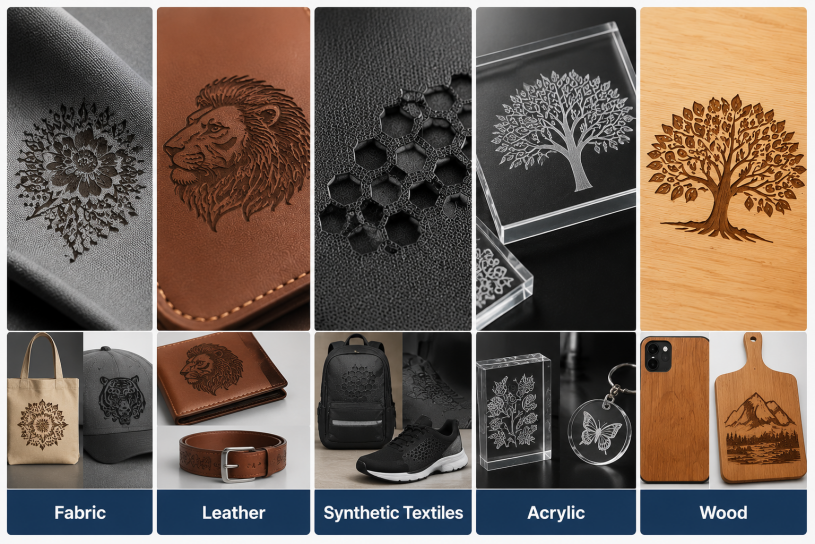
One of the main reasons businesses choose a CO2 laser cutter is its wide material compatibility.
Unlike many traditional cutting methods, laser technology provides clean and precise processing for various non-metal materials.
Selecting the right machine is not only about choosing the highest laser power. The best CO2 laser cutting machine depends on your actual production needs.
Different materials require different laser configurations.
For example:
Understanding your main materials is the first step when selecting a laser cutter machine.
Laser power directly affects cutting speed and material thickness capability.
General recommendations:
Suitable for:
Suitable for:
Suitable for:
Choosing suitable power helps avoid unnecessary investment while ensuring enough cutting performance.
Working area determines the size and quantity of materials you can process.
Common options include:
| Machine Type | Working Area | Best For |
| Desktop Laser Cutter | Small format | Small businesses and customized products |
| Medium Laser Cutter | Medium format | Commercial production |
| Industrial Laser Cutter | Large format | Factory manufacturing |
A larger working area can improve production efficiency by reducing material repositioning.
When purchasing a CO2 laser cutter for sale, consider not only your current needs but also future business growth.
A machine that supports:
can provide better long-term value.
For professional production applications, CO2 laser cutters generally provide higher power, larger working areas, and better performance on thicker materials.
Diode lasers are usually suitable for light engraving and thin material processing, while CO2 systems are better suited for businesses requiring reliable cutting capability.
Yes.
Industrial CO2 laser cutters are commonly used in textile manufacturing, signage production, furniture processing, packaging, and customized product manufacturing.
With higher laser power and larger working areas, industrial systems can support continuous production environments.
When selecting a supplier, consider:
A professional supplier should help you select a machine based on your production goals instead of only recommending higher power equipment.
Finding the right CO2 laser cutter for sale requires more than comparing prices or laser power. The ideal machine should match your materials, production requirements, workspace, and future business plans.
Mimowork Laser provides customized CO2 laser cutting solutions for businesses across different industries, from small workshops to large-scale manufacturers.
With flexible machine configurations, different working areas, and various laser power options, Mimowork helps customers find suitable laser cutting solutions for their applications.
Whether you need a desktop CO2 laser cutter for customized products or an industrial CO2 laser cutting system for production, choosing the right configuration can improve efficiency, product quality, and long-term manufacturing capability.
Contact Mimowork Laser today to discuss your materials and application requirements, and find the right CO2 laser cutting solution for your business.
News | Jul-17-2026
News | Jun-30-2026