Blog
In a field that evolves daily, staying ahead means staying informed.
Explore in-depth articles designed to help you solve complex challenges,
maximize your machine’s ROI.
Stay ahead in a competitive market.


In a field that evolves daily, staying ahead means staying informed.
Explore in-depth articles designed to help you solve complex challenges,
maximize your machine’s ROI.
Stay ahead in a competitive market.
News | Sep-4-2026
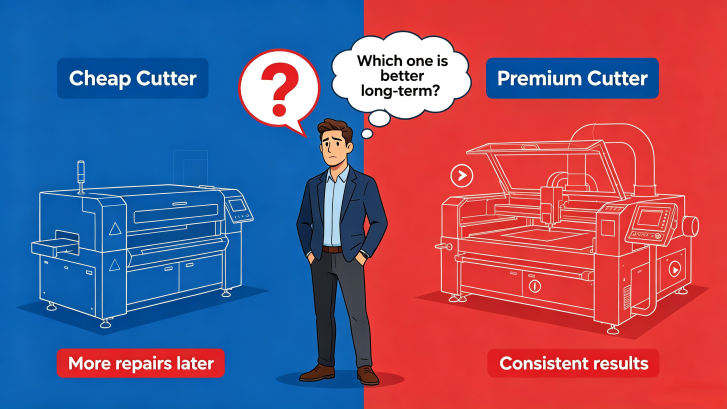
When you start shopping for a CO2 laser cutter, the price range can be overwhelming. You’ll see machines listed for a few hundred dollars and others priced at five figures or more. The natural question is: what actually justifies the gap? Is an expensive machine simply overpriced, or does a cheap CO2 laser cutter end up costing you more in the long run?
The short answer is that you’re paying for reliability, cutting consistency, production efficiency, and long-term durability — not just a bigger number on the spec sheet. This guide breaks down what your money can buy at different price levels, so you can make a decision that fits both your budget and your actual production needs.
The purchase price of a CO2 laser cutter is only the beginning. To understand whether a machine is truly “cheap” or “expensive,” you need to look at the total cost of ownership — including maintenance, replacement parts, operator time, downtime, and the consistency of output over the machine’s lifetime.
A cheap CO2 laser cutter might save you money upfront, but if it requires frequent adjustments or produces inconsistent results, the hidden costs can add up. Conversely, a higher-priced machine may offer more robust construction, upgraded components, and workflow features that can reduce operating time and improve production efficiency.
Entry-level and budget-friendly CO2 laser cutters generally share several characteristics:
Higher-grade CO2 laser cutters, by contrast, are often configured for more demanding production environments:
The price gap between budget and higher-grade CO2 laser cutters can show up in several areas:
| Area of Comparison | Budget / Lower-Cost CO2 Laser Cutter | Higher-Grade / Production CO2 Laser Cutter |
| Laser Source | Standard glass tube options | Higher-quality or specialized configurations |
| Drive System | Step motor and standard transmission | Higher-performance motion options |
| Motion Performance | Suitable for standard applications | Designed for higher speed and repeatability |
| Maximum Power | Often 40W–80W | 100W and above |
| Working Area | Smaller formats | Larger-format options |
| Cooling System | Basic water circulation | Industrial water chiller options |
| Production | Occasional or small-batch work | Frequent or commercial production |
| Build Quality | More basic construction | More robust construction |
| Long-Term Cost | May involve more manual adjustment | Can reduce operator time and downtime |
The key point is that you are not simply paying for “more laser.” You may be paying for a machine that can operate more consistently, handle larger workpieces, reduce manual intervention, and support a heavier workload.
One of the biggest mistakes buyers make is assuming that more power is always better. The reality is more nuanced. A cheap CO2 laser cutter with higher wattage on paper may still be less suitable for a specific application than a well-configured lower-wattage machine because power alone does not determine cutting quality — beam delivery, optics, motion performance, focus, and material characteristics also matter.
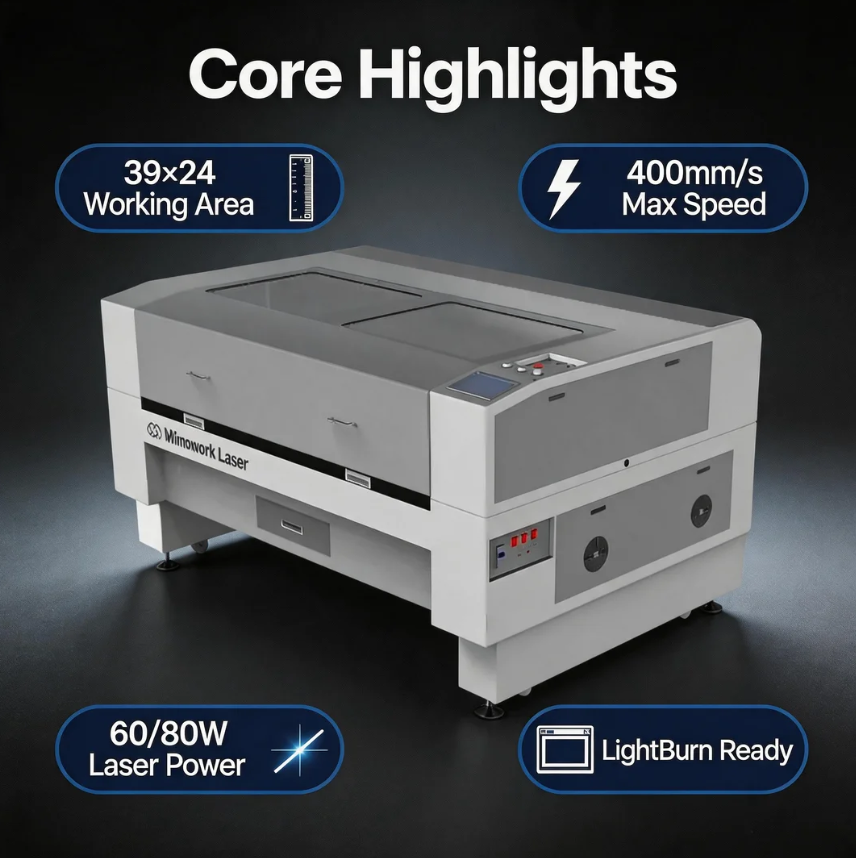
A 60W or 80W CO2 laser cutter can be a practical choice for small businesses, workshops, and serious hobbyists. These machines can handle many common cutting and engraving applications involving materials such as acrylic and wood.For a deeper look at lower-power CO2 laser systems, see this CO2 laser guide, which covers capabilities, applications, and selection considerations.
They’re suitable for:
If your material thickness and production volume stay within the machine’s capabilities, an 80W machine can offer a good balance between capability and cost. However, if you plan to run the machine for extended hours, also consider cooling, motion performance, and overall machine configuration.
A 100W CO2 laser cutter provides more cutting capacity for thicker materials and higher production demands. A 150W CO2 laser cutter takes this further, providing additional power for demanding cutting applications.
These power levels can be suitable for:
The exact cutting capability still depends on material type, thickness, machine configuration, and processing parameters.
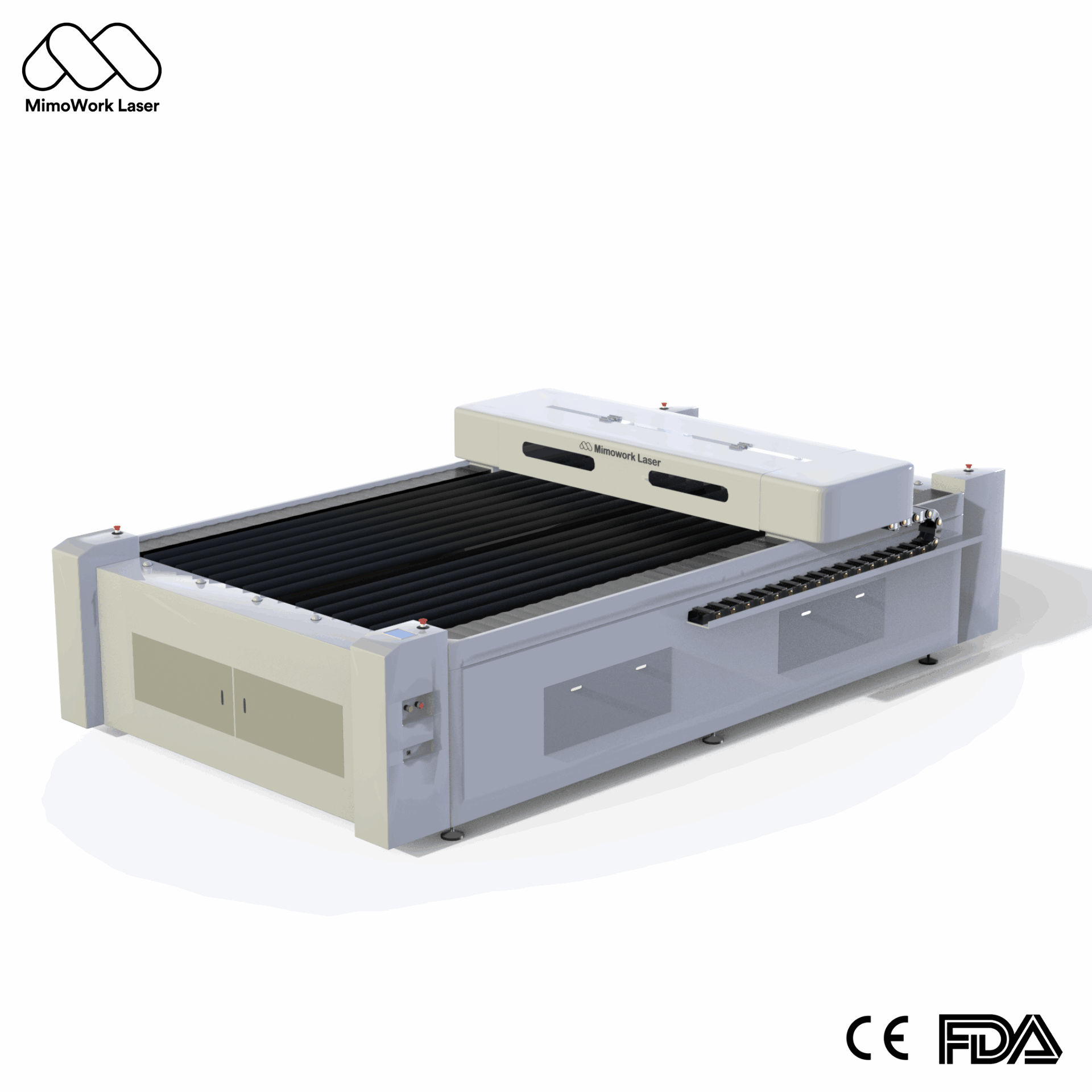
At the higher end, 300W to 600W CO2 laser systems can be configured for demanding industrial applications and larger production workloads. These systems are designed around higher cutting capacity, larger working areas, and sustained production requirements.
Choosing a cheap CO2 laser cutter can mean accepting compromises that may increase operating costs:
Laser tube lifespan varies significantly by tube type, operating conditions, power level, and maintenance. A lower-cost glass tube may require replacement sooner than a higher-quality or specialized tube.
Machine setup, motion performance, optics, alignment, and maintenance all affect cutting consistency. If frequent adjustment is required, it can increase post-processing time and material waste.
A lower-power machine may restrict the thickness or range of materials you can process. If your production requirements grow, a larger or more powerful machine may eventually become necessary.
Cooling, maintenance, adjustments, and troubleshooting can all affect production uptime. For businesses, even small amounts of downtime can become significant when repeated over hundreds of jobs.
An appropriately configured exhaust or fume extraction system helps manage smoke and particles during laser processing. Better integration can also make daily operation easier.
The most expensive machine isn’t always the right choice, and the cheapest option isn’t always the wrong one. The key is matching the machine to your actual production requirements.
Before you buy any CO2 laser cutter, ask yourself these questions:
A cheap CO2 laser cutter can be a great entry point for learning and light use. But if you’re running a business where cutting quality, speed, and reliability directly affect your bottom line, investing in a higher-grade configuration may provide better long-term value.
It depends on your production volume and materials. For occasional use with lighter materials, a budget machine can work well. For daily production, it is important to consider reliability, cooling, maintenance, and overall machine configuration.
The additional power can provide more cutting headroom and may reduce processing time for some materials. However, the actual difference depends on material type, thickness, machine configuration, and cutting parameters.
It varies widely by tube type, operating conditions, power level, and maintenance. Glass tubes generally have shorter lifespans than some higher-end tube technologies, but there is no single lifespan that applies to every CO2 laser tube.
Some components can be upgraded, such as certain cooling, optics, or exhaust components. However, major changes to the drive system, working area, or machine structure may not be practical. If you anticipate scaling production, it is worth considering future requirements before buying.
Start with the materials you process most often, their typical thickness, and your production volume. Then consider working area, desired processing speed, cooling, and other machine features. Power should be selected according to the complete application rather than thickness alone.
The biggest mistake when comparing cheap and expensive CO2 laser cutters is assuming that the more expensive machine is automatically better.
A budget machine can be a smart investment when you need basic cutting and engraving for occasional or small-batch work. A higher-grade machine becomes more valuable when production volume, material thickness, working area, consistency, and uptime become more important.
The key is to look beyond the initial price.
Instead of asking:
“Which CO2 laser cutter is the cheapest?”
Ask:
“Which machine gives me the right combination of capability, reliability, and production efficiency for my work?”
Once you understand what you are actually paying for — laser power, machine construction, motion performance, working area, useful features, maintenance, and long-term operating efficiency — it becomes much easier to choose a CO2 laser cutter that fits both your current needs and future production plans.
News | Aug-31-2026