Blog
In a field that evolves daily, staying ahead means staying informed.
Explore in-depth articles designed to help you solve complex challenges,
maximize your machine’s ROI.
Stay ahead in a competitive market.


In a field that evolves daily, staying ahead means staying informed.
Explore in-depth articles designed to help you solve complex challenges,
maximize your machine’s ROI.
Stay ahead in a competitive market.
News | Sep-15-2026
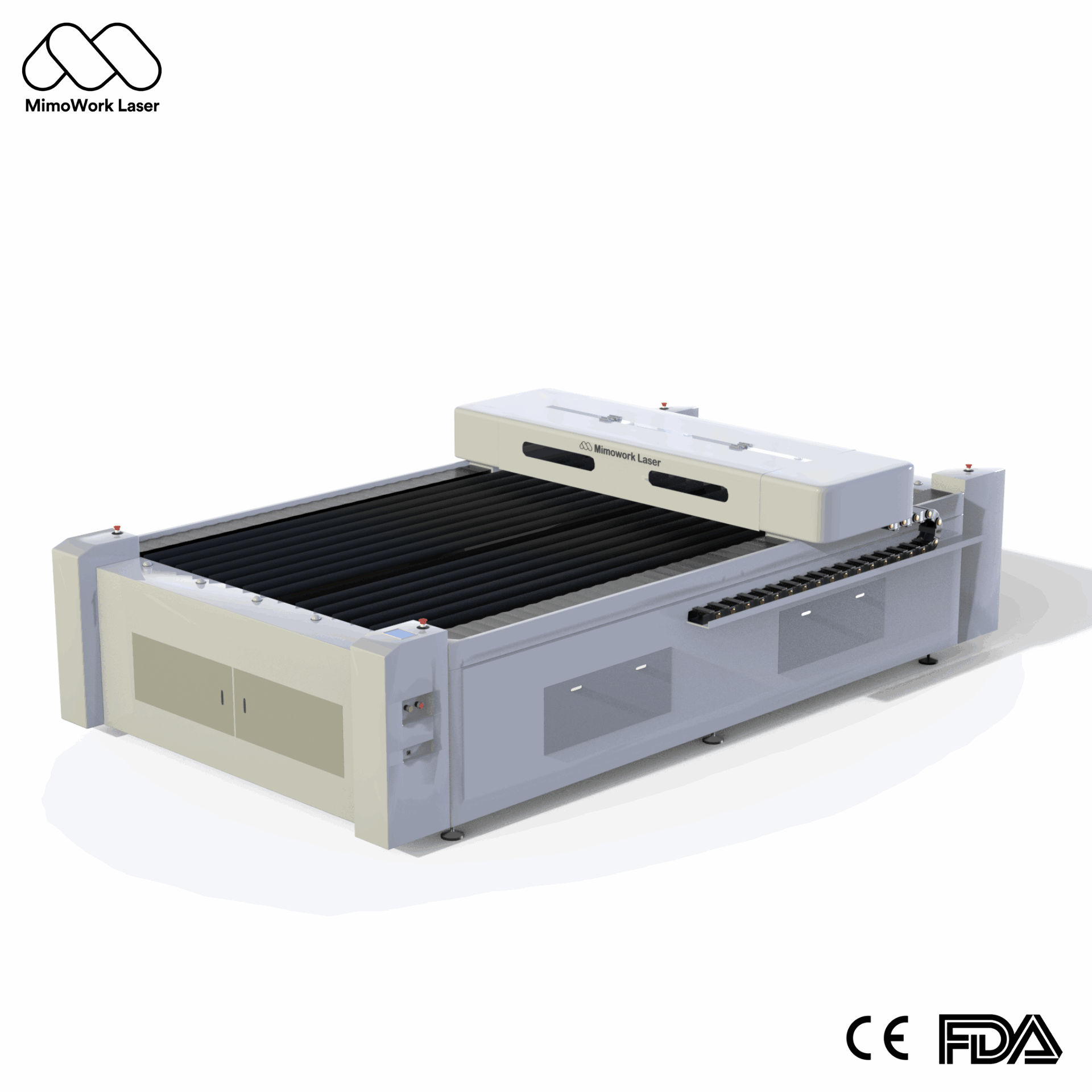
When you compare a flatbed co2 laser cutting machine, the price tag can vary dramatically between models. A machine with similar-looking specifications may cost far more than another one.
That does not automatically mean the expensive machine is better.
The difference usually comes down to the laser source, working area, motion system, cooling, material handling, automation, and how much production the machine can handle over time.
So if you are comparing a co2 laser cutter, do not look at the purchase price alone. Look at what the machine allows you to produce, how efficiently it runs, and what it will cost to keep it productive.
A flatbed co2 laser cutting machine price is influenced by several systems working together.
The laser tube is only one part of the machine.
A production-oriented system may include a larger working bed, stronger mechanical structure, servo motors, industrial cooling, fume extraction, automatic material handling, vision positioning, and software designed for continuous production.
That is why two machines with the same laser power can have very different prices.
| Cost factor | Lower-cost configuration | Production-oriented configuration |
| Laser source | Standard CO2 tube | Higher-power industrial CO2 source |
| Motion system | Basic stepper system | Servo motor + precision transmission |
| Working area | Smaller bed | Large-format bed |
| Cooling | Basic cooling | Industrial water chiller |
| Material handling | Manual loading | Conveyor or assisted feeding |
| Software | Basic control | Nesting and production workflow |
| Automation | Limited | Vision, feeding or other automation |
The right comparison is not simply “Which machine is cheaper?”
It is “What am I paying for, and will those features improve production?”
Laser power is one of the most obvious factors affecting machine cost.
But buying the highest wattage available is not always the smartest decision.
If your work mainly involves thinner acrylic, wood, fabric, leather, or other non-metal materials, a very high-power system may add cost without giving you a meaningful production advantage.
On the other hand, manufacturers working with thicker sheets or demanding continuous production may benefit from higher power.
This is where a commercial co2 laser cutter needs to be evaluated according to its workload rather than its maximum specification.
MimoWork’s F130-L is available with 100W–600W CO2 laser configurations and a 1300 × 2500 mm working area, giving manufacturers more room to match machine configuration with production requirements.
The goal is to buy enough power to achieve the required cutting performance—not simply the largest laser tube.
A large-format machine gives you more room to work with larger sheets or multiple pieces. That can be valuable for furniture components, signage, textiles, packaging, and other sheet-based production.
But a larger bed also means a larger machine structure and potentially higher investment.
The important question is whether you can actually use additional space.
If most of your jobs use small pieces, moving from a compact machine to a large format co2 laser may not significantly increase output.
If you regularly process large sheets, however, the larger bed can reduce material repositioning and make production more convenient.
MimoWork’s range illustrates this difference: its F60 uses a 600 × 400 mm working area, while the F130-L moves into a 1300 × 2500 mm format.
So working area should be treated as a productivity decision, not simply a specification to maximize.
This is one of the less obvious differences between machines.
A laser cutter is constantly accelerating, decelerating, changing direction, and positioning the laser head. The quality of its mechanical system affects how consistently it can perform those movements.
For occasional workshop use, a basic motion system may be sufficient.
For production, however, repeatability and stability become much more important.
A more industrial flatbed laser cutter may use servo motors and a stronger transmission system to support higher-speed, repeated operation.
The F130-L uses servo motors with a gear-rack transmission and is designed for high-speed industrial cutting.
You are simply not paying for a faster motor.
You are paying for a motion system that can maintain production performance over repeated jobs.
Cooling and extraction are easy to overlook when comparing machine prices.
A CO2 laser generates heat during operation, so the laser source needs appropriate cooling. Production machines may therefore require an industrial water chiller rather than a basic cooling solution.
Fume extraction matters for another reason.
Cutting wood, acrylic, fabric, leather, and other materials produce smoke, particles, and process fumes. An appropriate extraction system helps maintain a cleaner working environment and prevents smoke from interfering with the cutting process.
These systems add to the initial investment, but they are part of the machine’s operating environment—not optional decoration.
For a production floor, it makes more sense to compare the complete working system rather than the laser cutter alone.
Automation can have a major impact on the final price.
But automation should not be judged by how impressive the feature list looks.
The real question is whether it reduces labor or increases machine utilization.
For example:
For businesses processing hundreds or thousands of parts, these improvements can be more valuable than a small difference in laser power.
A cheaper machine can make sense when production requirements are relatively light.
A more expensive machine becomes easier to justify when downtime, labor, material waste, or production speed has a measurable financial impact.
| Consideration | Lower-cost machine | Higher-end production machine |
| Initial investment | Lower | Higher |
| Production capacity | Usually lower | Usually higher |
| Automation | Limited | More options |
| Large-sheet processing | May be limited | Better suited |
| Repeat production | Basic | More consistent |
| Material handling | More manual | More automated |
| Potential labor savings | Lower | Higher |
| Best fit | Small shops / light production | Industrial production |
This is why the cheapest flatbed co2 laser cutting machine is not necessarily the lowest-cost option over several years.
If a machine saves labor, reduces waste, or increases daily output, the additional investment may pay for itself through production efficiency.
If you are buying for commercial production, focus on the systems that directly affect your workflow.
If you frequently work with full sheets, a larger bed can reduce repositioning and manual handling.
If most jobs are small, a compact machine may offer better value.
Higher power is useful when you need thicker cutting capability or higher production throughput.
But excessive power can increase the investment without improving the jobs you actually run.
Check the drive system, motors, machine structure, positioning accuracy, and expected operating speed.
These details become much more important when the machine will run for hours every day.
Do not compare only the laser cutter.
Consider the chiller, extraction, software, material handling, installation, maintenance, and potential automation as part of the total investment.
It depends on the application.
A conventional cabinet-style CO2 machine can be a practical choice for smaller work areas and lower production volumes.
A flatbed system becomes more attractive when you need:
In other words, a flatbed machine is not automatically better. It is better suited to certain production environments.
If you are still comparing machine types, our main guide to the co2 laser cutter category provides a broader overview of machine formats, power levels, materials, and applications.
CO2 lasers are commonly used for non-metallic materials such as:
The actual cutting thickness depends on the material, laser power, lens configuration, cutting speed, and machine setup.
For example, a flatbed co2 laser for large sheets can be particularly useful when the workflow involves large wood, acrylic, textile, or similar sheet materials.
Always check the manufacturer’s recommended parameters and test the specific material before full-scale production.
There is no single price because configurations vary significantly. Laser power, bed size, motion system, cooling, automation, and material handling can all change the total investment.
It can be, particularly when the business regularly processes larger sheets or needs higher production capacity. For occasional cutting or small-format work, a compact CO2 laser may provide better value.
The best flatbed co2 laser for production depends on the material, sheet size, required throughput, and level of automation. A machine should be selected around the actual production workflow rather than maximum specifications.
A flatbed system generally provides a larger, open working area and is better suited to sheet-based or production-oriented workflows. Standard cabinet-style machines are often more compact and easier to fit into smaller workshops.
Common costs include electricity, cooling, extraction, consumables, laser-source replacement, optics, maintenance, and labor. Automation and material efficiency can also influence the overall cost per part.
The cost of a flatbed co2 laser cutting machine is not determined by laser power alone.
A better investment comes from matching the machine’s working area, mechanical system, cooling, automation, and production capacity to the jobs you actually run.
At MimoWork, we offer CO2 laser cutting solutions in different working areas and power configurations, making it easier to match the machine to your materials, workflow, and production needs.
Explore our CO2 laser cutters or contact MimoWork to discuss the right configuration for your application.
You May Also Like:https://www.mimowork-laser.com/blog/best-co2-laser-engraver-for-small-business
News | Sep-1-2026
News | Aug-17-2026
News | Aug-20-2026