Blog
In a field that evolves daily, staying ahead means staying informed.
Explore in-depth articles designed to help you solve complex challenges,
maximize your machine’s ROI.
Stay ahead in a competitive market.


In a field that evolves daily, staying ahead means staying informed.
Explore in-depth articles designed to help you solve complex challenges,
maximize your machine’s ROI.
Stay ahead in a competitive market.
News | Sep-15-2026
A 500w CO2 laser can provide substantially more cutting capacity than lower-power CO2 systems, but the laser source is only one part of the machine. Motion performance, cooling, optics, air assist, extraction, and material handling all affect what the system can actually achieve.
This guide explains where 500W makes sense, what it can be used for, and what to check before investing in a high-power CO2 laser cutter.
A 500W CO2 laser uses a CO2 laser source rated at 500 watts of output power.
Compared with common 60W, 80W, 100W, or 150W machines, this is firmly in the high-power category.
The additional power provides more energy for cutting suitable materials, particularly when the application involves thicker sections or higher production requirements.
A 500w CO2 laser machine can be used for both cutting and engraving, although its main advantage becomes more apparent in demanding cutting applications.
A 500W system is designed for demanding non-metal material processing, especially when thickness, production speed, or material size becomes challenging for lower-power machines.
Woodworking is one of the most obvious applications.
A 500W system can provide substantially more cutting capacity for:
For buyers searching specifically for a 500w co2 laser cutting machine for wood, the important question is not simply the maximum thickness.
Consider the actual production cycle.
A machine that cuts a thick board in one pass but takes too long to load and unload may not outperform a better-integrated system.
Acrylic is another strong application for high-power CO2 systems.
Typical products include:
Higher power can be useful when working with thicker acrylic or when a large number of parts need to be processed.
However, acrylic quality varies considerably between materials. Cast and extruded acrylic, for example, can behave differently during laser processing.
Testing the actual sheet you plan to use is therefore more useful than relying on a generic thickness chart.
CO2 lasers can also process many textile materials.
For industrial textile production, though, power is only part of the equation.
Continuous feeding, conveyor systems, vision alignment, and software integration can have a major effect on productivity.
A 500W source may provide plenty of cutting capacity, but if operators still need to manually reposition every piece, some of that capacity is lost.
Actual performance can change depending on:
A thick piece of low-density material may behave very differently from a thinner but dense or heavily bonded material.
For industrial buyers, a practical material test is therefore one of the best ways to determine whether a 500w CO2 laser for thick materials is actually suitable for the intended application.
The test should look at more than whether the beam gets through.
Check:
A successful cut that takes too long may not be commercially useful.
As power increases, the rest of the system must be able to handle the higher cutting load. The motion system must maintain speed and accuracy, while the optics must deliver the beam efficiently. Stable cooling, sufficient air assist, and effective fume extraction also become increasingly important.
That is why a high-power CO2 laser should be evaluated as a complete cutting system, not simply by its wattage. The real advantage comes from how well the laser source, motion system, optics, cooling, air assist, and extraction work together.
The difference is mainly about production capacity and application requirements.
A 300W machine may already provide enough power for many industrial wood, acrylic, and non-metal applications.
Moving to 500W makes more sense when the workload consistently pushes the machine toward its limits.
A 600W system, meanwhile, provides another step up in available power for particularly demanding applications.
| Laser Power | Typical Positioning | Main Advantage |
| 300W | Industrial production | Strong balance of power and cost |
| 500W | Heavy-duty production | More cutting headroom and higher capacity |
| 600W | High-demand applications | Maximum power within this range |
The right choice depends on the material, process, machine design, and required output.
For a broader comparison of CO2 power levels and machine configurations, see the complete CO2 laser cutter buying guide.
A 500W machine can be expensive compared with a lower-power system.
So, the extra power needs to generate something valuable.
That could be:
More output
If cutting is currently limiting production, faster processing can allow more orders to move through the workshop.
Thicker material capability
If customers are requesting materials that your current machine cannot process efficiently, additional power can expand the range of products you can offer.
Less processing time
Even when the machine is not dramatically faster, additional power may allow more productive settings on demanding materials.
Future capacity
A business expecting significant production growth may prefer to purchase additional capacity rather than replace the machine after a short period.
For most small businesses, 500W is more power than necessary.
If you mainly process thin materials or handle occasional custom orders, a lower-power machine may deliver enough capacity at a lower overall cost.
The calculation changes when production volume is high. If you are processing hundreds of parts a day, the additional power and capacity of a 500W system may be worthwhile.
The laser tube gets most of the attention, but industrial performance depends on the entire system.
A high-power source is of limited value if the cutting head cannot move accurately and consistently.
Look for a motion system designed around the intended cutting speed, workload, and machine size.
High-power CO2 lasers generate significant heat.
The cooling system needs to maintain stable operating conditions during extended production.
Air assist helps remove heat and debris from the cutting area and can contribute to cleaner cuts.
Its configuration should match the materials and power level being used.
The beam delivery system needs to handle the selected laser power while maintaining consistent focusing.
Lens selection can also influence the balance between cutting depth and detail.
Higher-power cutting can produce significant smoke and fumes.
Industrial extraction should therefore be treated as part of the production system rather than an optional accessory.
Large sheets can be physically difficult to load.
Features such as ball transfers, conveyors, vacuum systems, or automatic feeding can reduce manual handling and improve workflow.
It can matter a lot.
A powerful laser is not necessarily useful if the material cannot fit comfortably inside the working area.
For large wood and acrylic sheets, a larger bed can reduce:
Textile cutting introduces a slightly different set of priorities.
For soft materials, continuous production can be more important than maximum cutting thickness.
A production-oriented system may benefit from:
This is where an industrial co2 laser can look very different from a standard enclosed laser cutter.
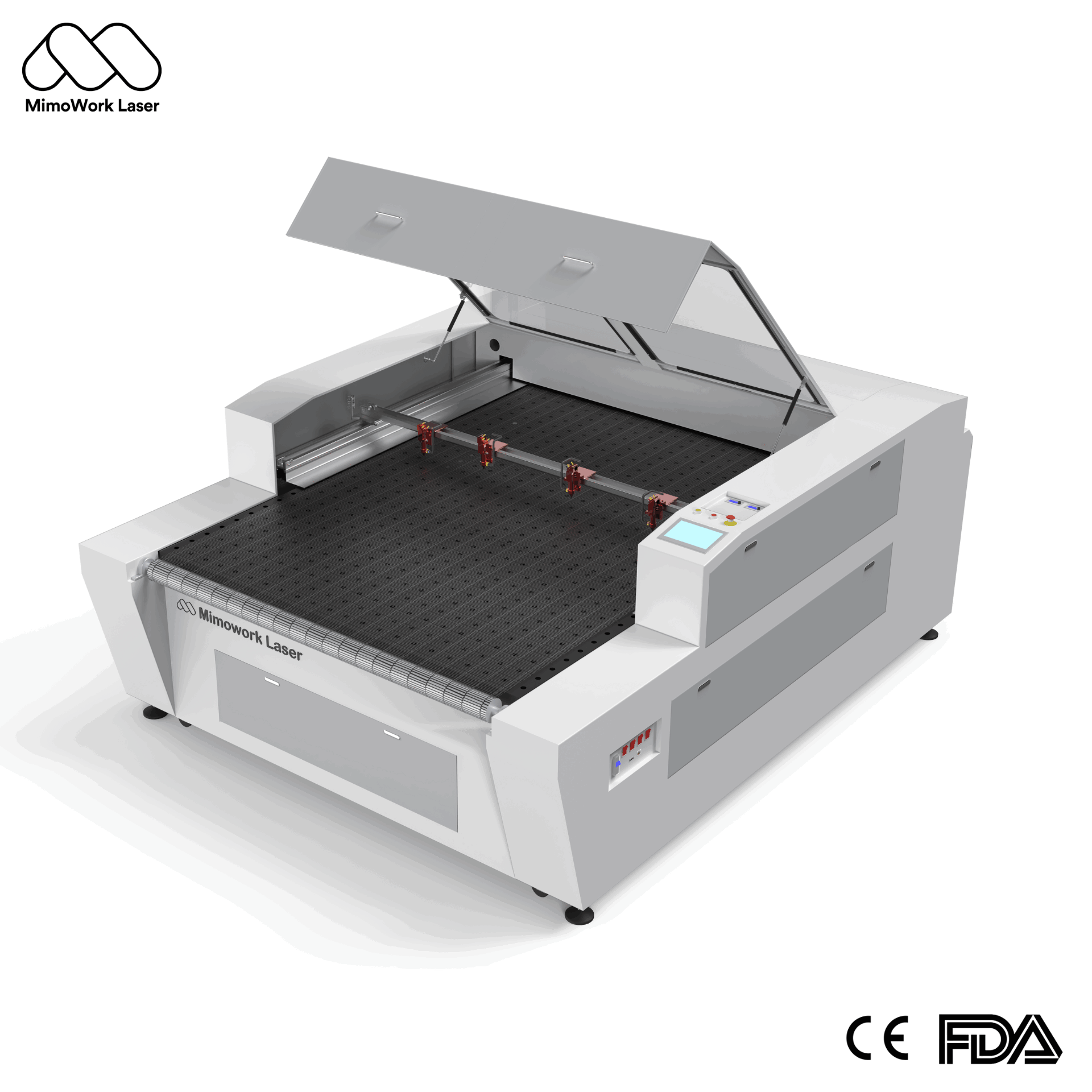
MimoWork’s F180-L is offered in 150W–600W configurations and is designed around industrial textile processing, including conveyor and vision-based capabilities.
The lesson for buyers is straightforward:
Do not buy 500W simply because your application is industrial.
Choose a configuration that matches how the material actually moves through production.
A higher-power machine can increase productivity, but it can also increase equipment and operating requirements.
Consider the full production picture.
| Cost / Performance Area | What to Evaluate |
| Laser source | Power, tube type, replacement cost |
| Cooling | Chiller capacity and maintenance |
| Electricity | Actual machine consumption and operating hours |
| Optics | Lens and mirror maintenance |
| Extraction | Ventilation and filter requirements |
| Labor | Loading, unloading, and machine supervision |
| Productivity | Cycle time and daily output |
The goal is not simply to minimize machine cost.
If a 500W system allows a workshop to produce significantly more sellable output with the same labor resources, the additional investment may make sense.
If production volume remains low, the calculation changes.
Look at your actual production history.
A 500W system becomes easier to justify when you regularly encounter one or more of these situations:
It is less compelling when your existing machine already handles the workload comfortably.
In that case, additional power may not improve your business enough to justify the extra investment.
MimoWork offers high-power CO2 configurations for applications that require more than standard workshop-level cutting.
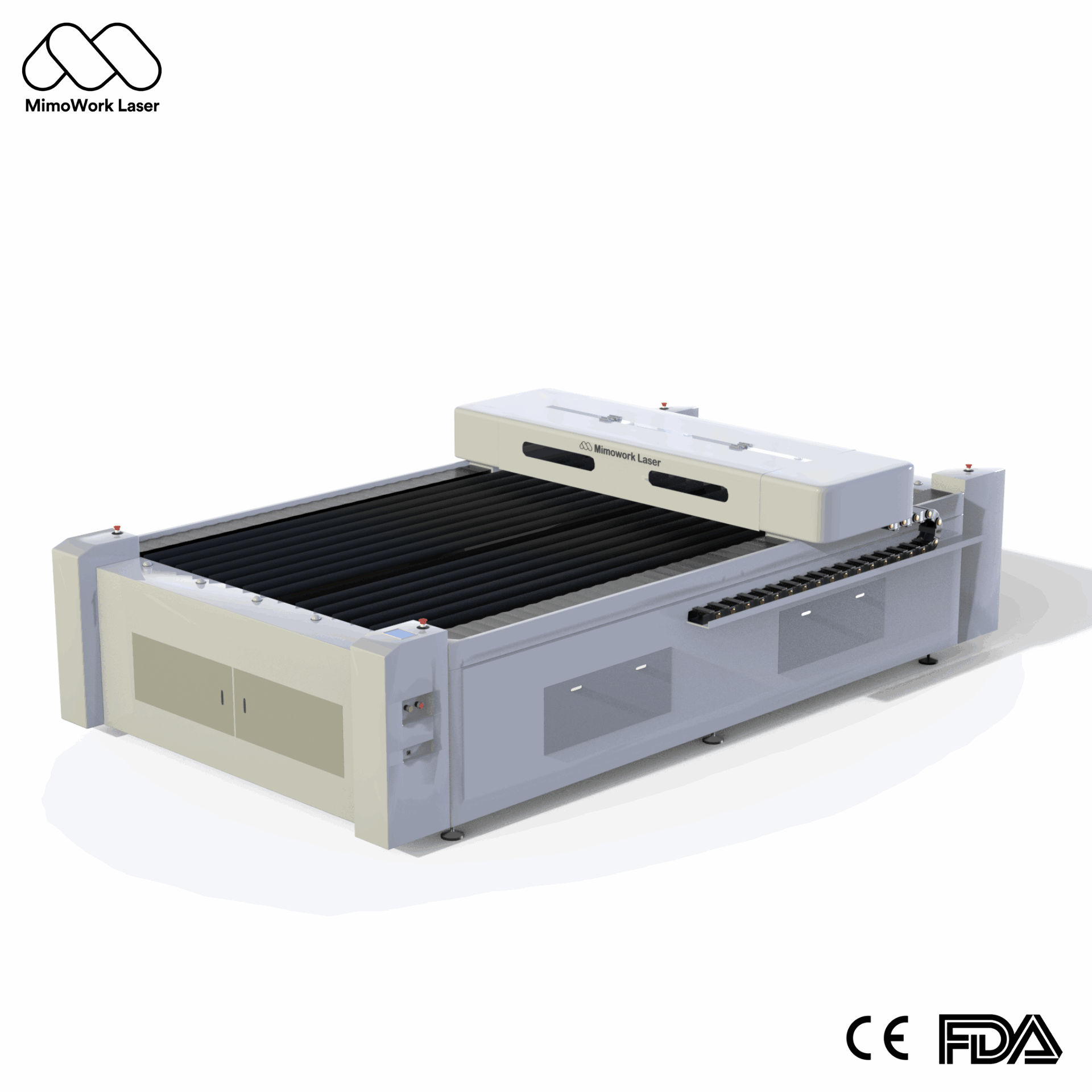
The F130-L supports 100W–600W configurations with a 1300 × 2500 mm working area, making it suitable for large-format wood and acrylic applications.
The F180-L supports 150W–600W configurations and targets industrial textile production with continuous material handling and vision-assisted processing.
MimoWork also provides customizable laser cutter configurations for applications requiring specific working areas, power levels, material handling, or production integration.
This approach is useful for industrial buyers because the machine can be considered around the actual production process rather than forcing every application into the same standard configuration.
Yes. A 500W CO2 system can be suitable for plywood cutting, particularly when thicker materials, larger sheets, or higher production output are involved. Actual results depend on plywood composition, thickness, machine configuration, and cutting parameters.
There is no universal maximum thickness. Material type, density, thickness, focus, air assist, optics, speed, and edge-quality requirements all affect the result. Material testing is recommended for demanding applications.
Not automatically. A 500W machine provides more available cutting power, but whether that translates into better business performance depends on the workload. If you need thicker materials or higher throughput, the additional capacity can be valuable.
It can be. A properly configured 500W system can support demanding production involving thick materials, large-format processing, or long operating cycles. The supporting motion, cooling, optics, extraction, and material-handling systems are equally important.
Standard CO2 laser systems are generally used for non-metal materials such as wood, acrylic, fabric, leather, rubber, and compatible plastics. Fiber laser technology is generally more appropriate for metal cutting and marking.
A 500w CO2 laser is worth considering when lower-power machines can no longer keep up with your materials or production volume.
Higher power can handle thicker materials and demanding workloads, but the entire CO2 laser cutter—including the motion system, cooling, optics, air assist, and extraction—must be designed to support it.
If you are considering a 500W upgrade, send us your material type, thickness, and cutting file. MimoWork can help you evaluate the right configuration for your production needs.
News | Sep-4-2026
News | Aug-31-2026