Blog
In a field that evolves daily, staying ahead means staying informed.
Explore in-depth articles designed to help you solve complex challenges,
maximize your machine’s ROI.
Stay ahead in a competitive market.


In a field that evolves daily, staying ahead means staying informed.
Explore in-depth articles designed to help you solve complex challenges,
maximize your machine’s ROI.
Stay ahead in a competitive market.
News | Sep-18-2026
Cast iron has a reputation for being difficult to repair, and the problem becomes obvious the moment a crack appears in an expensive casting.
The material can be strong in service but surprisingly sensitive during welding. Rapid heating, rapid cooling, carbon content and differences between cast iron grades can all contribute to cracking or an unstable weld.
That raises an important question for anyone considering a Laser Welding Machine: Can laser welding be used for cast iron, and how should the process be controlled?
Yes, cast iron can be laser welded, but successful results depend heavily on material identification, heat management, joint preparation and parameter development.
Cast iron is not a single material.
Gray iron, ductile iron, malleable iron and other cast iron grades have different microstructures and welding behavior.
The high carbon content found in many cast irons is one of the reasons conventional welding can be challenging. During welding, the localized thermal cycle can create hard or brittle zones around the weld.
Then comes cooling.
If the welded area cools too quickly, thermal stress can accumulate. In a brittle material, that stress may contribute to cracking.
This is why simply pointing a high-power laser at a cast iron crack and “filling it with metal” is not a reliable welding strategy.
The thermal cycle needs to be controlled.
Yes, but the exact process depends on the cast iron grade, component geometry, crack or joint configuration and the required mechanical properties.
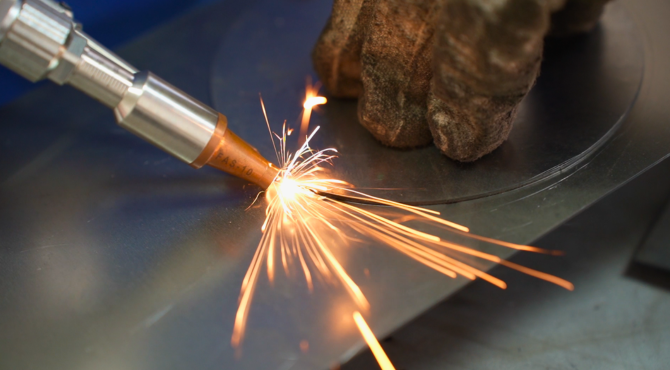
Laser welding offers one important characteristic that can be useful for cast iron: highly localized heat input.
Instead of heating a large surrounding area, the laser can concentrate energy at the joint.
This can reduce unnecessary thermal exposure, which is valuable when repairing precision castings or components where dimensional stability matters.
However, localized heat does not automatically eliminate cracking.
Cast iron remains sensitive to thermal gradients, and the welding procedure must be developed around the specific material.
Traditional cast iron repair may involve processes such as stick welding, TIG welding or brazing, depending on the component and repair requirements.
These processes can work, but they often require careful preheating, controlled cooling and substantial operator experience.
Laser welding introduces a different heat-management strategy.
The laser creates a small molten zone and allows the operator to control where energy is deposited.
For precision repair, this can reduce unnecessary heating of areas that do not need to be welded.
The trade-off is that laser welding is highly sensitive to parameters. A small change in focus, speed or energy delivery can change the weld pool significantly.
Therefore, laser welding is not a shortcut around welding knowledge. It is a more controllable heat source that still requires a properly developed procedure.
This is one of the most important steps.
Before choosing laser parameters, determine what type of cast iron you are dealing with.
A gray iron component should not automatically be treated like ductile iron.
If the material grade is unknown, identify it through available drawings, material records or appropriate material analysis before production repair.
Also inspect the condition of the component.
Old castings may contain:
Laser welding requires a clean and controlled welding zone.
Surface preparation can determine whether a repair succeeds before the laser is even switched on.
For a cracked casting, the visible crack should be evaluated carefully rather than simply placing a weld bead over its surface.
The damaged area may need to be opened or prepared to provide access to sound material.
The exact preparation depends on the component and repair procedure.
The key principle is simple:
Do not expect the laser to compensate for a poorly prepared joint.
Laser welding provides precise energy delivery, but it cannot remove contamination, eliminate a hidden crack or correct poor joint geometry by itself.
This is where cast iron welding becomes more complicated.
The laser creates a very localized heat source, which can be beneficial. But if the surrounding material remains cold while a very small area is heated rapidly, the thermal gradient can become severe.
Depending on the cast iron grade and repair method, controlled preheating may therefore be considered.
Preheating reduces the temperature difference between the welding zone and the surrounding casting.
However, the required temperature and heating method should be established for the actual material and repair procedure rather than copied from a generic chart.
The same applies to cooling.
Rapid uncontrolled cooling can increase thermal stress and may contribute to undesirable microstructures.
There is no universal cast iron laser welding setting.
Instead, parameters should be developed around the relationship between energy input and material response.
| Parameter | Why It Matters |
| Laser power | Controls available energy |
| Welding speed | Determines energy delivered along the joint |
| Focus position | Changes energy density and penetration |
| Beam size | Influences weld width and heat distribution |
| Pulse or modulation | Helps control heat input where applicable |
| Filler material | Influences joint composition and filling |
| Shielding gas | Protects the molten weld pool |
| Preheating | Helps manage thermal gradients |
| Cooling rate | Influences residual stress and microstructure |
The goal is not to maximize penetration.
The goal is to create enough controlled melting to produce the required joint while keeping thermal stress within an acceptable range.
Filler selection becomes especially important when repairing cast iron.
The filler needs to be compatible with the base material and the mechanical requirements of the repair.
A filler that produces a very hard weld zone may not be desirable for subsequent machining.
A filler with different thermal or metallurgical behavior may also influence residual stress.
For this reason, filler selection should be based on the cast iron grade and the purpose of the repair rather than simply choosing the strongest-looking wire.
Visual appearance is useful, but it is not enough to judge a repair.
A good weld should have appropriate fusion and a controlled bead profile without obvious cracking, excessive porosity, severe oxidation or uncontrolled spatter.
However, the real acceptance criteria depend on the component.
A decorative casting may be judged primarily by appearance.
A structural or load-bearing component requires a much more rigorous evaluation of penetration, defects and mechanical performance.
For critical parts, appropriate non-destructive or destructive testing should be considered according to the application and applicable standards.
Cracking is one of the biggest concerns.
Possible contributors include excessive thermal gradients, unsuitable filler material, poor joint preparation and inappropriate cooling conditions.
If cracks repeatedly appear after welding, increasing laser power is unlikely to solve the underlying problem.
The thermal cycle needs to be reviewed.
If the weld does not penetrate deeply enough, possible causes include insufficient energy density, excessive travel speed, incorrect focus position or unsuitable joint preparation.
Rather than immediately increasing power, check whether the laser is actually focused correctly on the intended welding zone.
The opposite problem is also possible.
Too much energy can enlarge the heat-affected region and increase the risk of distortion or undesirable metallurgical changes.
A slower welding speed is not always better.
The objective is controlled energy delivery, not maximum heat.
Dirty castings can create serious problems because cast iron components often retain oil or contaminants inside pores.
Surface cleaning is therefore particularly important before welding.
If contamination continues to emerge during heating, additional cleaning or preparation may be required before a stable weld can be achieved.
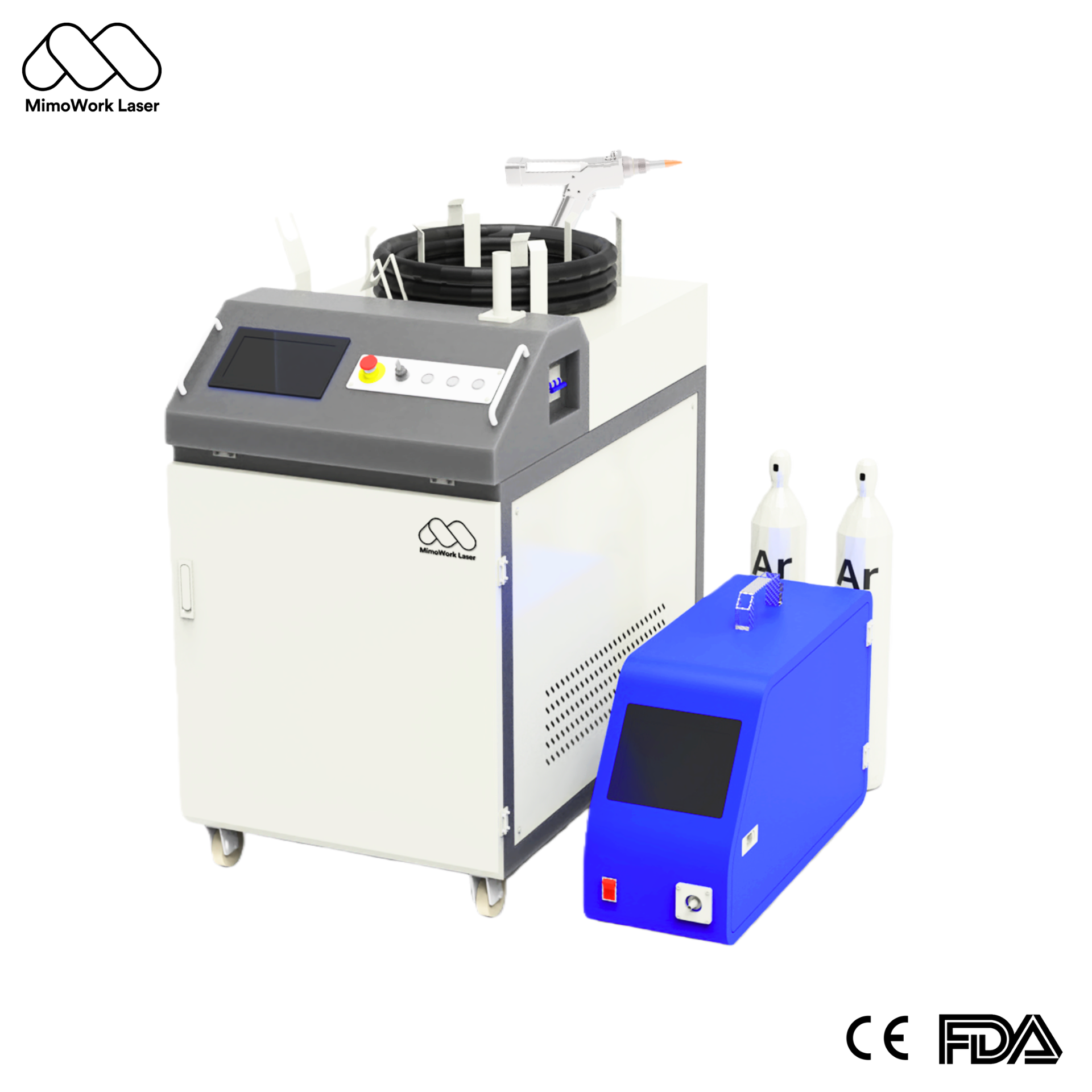
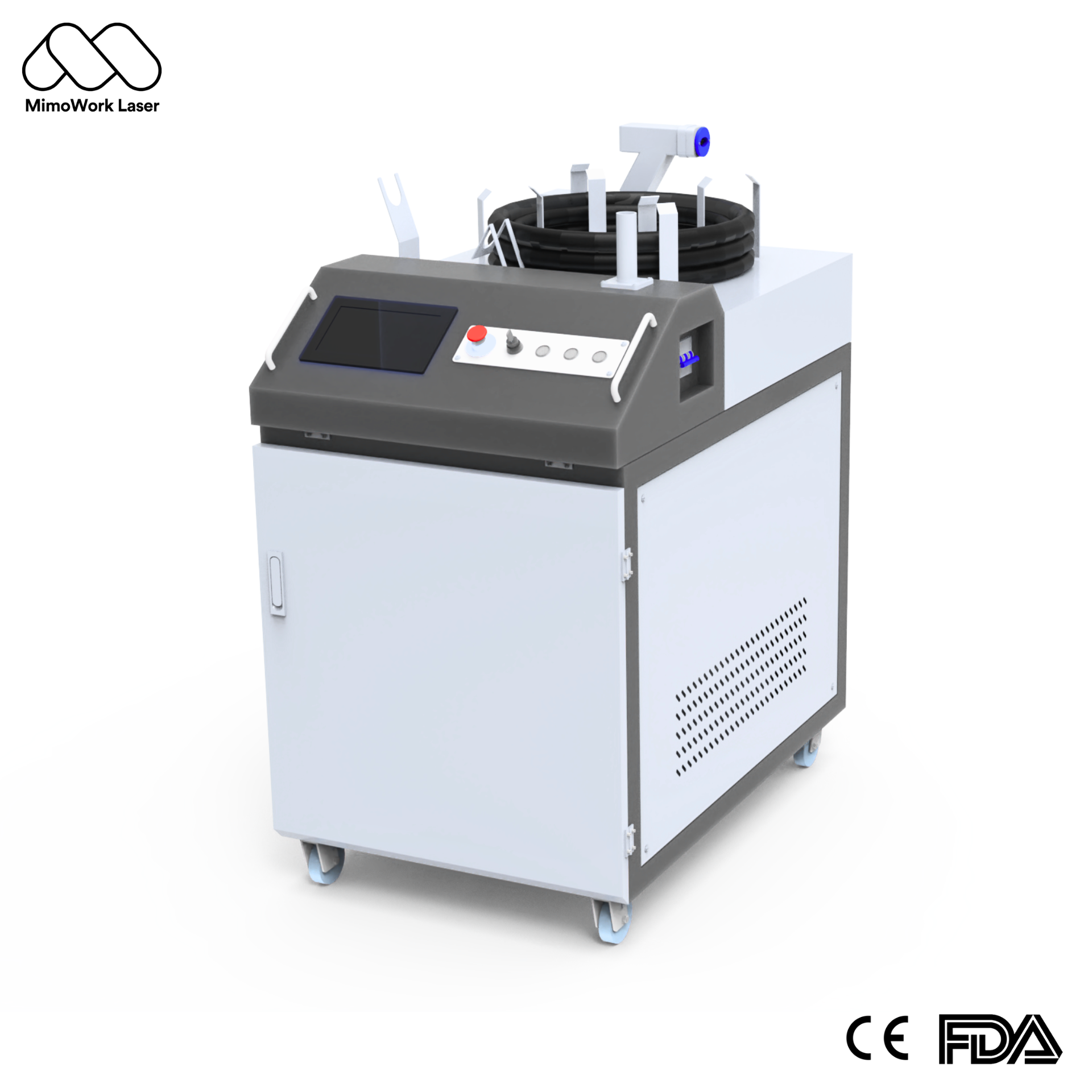
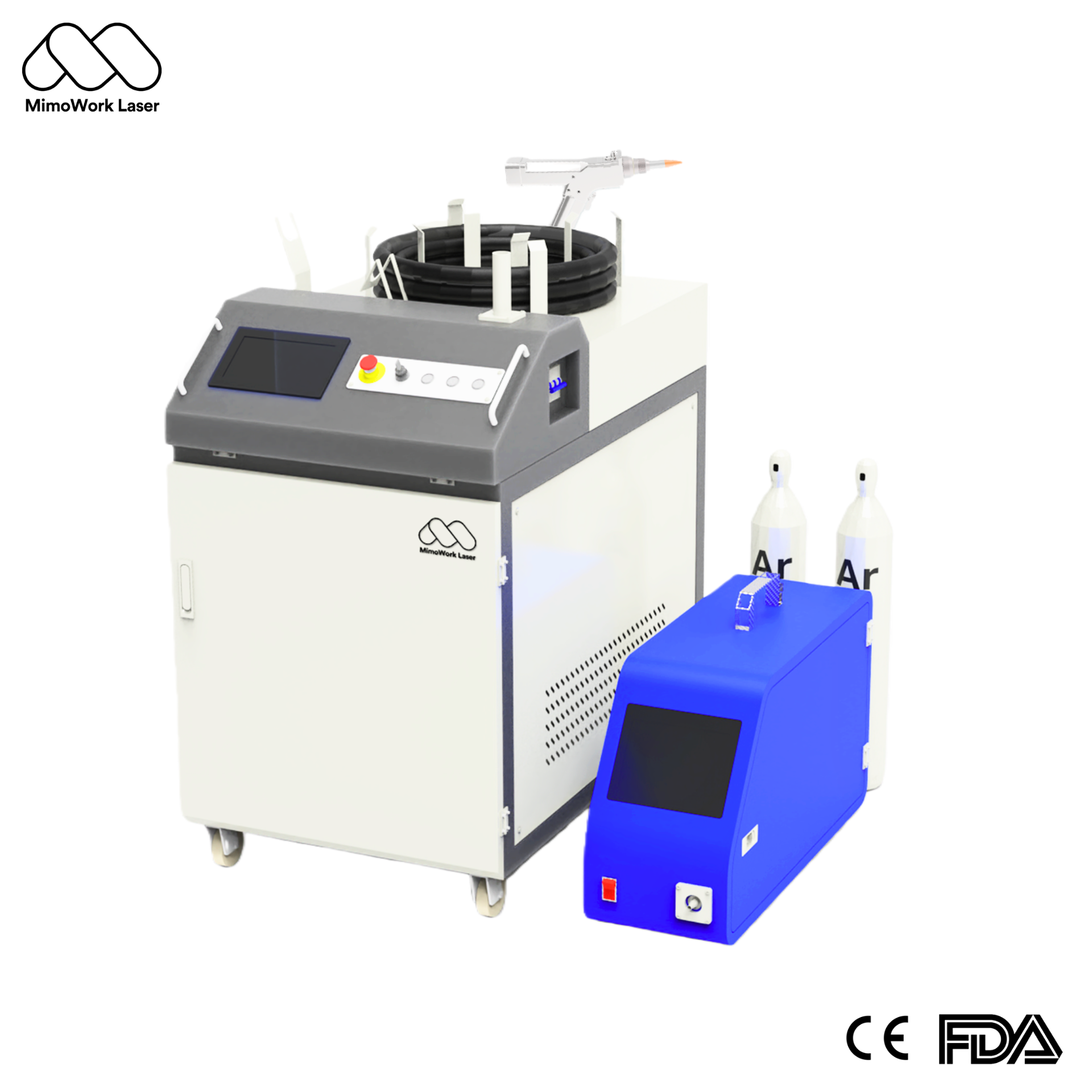
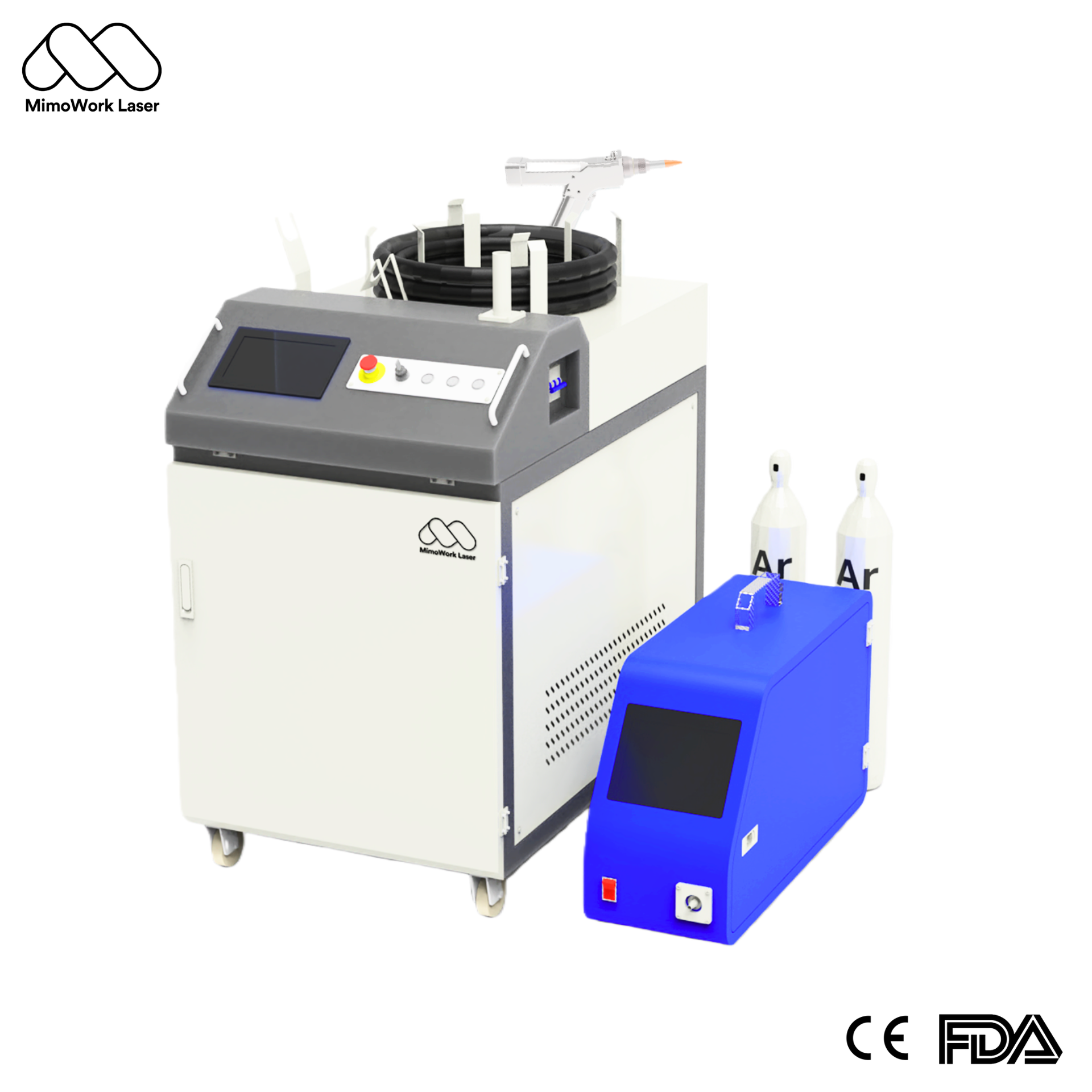
A handheld fiber laser welding system can be used for certain cast iron repair applications, particularly when the operator needs flexibility around a component.
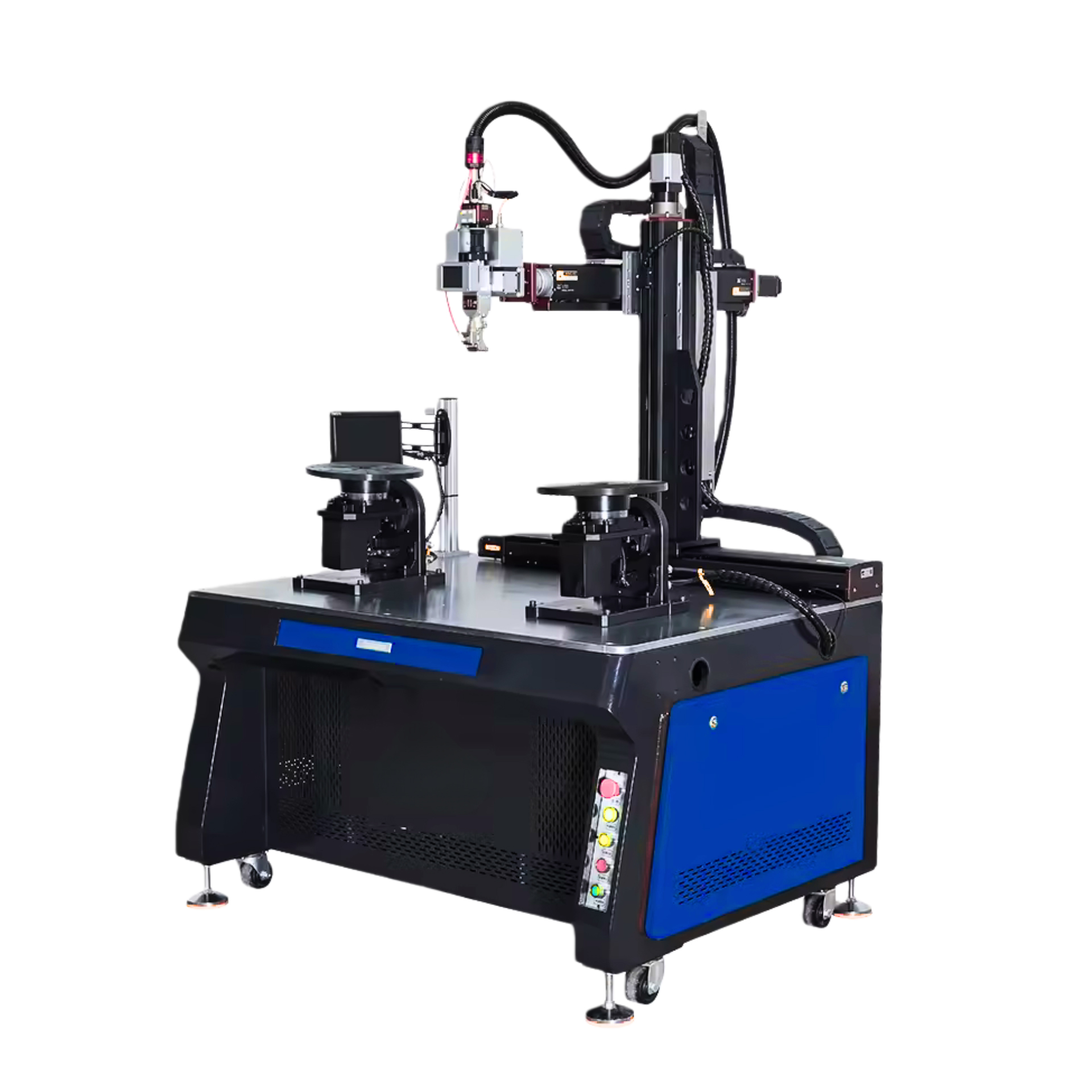
MimoWork offers several laser welding configurations, including Handheld Laser Welding Machine, 4-Axis Gantry Laser Welding Machine, and Manipulator Laser Welding Machine. A handheld system can be useful for flexible repair work, while gantry or robotic configurations may be better suited to larger components or repeatable production tasks.
For cast iron specifically, however, the exact suitability should be determined through application testing. The cast iron grade, component geometry, crack condition and required repair quality all affect the welding process.
The machine configuration should therefore follow the repair workflow rather than laser power alone.
A controlled repair process can be thought of as a sequence rather than a single welding operation.
Start by identifying the material and inspecting the defect.
Then remove contamination and prepare the damaged area.
Next, establish the appropriate preheating and shielding strategy if required.
Before repairing the production component, test the selected parameters on representative material.
Evaluate penetration, bead shape, cracking and the condition of the surrounding material.
Only after the procedure has demonstrated acceptable results should the production repair begin.
After welding, allow the component to cool under the intended conditions rather than exposing it to an uncontrolled thermal shock.
Finally, inspect the repaired area according to the requirements of the component.
This is perhaps the most important lesson.
A parameter that works well on mild steel cannot simply be transferred to cast iron.
Steel and cast iron can respond very differently to the same laser energy.
The difference comes from chemistry, microstructure, thermal conductivity, carbon behavior and cooling response.
Therefore, a “one-setting-fits-all” laser welding chart is especially risky for cast iron.
The more valuable approach is to create a procedure around the actual material.
No. Different cast iron grades have different weldability and thermal behavior. The material should be identified before developing a laser welding procedure.
There is no universal power requirement. The appropriate power depends on material grade, thickness, joint geometry, laser spot characteristics and welding speed. Actual sample testing is recommended.
Preheating may be used to reduce thermal gradients, depending on the cast iron grade and repair procedure. The required temperature should be determined for the specific material rather than assumed.
Filler selection depends on the cast iron grade, required mechanical properties and whether the repaired component needs subsequent machining. The filler should be selected as part of the overall welding procedure.
Laser welding can provide highly localized heat input, which can help with thermal control, but it does not automatically eliminate cracking. Material identification, preparation, heat management, filler selection and cooling conditions remain important.
It can be suitable for certain repair applications, especially when localized heat and precise control are valuable. Old castings should be thoroughly cleaned and inspected because oil, rust, previous repairs and hidden cracks can affect weld quality.
Laser welding cast iron is possible, but success depends on controlling the entire thermal and metallurgical process rather than simply increasing laser power.
The most important steps are material identification, careful joint preparation, controlled heat input, appropriate filler selection and controlled cooling.
For workshops considering a Laser Welding Machine for cast iron repair, sample testing is particularly important. The actual casting, defect geometry and material grade should be used to develop and validate the welding procedure before production repair.
Laser technology can provide the precision and localized heat that make difficult repair work more controllable—but the process still needs to be engineered around the material.
News | Jun-30-2026