Blog
In a field that evolves daily, staying ahead means staying informed.
Explore in-depth articles designed to help you solve complex challenges,
maximize your machine’s ROI.
Stay ahead in a competitive market.


In a field that evolves daily, staying ahead means staying informed.
Explore in-depth articles designed to help you solve complex challenges,
maximize your machine’s ROI.
Stay ahead in a competitive market.
News | Sep-8-2026
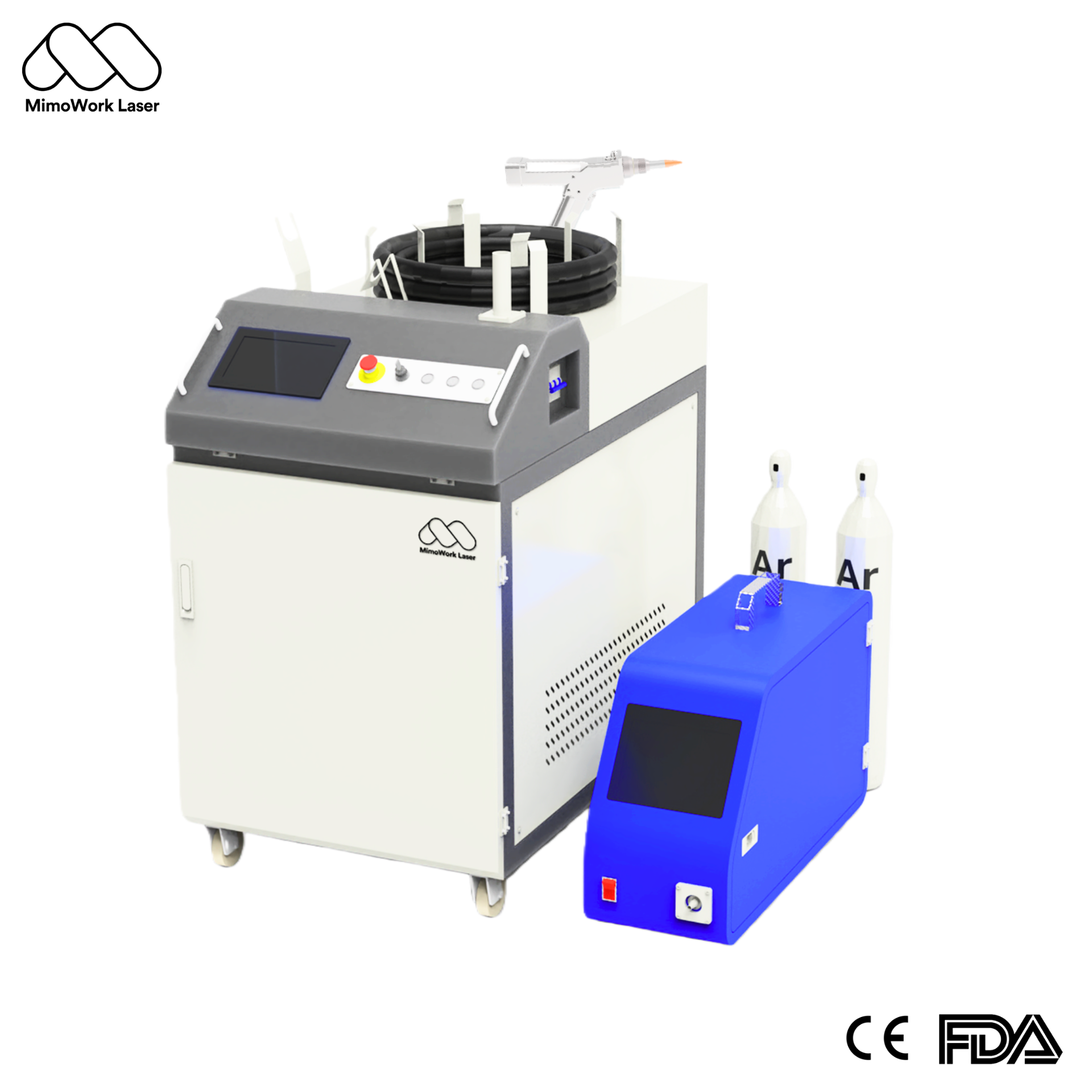
Post-weld grinding can take as much time as welding itself, especially when the finished surface needs to look clean and consistent.
A handheld laser welding machine can reduce this finishing work by producing a narrower, more controlled weld with less spatter and lower heat input than many conventional welding processes.
The result is not necessarily a completely grind-free weld. It is a weld that often needs far less cleanup before the next production step.
Grinding is usually needed to correct the surface left after welding.
Excess weld material, spatter, uneven beads, discoloration, and inconsistent penetration can all affect the final appearance. For products with visible seams, these defects often need to be removed before polishing, painting, coating, or assembly.
Conventional welding can leave a raised or uneven bead that does not match the surrounding surface.
Operators may need to grind down the weld and smooth the transition manually. On long seams, this adds considerable labor.
Spatter can stick to the workpiece during welding. Removing it takes additional time and may require grinding, wire brushing, or other finishing methods.
The more cleanup required after welding, the longer each finished part takes to produce.
High heat input can cause thin metal to warp or discolor. Correcting distortion or repairing inconsistent welds adds another layer of post-weld work.
This is especially important when the finished part has tight dimensional or cosmetic requirements.
Laser welding concentrates energy into a small area, allowing the operator to control the weld more precisely.
When the joint is properly prepared and the parameters are matched to the material, the process can produce a narrow, uniform weld with less excess material and spatter.
A laser beam delivers concentrated energy to the joint instead of heating a large surrounding area.
This makes it possible to control the weld width, penetration, and heat input more closely. For manufacturers, that can mean less material to remove after welding and fewer finishing operations.
A handheld laser welding machine also gives the operator direct control over the welding path, making it suitable for custom parts, short production runs, and applications where flexibility matters.
A stable laser welding process can produce a cleaner weld profile with less spatter than many traditional processes.
For visible stainless steel surfaces, enclosures, cabinets, metal furniture, and other appearance-sensitive products, this can reduce the amount of grinding and polishing required.
| Welding Result | Traditional Welding | Handheld Laser Welding |
| Weld profile | Often requires finishing | Can be narrow and uniform |
| Spatter | More common | Typically lower |
| Heat-affected area | Relatively larger | More concentrated |
| Post-weld grinding | Often required | Often reduced |
| Surface finishing | More labor-intensive | Less finishing in suitable applications |
The actual result depends on material, joint design, shielding gas, filler wire, laser power, and operator technique.
The difference is not simply welding speed. Heat control and the condition of the finished seam can have a direct effect on downstream labor.
Traditional welding may require several finishing steps to achieve a consistent appearance.
Laser welding can produce a cleaner and more uniform seam when the joint fit-up and parameters are suitable. This is valuable when grinding would otherwise remove material and change the appearance of the finished surface.
For decorative or exposed metalwork, reducing finishing time can have a noticeable impact on labor costs.
Because laser energy is concentrated around the weld zone, the surrounding material receives less unnecessary heat.
Lower heat input can help reduce distortion, particularly on thinner metal components. Less distortion means less time spent straightening, correcting, or reworking parts after welding.
However, laser welding does not eliminate thermal effects. Material thickness, joint configuration, welding speed, and parameter selection still matter.
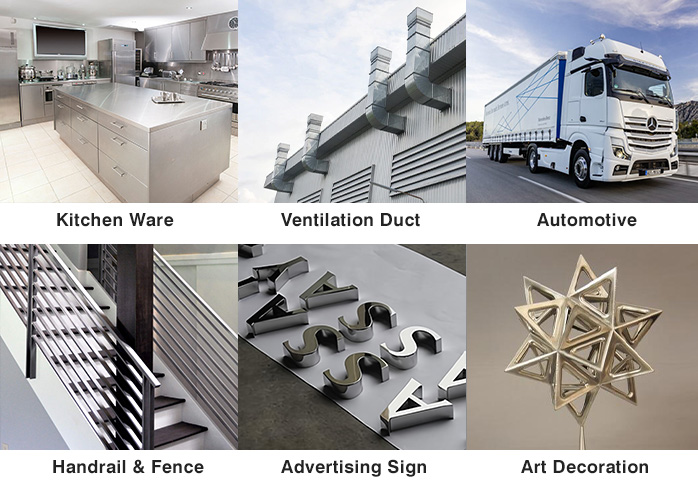
Handheld laser welding is commonly used for metals such as stainless steel, carbon steel, and aluminum.
The machine configuration and welding parameters should be matched to the material and joint.
Stainless steel is widely used where surface appearance and corrosion resistance matter. A clean laser weld can reduce the amount of grinding needed before polishing or final finishing.
Carbon steel is suitable for many structural and fabricated components, while aluminum requires careful control because of its high thermal conductivity and reflective properties.
For each material, laser power, welding speed, focus position, shielding gas, and filler wire can affect the final weld.
Handheld laser welding can be used for different thickness ranges, but there is no single setting that works for every application.
| Application Factor | Why It Matters |
| Material thickness | Determines required penetration and power |
| Joint type | Affects beam position and weld formation |
| Gap size | Influences whether filler wire is needed |
| Welding speed | Changes heat input and bead shape |
| Filler wire | Helps bridge gaps and control the final profile |
| Shielding gas | Protects the weld from contamination |
Before selecting a machine, test the actual material, thickness, and joint configuration rather than relying only on nominal power ratings.
A clean weld starts with the right process settings. Simply increasing laser power does not automatically improve weld quality.
Laser power and welding speed work together.
Too much energy can increase heat input and produce an oversized weld or excessive penetration. Too little energy may result in insufficient fusion.
The goal is to find a stable combination that provides the required penetration without putting unnecessary heat into the workpiece.
For production, record the successful settings for each common material and thickness. This makes results easier to repeat between operators and batches.
Shielding gas protects the molten weld pool from atmospheric contamination.
The appropriate gas depends on the material and application. Filler wire may also be required when the joint has a gap or when additional material is needed to achieve the desired weld profile.
Clean material preparation matters just as much. Oil, rust, coatings, and other contaminants can affect weld quality and increase cleanup requirements.
A handheld laser welder becomes particularly attractive when post-weld finishing is taking up a significant amount of production time.
For simple structural welds where appearance is not important, conventional welding may remain a practical option.
The business case becomes stronger when every welded part requires additional grinding, polishing, or rework.
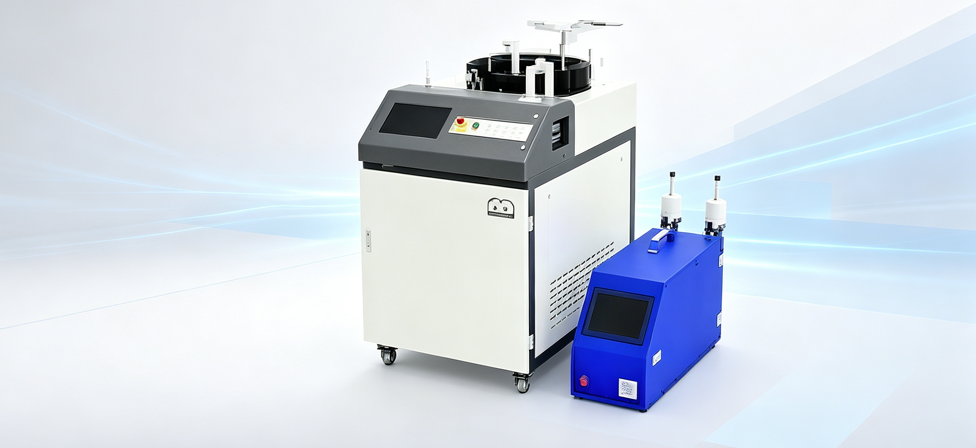
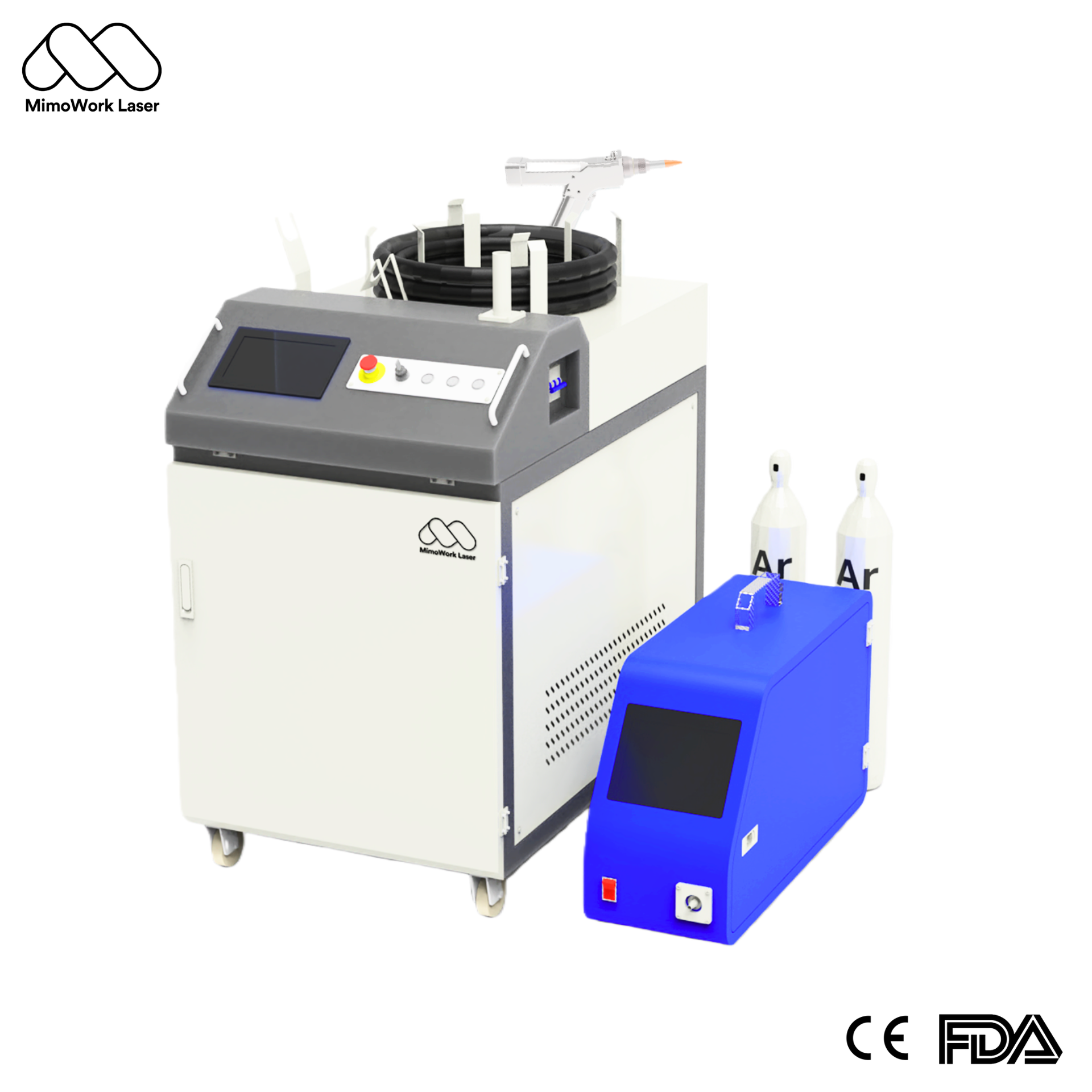
MimoWork’s Handheld Laser Welding Machine is available in 1000W and 1500W configurations for stainless steel, carbon steel, aluminum, and other metal applications. Its concentrated laser energy helps produce cleaner, narrower welds with less spatter.
With continuous or modulated laser output and water cooling, the machine can be matched to different materials and joint types. Testing your actual material and joint design can help determine how much post-weld grinding you can reduce.
Laser power is only one part of the decision.
Ask how the machine performs on your actual material, thickness, joint design, and production workflow.
A sample test is more useful than comparing specifications on paper.
Send the supplier your actual metal samples and explain your current grinding process. Ask them to compare the welded result, grinding time, surface finish, and overall processing time.
That gives you a much clearer picture of the potential labor savings.
Not always. Grinding may still be necessary for certain joint designs, surface requirements, or weld defects. The main advantage is that a well-optimized laser welding process can significantly reduce the amount of post-weld finishing required.
It can be, depending on the laser power, material, thickness, joint configuration, and required penetration. Very thick sections may require multiple passes or a different welding process.
Common materials include stainless steel, carbon steel, and aluminum. Other metals may also be suitable depending on the machine configuration and process parameters.
A properly configured laser welding process generally produces less spatter than many conventional welding methods. Material condition, shielding gas, power, speed, and joint fit-up still affect the result.
Laser welding can provide higher welding speeds in suitable applications, but total production time also includes setup, grinding, polishing, inspection, and rework. Reducing these downstream steps can be just as important as increasing welding speed.
Test your actual material and joint design. Compare the laser-welded sample with your current process based on weld appearance, grinding time, total cycle time, and rework rate.
A handheld laser welding machine can produce a more controlled weld with less spatter and lower surrounding heat, reducing the amount of grinding and polishing needed after welding.
But the real savings depend on your material, thickness, joint design, and current finishing process.
Want to see how much grinding you could eliminate? Send us your metal sample, material thickness, and typical joint design for a welding test. We can compare weld appearance, grinding time, and total processing time so you can evaluate the real production benefit before investing.
News | Aug-31-2026
News | Aug-19-2026

News | Aug-7-2026