Blog
In a field that evolves daily, staying ahead means staying informed.
Explore in-depth articles designed to help you solve complex challenges,
maximize your machine’s ROI.
Stay ahead in a competitive market.


In a field that evolves daily, staying ahead means staying informed.
Explore in-depth articles designed to help you solve complex challenges,
maximize your machine’s ROI.
Stay ahead in a competitive market.
News | Sep-4-2026
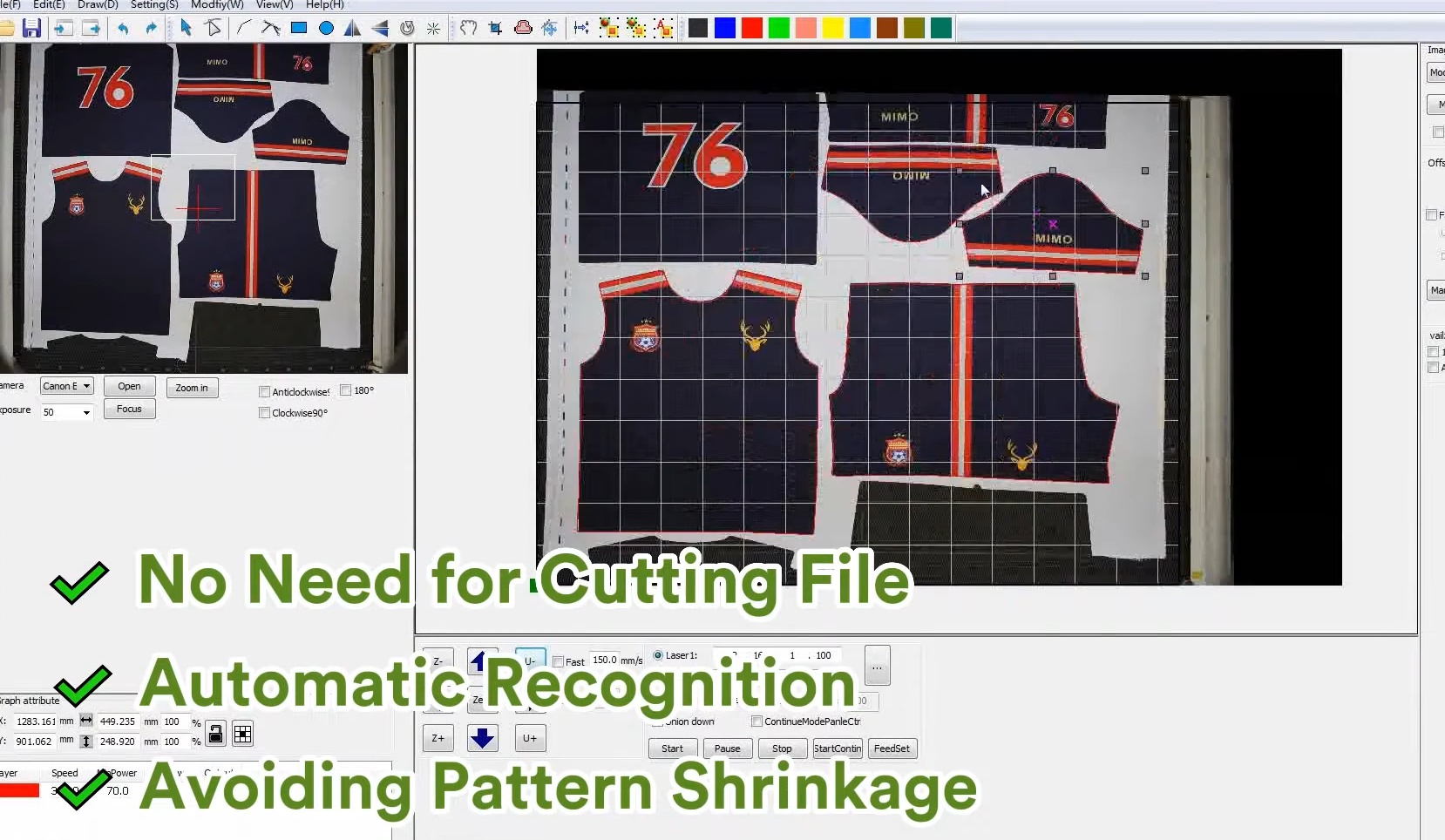
Fabric waste often starts before the laser—or knife—ever makes a cut. Printed patterns can shift, flexible fabrics can stretch, and manual alignment may require extra margins to avoid cutting into the design.
A vision laser cutting machine uses a camera to locate printed patterns or registration marks and adjust the cutting path accordingly. This allows fabric to be cut closer to the actual graphic, reducing unnecessary material loss and rework.
For printed and sublimated textiles, the result is better material utilization, more consistent cutting, and less manual correction.
Traditional cutting can waste fabric for several reasons.
When operators position printed fabric manually, even a small alignment error can affect the final piece. To avoid cutting into the graphic, operators may leave additional space around the pattern.
That extra margin adds up quickly in high-volume production.
Printed textiles are not always perfectly aligned with the original design file. Stretching, feeding tension, and slight fabric movement can change the position of the printed graphic.
A cutting path based only on the original file cannot always account for these changes.
Printed designs often have curved, irregular, or custom-shaped outlines. Standard rectangular cutting patterns may leave more unused fabric between pieces.
Precise contour cutting can make better use of the available material.
The machine does not simply follow a fixed cutting file. Its vision system first identifies where the actual printed design is located, then guides the laser along that position.
A camera scans the fabric and identifies registration marks or printed features.
For printed fabric laser cutting, this allows the cutting path to follow the actual position of the graphic rather than relying entirely on manual positioning.
This is particularly useful for sportswear, custom apparel, flags, banners, and other printed textiles.
Instead of manually tracing each printed outline, the vision system can detect the graphic contour and generate the corresponding cutting path.
For a camera-based fabric contour cutting machine, this is useful when designs change frequently or contain complex shapes.
More accurate positioning means less need for oversized safety margins.
When parts can be cut closer to their actual printed outlines, less fabric is left between pieces. Over hundreds or thousands of parts, even small improvements in material utilization can make a noticeable difference to production costs.
The biggest difference is how the machine determines where to cut.
| Factor | Vision Laser Cutting | Traditional Cutting |
| Pattern positioning | Camera-assisted | Manual or template-based |
| Printed contour detection | Automated | Usually file/template-based |
| Print offset | Detected during processing | Often corrected manually |
| Repeatability | Highly consistent | More operator-dependent |
| Cutting method | Non-contact laser | Mechanical blade |
| Continuous processing | Available with conveyor systems | More manual handling |
Manual positioning depends heavily on operator accuracy. A vision system uses the printed fabric itself as a reference, which helps reduce positioning variation between batches.
A laser cuts without physical contact. This avoids blade wear and mechanical drag, which can be useful when working with flexible fabrics and detailed contours.
For synthetic textiles, laser cutting can also create a clean edge while cutting and sealing the material in one process.
Once the design and cutting parameters are set, automated vision-guided cutting reduces repeated alignment work.
That matters most when the same type of printed fabric is processed in large quantities or when production involves frequent design changes.
Material savings depend on fabric width, pattern shape, print accuracy, nesting layout, fabric distortion, and how much safety margin is currently used.
| Production Factor | Potential Impact on Material Use |
| Print alignment | Less oversized margin |
| Contour accuracy | Less unused space around graphics |
| Fabric distortion | Better adaptation to actual print position |
| Nesting layout | More efficient use of fabric width |
| Cutting consistency | Fewer rejected or re-cut pieces |
The most reliable way to estimate savings is to compare the current process with a machine test using your actual fabric and cutting files.
Vision-guided systems are particularly useful for textiles where the printed design determines the cutting position.
Sublimated sportswear is a common application because graphics often need to be cut accurately around complex outlines.
A vision laser cutting machine for sublimated sportswear can identify the printed design and align the cutting path to it.
Polyester is widely used for sublimation printing and sportswear. Nylon and other synthetic fabrics can also be suitable, depending on the material structure and required edge quality.
For buyers looking for a laser cutting machine for printed polyester fabric, testing the actual material is still important because coating, thickness, stretch, and print characteristics can affect cutting performance.
Vision-guided cutting can also be considered for custom apparel, flags, banners, decorative textiles, and other products where printed graphics need accurate positioning.
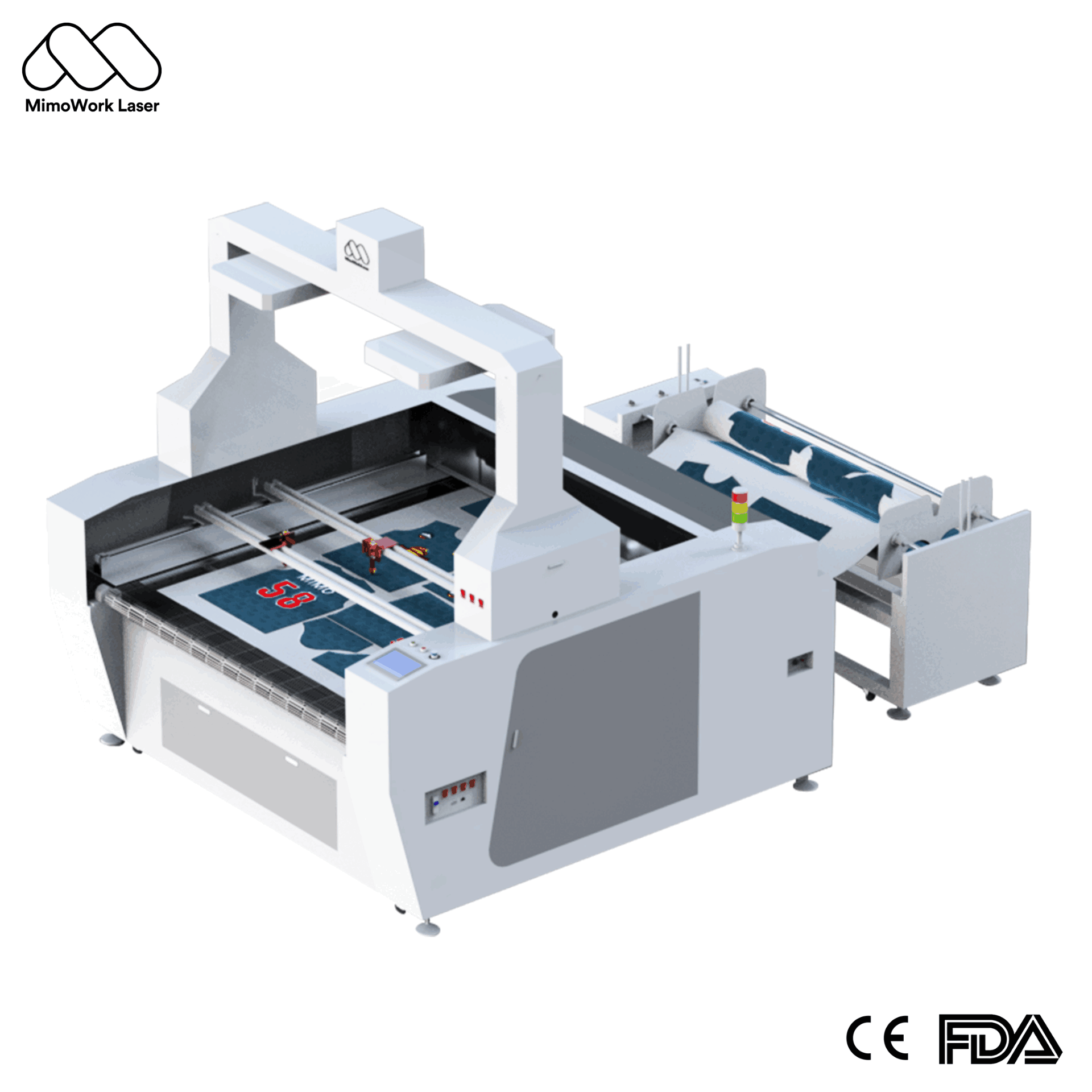
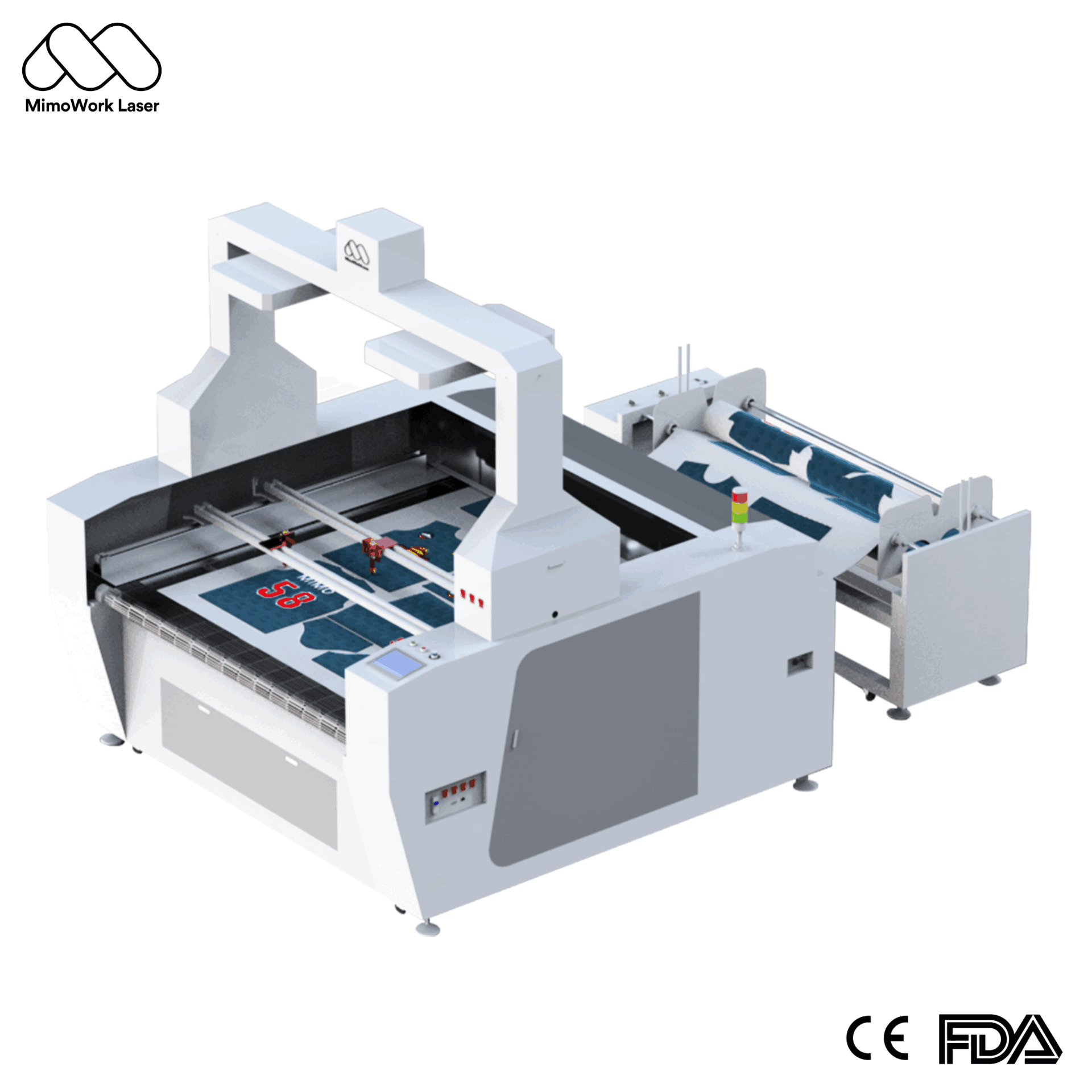
The C160-L addresses this by using the actual printed material as a reference during cutting.
The C160-L integrates a high-resolution camera system that scans registration marks and printed graphics. The system then aligns the laser cutting path with the actual design position.
This reduces the need for operators to repeatedly measure and reposition printed panels.
The machine has a 1600 × 1200 mm working area and is available with 100W–150W CO₂ laser power, making it suitable for a range of printed textile cutting applications.
Printed graphics do not always follow simple geometric shapes. The C160-L can automatically detect printed outlines and generate the cutting path around the actual graphic.
This is useful when production involves irregular logos, custom sportswear panels, or changing printed designs.
Manual loading and repositioning can become a bottleneck when working with long rolls of fabric.
The C160-L uses a conveyor working table to feed and transport roll materials through the cutting process. This supports more continuous production and reduces repeated manual handling.
The combination of vision recognition, contour cutting, and conveyor feeding makes the C160-L an automated fabric vision cutter for printed textile production, helping manufacturers reduce manual positioning and maintain more consistent cutting results across production runs.
Do not evaluate the machine only by laser power or cutting speed. For printed textiles, the vision system and overall workflow can have a bigger impact on production results.
| Buying Factor | What to Check |
| Vision system | Can it detect your actual patterns or registration marks? |
| Contour accuracy | Can it follow irregular printed outlines? |
| Working area | Does it match your typical panel size? |
| Conveyor system | Can it support your fabric feeding process? |
| Material compatibility | Has your actual fabric been tested? |
| Support | Are installation, training, and technical support available? |
A sample test is usually more useful than comparing specifications alone.
Send the manufacturer your actual fabric, print file, and cutting pattern. Ask for measurable results such as material utilization, cutting accuracy, processing time, and rejected-piece rate.
That gives you a much clearer basis for an investment decision.
It uses a camera to identify printed patterns or registration marks and align the cutting path with the actual fabric. This reduces unnecessary margins, positioning errors, and re-cutting.
Yes. Vision systems are designed to detect printed graphics or registration marks and guide the cutting path around the actual design.
It can compensate for certain print-position variations detected by the vision system. The actual level of compensation depends on the material, print process, and machine configuration.
Yes. Machines equipped with conveyor systems can support continuous fabric feeding and cutting from rolls, depending on the material and production setup.
It is mainly used to identify printed graphics and cut around their actual contours. Common applications include sublimated sportswear, printed textiles, custom apparel, flags, and other graphic-based fabric products.
Savings depend on the existing cutting process, fabric width, print accuracy, nesting efficiency, and current safety margins. A sample comparison using your own production data gives a more reliable estimate.
The C160-L combines vision recognition, automatic contour cutting, and conveyor processing for continuous printed fabric production.
We can run a sample test and help you understand the expected cutting results before you move forward.
News | Aug-24-2026
News | Aug-14-2026
News | Jul-3-2026