Blog
In a field that evolves daily, staying ahead means staying informed.
Explore in-depth articles designed to help you solve complex challenges,
maximize your machine’s ROI.
Stay ahead in a competitive market.


In a field that evolves daily, staying ahead means staying informed.
Explore in-depth articles designed to help you solve complex challenges,
maximize your machine’s ROI.
Stay ahead in a competitive market.
News | Sep-4-2026
Short Answer:
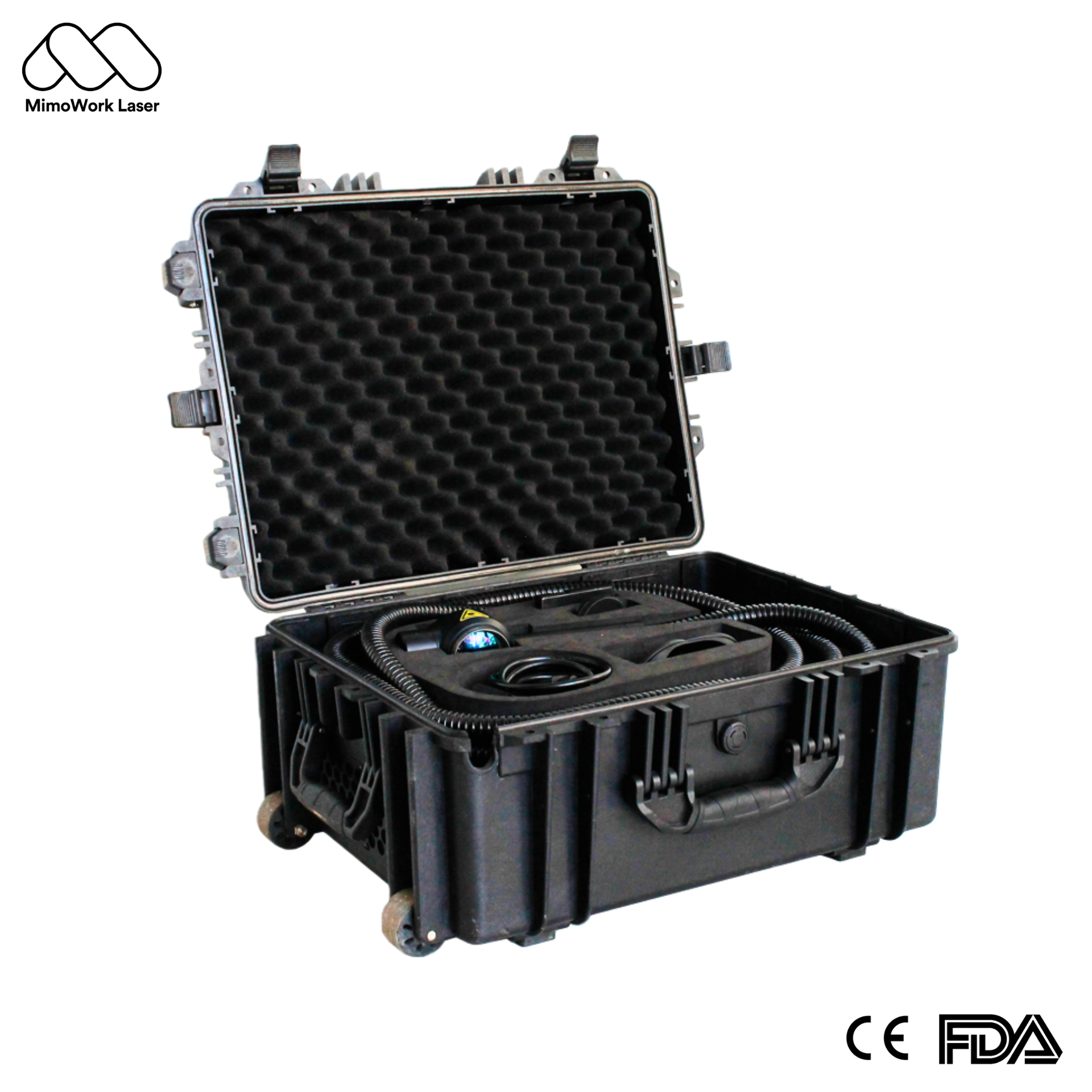
A continuous wave laser cleaning machine uses controlled laser energy to heat and remove rust from the metal surface.
With properly adjusted laser parameters, the rust layer absorbs the energy more effectively than the underlying metal.
This allows heavy rust to be removed efficiently while minimizing damage to the substrate.
A CW laser cleaner delivers laser energy continuously rather than in short pulses. This creates a different cleaning process compared with pulsed laser systems.
As the cleaning head moves across the surface, the laser continuously delivers energy into the contamination layer. This makes CW technology particularly suitable for applications involving large amounts of material removal.
👀 See How Laser Cleaning Works.
The basic principle is straightforward: the laser delivers controlled energy to the rusted surface.
Rust and the metal substrate have different physical and thermal properties. When the laser beam reaches a corroded surface, the contamination layer absorbs energy and heats rapidly.
Depending on the material and process parameters, the rust may:
The cleaning head then continues scanning across the workpiece.
This movement is critical.
A laser beam that remains stationary continues transferring energy into the same location. Even after the rust has been removed, the exposed metal can continue absorbing energy.
The goal is therefore not to use the maximum possible laser power.
The goal is to deliver enough energy to remove the contamination while minimizing unnecessary thermal effects on the cleaned substrate.
A CW laser cleaning machine can damage or alter metal if the parameters are wrong. It works safely and effectively when the process stays within the appropriate operating window for the material and contamination.
Four parameters have the greatest influence:
Higher power provides greater cleaning capacity.
However, excessive power can increase the risk of unnecessary heat input, especially on thin or heat-sensitive materials.
Scanning speed determines how long the laser interacts with a specific area.
A slower scan increases energy exposure. A faster scan reduces dwell time.
This is why increasing laser power while also increasing scanning speed can sometimes improve cleaning efficiency without concentrating excessive heat in one area.
A smaller spot concentrates more energy into a specific area.
A larger spot covers more surface area but reduces energy density.
The correct choice depends on the contamination and required cleaning result.
The distance between the cleaning head and the workpiece affects how efficiently the laser energy reaches the surface.
Incorrect positioning can reduce cleaning performance or create inconsistent results.
These factors are connected.
A CW laser cleaning machine for steel is particularly well suited to carbon steel, structural steel, and other large fabricated components.
Typical applications include:
Thicker steel components generally offer a wider processing window because they can tolerate higher thermal input than thin sheets.
This makes heavy steel structures one of the strongest application areas for high-power CW laser cleaning.
Stainless steel can also be cleaned using laser technology, but heat control becomes more important.
Excessive thermal input may cause unwanted discoloration or changes to the surface.
Aluminum conducts heat quickly and requires careful parameter selection.
Material thickness, surface condition, contamination type, and the required finish should all be considered before selecting a CW laser system.
Laser cleaning can be used on high-value industrial alloys, but high speed is not always the priority.
Where surface preservation is critical, a pulsed laser system may provide better process control.
CW laser cleaning is particularly useful when conventional cleaning becomes slow, abrasive, difficult to automate, or expensive to manage.
Heavy rust is one of the strongest applications for a continuous wave laser cleaning machine.
Large steel structures and heavily corroded equipment may require substantial cleaning capacity. Continuous high-power output can remove heavy contamination more efficiently across large surfaces.
Mill scale and oxidation can interfere with downstream manufacturing processes such as:
Laser cleaning can remove these layers without introducing abrasive media into the working environment.
CW laser systems can also remove certain industrial coatings.
However, coating thickness and composition vary significantly. Process testing should be completed before establishing production settings.
Laser cleaning can also support maintenance and surface preparation by removing:
The strongest CW applications usually combine substantial contamination with a thermally robust substrate.
More power is not automatically better.
The right power depends on:
MimoWork offers CW laser cleaning configurations from 1000W to 3000W.
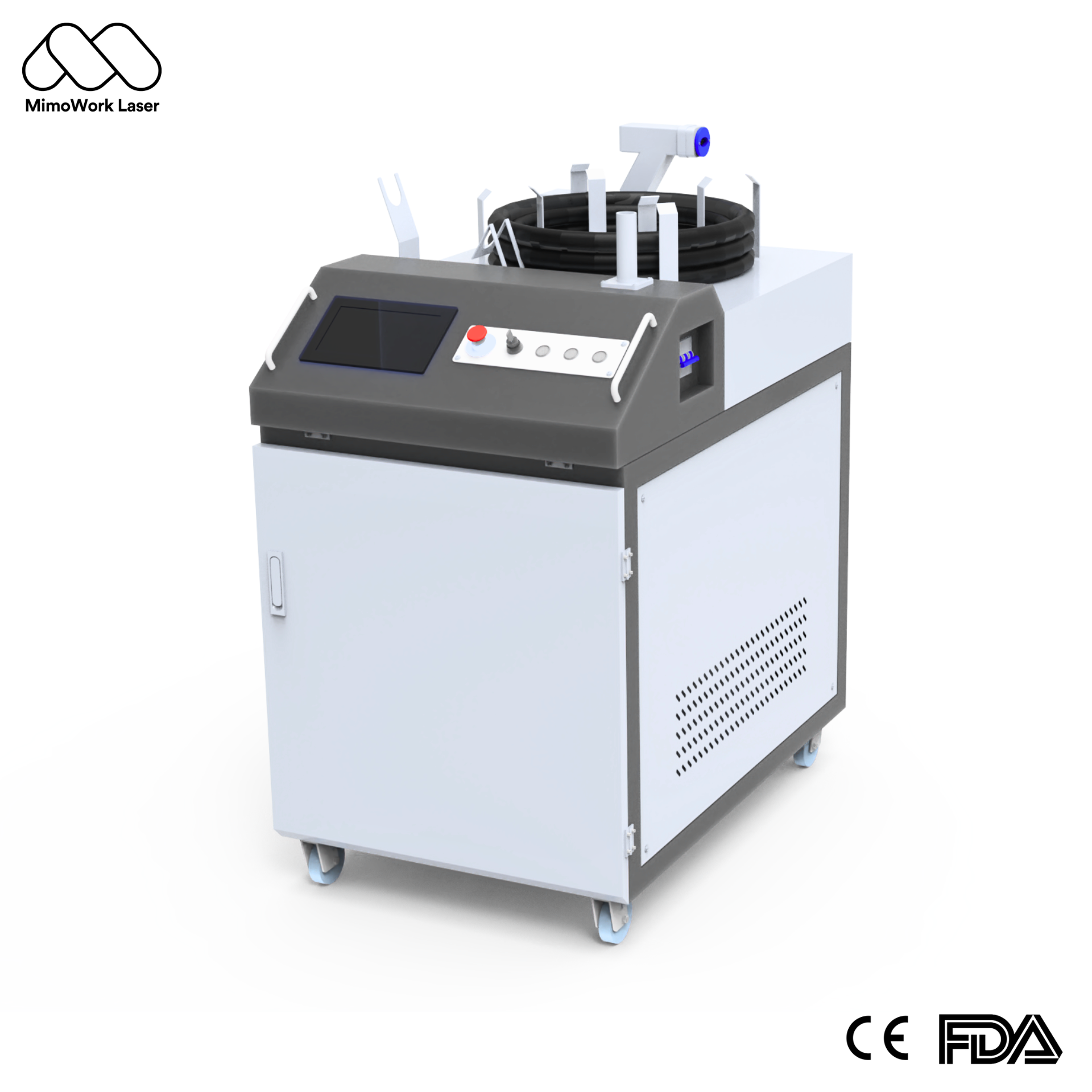
| Laser Power | Typical Application | Best For |
| 1000W | Moderate rust and maintenance | General industrial cleaning |
| 1500W–2000W | Heavy rust and larger workpieces | Balanced capacity and flexibility |
| 3000W | Large-scale and high-volume cleaning | Maximum industrial throughput |
A 1000W laser cleaner may be sufficient for regular maintenance and moderate corrosion.
A 1500W or 2000W system may provide a better balance for companies dealing with heavier rust or larger components.
A 3000W laser cleaning machine is more suitable when cleaning speed and production capacity are the priority.
Actual results will vary depending on rust thickness, material, surface geometry, and process parameters.For this reason, maximum cleaning speed should be treated as an application-specific performance reference—not a universal result.
Neither technology is universally better.
The right choice depends on the workpiece and cleaning objective.
The application requires tighter surface control
Surface precision is critical
The workpiece is thin
Heat input must be minimized
The component is delicate or high-value
Do not assume maximum power will produce the best cleaning result.
Begin with conservative settings appropriate for the material and contamination.
Increase laser intensity only when necessary.
If the rust is not being removed efficiently, increasing power is not always the best solution.
Adjustments to scanning speed, spot size, and working distance may improve the result while controlling thermal exposure.
A short test area can reveal whether the laser is causing:
This step is especially important when processing a new material or contamination type.
High-power CW laser systems require stable thermal management.
MimoWork uses a water-cooling system to support continuous high-power operation.
Laser cleaning may generate dust, particles, and fumes depending on the contamination being removed.
Rust, paint, coatings, and industrial residues should be considered when designing the extraction system.
A suitable fume extraction solution helps maintain a cleaner working environment and supports more stable operation.
A CW laser cleaner is usually a strong choice when cleaning productivity is the main concern.
It is particularly suitable for:
A handheld CW laser cleaner may provide flexibility for maintenance, repair, and large workpieces.
For repetitive cleaning of the same components, an automated system may provide greater long-term efficiency.
Before purchasing, buyers should evaluate more than laser power.
Key considerations include:
A 3000W machine is not automatically the best investment simply because it offers the highest output.
The right machine is the one that matches the actual cleaning workload.
Yes. Heavy rust is one of the strongest applications for CW laser technology. Continuous high-power output is particularly suitable for large and thermally robust metal surfaces.
It can if the laser parameters are incorrect. Excessive power, slow scanning, or prolonged exposure may introduce unnecessary heat. With appropriate process settings, the risk of substrate damage can be minimized.
It depends on the application. A 1000W machine may be sufficient for moderate rust and regular maintenance. A 2000W system may be more suitable for heavier contamination and larger cleaning workloads.
Choose CW technology for heavy rust, large surfaces, and high-throughput cleaning. Choose pulsed laser cleaning when surface precision and lower heat input are more important.
For companies regularly cleaning heavy rust, mill scale, coatings, or large steel components, it can be. The value usually comes from higher cleaning productivity, reduced abrasive waste, and a more streamlined cleaning process.
A continuous wave laser cleaning machine is not the best solution for every cleaning application.
Its strongest advantage is the high-speed removal of heavy contamination from large, robust metal surfaces.
If you regularly clean heavily rusted steel, structural components, industrial equipment, or large fabricated parts, a CW laser cleaner can provide significantly higher throughput than precision-focused cleaning systems.
If your application involves thin metal, delicate components, or strict surface quality requirements, pulsed laser cleaning may be the better choice.
The final decision should not be based on wattage alone.
Consider:
Material → Rust thickness → Cleaning area → Required throughput → Acceptable heat input
Once these factors are clear, selecting the right continuous wave laser cleaning machine becomes much easier.
Need help choosing between 1000W, 1500W, 2000W, or 3000W? Contact MimoWork with your material type, rust condition, workpiece dimensions, and daily cleaning requirements for an application-based recommendation.
News | Aug-6-2026