Blog
In a field that evolves daily, staying ahead means staying informed.
Explore in-depth articles designed to help you solve complex challenges,
maximize your machine’s ROI.
Stay ahead in a competitive market.


In a field that evolves daily, staying ahead means staying informed.
Explore in-depth articles designed to help you solve complex challenges,
maximize your machine’s ROI.
Stay ahead in a competitive market.
News | Nov-7-2026 | Mimowork
Industrial laser cleaning machines can achieve maximum advertised cleaning speeds of 20–70 m²/h, depending on laser power and configuration. For large steel surfaces, MimoWork’s continuous wave (CW) laser cleaning machines offer 1000W, 1500W, 2000W, and 3000W options, with listed maximum cleaning speeds of ≤20, ≤30, ≤50, and ≤70 m²/h, respectively. However, actual productivity depends on rust thickness, mill scale adhesion, scanning width, and the required surface finish.
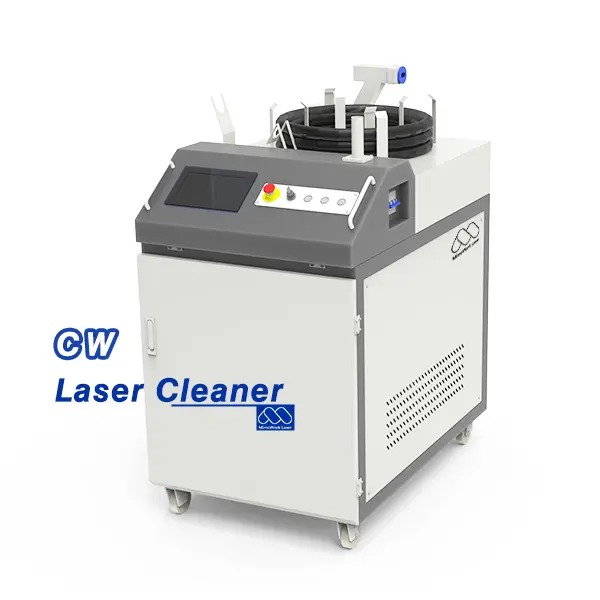
The most useful way to evaluate laser cleaning steel is to distinguish between a machine’s advertised maximum speed and its actual production output.
MimoWork provides the following maximum cleaning speed specifications for its CW fiber laser cleaning systems:
| Laser Power | Maximum Listed Cleaning Speed | Typical Application Focus |
| 1000W | ≤20 m²/h | Regular rust removal and surface maintenance |
| 1500W | ≤30 m²/h | Medium-scale industrial cleaning |
| 2000W | ≤50 m²/h | Large steel components and heavier contamination |
| 3000W | ≤70 m²/h | High-volume industrial surface preparation |
These figures represent equipment specifications, not guaranteed production rates on every steel surface. Heavy mill scale, multiple cleaning passes, and complex workpiece geometries can significantly reduce actual output.
For example, a 2,000W machine may process a lightly rusted flat steel plate much faster than a heavily oxidized structural beam requiring repeated passes.
The important question is therefore not simply how many square meters a machine can clean, but how much surface it can clean while achieving the required surface condition.
Different contaminants require different amounts of laser energy.
Light surface rust is generally easier to remove because it has weaker adhesion and requires less energy than thick, compact oxidation layers.
Mill scale presents a different challenge. This dense oxide layer forms during hot rolling and can remain firmly attached to the steel substrate. Removing it completely may require multiple passes or more demanding scanning parameters.
Old paint also introduces additional variables, including coating thickness, chemical composition, and adhesion.
Before selecting equipment, identify the actual surface condition rather than estimating cleaning speed from the material alone.
Higher laser power generally increases the available energy for removing contaminants. However, cleaning efficiency does not increase in a perfectly linear relationship with wattage.
For example, MimoWork’s listed maximum speeds increase from 20 m²/h at 1000W to 50 m²/h at 2000W. This is a 2.5-fold increase in the specified maximum speed, rather than a simple twofold increase.
The reason is that cleaning productivity also depends on scanning parameters, beam distribution, and the contamination being removed.
A 3000W system is worth considering when large surfaces and high daily production volumes justify the additional investment. For smaller maintenance operations, a lower-power system may offer better overall economics.
CW and pulsed laser cleaners serve different production requirements.
| Comparison | CW Laser Cleaning | Pulsed Laser Cleaning |
| Energy delivery | Continuous output | Energy delivered in pulses |
| Main advantage | High cleaning throughput | More controlled energy input |
| Suitable applications | Large steel surfaces, heavy rust and coatings | Precision cleaning and localized treatment |
| Typical priorities | Productivity and coverage | Surface control and reduced heat input |
For extensive steel structures, CW systems are generally more suitable when rapid material removal is the priority.
Pulsed systems are more appropriate when controlling thermal effects is particularly important, such as cleaning sensitive components or localized surfaces.
The choice should be based on the required cleaning result, not wattage alone.
Laser power is only part of the productivity equation.
A wider scanning field can cover more surface during each pass, reducing the number of movements needed to process a large steel plate.
However, increasing the scanning width without considering energy distribution may produce inconsistent cleaning results.
Overlap is equally important. Adjacent scanning paths need sufficient overlap to avoid untreated strips between passes. Excessive overlap, on the other hand, wastes processing time and can increase heat input.
Operators should test scanning width, speed, and overlap together to establish a consistent cleaning pattern.
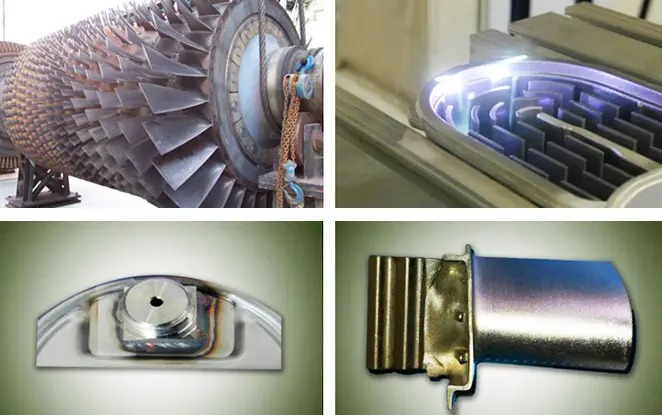
For shipyards, steel fabrication plants, and pipeline maintenance operations, cleaning speed directly affects production schedules.
CW fiber laser cleaning machines deliver continuous energy, making them suitable for removing rust, paint, and oxide layers across relatively large metal surfaces.
MimoWork’s CW laser cleaning range provides a useful reference for equipment selection:
• 1000W: A practical starting point for routine industrial rust removal and smaller production workloads.
• 2000W: A stronger option for larger workpieces, heavier contamination, and operations requiring higher throughput.
• 3000W: Designed for demanding industrial cleaning where large surface areas and production volume are major considerations.
The listed maximum cleaning speeds are 20, 50, and 70 m²/h, respectively.
It is important to understand that these maximum figures should not be treated as guaranteed rust-removal rates. A machine processing loose surface oxidation will perform differently from one removing firmly bonded mill scale.
For procurement, request a cleaning test using the actual steel grade, contamination thickness, and required finish.
Large industrial workpieces create a different cleaning challenge from small mechanical components.
Shipbuilding operations may involve extensive steel plates, structural sections, and surfaces exposed to corrosion during storage and transportation.
Steel fabrication plants also need consistent surface preparation before welding, coating, or other downstream processes.
CW laser cleaning offers several practical advantages:
However, laser cleaning still requires appropriate fume extraction, protective measures, and process control.
Cleaning speed should never come at the expense of the steel substrate.
Excessive energy input or inappropriate scanning parameters can cause localized heating, discoloration, or changes to surface characteristics.
The required surface finish also matters. Steel intended for repainting may need a different cleaning result from steel undergoing precision welding preparation.
CW cleaning is not automatically damage-free. The correct combination of power, scanning speed, focal position, and overlap must be established through testing.
Laser cleaning is not necessarily the fastest or cheapest solution for every large-scale steel cleaning project.
The right comparison should include labor, consumables, waste handling, equipment operation, and downstream surface preparation.
| Factor | Laser Cleaning | Sandblasting | Chemical Pickling |
| Cleaning mechanism | Laser energy removes contaminants | Abrasive impact | Chemical reaction |
| Consumables | No blasting media or cleaning chemicals | Requires abrasive media | Requires chemical agents |
| Secondary waste | Removed contaminants and extraction residues | Spent abrasive and dust | Chemical waste and wastewater |
| Surface control | Adjustable laser parameters | Depends on abrasive and pressure | Depends on chemical concentration and exposure |
| Complex geometries | Requires suitable access and scanning | Can reach many irregular surfaces | Depends on immersion or application method |
| Best application fit | Selective cleaning and controlled industrial treatment | High-volume bulk surface preparation | Suitable batch treatment and compatible materials |
Sandblasting can remain highly competitive for extensive, heavily corroded surfaces where maximum bulk removal is the priority.
Laser cleaning becomes attractive when reducing abrasive consumption, avoiding chemical treatment, or improving cleaning control provides operational value.
Chemical pickling may suit specific production processes, but chemical handling, wastewater treatment, and corrosion control must be considered.
A proper cost comparison should calculate the total cost per accepted square meter, rather than comparing equipment purchase prices alone.
MimoWork offers continuous wave fiber laser cleaning equipment designed for industrial surface treatment.
Its CW configuration covers 1000W–3000W and uses a 1070nm wavelength, water cooling, and a scanning speed of up to 7000mm/s.
The system also offers a beam width range of 10–200mm, supporting different cleaning coverage requirements.
For large steel surfaces, the equipment can be considered for:
Single-galvo and optional double-galvo configurations provide additional flexibility for different cleaning requirements.
For buyers comparing the best laser cleaning machine, the most important consideration is whether the machine can achieve the required cleaning result at an acceptable production rate.
Explore MimoWork’s Continuous Wave Laser Cleaning Machine for technical specifications and configuration details.
Related guide:Best Laser Cleaning Machine in 2026: How to Choose the Right Setup for Eco-Friendly, Precision Rust & Paint Removal
MimoWork lists maximum cleaning speeds of ≤20 m²/h for 1000W and ≤70 m²/h for 3000W. Actual performance varies with rust thickness, scanning parameters, and surface requirements.
Continuous handheld operation can cause fatigue and inconsistent scanning. Mechanical positioning, defined cleaning zones, and suitable mobile laser cleaning configurations can improve workflow efficiency.
Steel should be inspected and protected as soon as practical after cleaning. Humidity and residual moisture can cause flash rust, so coating preparation should follow the manufacturer’s requirements.
Yes. However, heavily bonded mill scale may require multiple passes and carefully adjusted laser parameters. Test a representative steel section before full-scale processing.
The right laser cleaning system depends on steel surface area, contamination thickness, and required production output. MimoWork offers 1000W–3000W CW configurations with maximum listed cleaning speeds of ≤20–70 m²/h.
When selecting the best laser cleaning machine, prioritize tested cleaning performance and operating costs rather than wattage alone.
News | Sep-24-2026