Blog
In a field that evolves daily, staying ahead means staying informed.
Explore in-depth articles designed to help you solve complex challenges,
maximize your machine’s ROI.
Stay ahead in a competitive market.


In a field that evolves daily, staying ahead means staying informed.
Explore in-depth articles designed to help you solve complex challenges,
maximize your machine’s ROI.
Stay ahead in a competitive market.
News | Oct-9-2026
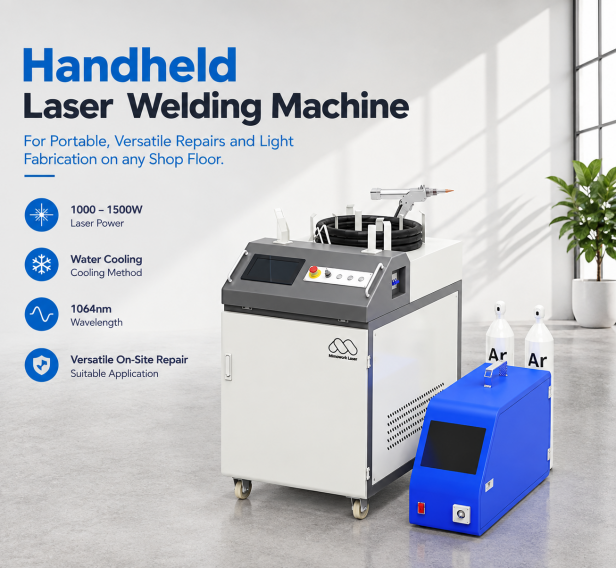
Yes, titanium can be laser welded successfully. Laser welding is particularly useful when a project requires a narrow weld, controlled heat input, and limited distortion.
The main challenge is not melting titanium, but protecting the hot metal from atmospheric contamination during welding and cooling. Titanium reacts strongly with oxygen and nitrogen at elevated temperatures, so inadequate shielding can cause discoloration, contamination, and reduced weld quality.
For this reason, successful titanium laser welding depends on several factors working together, including shielding gas, nozzle design, laser power, welding speed, joint fit-up, focus, and post-weld protection.
Titanium itself can be melted effectively with a concentrated laser beam. The difficulty comes from controlling what happens while the metal is hot.
During welding, the molten pool and surrounding heated material can react with atmospheric gases. If protection ends too early, the weld may become contaminated even when the initial weld pool looks stable.
This makes shielding particularly important for titanium. The gas must protect not only the molten pool but, when necessary, the hot metal immediately around and behind the weld.
Yes. Fiber lasers are widely used for precision metal welding because they concentrate energy into a relatively small area. For titanium, this can help control heat input and reduce unnecessary thermal distortion.
However, the laser source is only one part of the system. A suitable titanium welding setup also needs appropriate focusing optics, shielding gas delivery, nozzle positioning, welding speed, joint preparation, and workholding.
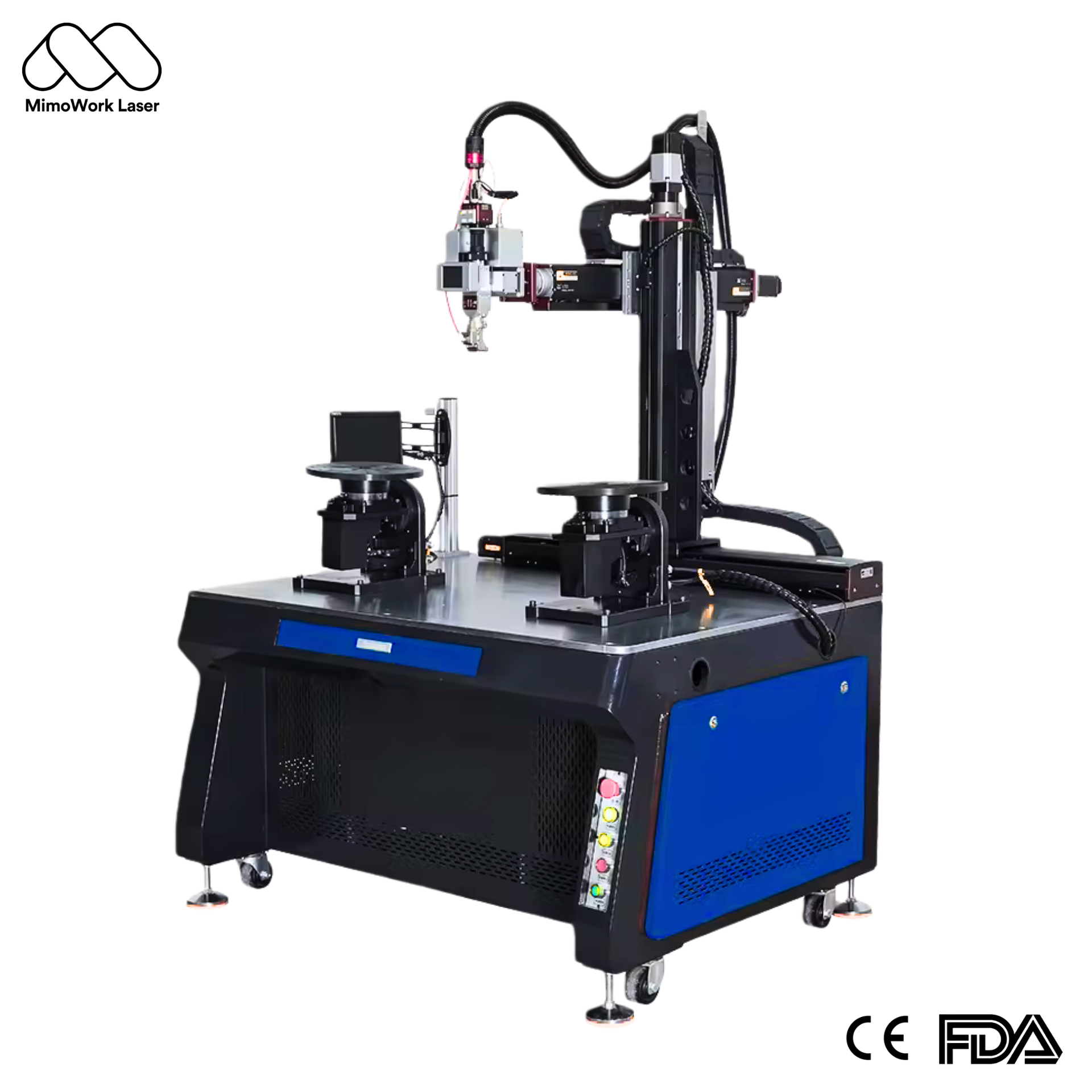
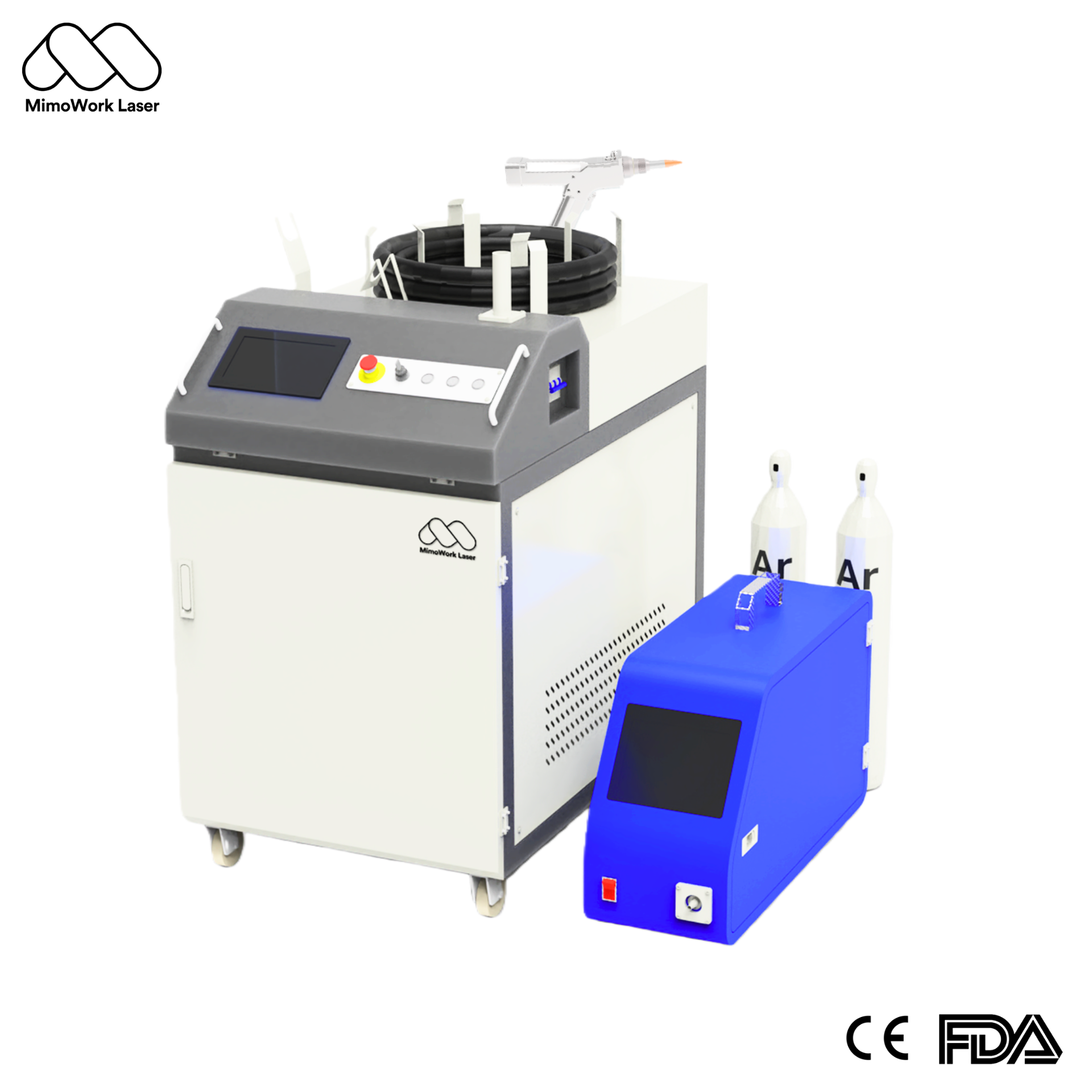
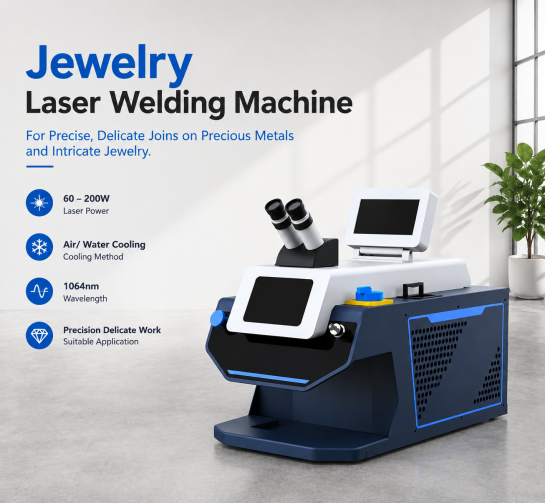
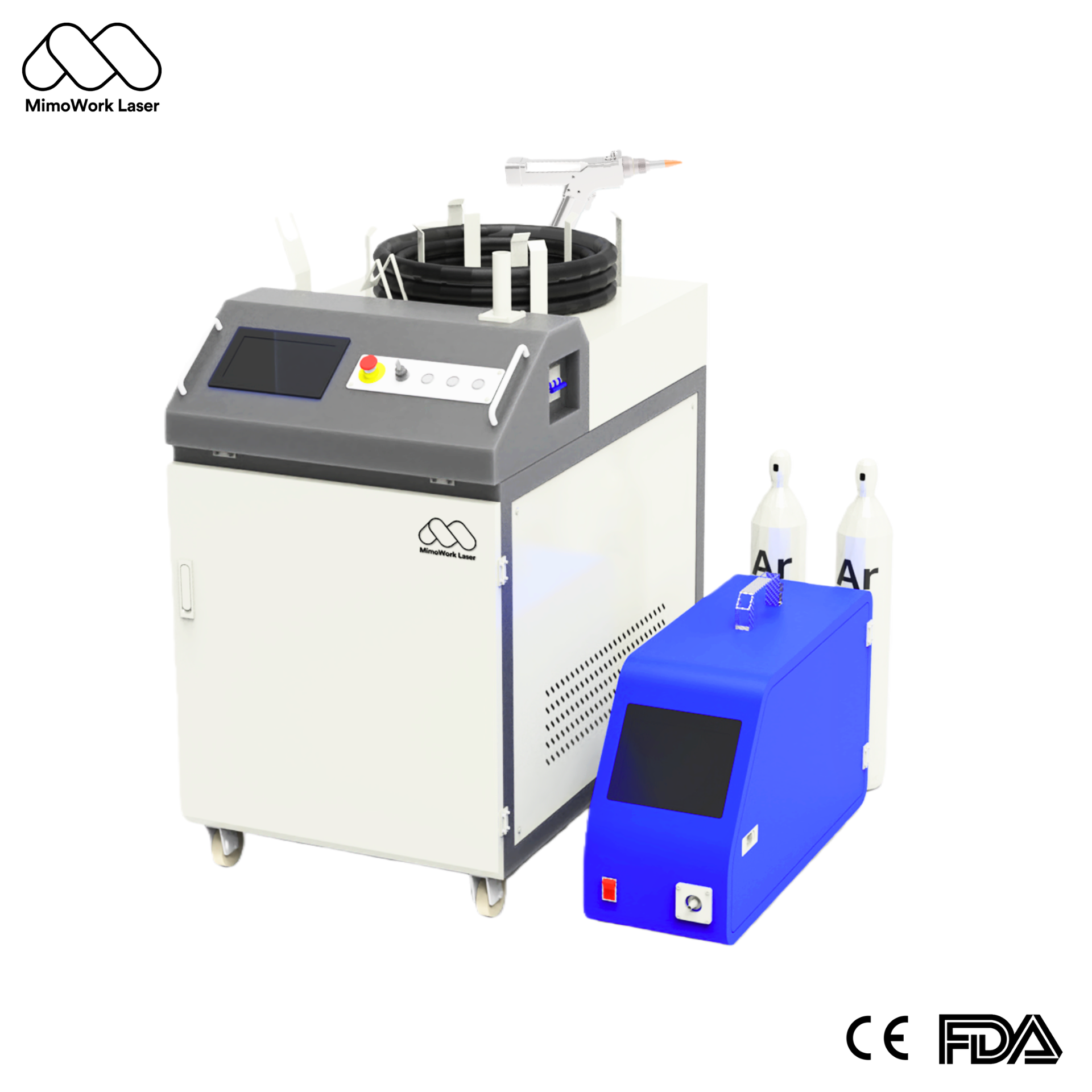
MimoWork offers four laser welding machine configurations—including a handheld laser welding machine, jewelry laser welding machine, 4-axis gantry laser welding machine, and manipulator laser welding machine. These systems can be used for titanium welding, with the appropriate configuration and process parameters selected for the material and application.
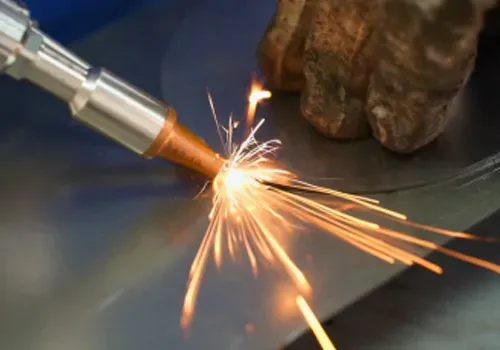
Argon and helium are the main shielding gas options used for titanium welding.
Argon is often a practical starting point because it is widely available and generally less expensive. Helium can be useful when its thermal and plasma characteristics are beneficial to the welding process.
The choice should not be based on gas type alone. Gas purity, flow behavior, nozzle geometry, joint design, and the size of the area requiring protection all influence weld quality.
The most important principle is that shielding gas coverage is a process variable, not simply a consumable.
| Factor | Argon | Helium |
| Chemical reactivity | Inert | Inert |
| Density | Higher | Lower |
| Cost | Generally lower | Generally higher |
| Shielding behavior | Good with suitable nozzle design | Requires careful flow management |
| Typical role | Common starting option | Useful when additional thermal/plasma characteristics are beneficial |
Actual welding trials are still necessary because the appropriate gas and flow conditions depend on the specific material, joint, and equipment.
More shielding gas does not automatically mean better protection.
If the flow is too high, turbulence can draw surrounding air into the shielding zone. If it is too low, atmospheric contamination may enter the weld area.
Nozzle design and positioning are equally important. A system may show a high gas-flow reading while still failing to protect the actual molten pool and cooling region.
For titanium welding, it is therefore better to evaluate the quality and coverage of shielding rather than simply targeting a particular flow rate.
In many titanium welding applications, yes.
The required setup depends on the joint geometry. A flat butt joint, tube, corner joint, and complex assembly can have very different shielding requirements.
For critical applications, the shielding system may need to protect the molten pool as well as the hot material immediately behind and around the weld. This is especially important because titanium can remain reactive during cooling.
There is no universal set of titanium laser welding settings.
The appropriate process window depends on:
For example, commercially pure titanium and Ti-6Al-4V should not automatically be treated as identical materials. Likewise, thin sheet and thicker plate require different energy input.
Instead of looking for one fixed recipe, manufacturers should develop a parameter window based on the actual material and joint.
| Variable | Lower Setting Tends to | Higher Setting Tends to |
| Laser power | Lower heat input | Greater penetration potential |
| Welding speed | More heat per unit length | Less heat per unit length |
| Spot size | Higher energy density | Lower energy density |
| Shielding flow | Lower gas consumption | Greater coverage potential, but turbulence risk |
| Joint gap | Easier to manage within process limits | Greater risk of incomplete fusion or instability |
The purpose of this matrix is not to create a universal welding recipe. It is to understand how the process responds and establish a stable operating window.
Weld color can provide a useful indication of atmospheric contamination, but it should not be the only quality criterion.
A clean, bright weld is generally preferable to heavily oxidized discoloration. However, the required acceptance criteria depend on the application.
For critical components, visual inspection may need to be supplemented with appropriate metallurgical, mechanical, or non-destructive testing.
Laser welding uses a concentrated energy source. This provides precision, but it also means that inconsistent joint gaps can quickly affect the process.
Poor fit-up can change:
For thin titanium components in particular, accurate fixturing and consistent joint preparation can be just as important as laser power.
It can.
Because laser welding concentrates energy into a relatively small area, a well-controlled process can reduce unnecessary thermal input compared with processes that heat a wider region.
However, low distortion is not guaranteed. Excessive power, unsuitable welding speed, repeated passes, poor fixturing, or inappropriate joint design can still cause deformation.
The objective should therefore be controlled heat input, rather than simply selecting the highest possible welding speed.
Tube welding creates an additional shielding challenge because the welding path moves around a curved surface.
The gas nozzle must maintain effective protection as the laser or workpiece moves. A gas setup that works well on a flat plate may not provide consistent coverage around a tube.
This is particularly relevant to:
For these applications, fixture design and nozzle positioning should be considered part of the welding process.
Potentially, yes.
A handheld system still requires controlled shielding, suitable laser parameters, stable material positioning, and an appropriate working environment.
For production involving critical titanium components, automated or highly controlled welding can provide better process consistency. The appropriate approach depends on weld-quality requirements, component geometry, and production volume.
Laser welding and TIG welding use different energy delivery methods, although both can be used for titanium.
| Factor | Laser Welding | TIG Welding |
| Heat source | Concentrated laser beam | Electric arc |
| Heat-affected region | Typically narrow | Typically wider |
| Automation potential | High | High |
| Filler material | Optional depending on joint | Often used depending on joint |
| Shielding importance | Very high | Very high |
| Heat input control | Highly localized | Controlled through arc parameters |
| Equipment investment | Typically higher | Often lower |
Neither process should be selected simply because one is generally considered better. Joint geometry, material thickness, tolerances, production volume, penetration requirements, and quality standards should all be considered.
A practical process-development sequence can be kept relatively simple:
The final step is particularly important. One successful weld does not necessarily represent a production-ready process. The same result should be reproducible across repeated parts.
Laser welding can generate airborne contaminants, particularly when processing metals or surface coatings. Localized extraction should therefore be considered as part of the welding workstation.
MimoWork’s W-Series Fume Extractor is designed for applications including laser welding and laser cleaning. Its published specifications include a 500W power rating, 690 m³/h extraction capacity, and 99.97% filtration at 0.3 μm.
It is important to distinguish extraction from shielding:
Shielding gas protects the weld from atmospheric contamination, while fume extraction removes airborne contaminants from the working environment.
They address two different process requirements.
Usually indicates inadequate protection or excessive exposure of hot titanium to the atmosphere.
Can be associated with contamination, unstable process conditions, poor shielding, or inadequate joint preparation.
May result from insufficient effective energy, excessive welding speed, incorrect focus, or unsuitable joint geometry.
Can be caused by excessive heat input, unsuitable parameters, or inadequate fixturing.
May indicate inconsistent shielding or changes in gas coverage during the welding process.
A reliable titanium laser welding process should focus on environmental control as well as laser parameters.
Keep the material clean, maintain consistent joint fit-up, use suitable high-purity shielding gas, position the nozzle correctly, and protect the weld during cooling when required.
The laser optics should also be kept clean, and welding speed should remain consistent.
Most importantly, validate the final process using the actual titanium grade, thickness, and joint configuration rather than relying on generic parameters.Related Guide:Why Does Copper Reject the Laser? The Science Behind the Welding Challenge
Yes. Titanium can be laser welded successfully when laser parameters, joint preparation, and atmospheric shielding are properly controlled. The main challenge is preventing oxygen and nitrogen contamination while the titanium remains hot.
Argon is a common starting option, while helium or argon-helium mixtures may be useful depending on the process. Gas purity, nozzle design, flow rate, and shielding coverage are all important.
Discoloration can indicate oxidation caused by insufficient shielding during welding or cooling. Its significance depends on the application and required weld quality, so critical components should be evaluated using the appropriate inspection criteria rather than color alone.
Yes. Fiber laser welding systems can be used for titanium when the laser configuration, shielding system, and process parameters are appropriate for the application. Different machine configurations may be selected depending on whether the requirement is handheld welding, precision work, automated production, or complex 3D welding.
Titanium can absolutely be laser welded, but successful production depends on controlling the complete process rather than simply increasing laser power.
Shielding, cleanliness, joint fit-up, heat input, laser focus, and process repeatability are the key considerations.
For manufacturers, the best approach is to establish a controlled welding window using the actual titanium grade and joint configuration. Once the process is stable, laser welding can provide a precise and controlled method for producing titanium joints with limited unnecessary heat input.
News | Oct-4-2026