Blog
In a field that evolves daily, staying ahead means staying informed.
Explore in-depth articles designed to help you solve complex challenges,
maximize your machine’s ROI.
Stay ahead in a competitive market.


In a field that evolves daily, staying ahead means staying informed.
Explore in-depth articles designed to help you solve complex challenges,
maximize your machine’s ROI.
Stay ahead in a competitive market.
News | Oct-1-2026
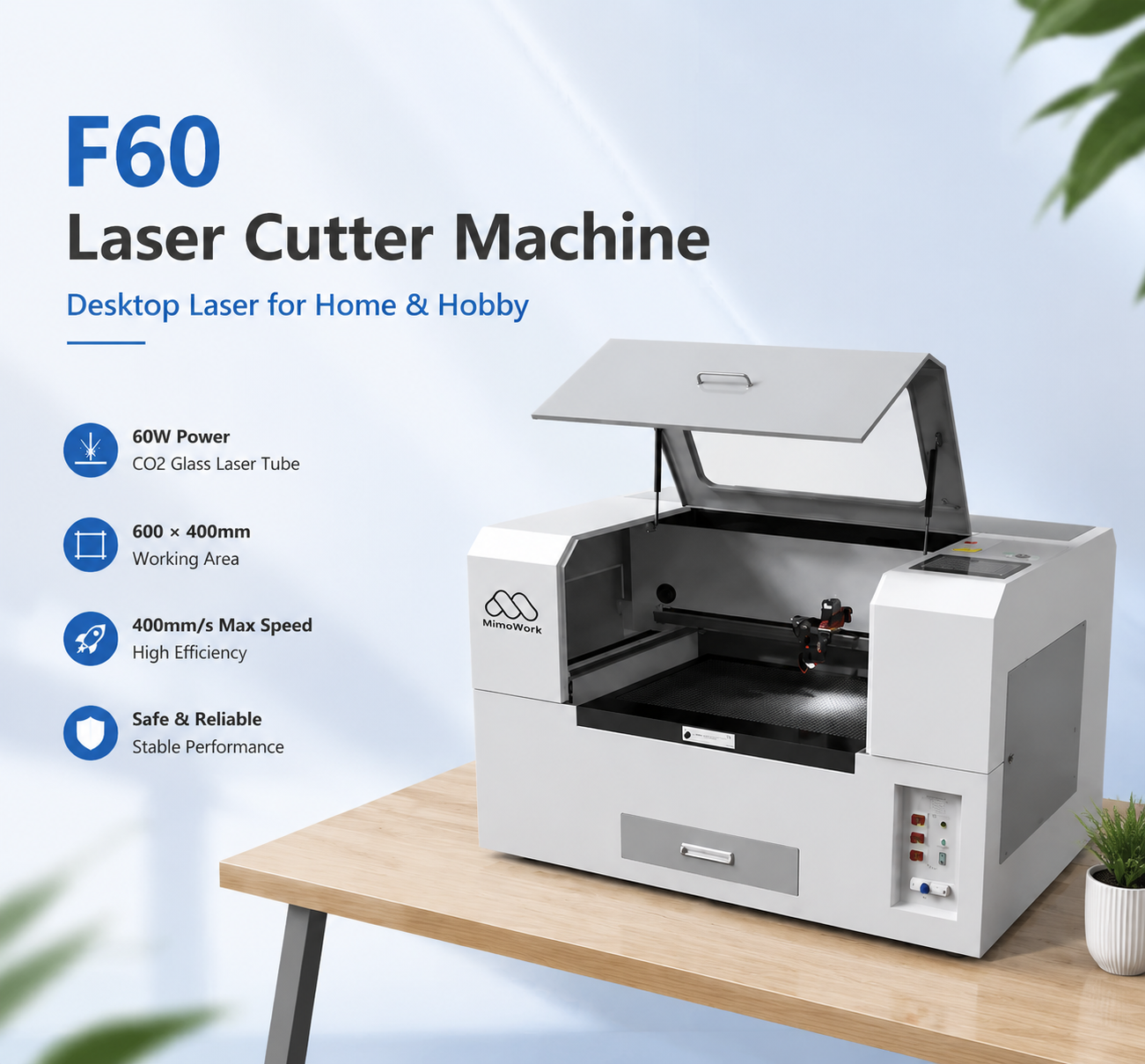
Quick Answer: Choosing between 40W, 60W, and 80W CO2 laser power is less about selecting the highest available wattage and more about matching power with material type, thickness, production volume, cutting speed, and engraving requirements. A 40W machine can be practical for light engraving and thinner materials, while 60W provides a broader balance between engraving and cutting. An 80W system becomes more attractive when cutting thicker materials, processing larger quantities, or reducing the number of passes is important.
When a laser cutter moves from occasional workshop use into commercial production, power selection becomes a business decision rather than simply a machine specification. Two machines may look similar on a product page, yet the difference between 40W, 60W, and 80W can affect processing time, material range, workflow stability, and the number of jobs that can be completed during a working day.
The common mistake is to assume that more power automatically means better performance. It does not. Laser power is only one part of the cutting process. Focal length, beam quality, lens condition, material composition, air assistance, cutting speed, focus position, and machine configuration all influence the final result.
The wattage of a CO2 laser describes the optical power available from the laser source. In practical cutting, higher power can provide more energy to the material within a given period.
That additional energy can be used in several ways. A business can cut at a higher speed while maintaining a similar material response, or it can process thicker material at a slower speed. The machine can also require fewer passes for some applications.
This distinction matters because commercial users rarely have only one objective.
A signage company may spend much of its time engraving acrylic, wood, or coated materials. A fabrication workshop may prioritize cutting sheet material. A custom-product business may need both detailed engraving and reliable cutting. In each case, the ideal power level can be different.
Laser cutting itself is a thermal, non-contact process in which a focused beam creates a localized molten or vaporized zone, while assist gas helps remove material from the kerf. TWI notes that laser cutting can provide narrow kerfs and high dimensional precision, but process parameters must be matched to the material and application.
A useful way to compare these three power levels is to look at what they allow a commercial operator to do rather than treating wattage as an isolated number.
| Factor | 40W CO2 | 60W CO2 | 80W CO2 |
| Light engraving | Excellent | Excellent | Excellent |
| Fine detail work | Strong | Strong | Strong |
| Thin material cutting | Suitable | Very suitable | Very suitable |
| Thicker material cutting | More limited | Broader capability | Broader capability |
| Production speed potential | Lower | Medium | Higher |
| Multiple-pass cutting | More likely | Less likely | Least likely of the three |
| Typical commercial use | Engraving and light cutting | Mixed production | Higher-volume cutting and mixed production |
| Power headroom | Lower | Medium | Higher |
| Energy demand | Lower | Medium | Higher |
These are general comparisons rather than guaranteed cutting limits. The actual result depends heavily on the material, lens, machine configuration, and processing parameters.
A 40W CO2 laser can be a sensible choice when the business concentrates on engraving, personalization, signage, craft products, and relatively thin materials.
For example, a shop producing wooden plaques, acrylic signs, personalized gifts, rubber stamps, decorative panels, or engraved products may not need the additional power of an 80W system for every job.
The advantage is not simply lower power consumption. A lower-power machine can be easier to justify when production demand does not require high cutting throughput.
However, businesses should think about future requirements before choosing 40W solely because the initial machine cost may be lower. If customers frequently request thicker materials or if production volume increases quickly, the operator may eventually spend more time compensating with slower speeds or additional passes.
That is where the difference between purchasing for today’s workload and purchasing for the next three years becomes important.
For businesses that perform both cutting and engraving, 60W can provide a useful middle position.
The machine does not need to operate at maximum power for every engraving job. At the same time, additional power headroom can make cutting tasks less restrictive than they would be with a lower-power system.
This can be especially useful for businesses with changing workloads.
One day the machine may engrave a large batch of acrylic nameplates. The next day it may cut wooden components or produce custom packaging inserts. Instead of optimizing the machine around one narrow application, a mid-range power level can provide greater operational flexibility.
The key is to avoid interpreting 60W as a universal answer. A business producing mostly thin engraved products may not benefit enough from the additional capacity, while a manufacturer working continuously with thicker materials may prefer still more power.
80W becomes more relevant when cutting productivity starts to affect the economics of the operation.
Suppose two businesses receive the same number of cutting orders. If one machine needs several passes or significantly slower processing parameters for a particular material while another can complete the same job more efficiently, the difference eventually appears in labor utilization and machine availability.
Higher power can provide additional process headroom, particularly for cutting applications where the material requires more energy to separate.
But higher power also creates another consideration: the rest of the machine must be designed to support it.
A commercial buyer should therefore evaluate the laser source, optics, motion system, cooling system, ventilation, work area, control system, and safety configuration together. Buying a higher-power laser source does not automatically turn a basic machine into a high-productivity production system.
Power selection becomes easier when buyers separate two concepts: cutting thickness and cutting speed.
A machine may technically cut a material at a certain thickness, but that does not necessarily mean the process is commercially efficient.
For example, a material might be cut successfully with a lower-power source at a very slow speed. If the business needs hundreds of identical parts per week, however, that processing speed may not be acceptable.
Conversely, a company producing only five custom pieces per day may consider the slower process completely reasonable.
This is why production volume should be part of the power-selection calculation.
Engraving does not always benefit from simply using more laser power.
For detailed engraving, the operator often wants controlled energy delivery rather than maximum energy. Speed, resolution, focus, material response, and image preparation can have a larger impact on the appearance of the engraving.
An 80W system can therefore perform delicate engraving, but it does not mean that every engraving job should be run at high power.
In practice, commercial users benefit from having enough power available for their cutting requirements while maintaining precise control over lower-power engraving operations.
A purchasing decision should consider the complete machine architecture.
| Purchasing factor | Why it matters |
| Laser source | Determines available optical power and influences operating characteristics |
| Working area | Defines the maximum practical job size |
| Motion system | Influences positioning and repeatability |
| Optics | Affects beam delivery and focusing |
| Cooling | Important for stable laser-source operation |
| Air assistance | Helps remove heat and processing debris |
| Exhaust system | Controls smoke and airborne contaminants |
| Software | Determines workflow and job preparation efficiency |
| Maintenance access | Influences downtime and service effort |
| Upgrade potential | Matters when production requirements may grow |
This broader approach is especially important because a laser cutter is not simply a laser tube attached to a moving platform.
Instead of starting with wattage, start with the production profile.
List the three most common materials, the typical thickness of each, the average number of pieces per order, the acceptable processing time per piece, and the percentage of work that involves cutting versus engraving.
Then identify the job that currently causes the biggest bottleneck.
If most work is engraving and thin-material cutting, 40W may provide sufficient capacity. If the workload is mixed, 60W can provide more flexibility. If thicker cutting and production throughput are becoming central to the business, 80W may offer more useful headroom.
For businesses that are still uncertain, testing the actual materials on a production-equivalent machine is often more informative than comparing wattage alone.
Related Guide:Best CO2 Laser Engraver for Small Business: A Practical Buying Guide
It can be enough for many engraving-focused businesses, especially when the majority of work involves wood, acrylic, coated materials, and other relatively easy-to-process substrates. The important question is whether the business also needs frequent cutting of thicker materials.
Not automatically. Higher available power can create the potential for higher cutting speed or greater cutting capacity, but actual performance depends on material, optics, focus, air assistance, motion system, and processing parameters.
For businesses that combine engraving with regular cutting, 60W can provide a useful balance. It offers more cutting headroom than a lower-power machine without necessarily requiring the production profile associated with a much higher-power system.
Not necessarily. Buying excessive power can increase the investment and may provide little benefit if most of the workload consists of engraving or thin-material processing. The machine should be selected around actual production requirements.
Power affects the amount of energy delivered to the material, but engraving quality also depends on focus, speed, resolution, material characteristics, optics, and artwork preparation. Higher wattage does not automatically produce better engraving.
Choosing between 40W, 60W, and 80W is fundamentally a question of production requirements.
A 40W system can make sense for businesses centered on engraving and lighter cutting. A 60W machine provides a broader middle ground for mixed workloads. An 80W system becomes more attractive when cutting capacity, thicker materials, and production throughput carry greater commercial importance.
The right purchase is therefore not the machine with the largest wattage number. It is the machine whose available power, working area, motion system, optics, cooling, exhaust, and software match the way the business actually produces parts.
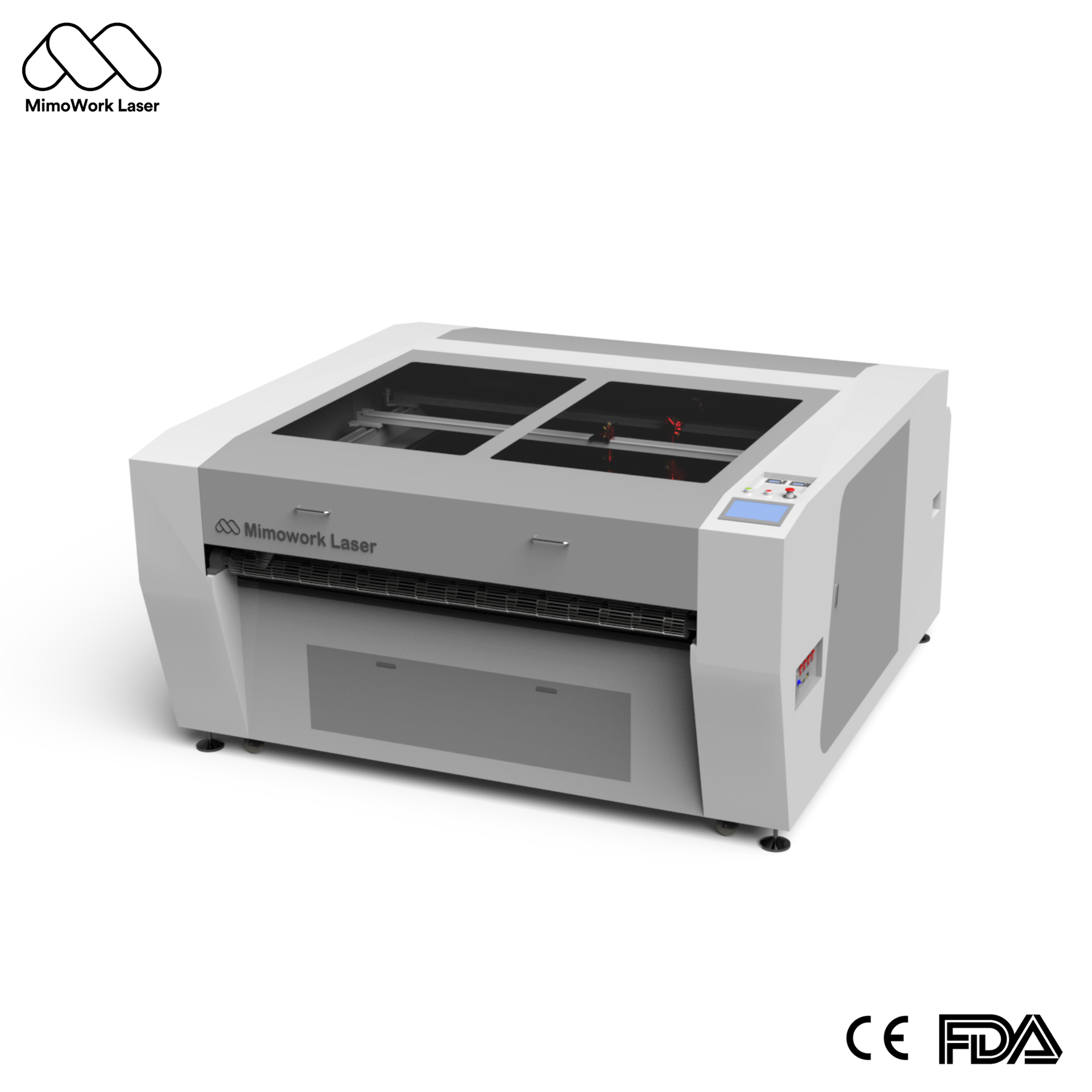
For businesses comparing machine configurations, the broader co2 laser cutter platform should be evaluated as a complete production system rather than by laser wattage alone.
News | Sep-30-2026
News | Sep-30-2026