Blog
In a field that evolves daily, staying ahead means staying informed.
Explore in-depth articles designed to help you solve complex challenges,
maximize your machine’s ROI.
Stay ahead in a competitive market.


In a field that evolves daily, staying ahead means staying informed.
Explore in-depth articles designed to help you solve complex challenges,
maximize your machine’s ROI.
Stay ahead in a competitive market.
News | Aug-6-2026
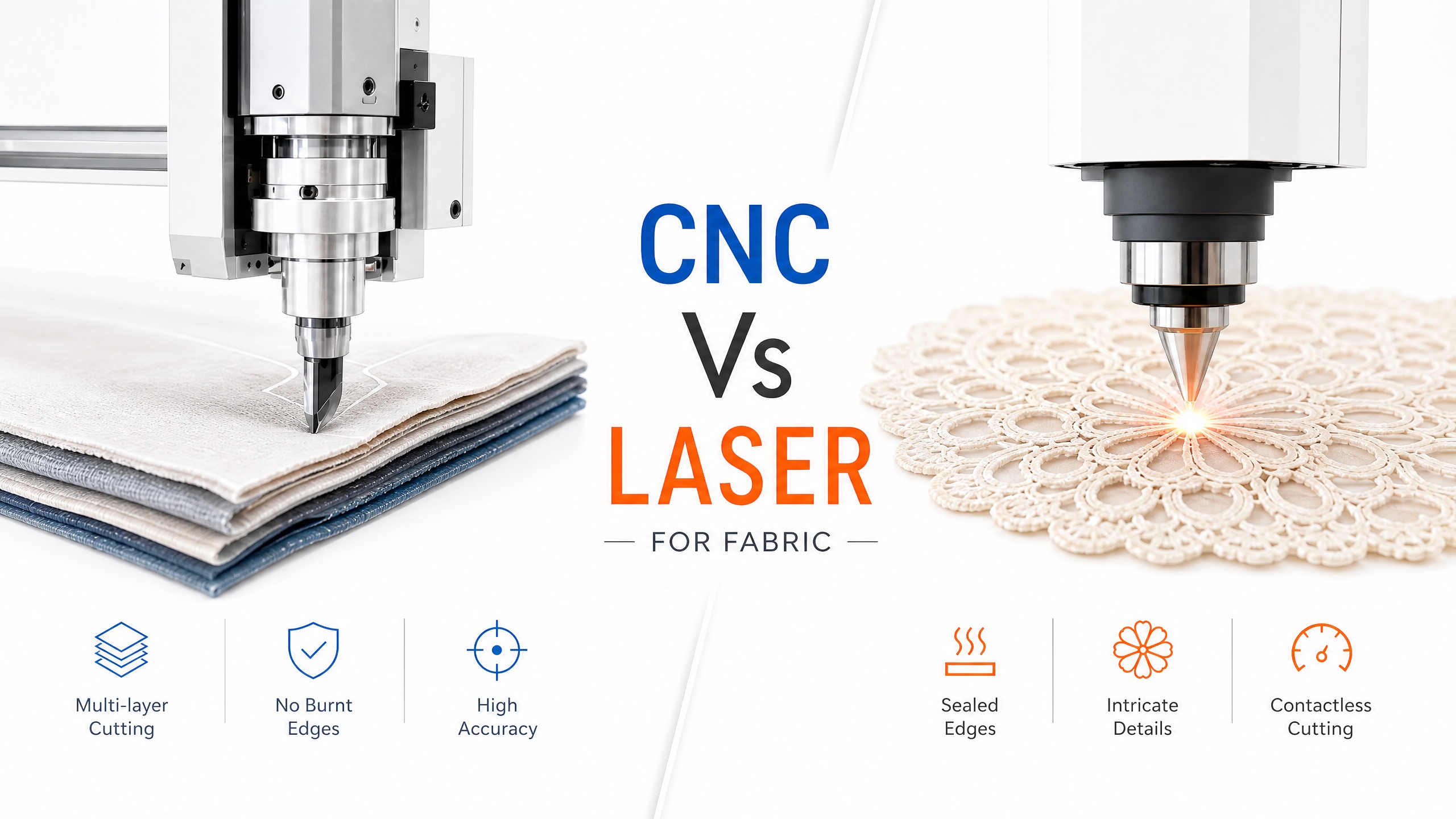
today’s textile industry, manufacturers often face a key decision: should they invest in a CNC knife cutter or a fabric laser cutter?
The right cutting solution depends on several factors:
For small apparel businesses, a compact fabric laser cutter can provide the flexibility needed for custom designs and short production runs. For large-scale textile manufacturers, an industrial laser cutting system with automatic feeding and vision recognition can improve efficiency, reduce material waste, and maintain consistent quality.
With various cutting solutions available, understanding the differences between laser cutting and CNC knife cutting can help you choose a machine that matches your production goals.
In this guide, we compare fabric laser cutters and CNC knife cutters, explore their key features, and explain how to choose the best fabric laser cutter for your business.
To help you make a better decision, here is a quick comparison of fabric laser cutters and CNC knife cutters based on their key features.
| Feature | Laser Cutter | CNC Knife Cutter |
| Cutting Quality | Clean, sealed edges | Requires finishing |
| Precision | High-detail cutting | Good for thick materials |
| Best For | Fabrics, apparel, patterns | Thick and rigid materials |
| Automation | High automation options | Production automation available |
A fabric laser cutter uses a focused CO₂ laser beam to process materials without physical contact.
Advantages:
Precision cutting
The laser beam allows:
No blade replacement costs during cutting operation
Because there is no cutting tool:
Edge sealing
For synthetic fabrics such as polyester and nylon, laser heat can melt and seal the edge during cutting.
This helps reduce:
Limitation: Very thick materials may require specialized laser systems.
A CNC knife cutter uses an oscillating blade to mechanically cut materials.
Advantages:
It is commonly used for:
Limitations:
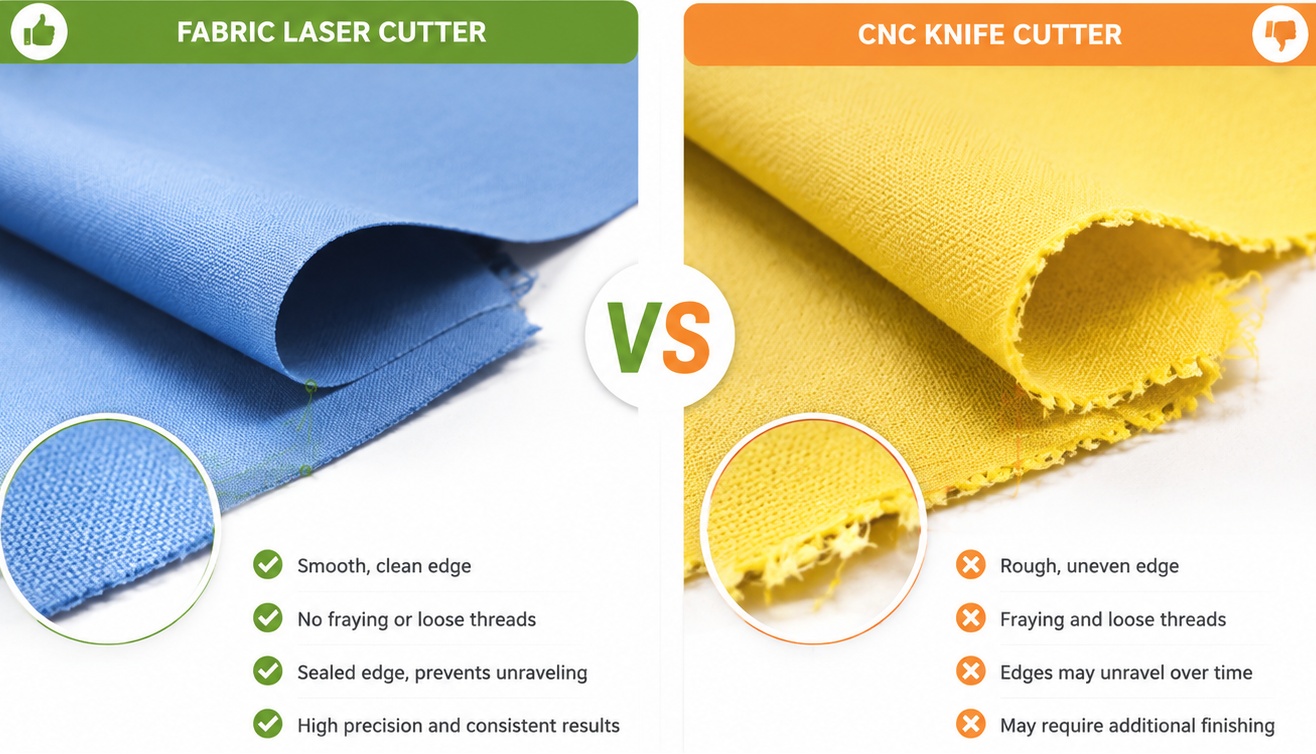
The best choice depends on your materials, production process, and the desired finishing quality.
The right fabric laser cutter depends on your materials, production requirements, and business goals.
Important factors include:
Different applications require different priorities. For example, a fashion manufacturer may prioritize:
While an industrial textile manufacturer may need:
Laser power directly affects cutting speed and material capability.
However, higher power does not always mean better results.
The right power depends on:
Suitable for:
Examples:
Suitable for:
Suitable for:
The goal is not to choose the highest wattage, but the configuration that best fits your production needs.
Before choosing a machine, consider these key questions:
Different fabrics require different cutting solutions.
Your production scale determines the level of automation you need.
If you cut printed fabrics, manual alignment can cause:
A vision system automatically detects printed patterns and adjusts the cutting path.
Best Fabric Laser Cutter Solutions for Different Production Needs
| Model | Best For | Key Advantage |
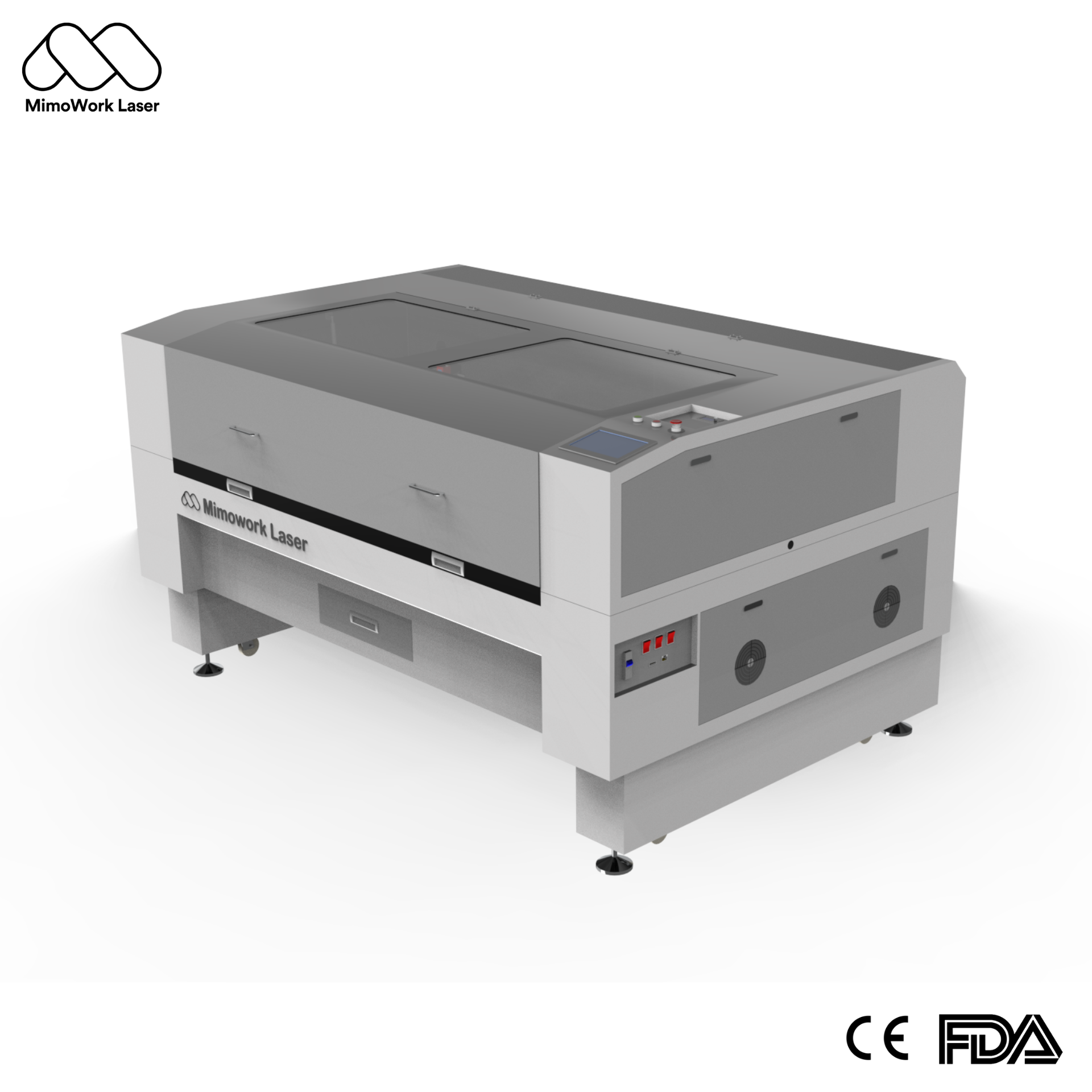
| F160 Laser Cutter | Apparel and fashion fabrics | Efficient fabric cutting with automatic feeding |
| C160-L Vision Laser Cutter | Sublimation sportswear and printed fabrics | Vision system automatically detects printed patterns and adjusts cutting paths for precise contour cutting |
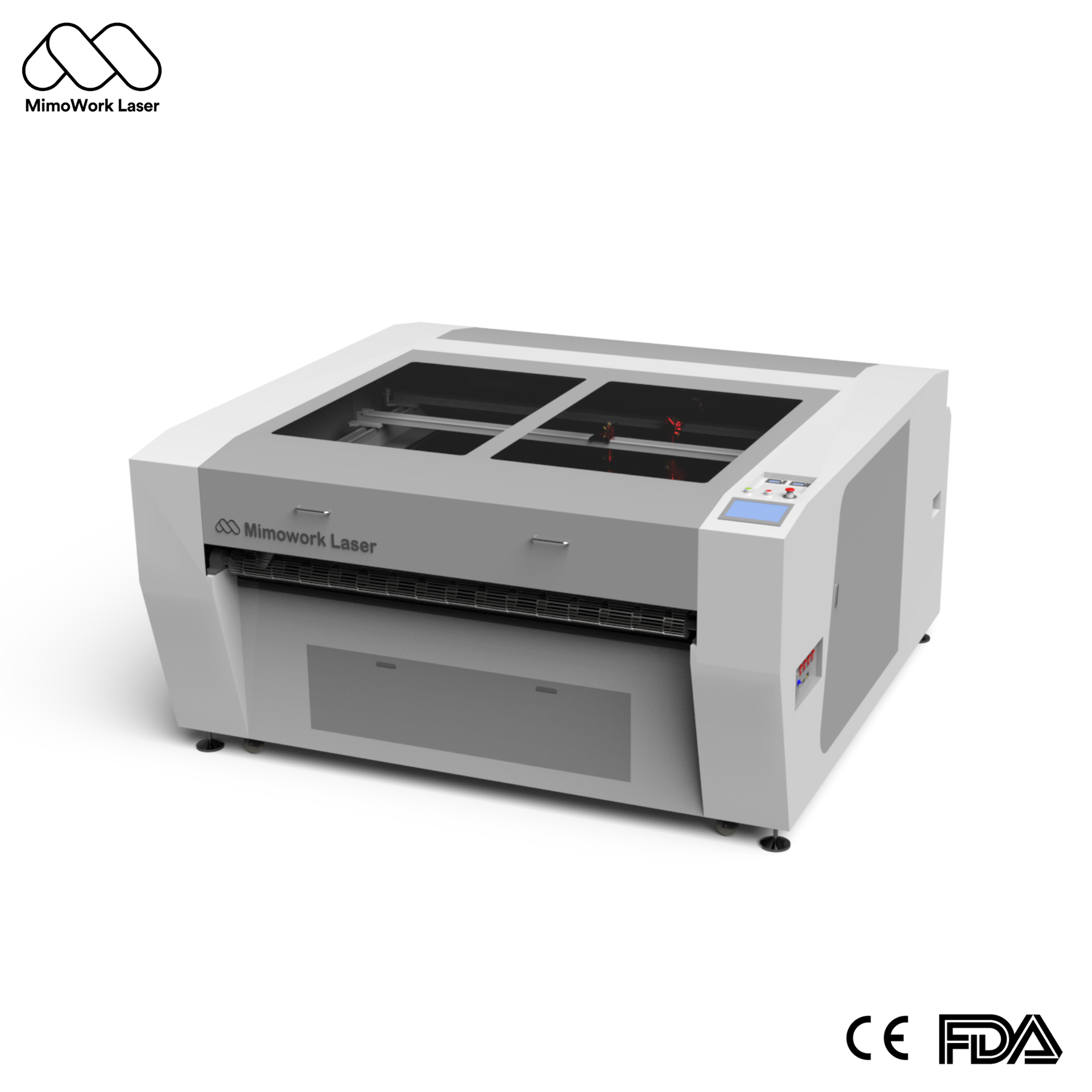
| F180-L Industrial Laser Cutter | Large-scale textile production | High automation and large working area for high-volume manufacturing |
| Customizable Laser Cutter Machine | Extra-wide textiles and specialized production lines | Tailored laser power, working size, and automation systems for special production requirements |
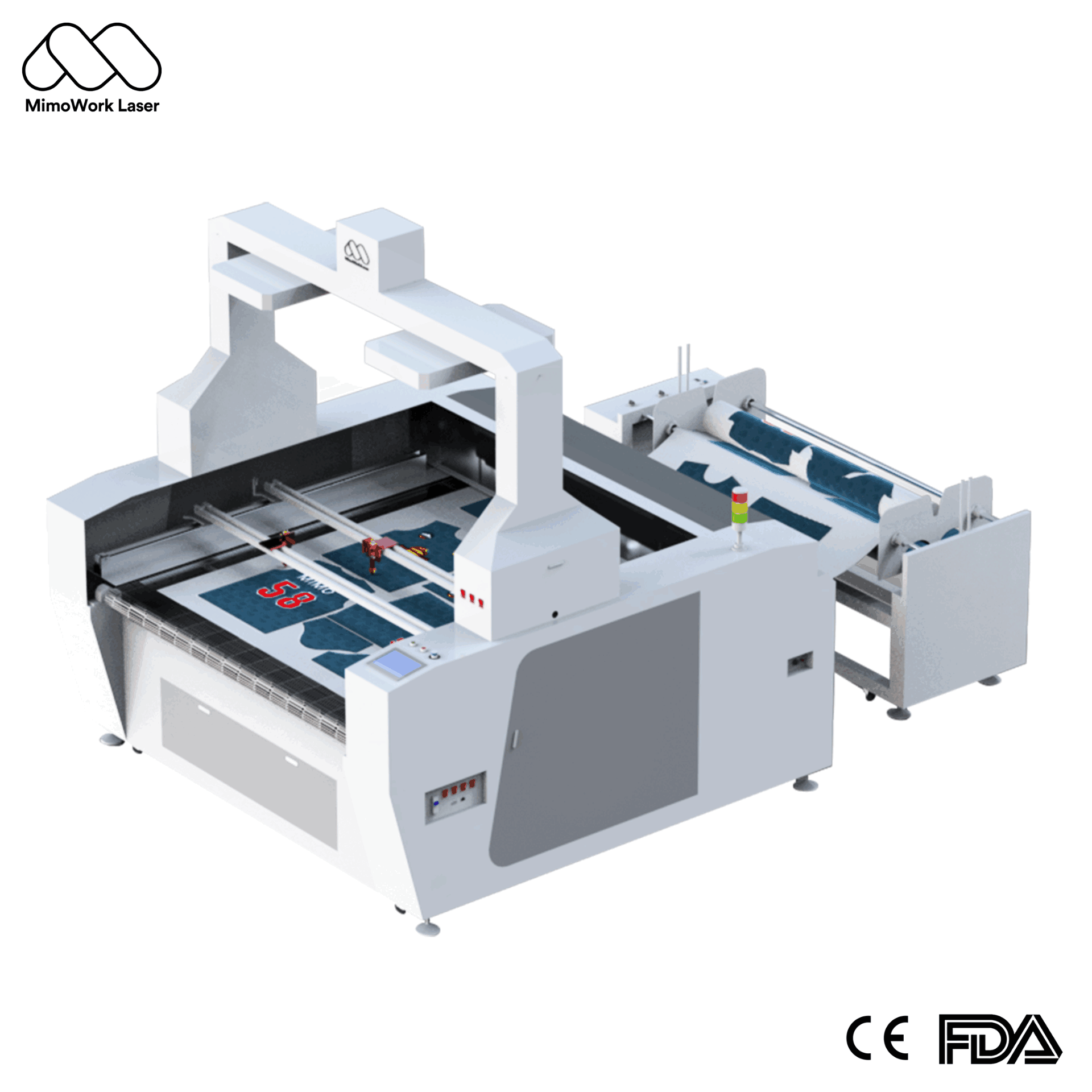
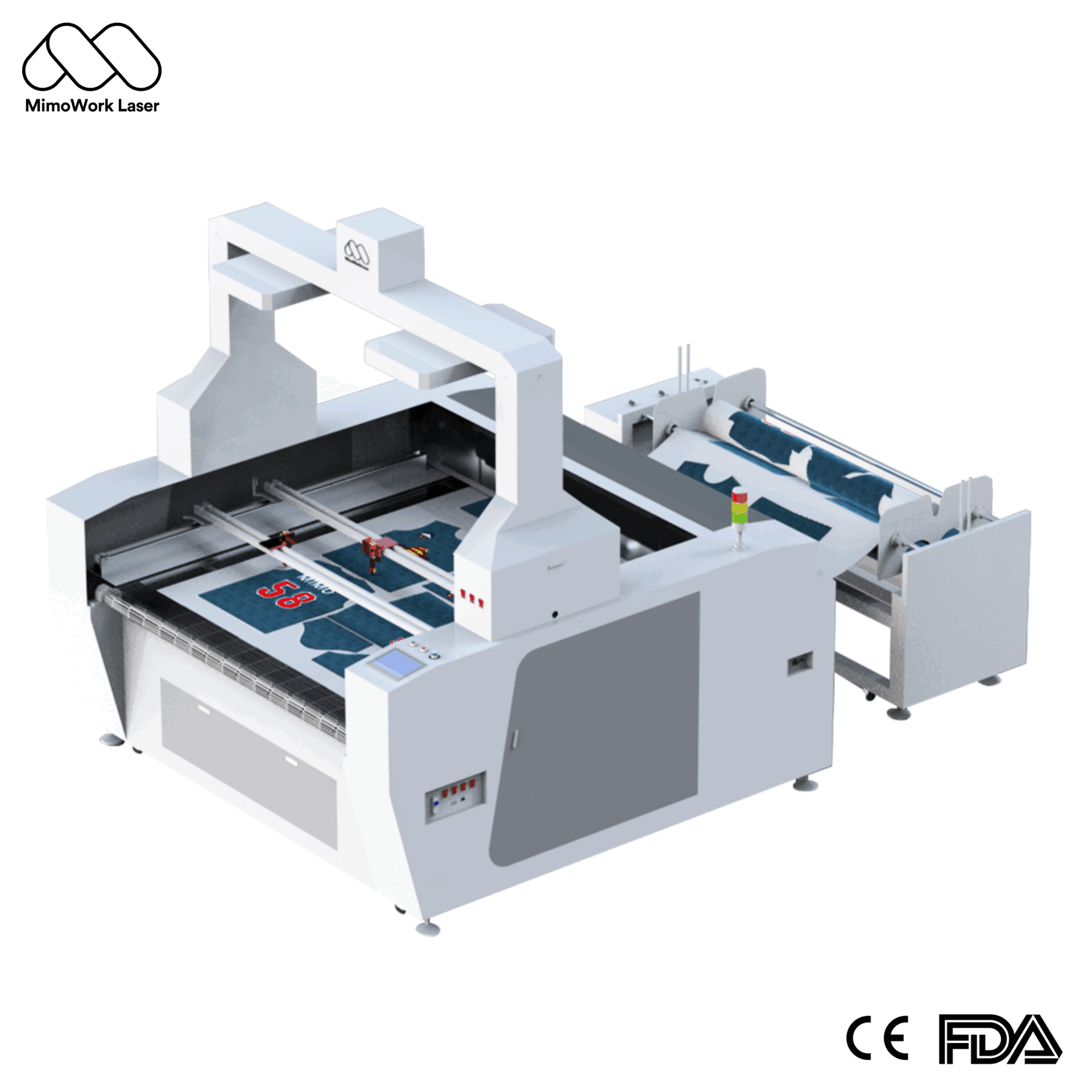
Designed for sublimated fabrics, sportswear, and apparel production, the C160-L uses an advanced vision system to automatically detect printed patterns and ensure precise contour cutting.
Key benefits:
Working Area: 1600 ×1200 mm
Laser Power: 100W-150W
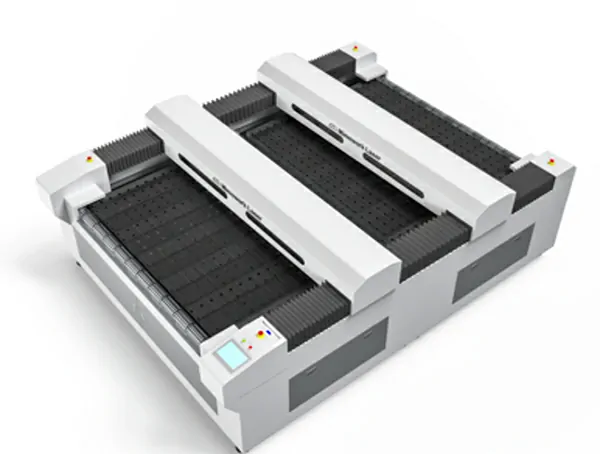
Built for technical textiles and heavy-duty materials, the F180-L delivers high-power cutting performance for demanding industrial applications.
Key benefits:
Working Area: 1800 × 1300 mm
Laser Power: 150W-600W
For manufacturers with unique materials or production requirements, MimoWork provides customized laser cutting systems with flexible working areas, laser power, and automation options.
MimoWork laser cutting machines help textile manufacturers achieve:
Whether you cut apparel fabrics, printed textiles, or industrial materials, MimoWork provides a fabric laser cutting solution built around your production needs.
A professional laser cutting system should support common design formats:
Good software compatibility helps:
For businesses processing fabric rolls, automatic feeding is one of the most valuable features.
Benefits:
It is especially useful for:
Printed fabrics create a special challenge because patterns may not perfectly align with cutting designs.
A vision system can:
This technology is particularly useful for:
MimoWork highlights vision systems as a solution for accurate printed fabric cutting and reducing misalignment waste.
Laser cutting produces smoke and particles during processing.
A reliable exhaust system helps:
Laser cutting enables manufacturers to create:
Digital cutting allows optimized layouts, helping manufacturers maximize fabric utilization.
This is especially important for expensive materials such as:
For synthetic fabrics such as polyester and nylon, laser heat can melt and seal the cut edges during processing.
Benefits:
With conveyor feeding systems, fabric laser cutters can support continuous production from roll materials.
This helps manufacturers improve:
Applications:
Applications:
Applications:
Applications:
Regular maintenance includes:
Safety considerations:
The cost depends on:
Higher power increases cutting capability.
Larger machines require greater investment.
Features such as:
increase productivity but also affect cost.
A machine for a small workshop and a machine for industrial textile production will have very different configurations.
The best fabric laser cutter depends on your material, production volume, and automation needs.
For printed fabrics and apparel production, a vision laser cutter like the MimoWork C160-L is ideal because it automatically detects printed patterns and ensures accurate contour cutting.
For heavy-duty textiles such as nylon, canvas, and technical fabrics, the MimoWork F180-L provides higher laser power and industrial-level performance.
For most textile applications, a fabric laser cutter provides better precision, cleaner edges, and more flexibility for complex designs.
Laser cutting is especially suitable for:
A CNC knife cutter may be a better choice for very thick materials or applications where heat-free cutting is required.
Yes, especially when cutting synthetic fabrics.
During laser cutting, the heat from the laser beam melts the fabric edges, creating a sealed finish that helps prevent fraying and reduces the need for additional edge finishing.
For natural fabrics like cotton, additional testing may be required depending on thickness and application.
The cost of an industrial fabric laser cutter depends on factors such as:
Entry-level systems may suit small production needs, while high-performance industrial machines with conveyor systems and automation are designed for continuous manufacturing.
When deciding between a laser cutting machine and a mechanical knife cutting system, the right choice depends on your material types, production requirements, and long-term goals. Both technologies offer distinct advantages: laser cutting provides exceptional precision, flexibility, and clean processing, while mechanical knife cutting delivers reliable performance and practical solutions for specific materials and applications.
Need help choosing the right fabric laser cutter? Contact MimoWork for a customized cutting solution based on your materials and production requirements.
News | Jul-30-2026
News | Apr-24-2026
News | Jul-3-2026