Blog
In a field that evolves daily, staying ahead means staying informed.
Explore in-depth articles designed to help you solve complex challenges,
maximize your machine’s ROI.
Stay ahead in a competitive market.


In a field that evolves daily, staying ahead means staying informed.
Explore in-depth articles designed to help you solve complex challenges,
maximize your machine’s ROI.
Stay ahead in a competitive market.
News | Oct-13-2026

The best starting point? Consider what you want to make, then test the actual fabric before committing to a machine.
A laser cutter can turn a fabric pattern into a precise cut, but choosing the right machine is not as simple as picking the one with the highest power rating. Some machines are better suited to small decorative projects, while others are designed to cut larger fabric pieces quickly and consistently.
For a laser fabric cutter for home use, the key differences are material compatibility, cutting speed, edge quality, working area, and the space required for safe operation. A diode laser cutter for fabric can be useful for selected small projects, while a CO2 laser fabric cutter is often better suited to regular textile cutting.
The main difference is how each laser interacts with the material, which affects cutting performance and fabric compatibility. Both technologies can process certain textiles, but they do not deliver identical results across every material.
Diode lasers emit visible or near-infrared light, depending on the system. Their performance can vary considerably with fabric color, composition, and surface characteristics. Dark materials may absorb some diode wavelengths more readily, while light-colored or reflective fabrics can be harder to process consistently.
CO2 lasers operate at a different wavelength that is commonly used to process non-metallic materials, including many textiles. They are often a practical option for fabric cutting when speed, repeatability, and clean edges matter.
Yes, a diode laser cutter for fabric can suit selected small fabric projects, but its limitations should be understood before buying. It may work for occasional decorative cuts or simple designs, especially when the material responds well to the laser wavelength.
Material composition, color, weave, thickness, and additives all affect the result.
Small samples of dark cotton, felt, or selected synthetic fabrics may be worth testing, but none should be assumed suitable without a controlled trial. Light-colored textiles can be particularly challenging for some diode systems because they may absorb less of the emitted light.
Avoid processing unknown fabrics or materials that may contain PVC, chlorine, or other hazardous components. Do not rely on appearance alone to identify a fabric’s composition.
Related guide: https://www.mimowork-laser.com/blog/laser-cutting-fabric-ultimate-guide
A diode laser may be adequate for small shapes and occasional projects, but cutting speed can become a bottleneck when designs contain many details or require repeated production.
Multiple passes may be necessary for some materials, potentially increasing processing time and the risk of discoloration or uneven edges. A small working area can also make larger patterns awkward to position.Let’s see the whole process of cutting fabric!
A diode laser is worth considering when your projects are small, your production volume is low, and you are comfortable testing materials before use.
It may suit selected appliqué shapes, small decorative pieces, or experimental craft designs. However, if you plan to cut garment panels, repeat the same pattern many times, or work with large fabric sheets, the limitations in speed and working area may become frustrating.
A CO2 laser fabric cutter is often the stronger option for regular fabric cutting when productivity and repeatable results matter. It is widely used for non-metallic materials, and suitable textile applications can benefit from efficient cutting and precise pattern reproduction.
However, a CO2 machine is not automatically the best choice for every home. Its footprint, ventilation requirements, installation needs, and operating costs must fit the workspace and intended workload.
A suitable CO2 system can cut many compatible fabrics more efficiently than a lower-powered diode system, especially when projects involve repeated shapes or more demanding production schedules.
This can make a difference when preparing multiple appliqués, textile accessories, or components for a small custom-making business.
Laser cutting can produce precise patterns without the mechanical movement of a blade dragging against the fabric. On suitable materials, this helps create repeatable shapes and may reduce fraying or the need for additional edge finishing.
Some synthetic fabrics can form a fused edge when cut with a suitable laser setup. Natural fabrics may instead show browning, charring, or discoloration if the settings are unsuitable.
A clean-looking edge is not guaranteed by the laser source alone. Focus, power, speed, airflow, fabric tension, and extraction all influence the finished result.
A CO2 laser can be suitable for many textile applications, including selected cotton fabrics, felt, polyester, and other compatible materials. The exact result depends on the fabric’s composition, treatment, and construction.
For mixed-material projects, check every component. Fabric blends, waterproof coatings, adhesives, backing layers, and printed finishes may react differently from the base textile. Confirm material safety and test the complete construction before cutting.
For occasional small projects, a diode laser may be sufficient; for frequent cutting and repeatable textile production, a CO2 system is often more practical. Use the comparison below as a starting point, not as a substitute for material testing.
| Buying factor | Diode laser | CO2 laser |
| Typical use | Selected small DIY projects | Regular fabric cutting and textile production |
| Fabric compatibility | More sensitive to color and absorption characteristics | Suitable for many compatible non-metallic textiles |
| Cutting productivity | May be limited by speed and repeated passes | Often better suited to frequent or repeated cutting |
| Edge quality | Depends heavily on fabric and settings | Can produce clean, consistent edges on suitable fabrics |
| Working area | Often compact, depending on model | Available in a range of working areas, including larger formats |
| Home workspace | Still requires proper guarding, extraction, and fire precautions | Requires careful planning for enclosure, extraction, and installation |
| Upgrade considerations | May be limiting as workload or material variety grows | May better support regular production, depending on configuration |
A larger machine is not automatically more suitable. Match its working area to your actual patterns, allow room for material handling, and make sure the full installation can be operated safely.
When choosing a home fabric cutting machine, consider your fabric, workspace, and expected workload—not just the advertised power or cutting speed. A few practical checks can help prevent an exciting craft purchase from becoming an oversized, underused piece of equipment.
Power affects processing capability, but more power is not always better for delicate textiles. Excessive energy can leave scorch marks, discoloration, or damaged edges.
The working area should accommodate your largest pattern with enough room for positioning. Small decorative pieces may fit on a compact bed, while garment panels or longer textile components may need a larger area or a conveyor system.
Air assist can help manage the cutting zone and influence the cutting result. Fume extraction is equally important because laser processing can release smoke, particles, and potentially hazardous decomposition products.
A home workspace needs a properly designed extraction arrangement that safely removes emissions. An open window or an ordinary room fan is not a substitute for appropriate fume control.
Look for clear controls, reliable focusing, accessible cleaning points, and software that fits your design workflow. Automatic feeding or vision positioning may be useful when you regularly process repeated patterns or printed textiles, but they add complexity that occasional hobby users may not need.
Ask what routine maintenance involves and whether replacement parts and technical support are available.
A laser cutter is not a household appliance to leave running unattended. Choose a system with appropriate guarding and interlocks, follow the manufacturer’s operating instructions, and maintain suitable fire precautions.
The machine also needs space for ventilation, material loading, maintenance, and safe access. Before buying, confirm that the proposed installation is suitable for your building and local requirements.
A CO2 laser is worth considering when fabric cutting is frequent enough that speed, consistency, or repeatability becomes important. For occasional sewing and simple craft projects, scissors, a rotary cutter, or a conventional cutting machine may be more practical.
Think about three factors:
A home-based business may benefit from a CO2 system when it needs repeatable output or handles regular custom orders. A hobbyist who only cuts simple shapes may not gain enough from laser automation to justify the additional equipment and installation requirements.
The sensible upgrade point is when your current method repeatedly limits production—not simply when a more powerful machine becomes available.
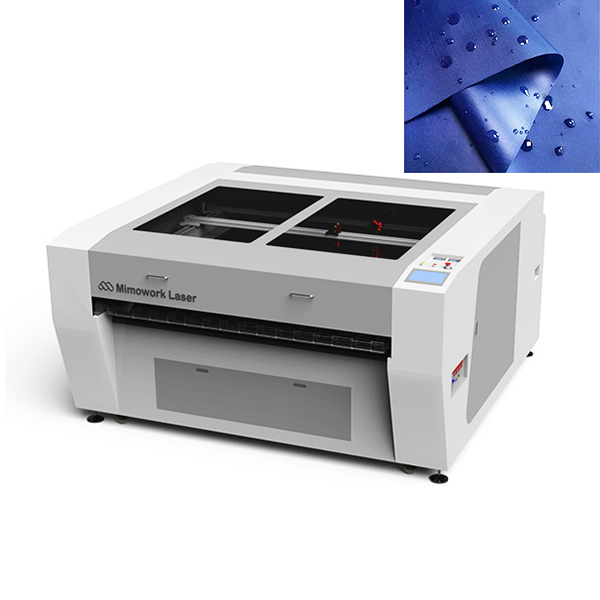
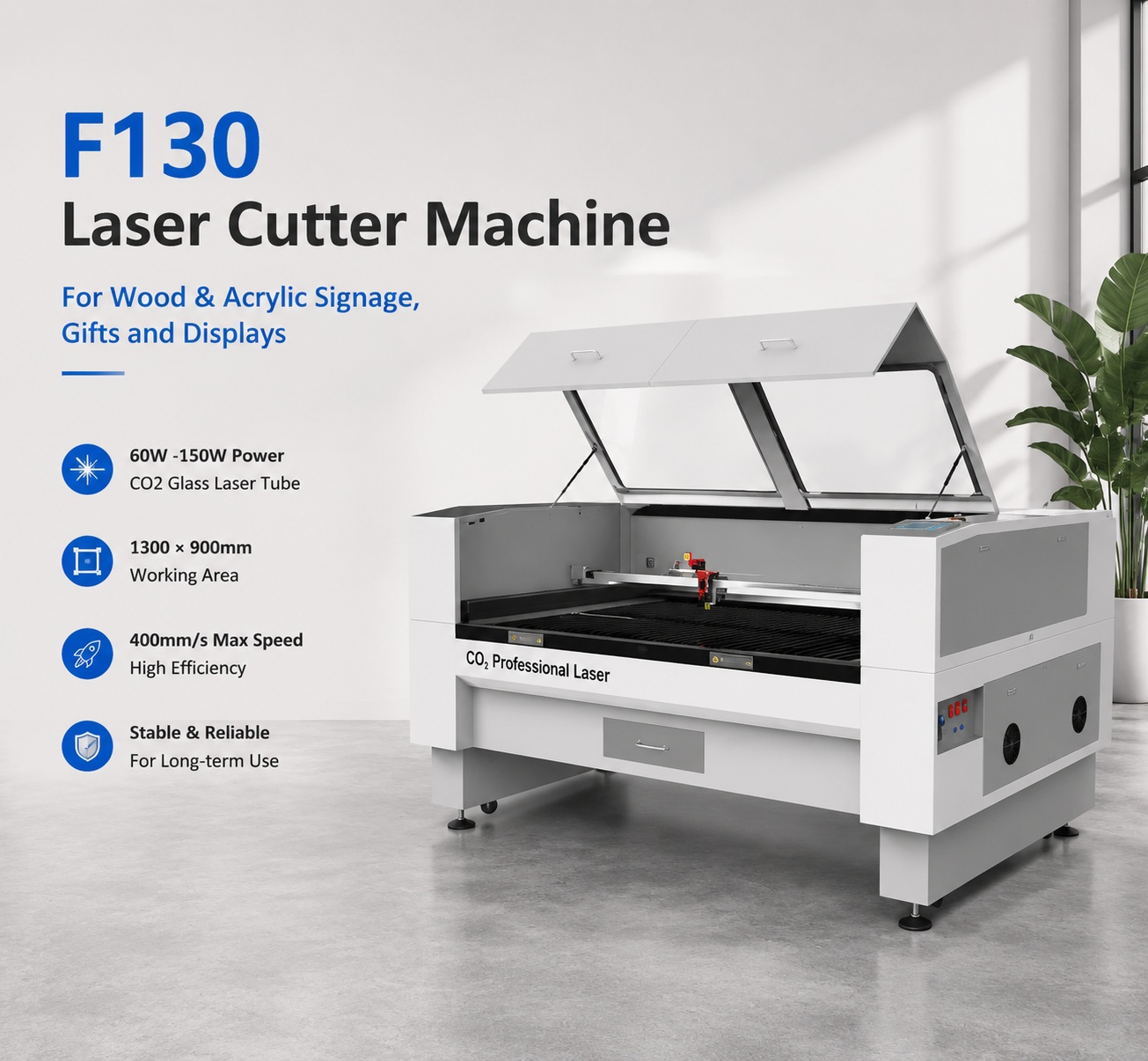
The best configuration depends on whether you need occasional manual cutting or a more repeatable textile workflow. MimoWork offers CO2 laser cutting systems for different fabric sizes and production needs.
MimoWork F100 CO2 Laser Cutter: With a 1000 × 600 mm working area and 60W or 80W laser power, the F100 is a practical option for small workshops handling fabric samples, accessories, custom patterns, and small-batch textile products. It offers a manageable working format for businesses that need flexibility without a large production footprint.
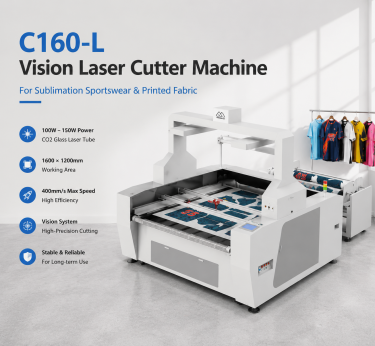
MimoWork C160-L Vision Laser Cutter: Featuring a 1600 × 1200 mm working area, vision positioning, and conveyor feeding, the C160-L is designed for fabric workflows that involve larger material pieces, printed patterns, or repeated cutting tasks. Its vision system can help align cutting paths with printed graphics, while conveyor feeding supports continuous material handling.
These configurations serve different needs, from customized products and short runs to more organized textile production. Before choosing a system, consider your maximum fabric width, pattern dimensions, daily workload, extraction arrangement, and available installation space.
MimoWork can help evaluate suitable configurations through material testing. Submit your actual fabric samples and cutting files to assess edge quality, discoloration, positioning accuracy, and repeatability before making a decision.
Yes, provided the machine, material, ventilation, and workspace are suitable. Use a properly guarded system, confirm the fabric’s composition, and test it under the manufacturer’s recommended conditions. Never leave laser processing unattended.
A laser cutter can be useful for home sewing projects involving intricate patterns, repeated appliqué shapes, or custom textile components. The best laser fabric cutter for home sewing projects depends on the fabric, cutting frequency, required working area, and available ventilation. For simple, occasional cuts, traditional sewing tools may be more economical.
Depending on the machine and settings, CO2 lasers can process many compatible textiles, including selected cotton, felt, polyester, and other fabric types. Blends, coatings, and finishes can change the result, so verify composition and test each material before processing.
The best laser fabric cutter for home use is the one that handles your actual projects without creating unnecessary cost, workspace, or safety problems.
Before investing, test your fabric, inspect the cut edges, and calculate how much time the complete job takes. If you are considering a CO2 system for a home studio or small textile business, contact MimoWork to discuss your material samples and cutting requirements. A practical test can help you decide whether a compact setup is enough—or whether your projects are ready for a more productive system.
News | Sep-25-2026
News | Oct-1-2026
News | Sep-21-2026