Blog
In a field that evolves daily, staying ahead means staying informed.
Explore in-depth articles designed to help you solve complex challenges,
maximize your machine’s ROI.
Stay ahead in a competitive market.


In a field that evolves daily, staying ahead means staying informed.
Explore in-depth articles designed to help you solve complex challenges,
maximize your machine’s ROI.
Stay ahead in a competitive market.
News | Sep-8-2026
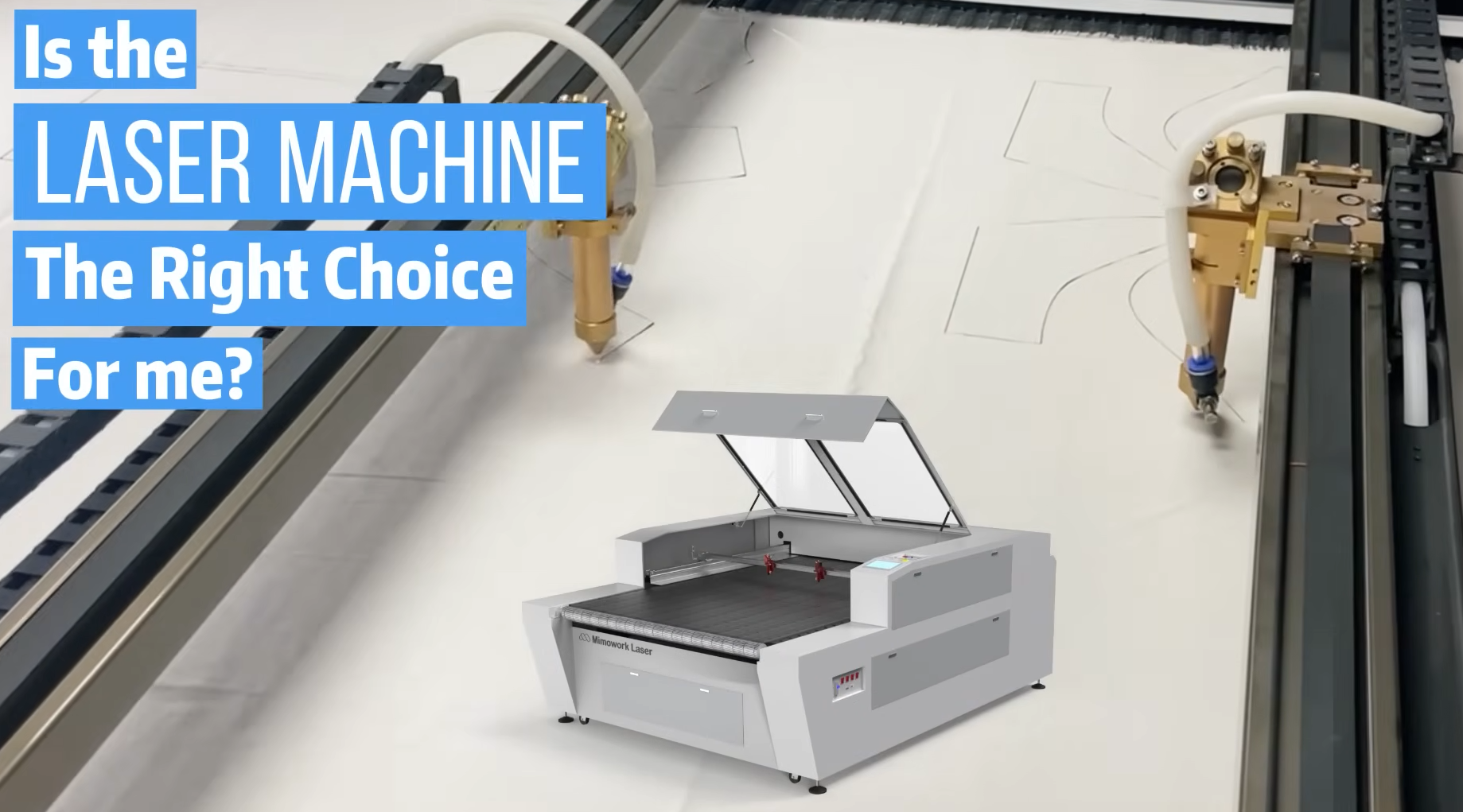
Fast decision:
For compatible synthetic textiles, a textile cutting laser usually delivers cleaner edges and can seal them during cutting. Blade CNC is often the better choice for heat-sensitive fabrics or high-volume multi-layer cutting.
This guide explains how the two technologies differ, how they affect edge quality, and which one makes more sense for your fabric and production needs.
The biggest difference is simple: a laser cuts without touching the fabric, while a CNC knife cuts through it mechanically.
A textile cutting laser uses a focused beam to cut the material along a digital path. Because the process is non-contact, there is no blade pressing, dragging, or dulling against the fabric. On suitable thermoplastic materials, the heat generated during cutting can also seal the edge.
Blade CNC cutting works differently. An oscillating or controlled knife physically moves through the textile. There is no thermal interaction, so the cut edge remains mechanically separated rather than fused.
That difference has a direct effect on edge quality.
With laser cutting fabric, the material does not experience direct mechanical pressure from a blade. This can be useful for flexible, lightweight, or delicate textiles that may shift or deform during conventional cutting.
It also removes one familiar production issue: blade wear.
As a mechanical blade becomes dull, cutting quality can gradually decline. A laser does not have a cutting edge that needs sharpening in the same way. However, that does not mean laser cutting is maintenance-free. Lens condition, beam alignment, fabric flatness, and cutting parameters still affect the final result.
Blade CNC cutting produces an edge without heat.
That is a major advantage when working with materials that may discolor, melt, or char under laser energy. It is also valuable when the product requires the fabric to retain a completely natural mechanical edge.
The trade-off is that the knife does not seal the material as it cuts.
For fabrics prone to fraying, an additional finishing step may be required.
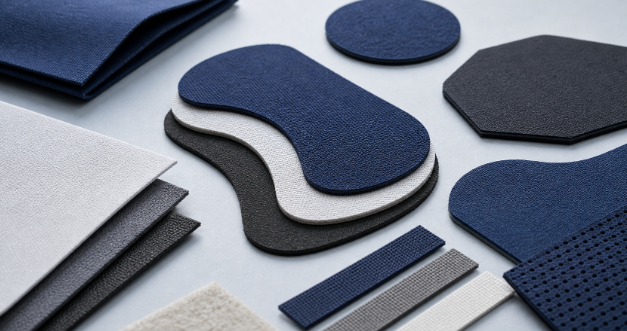
On compatible synthetic textiles, the laser can cut and seal the edge in the same pass. That is one of its most practical advantages.
When a CO₂ laser cuts certain thermoplastic materials, heat melts the edge while the beam passes through the fabric. As the material cools, the edge can fuse rather than remain loose.
For polyester, nylon, and many technical fabrics, this can reduce fraying and loose threads.
That is why a laser cutter for synthetic fabric is often attractive to manufacturers producing:
The result is not universal. Material composition matters. So do color, coating, thickness, weave, and laser settings.
A natural fiber such as cotton will not respond to the laser in the same way as polyester. Some materials may produce browning or charring rather than a clean fused edge.
Complex digital patterns are one of the strongest use cases for a textile cutting laser.
The laser follows a digital path without requiring a physical cutting die. Small holes, sharp internal corners, curved outlines, and intricate patterns can be processed directly from the design file.
This is particularly useful for short production runs and frequently changing designs.
A textile laser cutting machine for complex patterns can also be paired with a vision system when cutting printed or sublimated material.
For compatible single-layer synthetic fabrics, laser usually has the edge. For heat-sensitive or multi-layer materials, a CNC knife often makes more sense.
The table below shows the practical difference.
| Edge Quality Factor | Textile Cutting Laser | CNC Knife Cutting Fabric |
| Synthetic edge sealing | Strong on compatible materials | No heat sealing |
| Fraying control | Often excellent on thermoplastic fabrics | Depends on material and may require finishing |
| Complex patterns | Excellent | Good, but tool movement is mechanical |
| Multi-layer cutting | More limited | Often better suited |
Laser usually provides the cleaner solution when the fabric benefits from heat sealing.
Polyester and nylon are common examples. The laser can create a fused edge that helps reduce loose fibers immediately after cutting.
A blade cuts cleanly but does not alter the edge structure. If the material naturally frays, it can still fray after the mechanical cut.
This is one reason many buyers searching laser cutting vs knife cutting fabric should look beyond cutting accuracy alone. Two machines can produce the same shape, but the finished edge can behave very differently.
For intricate single-layer contours, laser offers exceptional flexibility.
There is no physical blade forcing its way around tight corners. A laser can follow detailed digital geometry without producing a cutting die.
Blade CNC systems can also be highly accurate, particularly on stable materials. But the fabric, blade type, tool path, and cutting depth can influence results.
For printed textiles, the comparison changes again. Vision-guided laser systems can automatically align cuts with printed graphics, which is particularly useful for sublimated sportswear and patterned fabrics.
This is where the “laser is always better” argument starts to fall apart.
Single-layer and controlled-layer laser processing is highly effective for many applications. But cutting too many layers at once can create uneven results. The top layer may cut cleanly while the lower layers receive different amounts of energy.
MimoWork specifically notes that excessive multi-layer laser cutting can lead to uneven sealing and potential charring on the bottom layer. For high-volume, multi-ply cutting, a CNC knife can therefore be the more efficient option.
That is an important buying distinction.
Synthetic and thermoplastic textiles are usually the strongest candidates for laser cutting, but every material should still be tested.
Polyester, nylon, and many technical fabrics can produce clean edges because they respond to laser heat in a way that allows edge fusion.
Nylon, for example, can be laser cut without direct mechanical contact, helping reduce material deformation while producing accurate shapes when the process is properly configured.
The advantage is especially relevant when edge quality and fraying control matter.
Natural fibers require more caution.
Cotton, linen, wool, and other organic materials do not create the same fused edge as thermoplastic synthetics. Depending on the settings, the laser may produce browning, darkened edges, or charring.
Blended fabrics can be even more complicated because the result depends on the proportion and arrangement of different fibers.
This is why buyers should not rely only on a material compatibility list. Sample testing is more reliable than assuming every fabric in the same category will behave identically.
Choose laser when edge finish, design flexibility, and digital automation matter most.
A fabric laser cutter is often the better choice when you need:
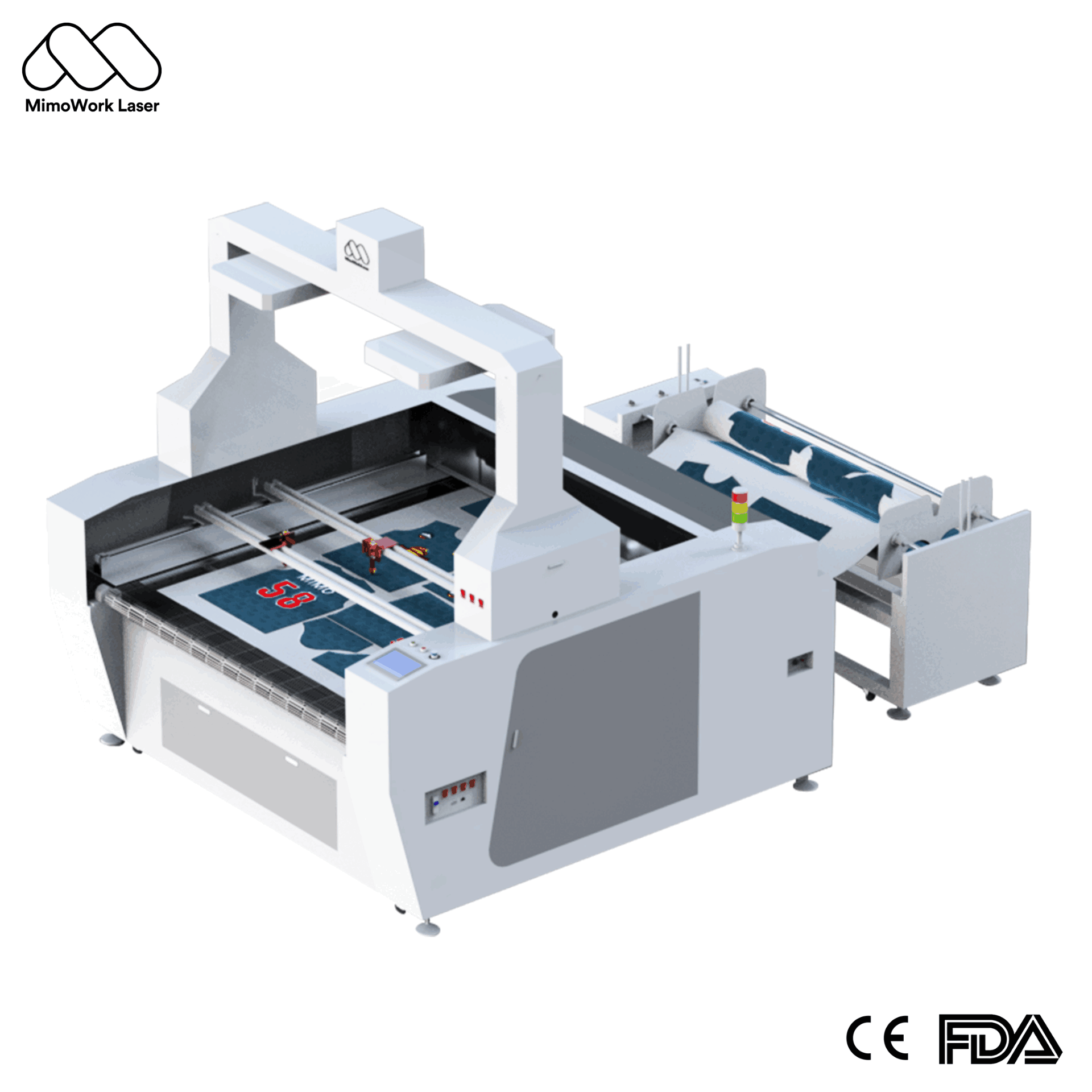
For businesses cutting sublimated sportswear and other printed fabrics at scale, a vision laser cutter can simplify the alignment process significantly. MimoWork’s C160-L Vision Laser Cutter combines an integrated vision system with a 1600 × 1200 mm working area, 100–150W CO₂ laser power.
With a maximum cutting speed of 400 mm/s and acceleration of 4000 mm/s², the C160-L is designed as a sportswear laser cutter for continuous fabric production, where accurate pattern alignment and efficient material handling are both important.
Choose a CNC knife when avoiding heat is more important than sealing the edge.
Blade cutting is often the better option for:
This is where many buying guides oversimplify the comparison.
A laser is not automatically a replacement for a knife. In some production lines, a knife is simply the more practical tool.
If your priority is cutting dozens of layers efficiently, the ability to seal a single edge may matter less than total throughput.
Ask four questions before comparing specifications.
What material are you cutting?
Synthetic textiles may benefit from laser edge sealing. Heat-sensitive materials may favor a blade.
What should the finished edge look like?
If reducing fraying is important, laser may offer an advantage. If a natural, unfused edge is required, choose a knife.
How many layers do you need to cut?
Single-layer precision and complex contours favor laser. Heavy multi-ply cutting often favors CNC knife technology.
How often do your designs change?
Laser is particularly attractive for short runs and changing digital patterns because it does not require a physical die.
For most buyers, these four questions are more useful than comparing machine specifications line by line.
It can significantly reduce fraying on compatible thermoplastic fabrics because the laser can seal the edge during cutting. Natural fibers and some blended materials do not respond in the same way.
Not in every application. Laser is often better for clean synthetic edges, intricate patterns, and digital flexibility. CNC knife cutting is often better for heat-sensitive materials and high-volume multi-layer cutting.
Yes, but the practical number of layers is limited by the material and required edge quality. Excessive multi-layer cutting can create inconsistent results, including uneven sealing or charring on lower layers.
Yes, if the laser parameters are unsuitable. Excessive power or slow cutting can cause melting, discoloration, or charring. Proper sample testing is essential before production.
Materials that release hazardous fumes should not be processed unless their composition and safety requirements have been properly verified. Heat-sensitive fabrics should also be tested carefully, as they may melt or discolor.
Choose laser if your priority is edge finish and design flexibility. Choose a knife if your priority is multi-layer capacity and zero thermal impact.
Ready to choose the right cutting technology? Talk to Mimowork today. Share your fabric, thickness, layer count, and production requirements, and let our experts help you identify the right laser or knife cutting solution for your application.
News | Aug-14-2026
News | Mar-16-2026