Blog
In a field that evolves daily, staying ahead means staying informed.
Explore in-depth articles designed to help you solve complex challenges,
maximize your machine’s ROI.
Stay ahead in a competitive market.


In a field that evolves daily, staying ahead means staying informed.
Explore in-depth articles designed to help you solve complex challenges,
maximize your machine’s ROI.
Stay ahead in a competitive market.
News | Sep-20-2026
If you are comparing a Laser Cleaning Machine for rust, paint, oxide, mold residue, or surface preparation, laser power is only one part of the decision.
The more important questions are: What are you cleaning? What needs to come off? How large is the area? How quickly does it need to be cleaned? And how much heat can the underlying material handle?
A 100W pulsed laser may be a good fit for a small mold or precision component, while a 2000W or 3000W continuous-wave system can make more sense for heavy rust on large steel parts.
This guide breaks down the main laser cleaning technologies, applications, power ranges, and machine configurations so you can compare them based on the actual job.
A Laser Cleaning Machine uses a focused laser beam to remove unwanted material from a surface without physical contact.
The laser energy is absorbed by the contamination. Depending on the material and laser settings, the unwanted layer can break apart, loosen, vaporize, or separate from the substrate.
That is what makes laser cleaning different from grinding or abrasive blasting. There is no grinding wheel rubbing against the surface and no abrasive media being thrown at the workpiece.
The process is particularly useful when you need to remove a coating or contaminant while keeping the underlying surface as intact as possible.
Common applications include:
For production environments, the process can also be repeated once suitable laser parameters have been established. That matters when similar parts need to be cleaned batch after batch.
The basic principle is selective removal.
The laser delivers energy to the surface, but the contaminant and the underlying material do not necessarily respond to that energy in the same way. By adjusting the laser parameters, operators can find a working range where the unwanted layer is removed while heat input to the substrate remains controlled.
Several settings influence the result:
This is why there is no universal laser setting for “rust” or “paint.”
A thin oxide layer on stainless steel is a very different job from heavy corrosion on structural steel. For this reason, material testing should be part of the buying process rather than something left until after the machine has been purchased.
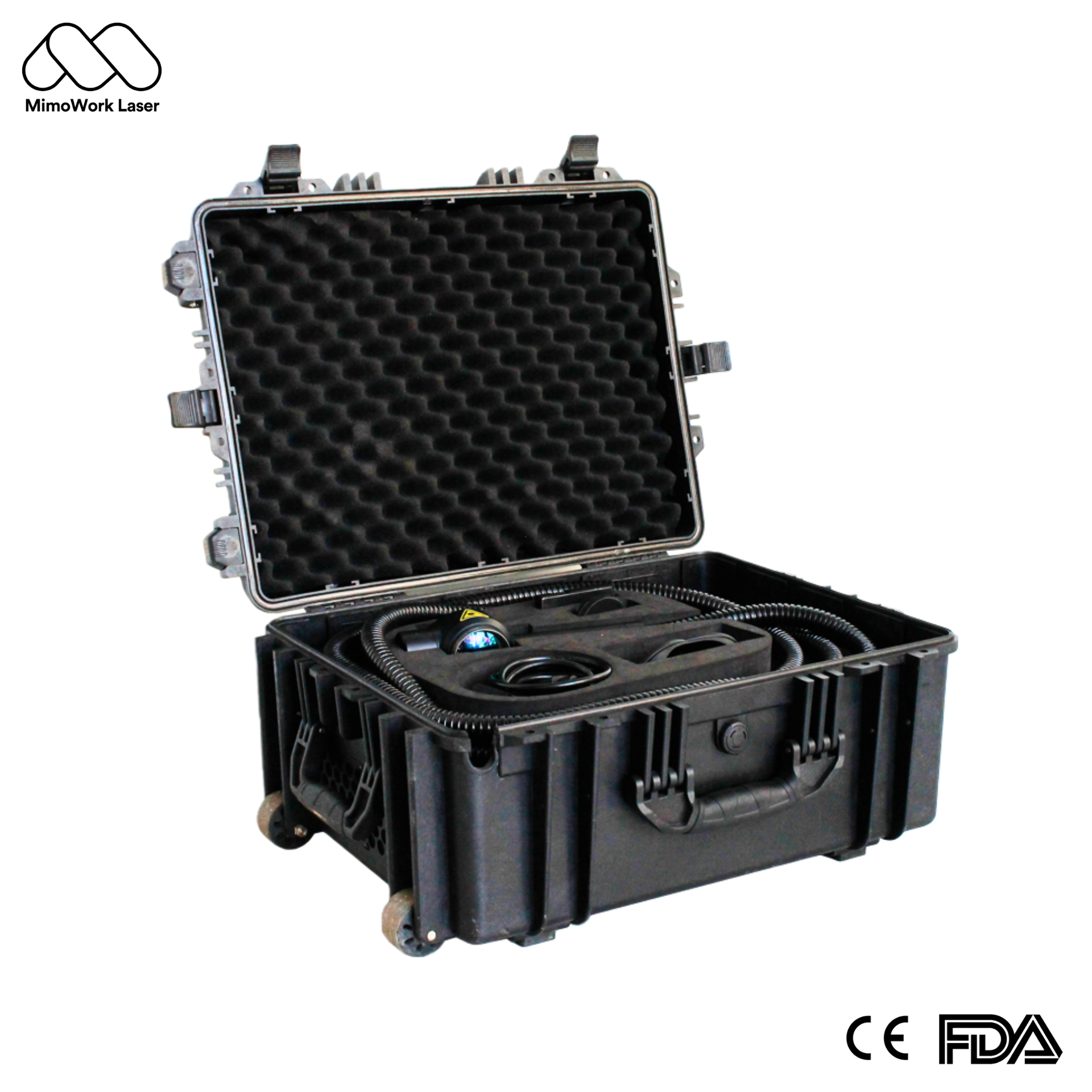
The two main laser cleaning approaches are pulsed laser cleaning and continuous-wave (CW) laser cleaning.
A pulsed laser releases energy in short bursts. This gives the operator more control over how much energy reaches the surface during each pulse and is useful when precision and heat control are important.
A CW laser delivers energy continuously. It is generally more suitable when the main challenge is removing a large amount of contamination from a large, robust surface.
Neither technology is automatically better.
The choice comes down to the workload.
| Pulsed Laser Cleaning | Continuous-Wave Laser Cleaning | |
| Energy delivery | Short laser pulses | Continuous output |
| Main strength | Precision and heat control | Higher removal productivity |
| Typical applications | Molds, tooling, precision parts, paint, oxide | Heavy rust, thick coatings, large metal surfaces |
| Typical power | 100–500W | 1000–3000W |
| Best suited to | Detailed or heat-sensitive cleaning | Large-area and heavy-duty cleaning |
Pulsed cleaning is worth considering when removing the contaminant is only part of the job. You also need to protect the underlying surface.
This can be important for:
For these applications, simply increasing laser power can create more problems than it solves.
CW cleaning becomes more attractive as the cleaning area gets larger and the contamination gets heavier.
Think about a large steel component covered with thick rust. If the machine has to make hundreds of passes over the same surface, cleaning speed becomes a major production issue.
This is where a higher-power industrial laser cleaning machine can provide more practical value.
The substrate also matters. Thick steel can generally tolerate more thermal input than a thin sheet, delicate alloy, or heat-sensitive material.
MimoWork’s Pulsed Laser Cleaning Machine is available with 100W–500W pulsed fiber laser power at 1064nm. It is positioned for precision cleaning applications such as coating removal, mold and tooling cleaning, oxide removal, and other jobs where surface integrity matters.
| Specification | MimoWork Pulsed Laser Cleaning Machine |
| Laser source | Pulsed fiber |
| Laser power | 100W–500W |
| Wavelength | 1064nm |
| Cooling | Air / water cooling |
| Main applications | Precision coating and contaminant removal |
If you are comparing pulsed and continuous systems in more detail, see Pulsed vs. Continuous Fiber Laser Cleaning Machine: Which One Do You Need?.
A fiber laser cleaning machine is commonly used for metal surface treatment because the fiber laser platform can be configured for different cleaning requirements, from precision removal to high-output industrial cleaning.
For a buyer, the more useful question is what type of fiber laser system you need.
A pulsed system may be appropriate when you are working with molds, detailed parts, oxides, or coatings where heat control matters.
A CW system may be more suitable when you are dealing with heavy rust, mill scale, thick coatings, or large steel surfaces.
Typical applications include:
The machine should be selected around the workpiece rather than the other way around.
Laser cleaning can be used for a broad range of contaminants, but different contaminants require different process settings.
| Contaminant | Typical Applications | Key Consideration |
| Rust | Steel parts, tools, machinery | Rust thickness and substrate |
| Oxide | Welding and surface preparation | Required surface finish |
| Paint | Refurbishment, repair, maintenance | Coating type and thickness |
| Oil and grease | Machinery and components | Residue and extraction |
| Mold residue | Injection molds and tooling | Surface details |
| Carbon deposits | Engines and industrial equipment | Deposit thickness |
| Soot | Fire-damaged materials | Substrate sensitivity |
| Dirt and deposits | Maintenance and restoration | Material compatibility |
Rust is one of the most common reasons companies look at laser cleaning.
A laser rust removal machine can remove corrosion without abrasive media. This can be useful when the shape, edges, grooves, or surface details of the part need to be preserved.
But rust thickness makes a major difference.
Light oxidation on a machined component is not the same job as thick corrosion on structural steel. The first may favor a precision pulsed system, while the second may benefit from a higher-power CW system.
Laser cleaning can also be used to remove paint, coatings, and selected surface treatments.
A laser paint removal machine is particularly useful when only certain areas need to be stripped or when physical abrasion would be difficult to control.
For example, a repair shop may need to remove coating from a specific section before welding. A restoration project may require the removal of several layers without aggressively sanding the underlying surface.
Coating composition still matters. Different paints and coating thicknesses can require very different laser parameters.
Molds collect release agents, oil, carbon, rubber residue, and other deposits over time.
Traditional cleaning can involve solvents, abrasive materials, or manual scrubbing. These methods can become inconvenient when the mold contains fine cavities or detailed surfaces.
Laser cleaning provides a non-contact option that can be tuned around those features. The objective is to remove the residue without unnecessarily changing the mold geometry.
A 100w laser cleaning machine can be a practical starting point for precision cleaning, mold maintenance, localized rust removal, and lighter coating removal.
The benefit of 100W is not that it works for everything. It is that a lower-power pulsed system can provide a useful level of process control for smaller or more detailed workpieces.
For example, a mold with release-agent residue may require careful cleaning around cavities and edges. A small metal component may need rust removed without excessive heat input.
On the other hand, 100W is unlikely to be the most productive choice for every large-area cleaning job.
If you are dealing with heavy rust on a large steel surface, the machine may spend too much time making passes over the workpiece. In that situation, moving to a higher-power system can have a much larger impact on cycle time.
Before choosing 100W, look at:
MimoWork’s pulsed cleaning platform starts at 100W and uses a 1064nm pulsed fiber laser. The platform covers 100W–500W, allowing buyers to compare different power levels within the same pulsed-cleaning approach.
For a 100W application, the actual cleaning result still depends on the material, contaminant, scanning speed, pulse parameters, and number of passes.
Related Guide: 100W Laser Cleaning Machine: The Precision Solution for Mold & Rust Removal
When the cleaning area becomes large, the conversation changes.
You may no longer be asking whether the laser can remove the contamination. The bigger question becomes how long the job will take.
This is where higher-power CW systems can be useful.
MimoWork currently offers Continuous Wave Laser Cleaning Machines from 1000W to 3000W, targeting heavier rust, coatings, mill scale, and large metal surfaces.
A rough way to think about the range is:
These are not universal production limits. Actual cleaning speed depends on the contamination, substrate, surface geometry, scanning parameters, and required finish.
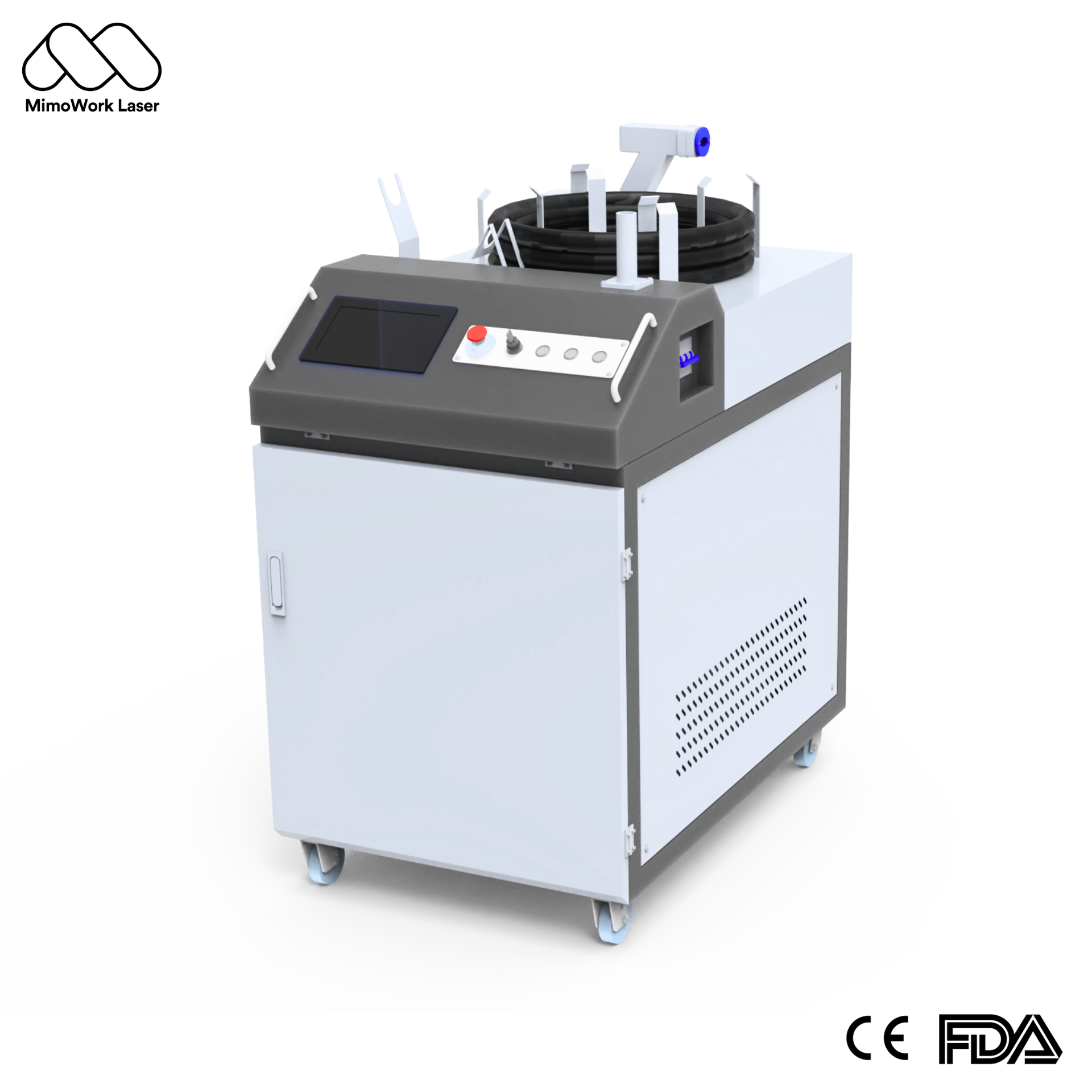
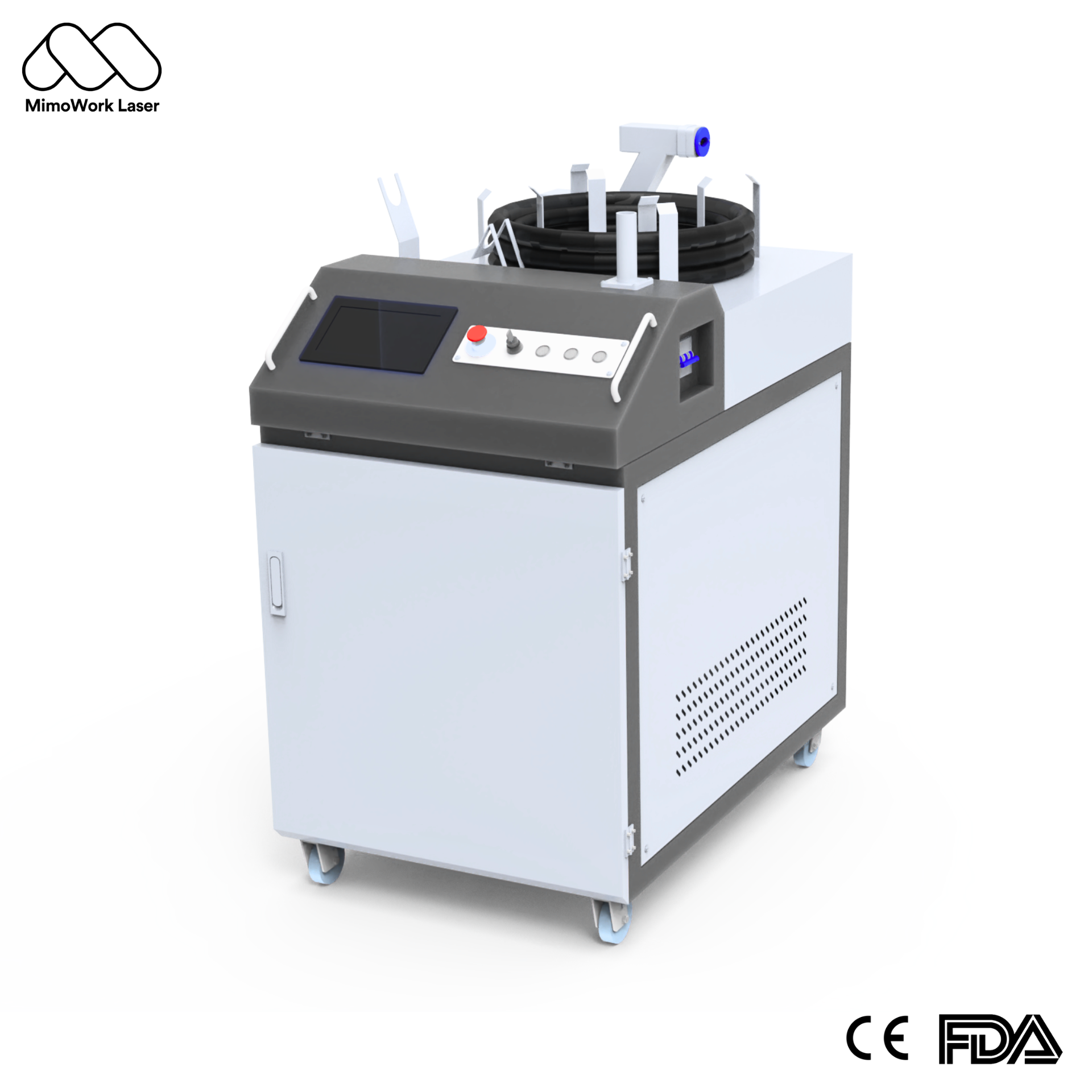
MimoWork’s CW system is available from 1000W to 3000W, using a 1070nm continuous-wave fiber laser and water cooling. It is designed for applications where removal productivity is a major consideration.
| Specification | MimoWork Continuous Wave Laser Cleaning Machine |
| Laser source | Continuous-wave fiber |
| Laser power | 1000W–3000W |
| Wavelength | 1070nm |
| Cooling | Water cooling |
| Typical applications | Heavy rust, paint, mill scale, large metal surfaces |
For buyers comparing a laser rust removal machine, this type of high-power configuration is more relevant when the workpiece is large, the contamination is heavy, and cleaning throughput matters.
A 2000W laser cleaning machine sits in the higher-power range of handheld industrial laser cleaners. It is typically considered when 1000W or 1500W systems are not providing enough cleaning speed for heavier contamination or larger metal surfaces.
A 2000W CW fiber laser is suited to applications such as:
The main advantage is cleaning throughput. More average laser power allows the machine to remove stubborn contamination faster, which can make a significant difference when operators are cleaning large surfaces rather than small precision parts.
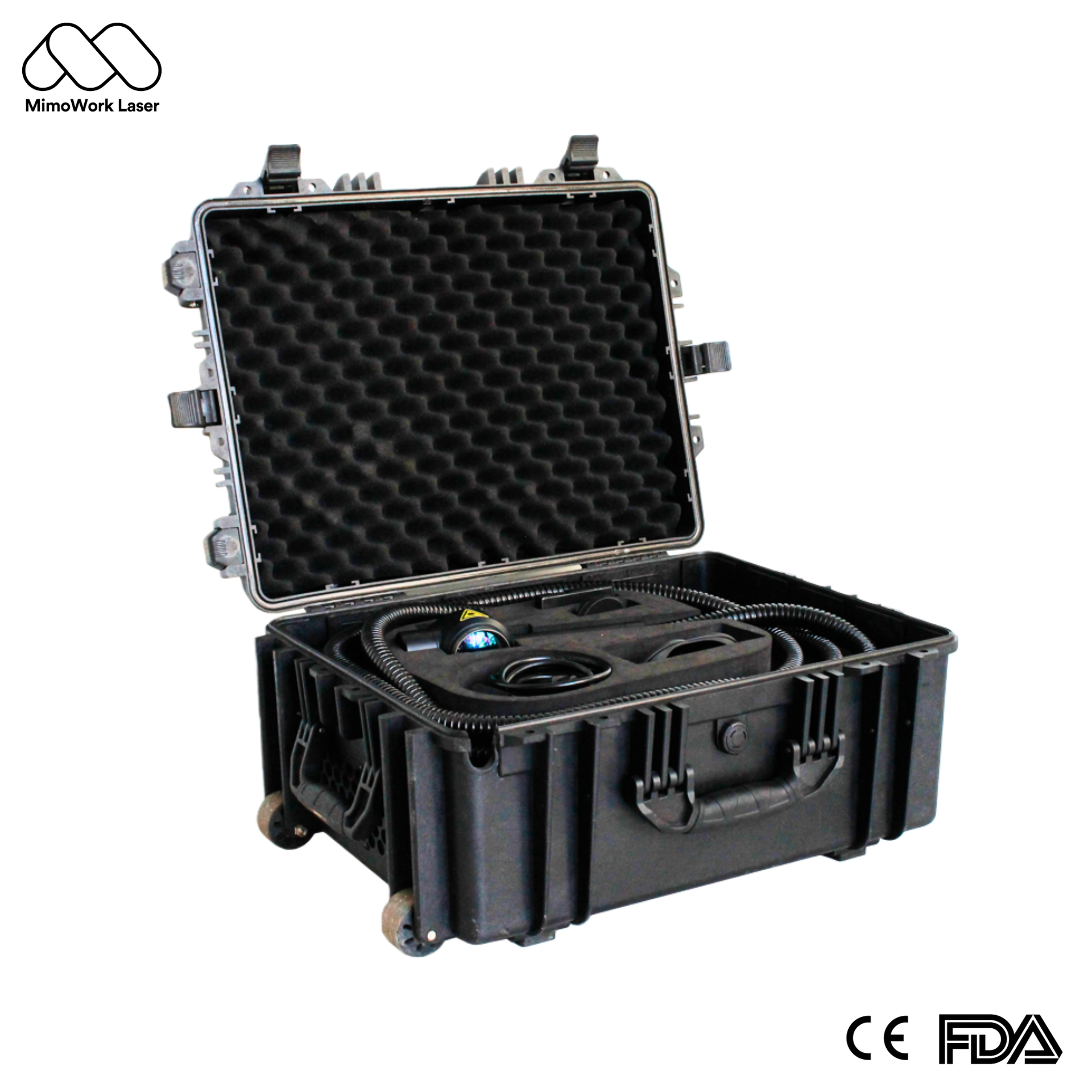
MimoWork’s handheld CW laser cleaning configurations include 1000W, 1500W, 2000W, and 3000W options. Its 2000W configuration uses a 1070nm fiber laser, water cooling, a 10–200mm beam width, and scanning speeds of up to 7000mm/s. Actual cleaning speed depends on the contaminant, substrate, beam settings, and required cleaning result.
At 3000W, the focus shifts further toward heavy-duty cleaning and high-volume production.
This level of power can be considered for:
However, a 3000W machine also requires greater attention to heat input, cooling, cleaning-head configuration, and the overall production setup.
The useful question is not simply how much power you can buy. Consider how much material needs to be removed, how large the cleaning area is, and how quickly the work needs to be completed.
For a small component with a thin oxide layer, 2000W may add little value. For a large steel structure covered in heavy rust, the additional cleaning capacity can significantly reduce processing time.
Start with the workpiece, not the machine brochure.
Steel, stainless steel, aluminum, molds, and coated components all behave differently under laser energy.
Rust, paint, oxide, oil, carbon, and mold residue have different absorption characteristics and may require different parameters.
A thin oxide layer can require a very different process from thick corrosion or multiple layers of paint.
A small handheld system may be practical for irregular parts and maintenance work.
For larger surfaces, cleaning speed and scanning coverage become more important.
This is one of the most overlooked questions.
If you clean five parts a week, a small amount of extra cleaning time may not matter.
If you clean several hundred components every day, cycle time becomes a production cost.
Thin metal, painted surfaces, and other heat-sensitive materials may require more controlled energy input.
Handheld cleaning provides flexibility when every workpiece is different.
Automation becomes more interesting when the same part is cleaned repeatedly and manual positioning has become a bottleneck.
Laser cleaning does not make the removed material disappear.
Paint, rust, coatings, oil, and other contaminants can generate fumes or particles during processing. Extraction should therefore be considered when designing the cleaning workstation.
An industrial laser cleaning machine can mean very different things depending on the production environment.
For occasional maintenance, a handheld laser cleaner may be enough.
For repeated cleaning of identical components, a more automated system may make more sense.
For complex three-dimensional parts, the motion system itself can become important because the laser needs to maintain a suitable position and angle as it moves across the workpiece.
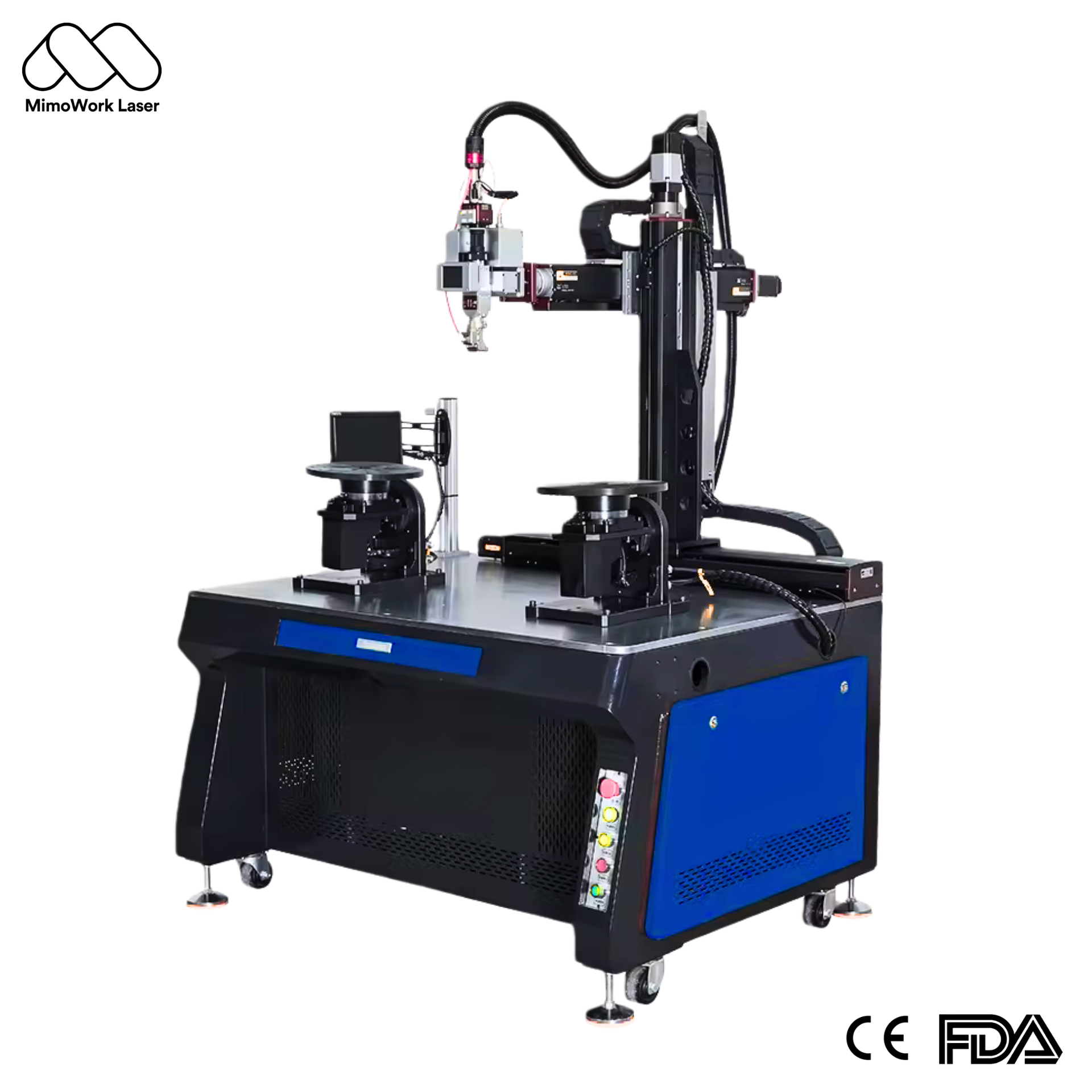
For automated cleaning of complex parts, MimoWork offers a 5-Axis Gantry Laser Cleaning Machine built around a 300W pulsed fiber laser. The system provides an 800 × 300 × 300 mm XYZ stroke, uses a 1064nm laser, and is designed for multi-axis processing.
| Specification | MimoWork 5-Axis Gantry Laser Cleaning Machine |
| Laser source | Pulsed fiber |
| Laser power | 300W |
| XYZ stroke | 800 × 300 × 300 mm |
| Motion | 5-axis CNC |
| Wavelength | 1064nm |
| Cooling | Water cooling |
| Typical applications | Complex 3D components, molds, tooling |
The value here is not simply the 300W laser.
The five-axis motion system can help maintain the laser’s position relative to complex surfaces, making it more suitable for repeatable cleaning where manually moving the laser head would be difficult.
This type of setup becomes more relevant when cleaning is part of a regular production workflow rather than occasional maintenance.Related Guide:Industrial Laser Cleaning Machine: What to Consider for Production Cleaning
Laser cleaning is used across a range of manufacturing and maintenance applications.
Metalworking: Rust and oxide removal before welding, coating, painting, or inspection.
Automotive: Cleaning components, removing coatings, and preparing surfaces before repair or further processing.
Mold and tooling: Removing release agents, carbon deposits, rubber residue, and other buildup.
Manufacturing: Cleaning fixtures, machinery, components, and production tools.
Maintenance: Removing rust, oil, paint, and deposits without abrasive contact.
Restoration: Controlled removal of coatings, soot, and deposits from selected historic surfaces.
The machine configuration changes with the application. A maintenance team cleaning irregular steel components has very different requirements from a factory cleaning the same mold hundreds of times each month.
Laser cleaning is attractive for several practical reasons.
The laser does not need to touch the surface like a grinding wheel or brush.
There is no continuous supply of blasting media to purchase, collect, and dispose of.
The beam can be controlled to target specific areas rather than treating the entire surface equally.
Power, scanning speed, pulse parameters, and beam movement can be adjusted for different cleaning requirements.
Unlike abrasive blasting, the process does not create spent blasting media as a second waste stream.
The same general technology can be configured for rust, paint, oxide, mold, oil, and other surface contaminants.
These advantages do not mean laser cleaning is automatically cheaper or faster than every traditional process.
The value depends on what is currently costing you time, labor, consumables, and rework.
Yes. Rust and oxide removal are common laser cleaning applications. The required power depends on rust thickness, substrate material, cleaning area, and target production speed.
There is no single configuration for every rust-removal job. Pulsed fiber lasers are commonly considered for precision cleaning, while continuous-wave systems are more relevant to heavy rust, larger surfaces, and higher-throughput applications.
Yes. Many paints and coatings can be removed with laser energy. A laser paint removal machine can be useful when coating needs to be removed from selected areas or when mechanical abrasion is difficult to control.
A 100W pulsed system can be suitable for lighter rust and precision cleaning on smaller parts. Heavy corrosion on large surfaces may require substantially more power to achieve practical production speeds.
Pulsed systems are generally better suited to applications where precision and heat control are important. CW systems are more relevant when heavy contamination, large surfaces, and cleaning productivity are the main concerns.
Not in every application. Sandblasting can still be effective for fast bulk removal. Laser cleaning becomes more attractive when selective removal, surface control, reduced abrasive waste, or reduced physical contact is important.
There is no universal power level. MimoWork currently offers pulsed cleaning from 100W–500W, CW cleaning from 1000W–3000W, and a 300W 5-axis gantry configuration for automated multi-axis cleaning. The appropriate configuration depends on the material, contaminant, cleaning area, throughput, and automation requirements.
The simplest way to narrow down a Laser Cleaning Machine is to work backward from the cleaning job.
If you are dealing with molds, detailed components, light rust, oxides, or selected coatings, a pulsed fiber system may give you the control you need.
If you are removing heavy rust, thick coatings, or mill scale from large steel surfaces, a higher-power CW system may make more sense.
If the same complex parts need to be cleaned repeatedly, an automated multi-axis system can address the positioning and consistency challenges that come with manual cleaning.
Power still matters, but it should come after the basics:
Material → Contaminant → Cleaning area → Required cycle time → Heat tolerance → Automation level
Once these are clear, comparing machine configurations becomes much easier.
Choosing a Laser Cleaning Machine is easier when you test the actual workpiece first.
Rust thickness, paint composition, substrate material, surface geometry, and required cleaning speed can all change the laser parameters. A machine that performs well on one material may need a different configuration for another.
Send MimoWork your material details, contaminant type, cleaning area, and production requirements for an application evaluation. A sample workpiece, photos, or cleaning file can also help determine the appropriate laser source, power, and machine configuration.
Have a cleaning job to test? Contact MimoWork for a material test and find out how laser cleaning performs on your actual surface.
News | Jun-15-2026