Blog
In a field that evolves daily, staying ahead means staying informed.
Explore in-depth articles designed to help you solve complex challenges,
maximize your machine’s ROI.
Stay ahead in a competitive market.


In a field that evolves daily, staying ahead means staying informed.
Explore in-depth articles designed to help you solve complex challenges,
maximize your machine’s ROI.
Stay ahead in a competitive market.
News | Sep-20-2026
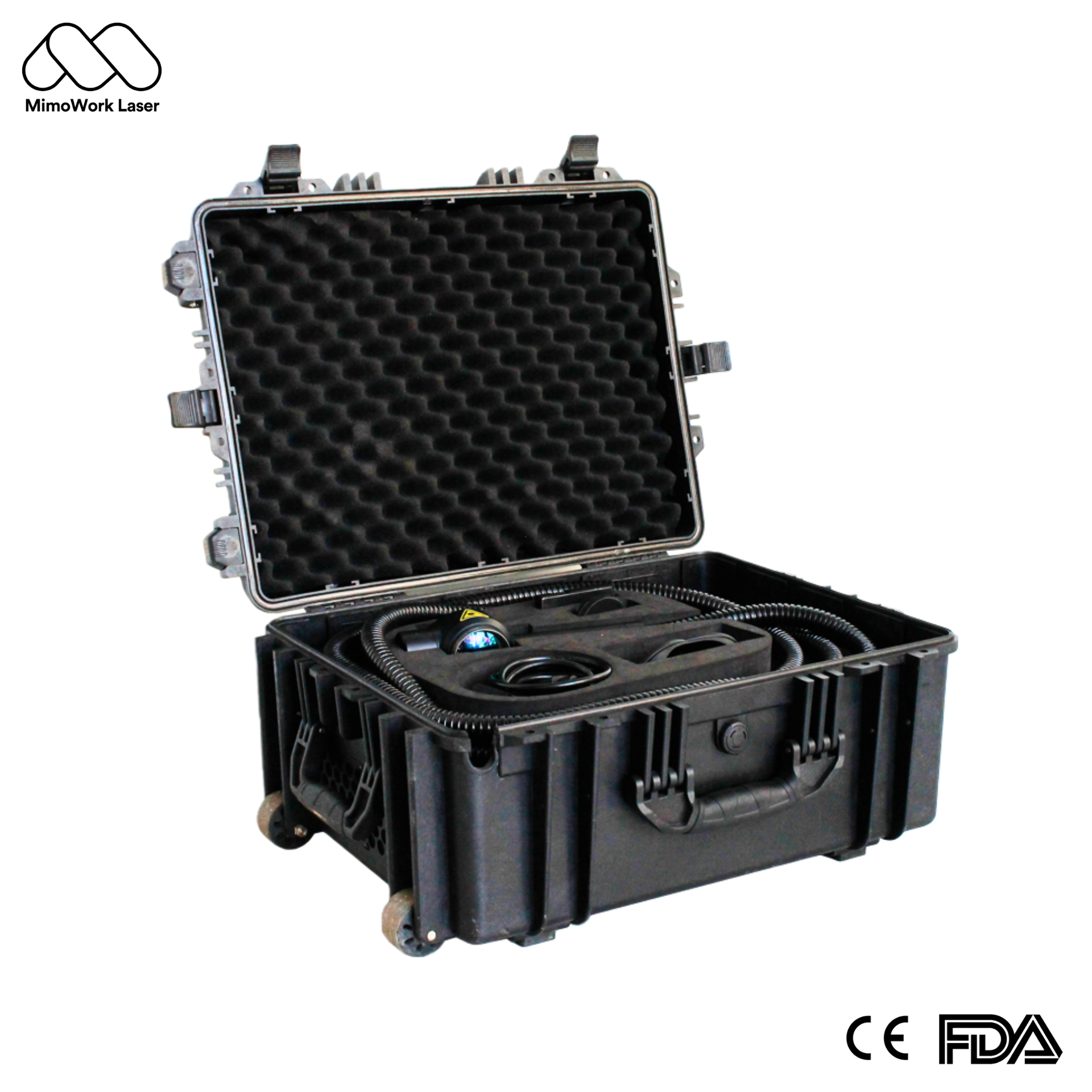
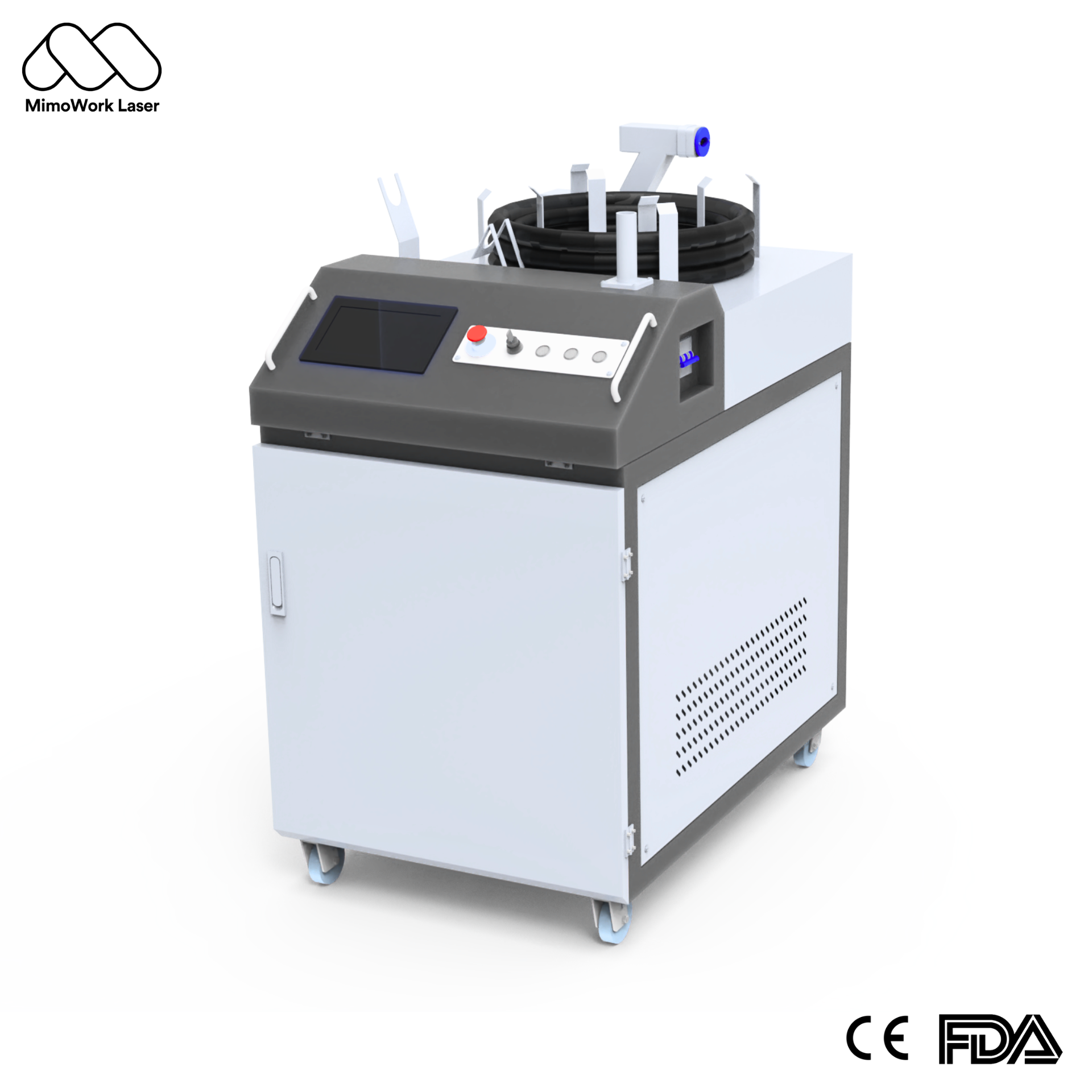
A 100w laser cleaning machine uses a focused laser beam to remove unwanted material from a surface without physical contact.
It can be used for rust, oxide, paint, oil, carbon deposits, mold residue, and other contaminants. The laser is scanned across the surface, and the parameters are adjusted so the unwanted layer absorbs enough energy to be removed while limiting the effect on the substrate.
For many precision cleaning jobs, 100W can provide a useful balance between cleaning performance and process control.
It is especially relevant for applications such as mold maintenance, smaller metal components, tools, and precision rust removal.
The important point is that 100W does not define the entire cleaning capability. Pulse characteristics, scanning speed, beam size, and the material being cleaned all affect the actual result.
The appeal of 100W comes from its balance.
A system with too little power may take too long to remove contamination. A much higher-power system may deliver more energy than necessary for a precision cleaning task.
A 100W pulsed system can provide enough energy for many rust and mold-cleaning applications while still allowing the operator to control the cleaning process.
When cleaning a mold or precision metal component, removing the contamination is only half the job.
The original surface also needs to be preserved.
Grinding and abrasive blasting can physically contact the surface and may alter fine details over time. Laser cleaning works differently: the operator can adjust the energy delivery to target the contamination more selectively.
This makes controlled laser cleaning useful for molds, tooling, and parts with detailed surfaces.
Pulsed laser energy is delivered in short bursts rather than as a continuous beam.
This gives the operator more control over heat input and makes pulsed systems suitable for applications where excessive thermal exposure could affect the substrate.
The actual result still depends on the settings. Power alone is not enough to predict cleaning performance.
A 100W system can handle a range of common industrial contaminants.
Rust and oxide are among the most common applications.
A laser rust removal machine can target corrosion without abrasive media. This can be useful for tools, metal parts, machine components, and maintenance work.
Light oxidation is generally easier to process than thick, tightly bonded rust. If the workpiece has deep corrosion across a large area, a higher-power system may be more productive.
Molds can collect release agents, oil, carbon deposits, and other residues during repeated production cycles.
A 100W laser can be used to clean these deposits from mold surfaces without physical contact.
This is particularly useful around fine cavities, grooves, and textured areas where abrasive cleaning may be difficult to control.
Depending on the coating and substrate, a 100W system can also remove paint, oil, grease, and surface dirt.
Because coatings vary significantly in composition and thickness, the process should be tested rather than assuming the same settings will work for every job.
Mold cleaning is one of the applications where process control matters more than raw power.
Injection molds can accumulate release-agent residue, carbon, oil, and other buildup.
Traditional cleaning may involve chemicals, dry ice, manual brushing, or abrasive processes. Each method has its own limitations, especially when the mold has small cavities or detailed features.
A laser provides a non-contact option for cleaning selected areas without physically rubbing against the mold surface.
Mold surfaces are rarely completely flat.
Cavities, corners, grooves, and fine textures can make manual cleaning slow and inconsistent.
A scanning laser can follow these areas without requiring a physical cleaning tool to reach every surface.
For valuable tooling, it is still important to test the cleaning parameters on a representative area before full processing.
Rust removal is another practical application for a 100W system.
A 100W laser can be used to remove rust from smaller metal parts, tools, fixtures, and machine components.
It is particularly attractive when abrasive media would create additional cleanup or when the original geometry needs to be preserved.
For large structural components or severe corrosion, however, cleaning speed should be evaluated carefully. Higher laser power may provide a better production rate.
Unlike sandblasting or grinding, laser cleaning does not require abrasive particles to strike the surface.
This can simplify the process and reduce secondary abrasive waste.
The laser can also be directed to selected areas, which is useful when only part of a component needs to be cleaned.
Do not stop at the 100W specification. Check the complete configuration.
Confirm whether the system uses a pulsed or continuous source and understand how that source matches your application.
Ask how quickly the machine can clean your actual material and contaminant. A higher nominal power does not automatically translate into a faster production process.
A wider scan can help reduce the number of passes required on larger surfaces.
Handheld systems are flexible for different part sizes and maintenance work.
If the same component is cleaned repeatedly, automation may offer better consistency and cycle-time control.
Rust, paint, oil, and other contaminants can generate fumes and particles during cleaning. Make sure the extraction system is appropriate for the material being removed.
A sample test is one of the most useful steps before purchasing.
Test the actual rust, mold residue, coating, and substrate rather than relying only on general specifications.
| Cleaning Method | Advantages | Limitations |
| 100W laser cleaning | Precise, non-contact, no abrasive media | Requires parameter testing |
| Sandblasting | Fast for heavy contamination | Abrasive media and secondary waste |
| Grinding | Effective on heavy rust | Can alter the substrate |
| Chemical cleaning | Useful for selected contaminants | Chemical handling and disposal |
| Manual cleaning | Low equipment cost | Labor-intensive and inconsistent |
A 100W laser does not necessarily replace every traditional cleaning method.
Its value is strongest when you need controlled cleaning, minimal physical contact, repeatability, or access to areas that are difficult to clean mechanically.
For some industrial applications, yes.
A 100W system can be suitable for molds, tooling, small and medium metal parts, precision rust removal, and surface preparation.
But “industrial” does not automatically mean “100W.”
If you need to clean large metal structures, remove thick coatings, or meet a demanding production cycle time, a higher-power system may be more appropriate.
The better question is:
Can 100W clean your specific part at the required speed while achieving the required surface condition?
A sample test can answer that much more accurately than the wattage alone.
Yes. A 100W laser can remove rust and oxide layers from many metal surfaces. The actual cleaning speed depends on rust thickness, substrate, scanning parameters, and required surface finish.
Yes. A 100W system can be used to remove release-agent residue, oil, carbon deposits, and other contaminants from many molds and tooling surfaces.
It can if the laser parameters are too aggressive. Proper power, speed, frequency, and scanning settings are important to control heat input and protect the substrate.
It depends on the application.
For precision cleaning and mold maintenance, 100W may be sufficient. Large surfaces, heavy rust, thick coatings, or high-volume production may require more power.
It can remove certain paints and coatings, but the result depends on coating composition, thickness, and substrate. Always test the actual material before production.
A 100w laser cleaning machine can be a practical choice when precision matters as much as cleaning power.
It is particularly well suited to mold maintenance, precision rust removal, tooling, and smaller metal components where you need to remove contamination without aggressively affecting the substrate.
For heavy corrosion, thick coatings, or large-area production cleaning, look beyond 100W and compare the required cycle time with higher-power alternatives.
If you are considering a 100W system, test your actual mold, rust, coating, and substrate first. That will give you a realistic picture of cleaning speed and surface protection before you invest in the machine.
Not sure whether 100W is enough for your cleaning job? Share your workpiece material, contaminant type, and cleaning area with MimoWork to discuss a suitable laser cleaning setup for your application.
Related Guide:https://www.mimowork-laser.com/blog/mobile-laser-cleaning-machine-guide
News | Sep-4-2026
News | Aug-6-2026