Blog
In a field that evolves daily, staying ahead means staying informed.
Explore in-depth articles designed to help you solve complex challenges,
maximize your machine’s ROI.
Stay ahead in a competitive market.


In a field that evolves daily, staying ahead means staying informed.
Explore in-depth articles designed to help you solve complex challenges,
maximize your machine’s ROI.
Stay ahead in a competitive market.
News | Sep-25-2026
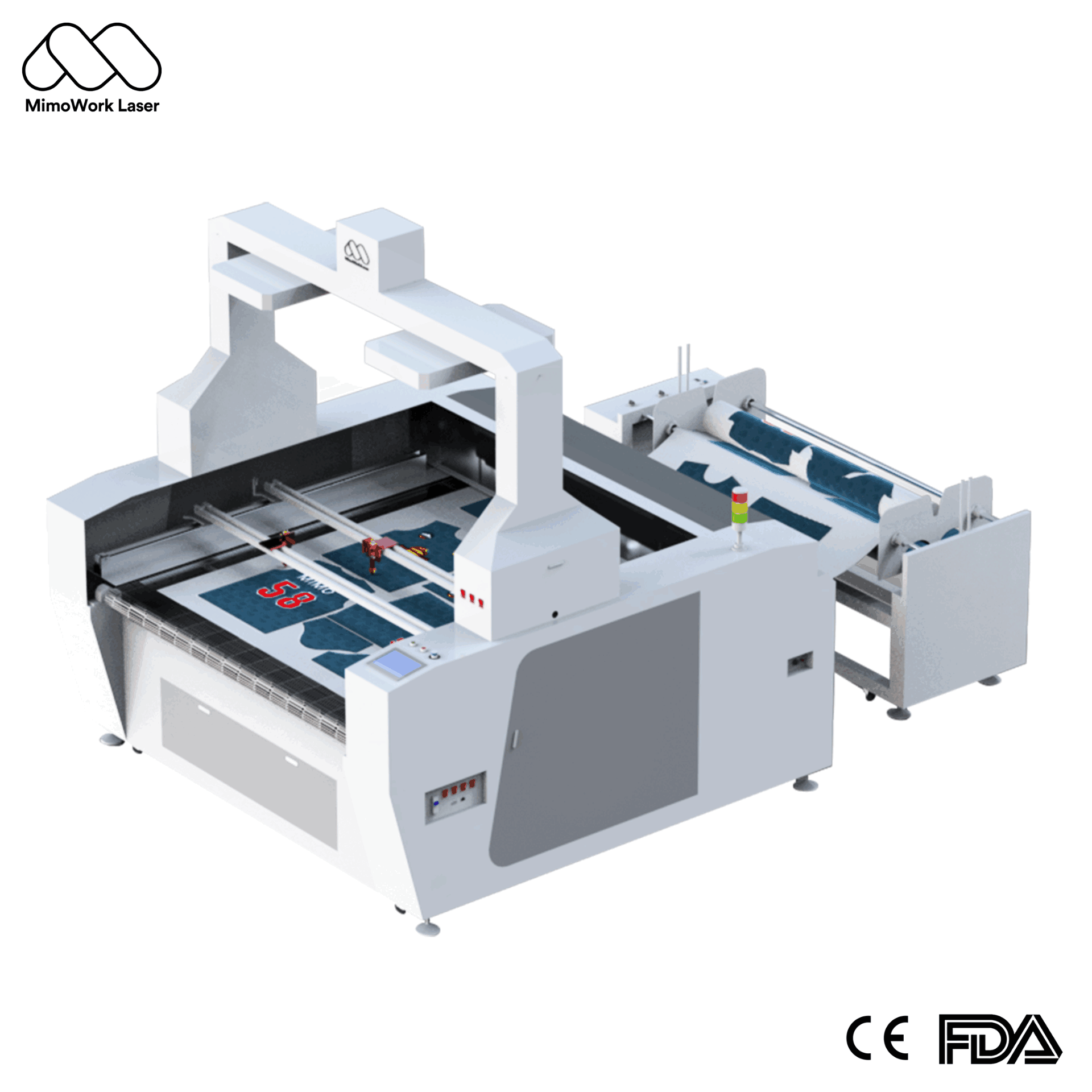
The textile and apparel industry is facing increasing demands for faster production, higher accuracy, and more flexible customization. Traditional fabric cutting methods can struggle to meet these requirements, especially when manufacturers need to process complex patterns, multiple layers, or customized designs.
An industrial fabric laser cutter provides a modern solution by using a high-precision laser beam to cut textiles with clean edges, consistent accuracy, and reduced material waste.
Unlike mechanical cutting tools, laser cutting does not require direct contact with the fabric. This allows manufacturers to process delicate and technical textiles while maintaining cutting quality throughout large-scale production.
For apparel manufacturers, sportswear producers, and textile companies, fabric laser cutting has become an important technology for improving production efficiency and meeting changing market demands.
An industrial fabric laser cutter is a high-performance cutting system designed specifically for processing textile materials in professional manufacturing environments.
The machine uses focused laser energy to cut fabric according to digital designs. The cutting path is controlled by software, allowing manufacturers to create precise shapes, complex patterns, and customized designs.
Compared with traditional blade cutting, laser cutting offers a cleaner and more automated production process.
During cutting, the laser beam generates heat that cuts and seals synthetic fabric edges at the same time. This helps reduce fraying and improves the overall quality of finished textile products.
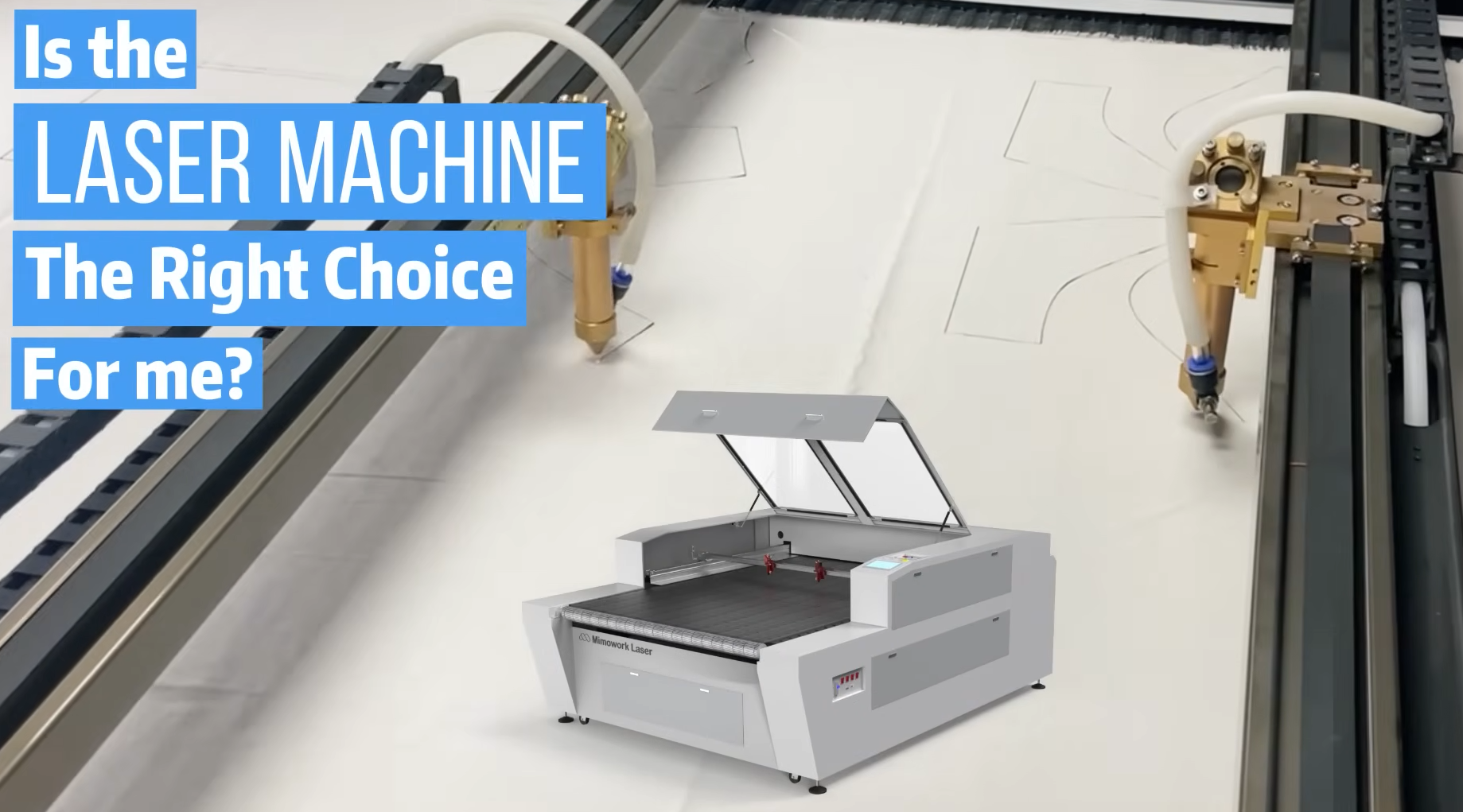
The apparel industry has become more competitive, with brands requiring shorter production cycles, customized products, and higher design flexibility.
Traditional fabric cutting methods often require manual preparation, physical tools, and frequent adjustments when production requirements change.
An industrial fabric laser cutter helps manufacturers overcome these limitations by providing a digital cutting workflow.
Fabric products often contain detailed patterns, curves, and small design elements.
Laser cutting follows digital design files with high accuracy, making it suitable for applications where consistent cutting quality is required.
This is especially useful for:
One of the advantages of laser cutting fabric is the ability to create clean edges without mechanical pressure.
For synthetic fabrics, the heat generated during laser cutting can seal the edges, reducing fraying during later production processes.
In addition, digital nesting software can help optimize material layouts and reduce fabric waste.
Modern apparel production often requires frequent changes in styles and patterns.
Because laser cutters work directly from digital files, manufacturers can quickly switch between different designs without replacing physical cutting tools.
This flexibility is valuable for:
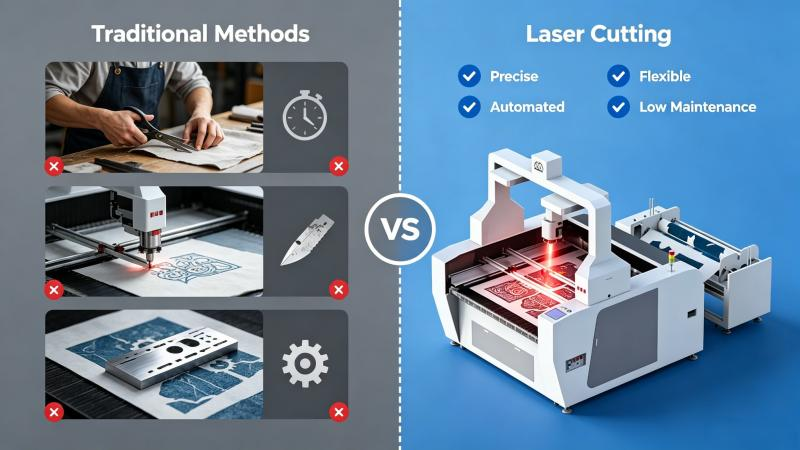
Different cutting technologies have different advantages depending on production requirements.
| Cutting Method | Advantages | Limitations |
| Manual Cutting | Flexible for small operations | Lower efficiency and depends on operator skill |
| Blade Cutting | Suitable for traditional textile production | Tool wear and fabric movement can affect accuracy |
| Die Cutting | Efficient for large repeated patterns | Requires customized dies and less flexible |
| Laser Cutting | Precise, flexible, automated, low tool maintenance | Requires suitable ventilation and system investment |
For manufacturers handling diverse designs and materials, laser cutting provides greater production flexibility.
In clothing production, laser cutters are widely used for creating accurate garment panels, decorative patterns, and customized designs.
Applications include:
The precision of laser cutting helps maintain consistency across large production batches.
Sportswear manufacturers often work with synthetic fabrics such as polyester, nylon, and technical textiles.
Laser cutting is suitable for these materials because it can create smooth edges while supporting complex design requirements.
Beyond apparel, industrial fabrics are used in many sectors, including:
Laser cutting provides the accuracy required for these specialized applications.
Selecting the right fabric laser cutting machine requires evaluating the actual production workflow.
Different fabrics respond differently to laser processing.
Common materials suitable for laser cutting include:
| Fabric Type | Laser Cutting Performance |
| Polyester | Clean cutting with sealed edges |
| Nylon | Suitable with proper parameter adjustment |
| Cotton | Precise cutting with controlled settings |
| Leather | Commonly processed for fashion products |
| Technical Textiles | Suitable for specialized applications |
Manufacturers should test their specific materials before finalizing equipment selection.
The working area of an industrial fabric laser cutter directly affects production efficiency.
For roll fabrics and large textile production, manufacturers often require larger working areas and continuous feeding systems.
The right configuration depends on:
For industrial textile production, automation can significantly improve workflow efficiency.
Features such as:
help manufacturers reduce manual handling and improve production consistency.
For industrial textile and apparel production, MimoWork provides professional fabric laser cutting solutions designed for applications such as clothing, sportswear, roll fabrics, and technical textiles.
The MimoWork Fabric Laser Cutter Series features large-format working areas, precise CO₂ laser cutting technology, and flexible configurations to meet different production requirements. Models such as the MimoWork Fabric Laser Cutter F180L are designed for large-scale textile processing, supporting wide fabric materials with efficient and consistent cutting performance.
With digital cutting control and clean laser processing, MimoWork fabric laser cutters help manufacturers improve cutting accuracy, reduce material waste, and optimize modern textile production workflows.
Related Guide: The Ultimate Guide to Cutting Fabric with a Laser Cutter
Industrial fabric laser cutters can process many textile materials, including polyester, nylon, cotton, leather, and various technical fabrics. The suitable settings depend on material characteristics.
Laser cutting uses heat to process materials, so proper parameter adjustment is important. With suitable settings, manufacturers can achieve clean cutting results while minimizing unwanted marks.
Yes. Industrial fabric laser cutters are designed for professional production environments and can be integrated with automated feeding systems for continuous textile processing.
Laser cutting provides non-contact processing, high precision, reduced tool wear, and the ability to create complex patterns directly from digital designs.
Yes. Cutting textiles can generate smoke and particles, especially when processing synthetic materials. A suitable exhaust and filtration system helps maintain a cleaner working environment.
An industrial fabric laser cutter provides apparel and textile manufacturers with a more precise, flexible, and efficient way to process modern fabrics.
Compared with traditional cutting methods, laser cutting offers advantages in accuracy, design flexibility, edge quality, and digital production integration.
For companies producing garments, sportswear, technical textiles, and customized fabric products, investing in the right laser cutting solution can help improve production efficiency while meeting increasingly complex market demands.
News | Sep-8-2026
News | Sep-1-2026
News | Aug-14-2026