Blog
In a field that evolves daily, staying ahead means staying informed.
Explore in-depth articles designed to help you solve complex challenges,
maximize your machine’s ROI.
Stay ahead in a competitive market.


In a field that evolves daily, staying ahead means staying informed.
Explore in-depth articles designed to help you solve complex challenges,
maximize your machine’s ROI.
Stay ahead in a competitive market.
News | Sep-30-2026
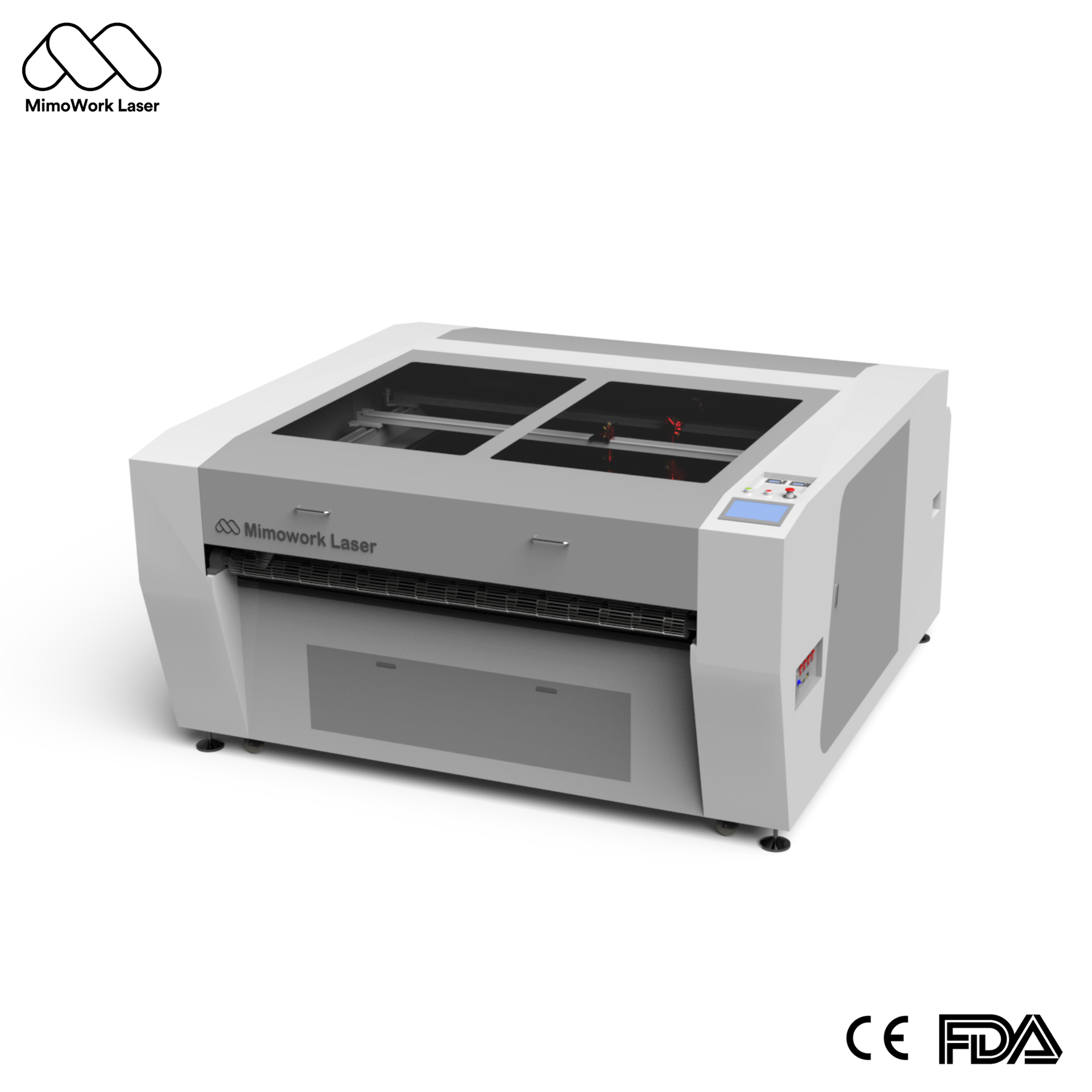
A 200W CO2 laser Cutter is mainly worth considering when material thickness, cutting speed, and production volume start to exceed what lower-power machines can handle efficiently. It is particularly suited to non-metal materials such as acrylic, plywood, MDF, wood, leather, and industrial textiles.
Compared with 100W or 150W systems, the additional power can provide more cutting capacity and reduce the need for multiple passes. However, laser power is only one part of the equation. Working area, laser tube, optics, air assist, material characteristics, and the required edge quality all affect the result.
A 200W CO2 laser uses a CO2 laser source to deliver higher cutting power for non-metal materials. The main advantage is not simply “more power,” but the ability to process thicker materials or maintain useful cutting speeds as material thickness increases.
Higher power gives the laser more energy available at the cutting point. For production users, this can mean faster cutting, fewer passes, and more practical processing of thicker sheets.
The actual improvement varies by material. A dense plywood sheet, cast acrylic panel, and leather hide will respond differently to the same laser power.
MimoWork notes that cutting thickness is affected by factors including material density, laser tube performance, lens selection, air assist, and cutting parameters—not power alone. Its recent testing examples include thick acrylic and plywood in high-power CO2 laser applications.
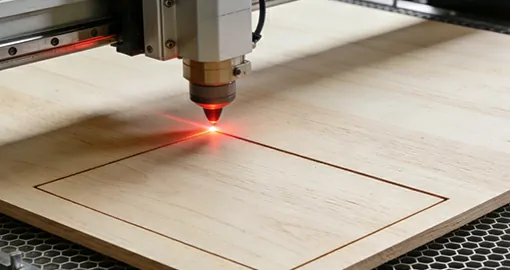
A 200W CO2 laser cutting machine is suitable for a broad range of non-metal materials, including:
CO2 lasers are generally chosen for these materials because their wavelength interacts effectively with many organic and non-metal surfaces.
A 200W system makes the most sense for thicker material processing and repeated production, rather than occasional light cutting.
Yes. A high-power CO2 laser becomes useful when cutting time is starting to affect production output.
For example, a shop producing acrylic displays may move from 100W to 200W because thicker sheets take too long to process at lower power. A furniture or signage manufacturer may also benefit when plywood or MDF parts need to be cut repeatedly throughout the day.
The goal is not maximum wattage. It is getting enough power to meet the required cycle time without sacrificing edge quality.
Yes, but the appropriate settings vary considerably.
Acrylic can benefit from higher power when thicker sheets need to be cut efficiently. Wood and plywood are more variable because density, glue content, grain, and thickness affect cutting performance. Leather usually requires more attention to heat and edge effects.
For 200W CO2 laser cutting machine for acrylic applications, buyers should therefore test the actual acrylic grade and thickness rather than relying on a generic maximum thickness figure.
The best 200W configuration is not necessarily the machine with the largest bed or highest speed rating. The important factors are working area, laser source, motion system, cooling, optics, and how the machine fits your production workflow.
A 200W laser paired with a small working area may make sense for thick materials and repeated small parts. A larger bed becomes more valuable when full sheets or multiple parts need to be processed in one setup.
| Production Need | Configuration to Consider | Why It Matters |
| Thick small parts | Higher power + compact bed | Prioritizes cutting capacity |
| Acrylic sheets | 200W + suitable bed size | Reduces repeated loading |
| Batch production | 200W + larger working area | More parts per setup |
| Large panels | 200W + large-format bed | Reduces repositioning |
| Roll materials | 200W + conveyor system | Supports continuous feeding |
The working area should therefore be selected around the size of the material you actually process, not simply the largest machine available.
The laser source affects maintenance, stability, beam delivery, and long-term operating requirements.
CO2 systems may use glass or RF metal laser tubes. MimoWork’s customizable CO2 laser systems list both CO2 glass and RF metal laser tube options, with power, working area, and other specifications configurable around the application.
Cooling is another practical consideration. Water cooling is commonly used on higher-power CO2 systems to maintain stable laser-source temperature during longer production runs.
MimoWork does not position 200W as a single standalone machine model. Instead, its CO2 laser range includes configurable machines that cover the 200W level.
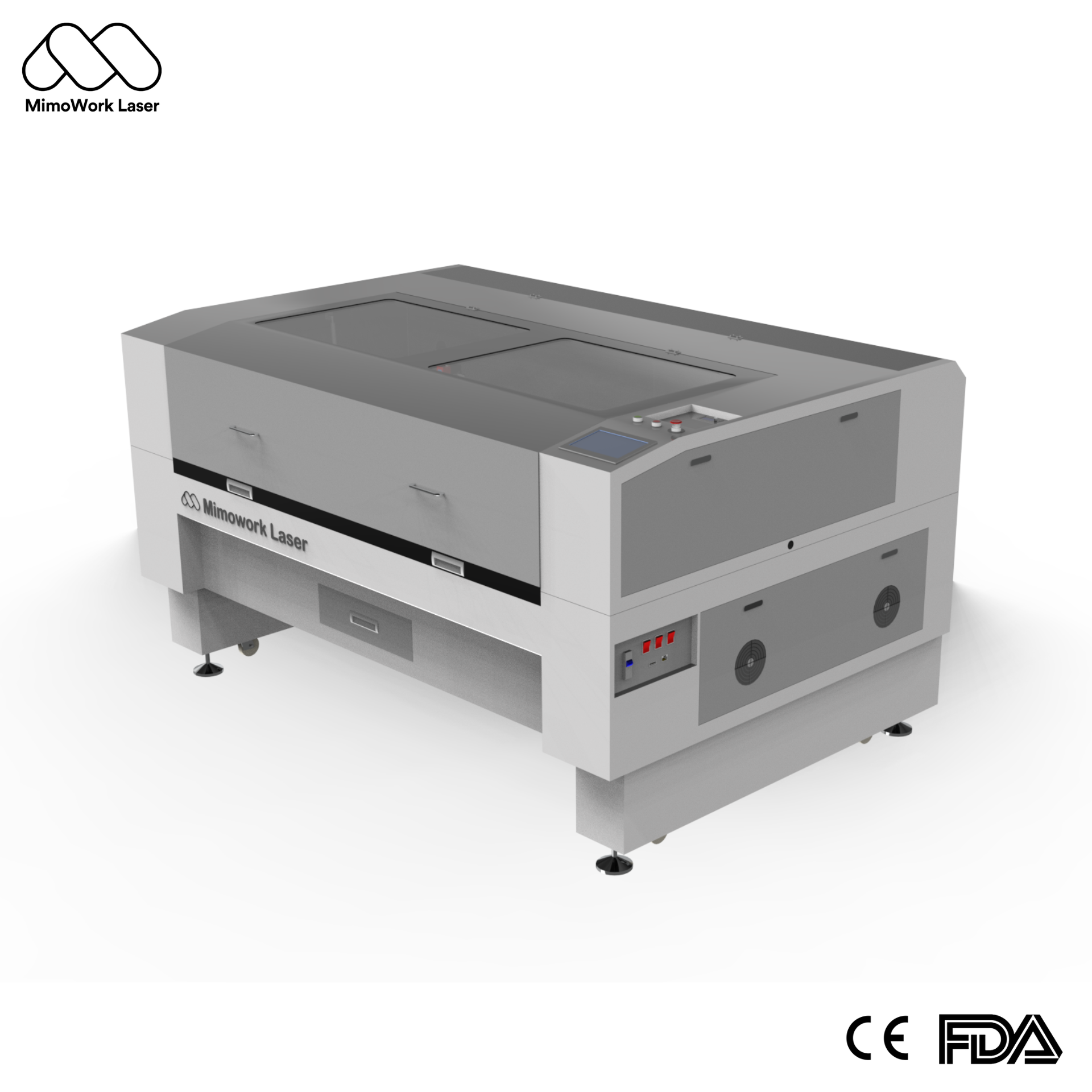
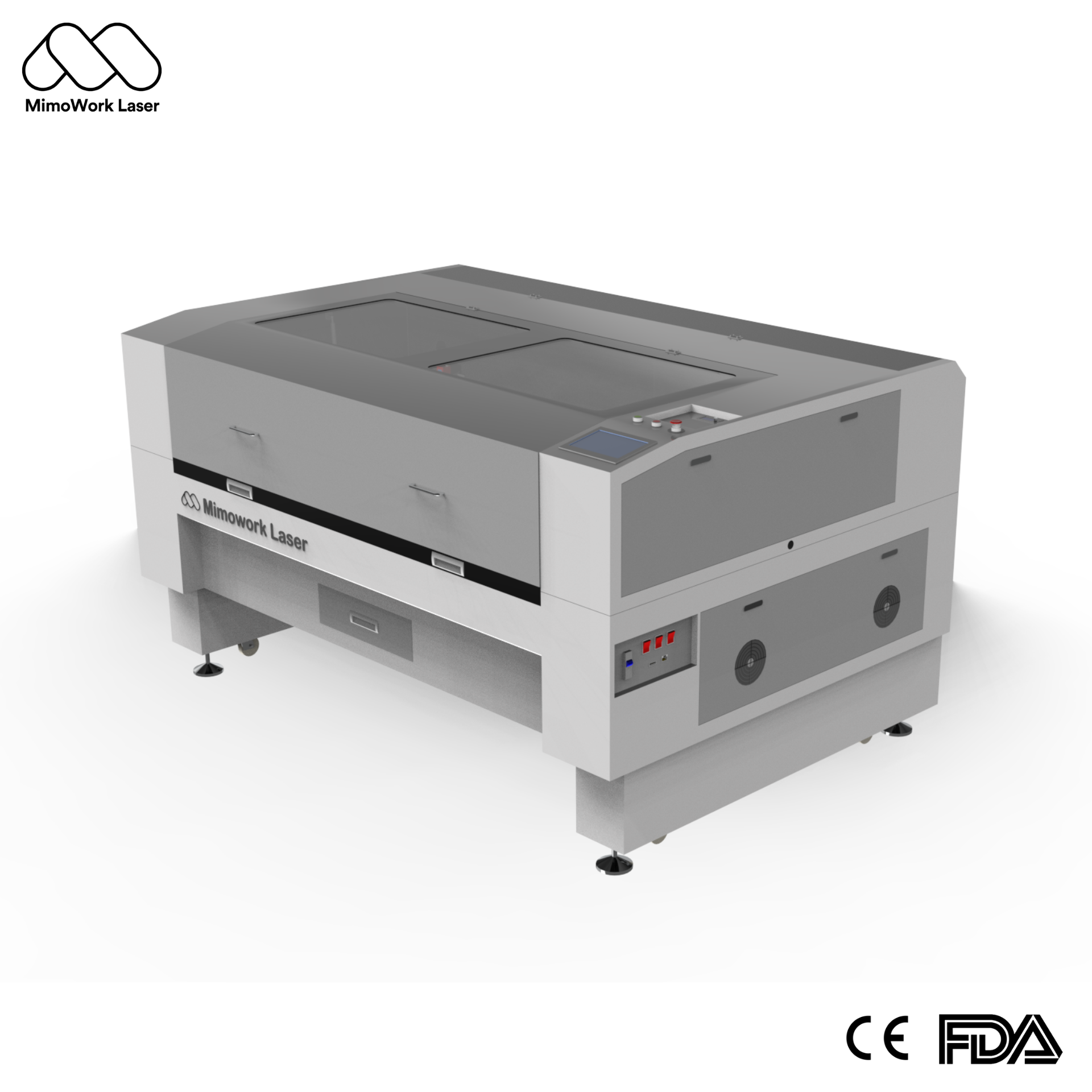
The F160 Laser Cutter supports 100W–300W laser power and provides a 1600 × 1000mm working area, making a 200W configuration available within its stated power range. It is positioned for larger material processing and production applications.
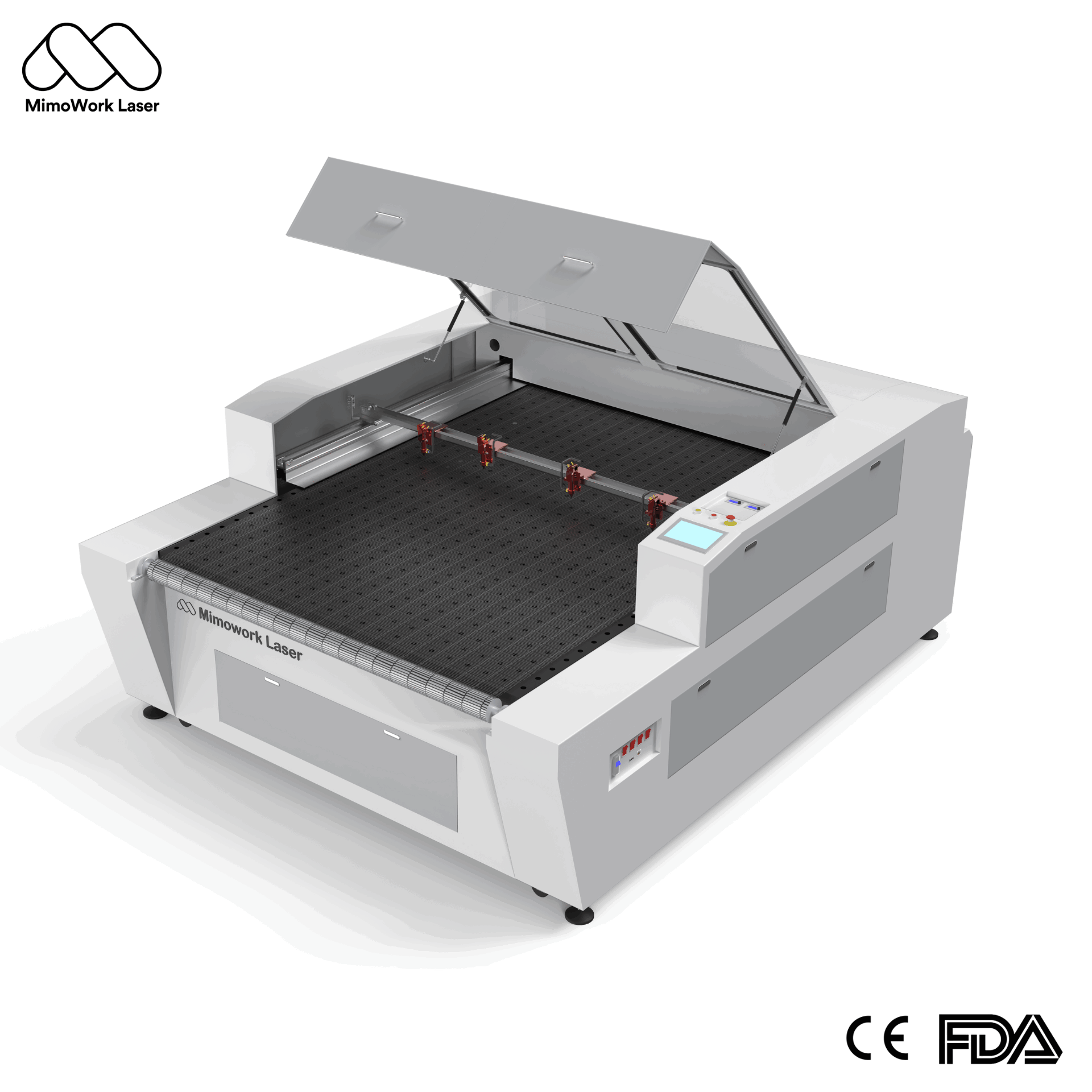
For businesses processing full-size wood or acrylic sheets, MimoWork also offers the F130-L, with a 1300 × 2500mm working area and 100W–600W CO2 laser power options. This is more relevant when sheet size and material handling are as important as laser power.
This is an important buying distinction: 200W is a power configuration, not necessarily a complete machine specification.
For production environments with unusual material sizes or workflow requirements, customization can be more valuable than simply upgrading laser power.
MimoWork’s customizable CO2 laser system allows the working area, laser power, laser source, motion system, cooling, and other elements to be configured around the production process.
The main difference is processing capacity rather than a completely different application range.
| Factor | 100W CO2 Laser | 150W CO2 Laser | 200W CO2 Laser |
| Light to medium materials | Suitable | Suitable | Suitable |
| Thicker materials | Limited | Better | Better suited |
| Cutting speed | Moderate | Higher | Higher |
| Batch production | Small–medium | Medium | Medium–large |
| Typical reason to upgrade | More speed needed | More thickness/speed | Higher throughput |
A 200W CO2 laser vs 100W laser comparison should therefore focus on actual production requirements. If most jobs involve thin acrylic, paper, leather, or wood, moving directly to 200W may provide little practical benefit. If thicker sheets are common and cutting time is limiting output, the extra power becomes more meaningful.
A 200W CO2 laser can process many non-metal materials, but there is no universal maximum thickness for every material.
Yes. Acrylic is one of the common applications for CO2 laser cutting. Thicker acrylic generally benefits from higher power, but the exact result depends on acrylic type, thickness, lens, focus, air assist, and cutting speed.
Yes. Wood, plywood, and MDF can be processed, although resin content, density, glue layers, and thickness can change the cutting result.
For demanding jobs, a sample test is more useful than relying on a published thickness number.
It can cut many non-metal materials, including acrylic, wood, plywood, MDF, leather, fabric, rubber, and certain plastics. Actual cutting thickness depends on the material and machine configuration.
Yes, particularly when thicker acrylic sheets or higher production throughput are involved. The exact configuration should be tested against the acrylic grade and thickness being processed.
Not for every application. A 200W system provides greater cutting capacity, but a 100W machine may already meet the requirements of thinner materials and lower production volumes.
Start with the material thickness, sheet size, daily production volume, required cutting speed, and edge-quality requirements. Then compare laser source, working area, motion system, cooling, extraction, and available automation.
A 200W laser cutting machine is worth considering when thicker non-metal materials and production volume are making lower-power CO2 systems too slow. It is particularly relevant for acrylic, plywood, MDF, wood, leather, and other non-metal applications where cutting throughput matters.
Before upgrading, test the actual material rather than choosing from wattage alone. A sample can reveal whether 200W meaningfully improves cutting speed, edge quality, and overall production time.
Need to process a specific material or thickness? Send MimoWork your material details and sample file to evaluate a suitable CO2 laser configuration for your production needs.
Related Guide:Understanding the 50W CO2 Laser: Capabilities, Applications, and Considerations