Blog
In a field that evolves daily, staying ahead means staying informed.
Explore in-depth articles designed to help you solve complex challenges,
maximize your machine’s ROI.
Stay ahead in a competitive market.


In a field that evolves daily, staying ahead means staying informed.
Explore in-depth articles designed to help you solve complex challenges,
maximize your machine’s ROI.
Stay ahead in a competitive market.
News | Oct-20-2026 | Mimowork
Quick Answer
Aerospace laser welding uses a concentrated laser beam to join metal components with a localized heat input and precise control over the weld area. It can be considered for aircraft components, lightweight assemblies, precision housings, and selected spacecraft structures where joint quality, dimensional accuracy, and repeatability matter. However, the right process depends on the alloy, component geometry, joint design, and qualification requirements. Laser welding is not automatically suitable for every aerospace part, and critical applications require rigorous procedure qualification and weld inspection.
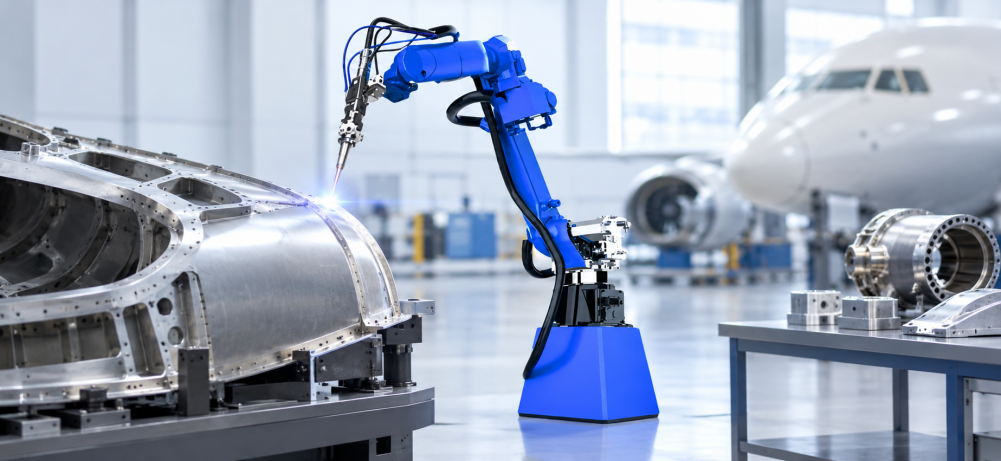
Aerospace manufacturing places demanding requirements on joining processes. Components must meet strict design specifications while keeping weight under control and maintaining reliable performance under vibration, temperature changes, and mechanical loading.
Aerospace laser welding uses focused laser energy to melt and fuse compatible materials along a defined joint. Compared with conventional arc welding, the process can concentrate heat in a smaller area, helping reduce the heat-affected zone and limit distortion when the parameters and joint fit-up are properly controlled.
The benefits are particularly relevant when manufacturers need narrow weld seams, accurate positioning, or repeatable joining across complex metal parts.
Still, a good-looking weld is not necessarily a qualified aerospace weld. Penetration, porosity, cracking, residual stress, fatigue performance, and material-specific requirements must all be evaluated against the component’s engineering specifications.
The suitability of laser welding depends on the application rather than the industry label alone. Several types of aerospace components may benefit from further process evaluation.
Weight reduction is an important consideration in aircraft design. Selected aluminum and titanium assemblies may be candidates for laser welding when the alloy, joint configuration, and load requirements are compatible with the process.
The concentrated energy source can help produce narrow welds while limiting unnecessary heat input. This may reduce distortion in thin or precision-machined parts, although results depend on material thickness, restraint, and welding parameters.
For structural components, engineers must also verify fatigue resistance, joint strength, and the effects of welding on the material’s mechanical properties.
Selected engine-related components and high-temperature alloy assemblies may require accurate joining in restricted areas. Laser welding can be evaluated for suitable nickel-based alloys, stainless steels, and other qualified materials.
These applications demand particular attention to alloy chemistry, heat input, cracking sensitivity, and the thermal history of the component. Some alloys require specialized procedures or post-weld treatment.
Laser welding should therefore be selected through material-specific trials and engineering review, rather than assuming that one set of parameters will work across different aerospace alloys.
Small housings, sensor enclosures, instrumentation parts, and other precision assemblies may benefit from a localized joining process.
Where the design allows laser access to the joint, laser welding can support narrow seams and repeatable weld paths. Automated positioning can further improve consistency when multiple components share the same geometry.
The key consideration is whether the equipment can maintain the required focal position, joint alignment, and weld path throughout production.
Laser beam welding is also being investigated for specialized space-manufacturing applications. NASA has reported research into laser welding under vacuum and experiments intended to improve understanding of joining aerospace alloys in space-related environments.
These research applications should not be confused with routine qualification for flight hardware. Welding in a controlled terrestrial production environment and welding under reduced gravity or vacuum involve different process challenges.
Material selection is one of the first steps in developing a welding process. The same laser system may behave differently when working with different alloys, thicknesses, surface conditions, and joint geometries.
| Material | Potential application areas | Key process considerations |
| Aluminum alloys | Selected lightweight structures and enclosures | High reflectivity, thermal conductivity, porosity, and alloy-specific cracking sensitivity |
| Titanium alloys | Selected lightweight structural and precision components | Oxidation protection, shielding gas, contamination control, and joint quality |
| Stainless steels | Housings, brackets, and selected mechanical assemblies | Heat input, distortion, penetration, and corrosion-related requirements |
| Nickel-based alloys | Selected high-temperature components | Crack sensitivity, thermal management, and metallurgical evaluation |
| Copper alloys | Selected electrical or thermal components | High reflectivity and thermal conductivity, requiring suitable laser and process parameters |
This table is a starting point for application screening, not a guarantee that every listed alloy or component is suitable for a particular machine.
Before choosing equipment, confirm the exact alloy grade, material thickness, required penetration, joint design, surface preparation, and applicable acceptance criteria.
The main advantage of laser welding is its ability to deliver concentrated energy to a relatively small area. In suitable applications, this can support precision joining while limiting the amount of surrounding material exposed to heat.
| Evaluation factor | Laser welding | Conventional arc welding |
| Heat input | Can be highly localized | Often distributed over a wider area |
| Weld geometry | Suitable for narrow, precisely positioned seams | Depends on process, electrode or wire, and joint design |
| Distortion control | Can be favorable with optimized parameters | May require additional heat and fixture management |
| Automation | Well suited to programmed motion and robotic integration | Also supports automation, depending on the process |
| Joint preparation | Requires suitable fit-up and controlled joint geometry | Requirements vary by welding process |
| Process qualification | Required for critical aerospace applications | Also required for critical aerospace applications |
Laser welding is not universally better. Arc welding may be more practical for certain thick sections, less accessible joints, repair work, or applications where existing qualified procedures already meet the requirements.
The best choice is the process that consistently satisfies the engineering specification at an acceptable production cost.
Aerospace applications demand more than a fast welding cycle. Several technical factors must be addressed before a process can be released for production.
Material-specific behavior. Different alloys absorb laser energy differently and respond differently to rapid heating and cooling. Some materials are particularly sensitive to cracking, porosity, or contamination.
Joint fit-up and positioning. Laser welding typically requires careful control of the joint gap and beam position. Small geometric variations can affect penetration and weld consistency.
Shielding and surface preparation. Oxidation, oil, moisture, and other contaminants can compromise weld quality. Appropriate cleaning and shielding procedures must be established for the material and application.
Inspection and traceability. Visual inspection alone may not reveal internal defects. Depending on the component, inspection may include radiographic, ultrasonic, penetrant, metallographic, or other suitable examinations. Process records and traceability may also be required.
Qualification and compliance. Aerospace projects may specify particular welding procedures, personnel qualifications, inspection methods, and acceptance standards. Requirements must be confirmed with the relevant engineering authority and customer.
These considerations should be addressed during process development, not after a production machine has been purchased.
Selecting a machine should begin with the actual part and its acceptance requirements, not with laser power alone.
Identify the material grade, thickness, joint type, weld length, access restrictions, and dimensional tolerances. A thin precision enclosure and a complex three-dimensional structural assembly may need very different equipment configurations.
Define penetration depth, acceptable bead geometry, strength requirements, distortion limits, and inspection criteria. These targets determine whether a proposed laser process is technically feasible.
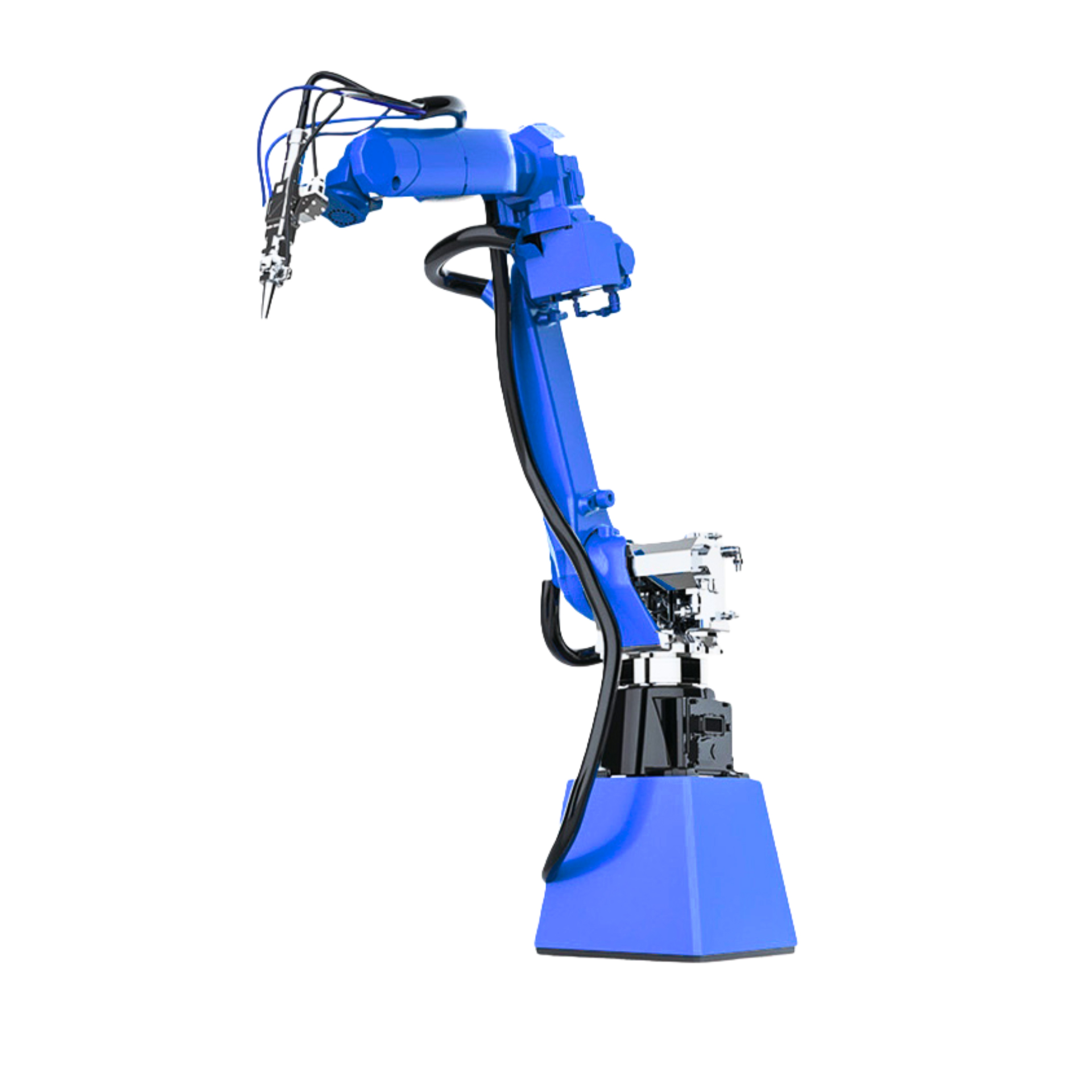
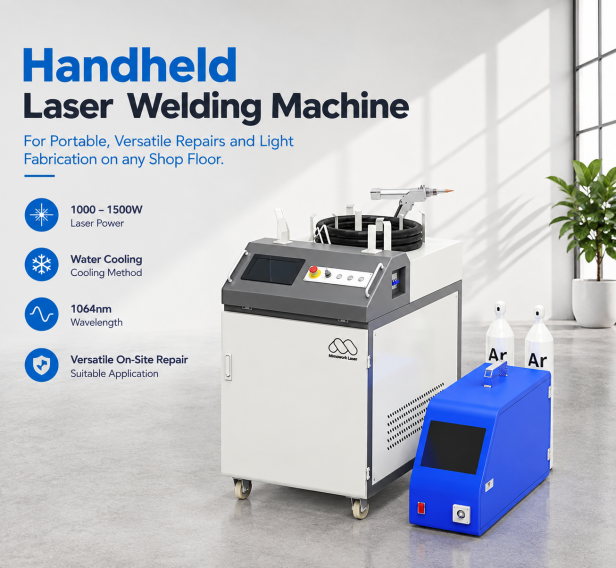
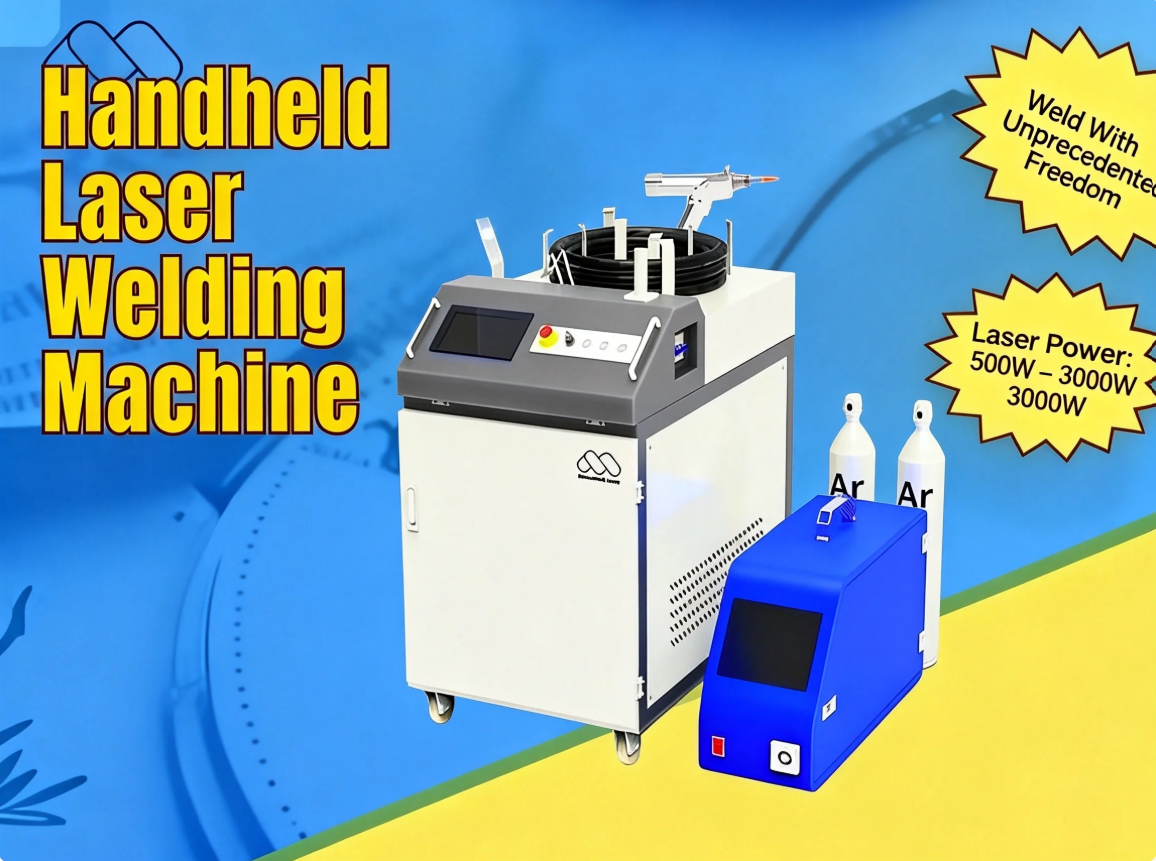
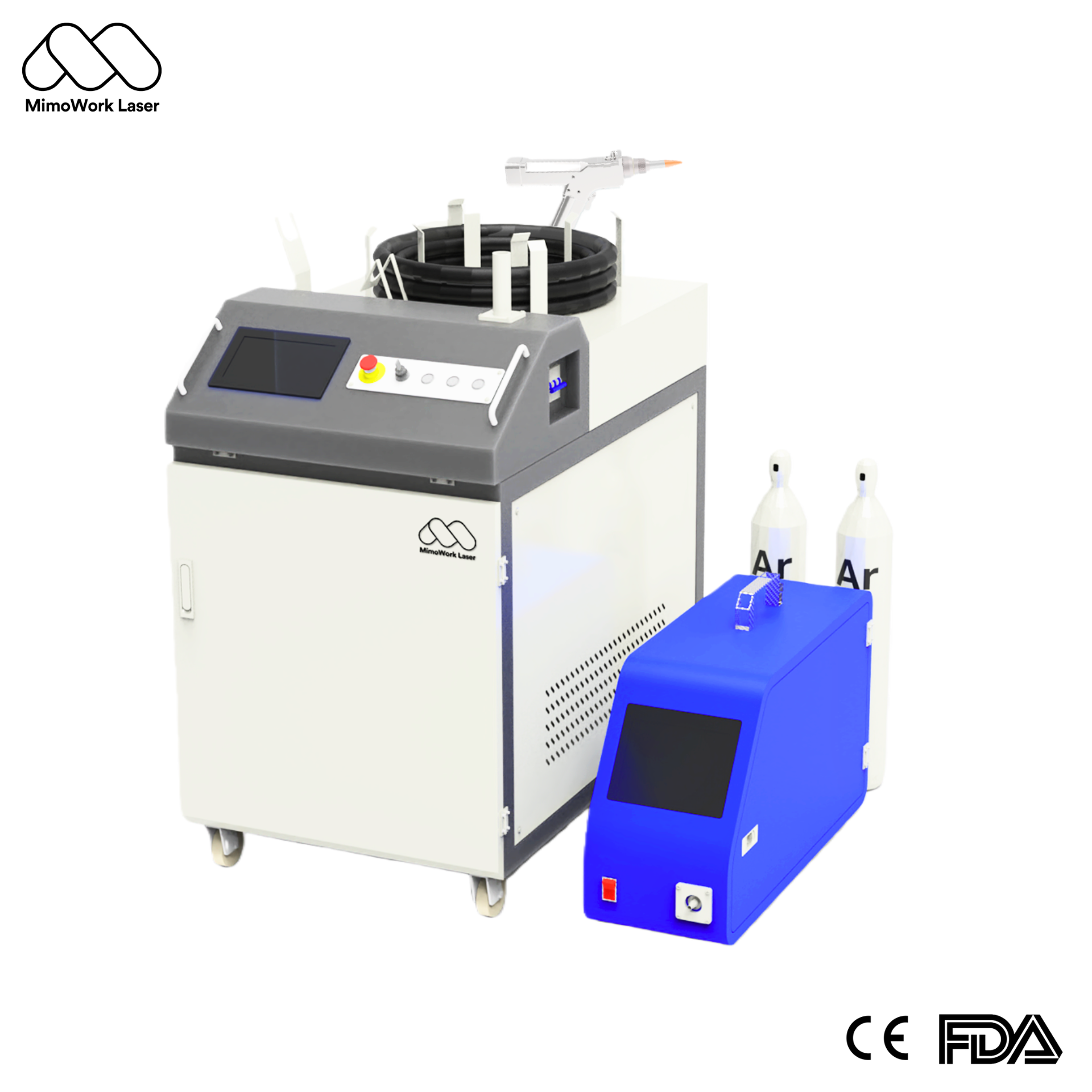
For relatively accessible parts and flexible workshop jobs, a handheld system may be worth evaluating where permitted by the process requirements. For repeatable production paths, a gantry system can offer programmed movement. Complex three-dimensional components may call for a multi-axis robotic configuration.
MimoWork offers different configurations within its laser welding machine range, including handheld, gantry, and robotic systems. These are equipment options to evaluate against the application; their availability does not itself establish aerospace qualification.
A meaningful equipment evaluation should use representative samples of the intended alloy, thickness, and joint geometry. Examine weld penetration, porosity, cracking, distortion, and the repeatability of the results.
Where aerospace requirements apply, preliminary sample testing must be followed by the required engineering validation and formal qualification. A successful demonstration weld alone is not sufficient.
For production applications, review fixture design, positioning accuracy, laser parameter control, monitoring capability, cooling, operator safety, and documentation. Automated equipment may improve repeatability, but it must be validated as part of the complete manufacturing process.
MimoWork can help manufacturers evaluate laser processing options, material compatibility, and equipment configurations through application consultation and testing. Final suitability for aerospace production must be confirmed against the project’s technical and regulatory requirements.
Related guide: https://www.mimowork-laser.com/blog/precision-laser-welding-guide
Yes, laser welding can be suitable for selected aerospace components, provided the material, joint design, mechanical requirements, and qualification process support its use. Suitability must be established for the specific application.
Aluminum alloys, titanium alloys, stainless steels, and nickel-based alloys may be considered, depending on the component and application. Each material requires its own process development and validation.
Its concentrated heat input can help limit distortion compared with some alternative processes. However, the final result depends on thickness, joint geometry, restraint, welding speed, heat input, and material properties.
A standard industrial system may be useful for preliminary trials or suitable non-flight-critical manufacturing tasks. Flight-critical or otherwise controlled applications may require specialized equipment, documented process controls, qualified procedures, and approved inspection methods. Machine specifications alone do not demonstrate compliance.
Start with representative material samples and the intended joint geometry. Evaluate penetration, defects, distortion, repeatability, and the ability to meet the applicable acceptance criteria. For controlled aerospace applications, involve the responsible welding and quality engineers from the beginning.
Aerospace laser welding offers a promising option for selected precision metal-joining applications where localized heat input, narrow welds, and repeatable processing are important. Its success depends on matching the laser process to the material and joint, then validating the resulting weld against the component’s engineering requirements.
For manufacturers exploring laser welding, the practical next step is to test representative parts, document the results, and select equipment based on verified process capability rather than power or speed alone.
NASA Technical Reports Server — Laser Welding Applications for Thermoplastic Composite Structures
NASA — NASA Technical Standard NASA-STD-6016C, with Change 1
News | Oct-9-2026
News | Oct-5-2026
News | Oct-4-2026