Blog
In a field that evolves daily, staying ahead means staying informed.
Explore in-depth articles designed to help you solve complex challenges,
maximize your machine’s ROI.
Stay ahead in a competitive market.


In a field that evolves daily, staying ahead means staying informed.
Explore in-depth articles designed to help you solve complex challenges,
maximize your machine’s ROI.
Stay ahead in a competitive market.
News | Oct-30-2026 | Mimowork
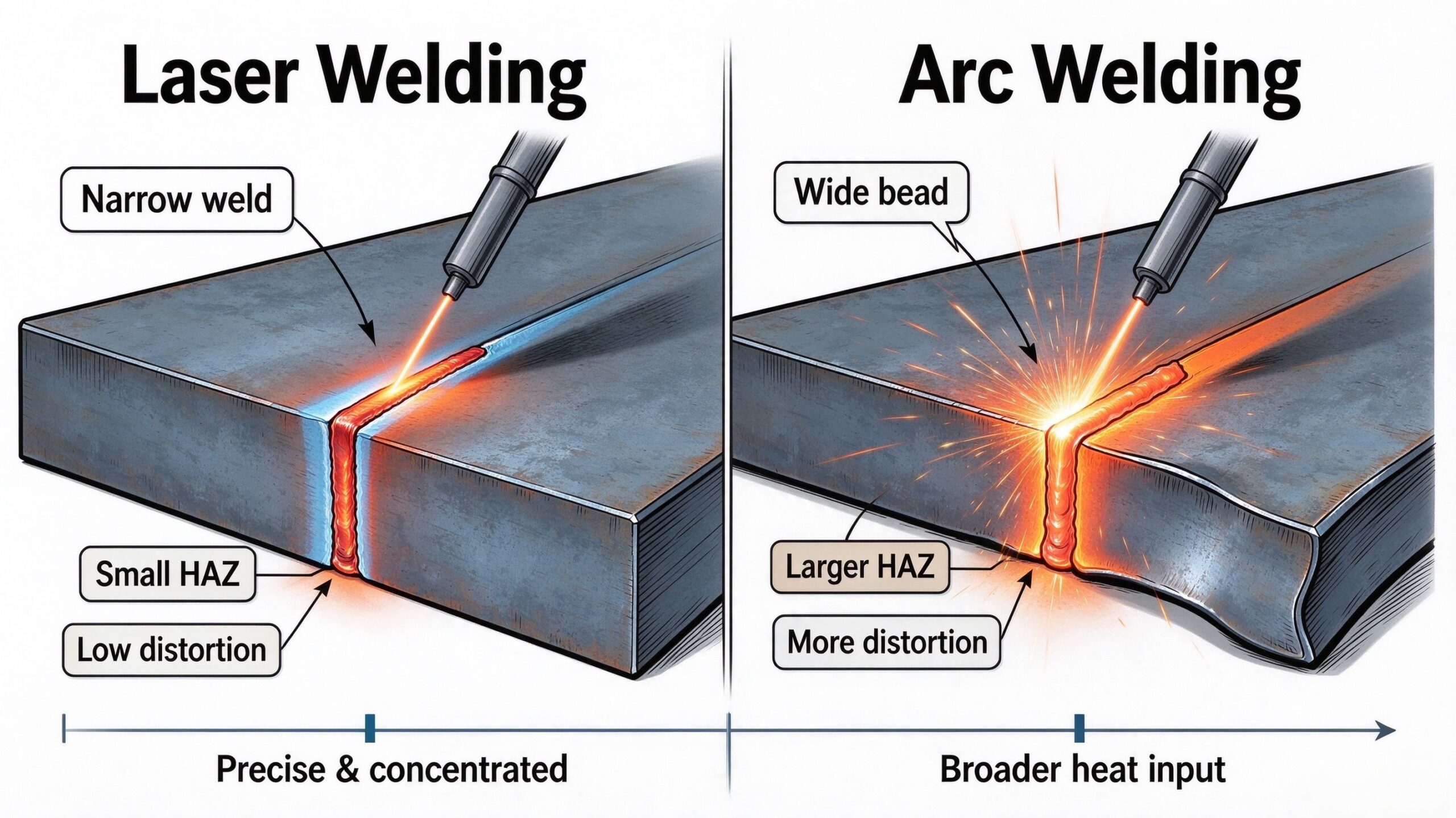
Laser welding can offer high processing speeds and reduced heat distortion in suitable thick-steel applications, but it is not always more efficient than arc welding. Joint fit-up, penetration requirements, filler metal, inspection, and equipment costs all affect the result. The best process is the one that produces acceptable welds at the lowest total production cost.
A steel fabrication shop can save time on the welding pass and still lose money on the finished part. Poor joint fit-up may require extra preparation, incomplete penetration can lead to rework, and a process that works well on one plate thickness may not perform as expected on another.
This is why choosing a welding machine based on speed or laser power alone can be misleading.
When comparing laser welding and arc welding for thick steel, manufacturers need to consider the entire production process: joint preparation, welding, inspection, finishing, and the cost of rejected parts. Laser welding can be an effective option when the joint geometry and process conditions are suitable. Arc welding remains highly competitive for heavy fabrication, variable joint gaps, and applications that require substantial filler-metal deposition.
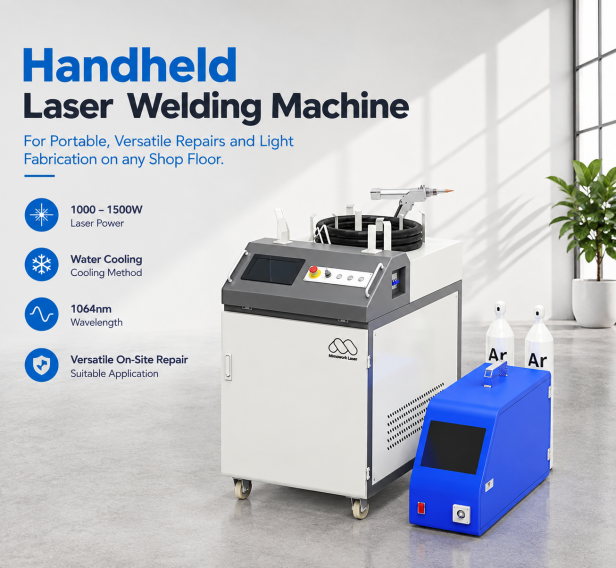
Laser welding concentrates energy into a relatively small area. Under suitable conditions, this can produce deep penetration with a narrower heat-affected zone than some conventional welding procedures.
However, thick steel presents several challenges that cannot be solved by increasing power alone.
Penetration must meet the joint requirement. A clean-looking weld surface does not prove that the root has fused correctly. The required penetration depends on the joint design, material thickness, laser characteristics, and welding parameters.
Joint gaps must be controlled. Laser welding can be sensitive to gaps and misalignment because the concentrated beam and weld pool may have limited ability to bridge an inconsistent joint. Accurate cutting, edge preparation, and fixturing therefore become important parts of the welding process.
Material and procedure qualification still matter. Steel grade, thickness, welding position, and service conditions can affect weld quality. A machine demonstration on one sample does not establish suitability for every production application.
The International Organization for Standardization provides guidance on laser beam welding procedures and qualification. For example, ISO 15614-11:2025 addresses qualification testing for electron and laser beam welding procedures. Its relevance is particularly clear when a manufacturer must demonstrate that the process meets defined quality requirements.
Related guide:Can You Laser Weld Titanium? Shielding Gas, Settings, and Best Practices
| Decision Factor | Laser Welding | Arc Welding |
| Heat concentration | Highly concentrated energy input | Generally broader heat input |
| Penetration | Can achieve deep penetration under suitable conditions | Depends on the process, current, joint design, and number of passes |
| Distortion | Can be lower with an appropriate procedure | May be greater when total heat input is higher |
| Joint fit-up | Often requires accurate preparation and alignment | Many processes can accommodate larger gaps with appropriate filler and technique |
| Filler metal | May be unnecessary for some joints | Commonly used, depending on the application |
| Production speed | Potentially high for suitable, repeatable joints | Can also be highly productive, especially in established heavy-fabrication workflows |
| Automation | Well suited to repeatable programmed paths | Also supports manual, mechanized, and robotic operation |
| Equipment investment | Laser source, safety controls, and integration can increase initial costs | Ranges from relatively simple equipment to sophisticated automated systems |
These are general process characteristics rather than universal performance guarantees. Actual results depend on the welding procedure, material, thickness, joint geometry, and quality requirements.
Laser welding is most attractive when it can improve several stages of production at once.
Consider a manufacturer producing repeated steel enclosures or accurately fitted metal components. If parts arrive with consistent edges and the joints are easy to position, a laser welding system may reduce welding time and help control distortion. Less distortion can mean fewer corrections before assembly or finishing.
The advantage becomes less obvious when the components have inconsistent gaps or require substantial filler metal. In these cases, time spent improving fit-up may offset the faster welding process.
For heavy steel structures, the comparison must also include access to the joint, welding position, inspection requirements, and whether the existing arc welding procedure is already productive and reliable.
A useful measurement is cycle time per accepted part, not the travel speed of the welding head. This includes preparation, positioning, welding, inspection, rework, and finishing.
Joint preparation is one of the most overlooked factors in laser welding thick steel.
A laser beam must interact with the joint in a controlled way. If the edges are misaligned or the gap varies along the seam, the process may produce inconsistent fusion. The shop may then need additional machining, tighter tolerances, or more expensive fixtures.
Arc welding can be more forgiving in some gap conditions because filler metal can bridge the joint. This does not mean that arc welding can ignore preparation; it means that the acceptable fit-up range differs between processes and procedures.
Before switching technologies, evaluate the upstream manufacturing process. Can the cutting system consistently produce the required edge? Are the components dimensionally stable? Can fixtures maintain alignment throughout the weld?
If these questions remain unresolved, purchasing a higher-power laser may not address the real production bottleneck.
| Cost Component | What to Evaluate |
| Preparation | Cutting accuracy, edge cleaning, beveling, and fit-up |
| Welding time | Actual processing time per joint |
| Consumables | Filler wire, electrodes, shielding gas, and other supplies |
| Fixtures and handling | Clamping, alignment, loading, and repositioning |
| Post-processing | Grinding, straightening, and surface finishing |
| Quality control | Inspection, repair, rejected parts, and procedure qualification |
| Equipment ownership | Purchase, installation, maintenance, and safety infrastructure |
| Labor productivity | Number of accepted parts completed per shift |
A laser process may reduce finishing time but require more precise fixtures. An arc process may take longer to deposit the weld but accommodate the actual production tolerances more economically.
The correct comparison should use the same steel grade, thickness, joint geometry, acceptance criteria, and production volume. Otherwise, the results may favor a process simply because it was tested under more favorable conditions.
The suitable system depends on whether the priority is operator flexibility, repeatable production, or access to complex three-dimensional components.
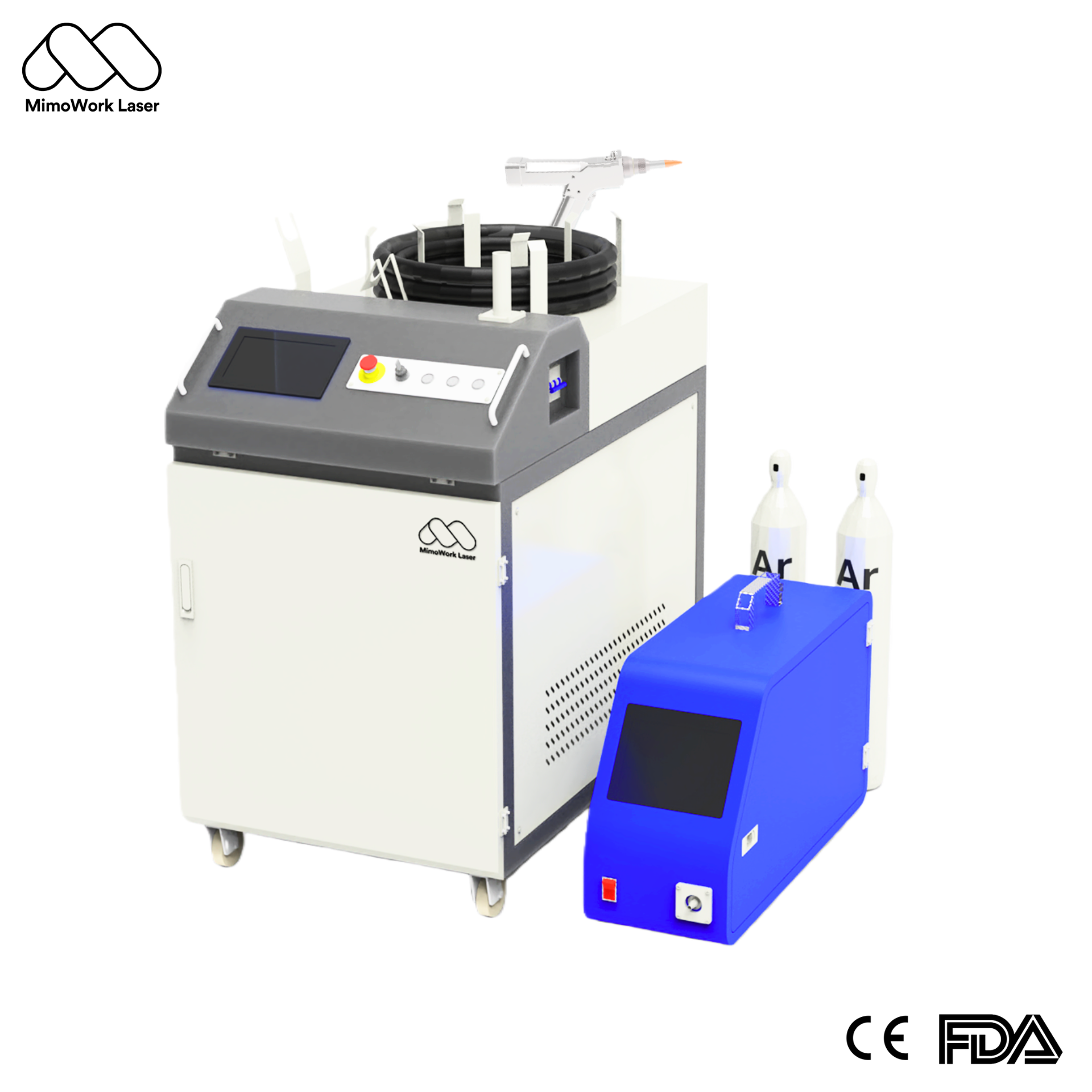
Handheld Fiber Laser Welding Machine
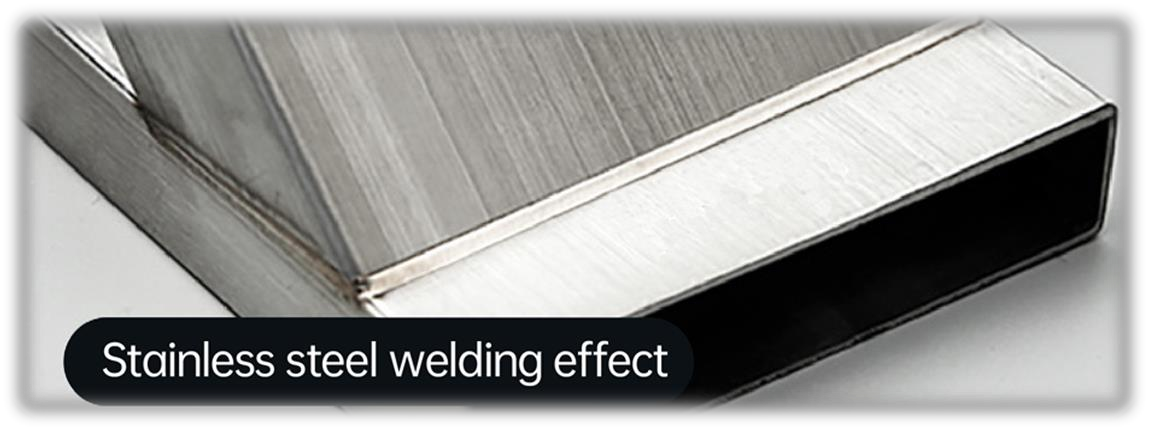
MimoWork offers a Laser Welding Machine with handheld fiber laser configurations for metal fabrication and repair. Its welding solutions include power options within a broader 500W–3000W range, while specific handheld configurations should be confirmed with the supplier.
Handheld welding may be worth evaluating for repair work and flexible fabrication involving steel and other compatible metals. For thick steel, confirm penetration, joint requirements, and the applicable welding procedure using representative samples.
4-Axis Gantry Laser Welding Machine
A gantry configuration can be useful when the same welding path must be repeated across multiple components. Programmed movement can improve positioning consistency, provided that the workpieces and fixtures maintain the required tolerances.
Manipulator Laser Welding Machine
A robotic manipulator configuration may be relevant for complex component geometries or welding paths that are difficult to access manually. Its value depends on the part design, reach requirements, fixturing, and the level of automation needed.
These configurations should not be treated as interchangeable. Nor should their rated power be used as proof of a particular maximum steel thickness. Ask MimoWork to validate the intended application before selecting a system.
Explore MimoWork Laser Welding Solutions for the available equipment configurations.
A useful trial begins with the actual steel grade and thickness, not a convenient sample selected only for demonstration. The test should reproduce the intended joint design, gap tolerance, welding position, and required production speed.
The resulting weld must be inspected against the application’s acceptance criteria. Depending on the component and applicable requirements, this may include cross-sectional examination, non-destructive testing, or formal procedure qualification.
Next, measure the complete cycle. Record preparation time, welding time, finishing time, inspection results, and any rework. If automation is involved, include loading, unloading, and fixture adjustment.
This process reveals whether laser welding delivers a genuine productivity improvement or simply moves work from the welding station to another part of the factory.
It depends on the steel grade, thickness, laser characteristics, joint design, and process parameters. Single-pass capability must be demonstrated for the actual application and qualified when required.
Neither process is inherently stronger in every situation. Strength depends on weld geometry, fusion, defects, material compatibility, and the qualified welding procedure.
It may suit certain fabrication and repair applications, but it should not automatically replace established heavy-plate welding procedures. Penetration, joint preparation, safety controls, and applicable standards must be verified.
Arc welding remains a strong option for heavy fabrication, variable joint gaps, substantial filler-metal requirements, and production environments with established procedures and equipment.
Laser welding can improve productivity and distortion control when thick-steel joints are properly prepared and the welding process is suitable for the required penetration. Arc welding remains competitive when joint flexibility, filler deposition, and proven heavy-fabrication procedures are more important.
Before investing in a new system, compare the cost per accepted weld and validate the actual joint. Explore MimoWork Laser Welding Solutions to identify a configuration worth testing against your production requirements.
News | Oct-9-2026
News | Sep-18-2026