Blog
In a field that evolves daily, staying ahead means staying informed.
Explore in-depth articles designed to help you solve complex challenges,
maximize your machine’s ROI.
Stay ahead in a competitive market.


In a field that evolves daily, staying ahead means staying informed.
Explore in-depth articles designed to help you solve complex challenges,
maximize your machine’s ROI.
Stay ahead in a competitive market.
News | Nov-7-2026 | Mimowork
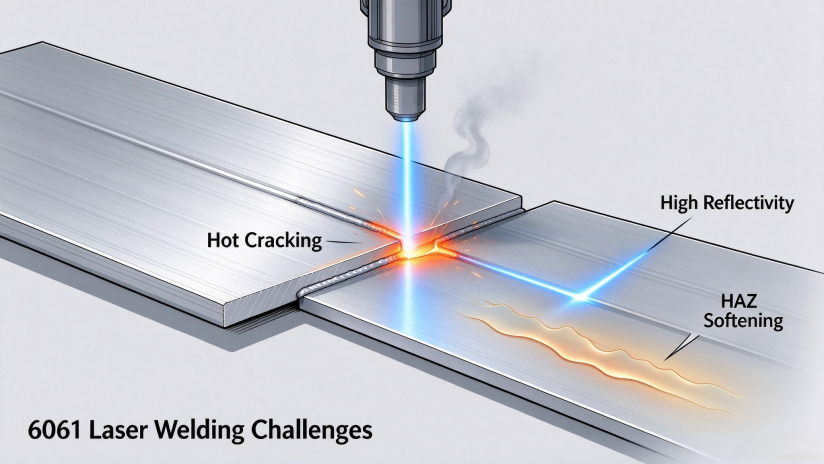
6061 aluminum is widely used in automotive components, machinery frames, and structural assemblies because of its strength-to-weight ratio and corrosion resistance. However, its Al-Mg-Si composition makes welding more challenging than joining some other aluminum alloys.
The main problems are solidification cracking, unstable molten-pool behavior, porosity, and strength loss in the heat-affected zone (HAZ). A reliable process requires the right filler wire, controlled energy input, stable beam movement, and effective shielding gas. Simply increasing laser power does not solve these problems.
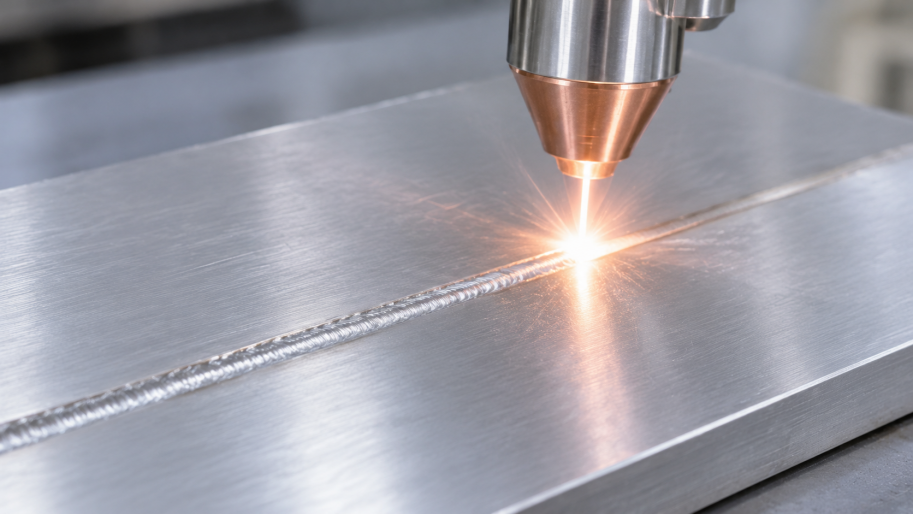
6061 is a heat-treatable Al-Mg-Si alloy. During welding, the molten metal solidifies rapidly, creating a structure of growing grains and remaining liquid between them.
If solidification shrinkage and thermal contraction generate stress before the weld metal has sufficient strength, cracks can develop along grain boundaries. This is known as solidification or hot cracking.
A 2023 study on laser-welded AA6061 lap joints found that cracking was influenced by heat input, stress, strain, and the concentration of alloying elements in the intergranular region. This means joint geometry and process conditions are just as important as laser power.
Aluminum reflects a significant proportion of incident laser energy, especially before a stable molten pool forms. Its high thermal conductivity also allows heat to spread quickly away from the welding area.
These properties make the process sensitive to laser focus, spot size, surface condition, and power density. Too little effective energy can result in incomplete penetration, while excessive energy may cause an unstable keyhole, spatter, and excessive melting.
A stable process window is more important than selecting the highest available power.
6061 contains magnesium and silicon as important alloying elements. Under concentrated laser heating, magnesium can evaporate from the molten pool.
Vapor formation and keyhole fluctuations can interfere with molten-metal flow. If the keyhole collapses before gas escapes, pores may become trapped inside the weld.
Research on aluminum-alloy laser welding has shown that magnesium content can influence keyhole behavior and porosity formation. However, porosity is not caused by magnesium evaporation alone; keyhole stability, surface contamination, shielding, and welding parameters also matter.
Filler wire changes the chemical composition of the weld metal. This can help reduce solidification cracking and improve the final weld properties.
| Filler Wire | Main Alloying Element | Typical Selection Consideration |
| ER4043 | Silicon (Si) | Commonly used for general aluminum welding; good fluidity and reduced hot-cracking susceptibility in suitable applications |
| ER5356 | Magnesium (Mg) | Often considered when higher weld-metal strength, ductility, or anodized color matching is required |
For many 6061 applications, 4043 is a common starting point because its silicon content changes the weld-metal solidification behavior and can reduce cracking susceptibility.
5356 is also used with 6061, particularly when mechanical properties or post-weld appearance are important. However, it is not automatically the better option. Service temperature, corrosion exposure, anodizing requirements, and applicable welding standards should all be considered.
The correct choice depends on the finished component, not just the base-metal grade. AWS guidance also identifies both 4043 and 5356 as commonly used filler options for 6061.
Wobble welding moves the laser beam along a controlled oscillating path rather than maintaining a single straight trajectory.
This movement can widen the weld, redistribute heat, and improve tolerance to small joint gaps. A 2024 study on AA6061 found that laser spot size and beam wobbling affected heat input, surface defects, microstructure, and weld-metal properties.
However, wobbling is not a guaranteed solution to cracking or porosity. Excessive oscillation can increase heat input or change the solidification structure in undesirable ways. Beam amplitude, frequency, spot size, and travel speed need to be matched to the joint.
Modulated laser output allows operators to adjust how energy is delivered to the workpiece. Depending on the laser source, power modulation can help control penetration, molten-pool size, and heat accumulation.
The objective is to achieve stable fusion without overheating the surrounding material or destabilizing the keyhole.
For thin sections, excessive energy may cause burn-through and distortion. For thicker sections, insufficient energy may result in incomplete penetration. Parameter development should therefore use sample welds made from the actual alloy, thickness, and joint configuration.
Shielding gas protects the molten aluminum from atmospheric contamination during welding. Argon is commonly used, while helium or mixed gases may be considered for particular applications.
The gas flow must provide adequate coverage without creating excessive turbulence. Nozzle angle, distance from the weld, gas flow rate, and travel direction all affect shielding effectiveness.
Increasing gas flow does not necessarily improve protection. Poorly directed or excessive flow can disturb the shielding pattern and draw surrounding air into the weld area.
Different aluminum alloys have different alloying elements, solidification characteristics, and heat-treatment responses. These differences affect their fusion-welding behavior.
| Aluminum Alloy | Main Alloy Family | Welding Characteristics |
| 3003 | Al-Mn | Generally good weldability; commonly used in sheet-metal fabrication |
| 5083 | Al-Mg | Generally good fusion weldability; filler selection and heat input still require attention |
| 6061 | Al-Mg-Si | Requires attention to solidification cracking and heat-affected-zone softening |
| 7075 | Al-Zn-Mg-Cu | Generally difficult to fusion weld because of high cracking susceptibility |
6061 is not necessarily the most difficult aluminum alloy to weld. 7075, for example, presents substantial challenges in conventional fusion welding because of its alloy composition and cracking susceptibility.
The particular challenge with 6061 is that a weld can look acceptable while the surrounding heat-affected zone has lost a significant amount of strength. This is especially important when the original material is supplied in a T6 temper.
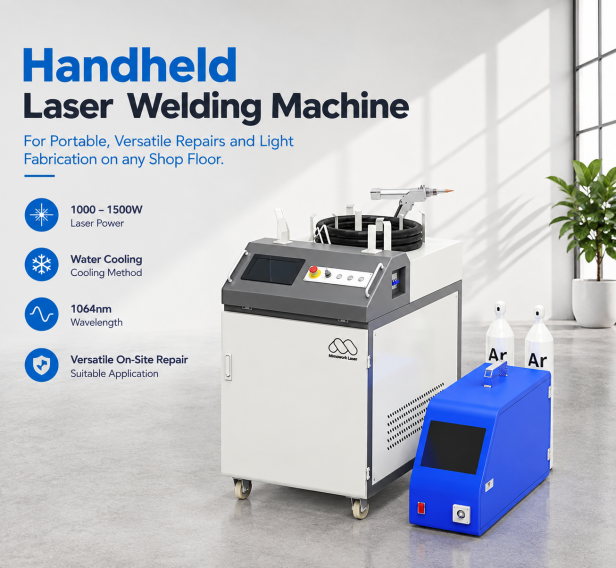
MimoWork offers handheld fiber laser welding equipment with a published power range of 1000–1500W. Its product information lists continuous and modulated fiber laser configurations, with a wire-feeding connection available.
The wire feeder allows filler material to be added during welding. This can help manage weld-bead formation and accommodate suitable joint gaps when the filler alloy and process parameters are correctly selected.
For 6061 components, the equipment configuration should be evaluated against the actual material thickness, joint preparation, required penetration, and filler-wire specification. The published power range alone does not establish a guaranteed welding thickness or prove that a particular joint will be free of cracking and porosity.
MimoWork’s Handheld Laser Welding Machine can be considered for suitable aluminum fabrication and repair applications, subject to sample testing and process qualification.
Explore the MimoWork Handheld Laser Welding Machine for its published specifications and wire-feeding configuration.
No. Autogenous welding without filler wire is possible when the joint design, fit-up, thickness, and process conditions allow it.
However, filler wire can help adjust weld-metal composition, reduce cracking susceptibility, and fill gaps. For crack-sensitive joints or production applications with strict quality requirements, filler-assisted trials are worth considering.
4043 is often a practical starting point when reducing solidification cracking is a priority. Its silicon content can improve weld-metal fluidity and influence solidification behavior.
5356 may be appropriate when the application requires particular strength, ductility, or anodized color matching. The final choice should also consider service temperature, corrosion exposure, and applicable engineering requirements.
Neither filler is suitable for every 6061 component. Always confirm the selection through welding procedure development and testing.
The T6 temper is achieved through solution heat treatment and artificial aging. Welding exposes the material to a new thermal cycle that can dissolve or coarsen strengthening precipitates in the fusion zone and heat-affected zone.
As a result, the welded area may become softer and lose strength compared with the original T6 material. A study of laser-welded 6061-T6 sheets found a substantial hardness reduction after welding. Post-weld aging increased hardness to some extent, but did not fully restore the original base-metal hardness under the tested conditions.
If the component depends on T6 mechanical properties, the design and qualification process must account for this softened region.
There is no universal power threshold. Penetration depends on laser power density, beam quality, spot size, welding speed, focus position, joint preparation, and whether filler wire is used.
A 2025 study demonstrated full-penetration welding of 8mm 6061-T6 plate using a specialized 4.8kW small-core single-mode fiber laser under optimized conditions. This is a specific experimental result, not a general recommendation for handheld systems.
For sections above 3mm, use representative samples to evaluate penetration, porosity, cracking, and mechanical performance. Machine power alone cannot guarantee a sound joint.
Related guide:Aerospace Laser Welding: Applications, Materials, and How to Choose the Right Systems
Laser welding 6061 aluminum requires careful process development because its solidification behavior, thermal properties, and heat-treatment response all influence the final joint.
Suitable filler selection, controlled energy input, stable beam movement, and effective shielding can help reduce defects. However, the finished weld must still be evaluated for cracking, porosity, penetration, and mechanical performance.
For manufacturers working with 6061 components, the goal of laser welding 6061 aluminum is not simply to produce a visible weld seam. It is to establish a repeatable process that meets the required strength, dimensional, and quality standards.
News | Oct-9-2026