Blog
In a field that evolves daily, staying ahead means staying informed.
Explore in-depth articles designed to help you solve complex challenges,
maximize your machine’s ROI.
Stay ahead in a competitive market.


In a field that evolves daily, staying ahead means staying informed.
Explore in-depth articles designed to help you solve complex challenges,
maximize your machine’s ROI.
Stay ahead in a competitive market.
News | Oct-22-2026 | Mimowork
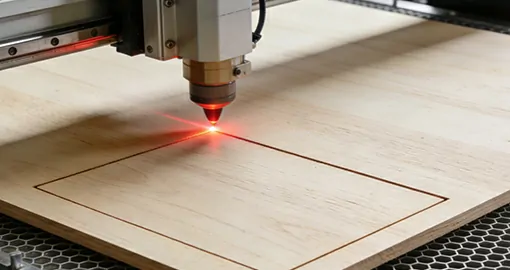
The best laser cutter for balsa wood combines precise motion control, adjustable CO2 laser power, effective air assist, and reliable fume extraction. For model makers and manufacturers, the goal is to cut delicate ribs, intricate profiles, and repeated components without excessive charring or damage to the lightweight material.
A 60W–150W CO2 laser system is a practical starting point for many professional balsa wood applications, although the ideal power depends on material thickness, density, cutting speed, and production volume. Small workshops may prioritize fine-detail processing, while larger manufacturers benefit from a wider working area and automated material handling.
This guide explains what makes balsa wood suitable for laser processing and how to evaluate machine specifications.
Balsa wood is known for its low density, lightweight structure, and ease of processing. These characteristics make it popular for aircraft models, architectural prototypes, lightweight structures, and educational projects.
Its relatively soft, porous structure allows a focused CO2 laser beam to cut intricate profiles without the mechanical force associated with conventional blades. However, balsa is not perfectly uniform. Differences in grain direction, density, moisture content, and thickness can affect the final cut.
For consistent results, operators should test representative samples from each material batch rather than assume that every sheet will behave identically.
Thin balsa components can bend, crack, or shift when subjected to excessive mechanical pressure. Laser cutting avoids direct tool contact, helping preserve narrow ribs, delicate connectors, small openings, and complex outlines.
This advantage is especially useful when producing multiple lightweight components that must fit together accurately. Once the cutting file is prepared, the machine can reproduce the same geometry across a batch with less manual intervention.
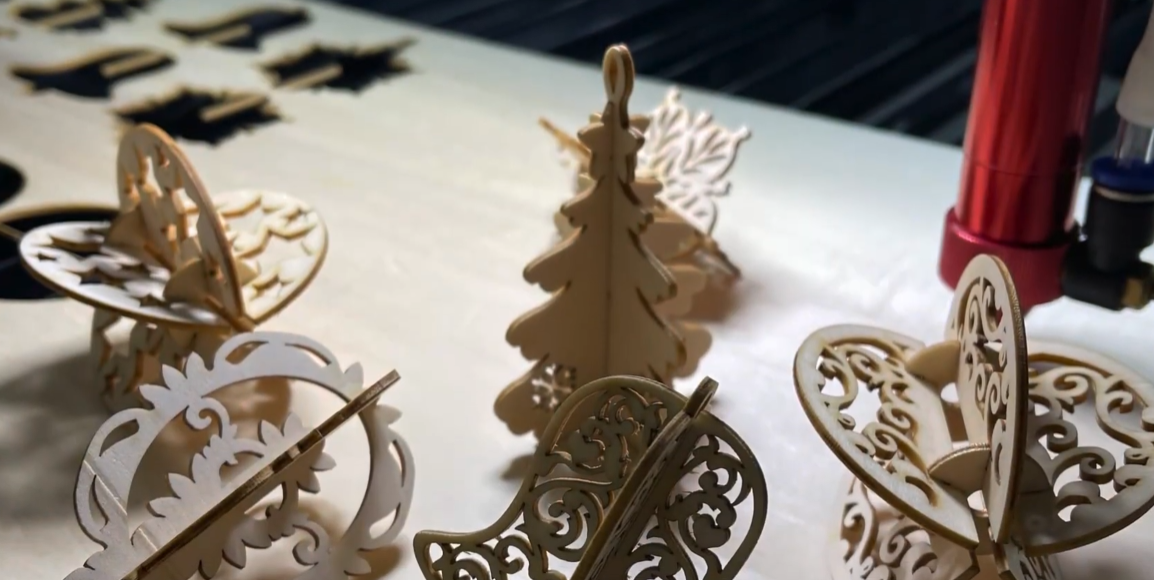
A properly tuned laser can produce narrow cuts and clean edges, reducing the need for sanding or manual trimming. This matters when assembling model aircraft, interlocking structures, or small-scale architectural components.
However, laser cutting does not guarantee completely char-free edges. Excessive power, slow movement, poor focus, or inadequate airflow can darken the material. The objective is to achieve complete separation with the lowest practical heat input, rather than simply maximizing laser power.
A CO2 laser is generally the most suitable option for cutting non-metallic materials such as balsa wood. Its infrared wavelength is well absorbed by wood, allowing the beam to remove material efficiently along the programmed cutting path.
Compared with choosing a machine based on engraving capability alone, buyers should prioritize stable cutting performance, adjustable power, suitable focusing optics, and reliable motion control.
When evaluating a CO2 laser cutter for balsa wood, also check whether the machine supports the required file formats, worktable configuration, cooling system, and extraction setup.
Laser power affects how quickly the beam can cut through a sheet, but higher wattage is not automatically better for delicate wood. Excessive energy can widen the kerf, darken the edges, and damage narrow features.
| Laser power | Typical selection priority | What to evaluate |
| 60W | Thin sheets and intricate model components | Fine details, cutting speed, and edge quality |
| 80W–100W | Mixed thicknesses and regular workshop production | Cutting consistency and throughput |
| 130W–150W | Higher-volume processing or thicker stock | Separation quality, speed, and heat control |
These are starting points for machine selection, not guaranteed thickness ratings. Actual performance depends on the specific laser source, lens, wood characteristics, focus, airflow, and programmed settings.
Before purchasing a balsa wood laser cutting machine, ask the supplier to test your actual material at the thicknesses you use most frequently. Compare complete cuts, edge discoloration, narrow-feature integrity, and processing time.
Fine model components often require repeatable positioning and consistent geometry. A positional accuracy target of 0.15 mm or better may be appropriate for some projects, but the required tolerance should come from the design and assembly process.
Machine accuracy and finished-part accuracy are not identical. Kerf width, material movement, grain variation, focus, and heat effects can all influence the final dimensions.
Servo-driven systems can offer responsive motion control and stable operation in demanding production environments. Belt-driven systems can also be suitable for many cutting applications when properly designed and maintained.
Rather than selecting a motor type in isolation, evaluate the complete machine through repeatability tests using small holes, narrow slots, interlocking joints, and repeated components.
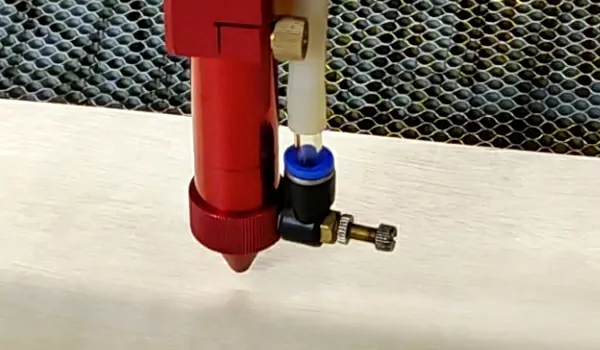
Air assist directs airflow toward the cutting point, helping remove debris and manage heat around the kerf. Properly adjusted airflow can reduce excessive scorching and support more consistent cutting. The appropriate pressure depends on the material and cutting setup.
A fume extraction system removes smoke and airborne contaminants generated during processing. Effective extraction helps maintain a cleaner working area and reduces deposits inside the machine.
For safe operation, use suitable ventilation and follow the manufacturer’s guidance on material compatibility, fire prevention, and machine supervision. Wood can ignite during laser processing, so never leave an operating laser cutter unattended.
The best machine depends on whether your priority is intricate component production, full-sheet processing, or repeatable batch manufacturing.
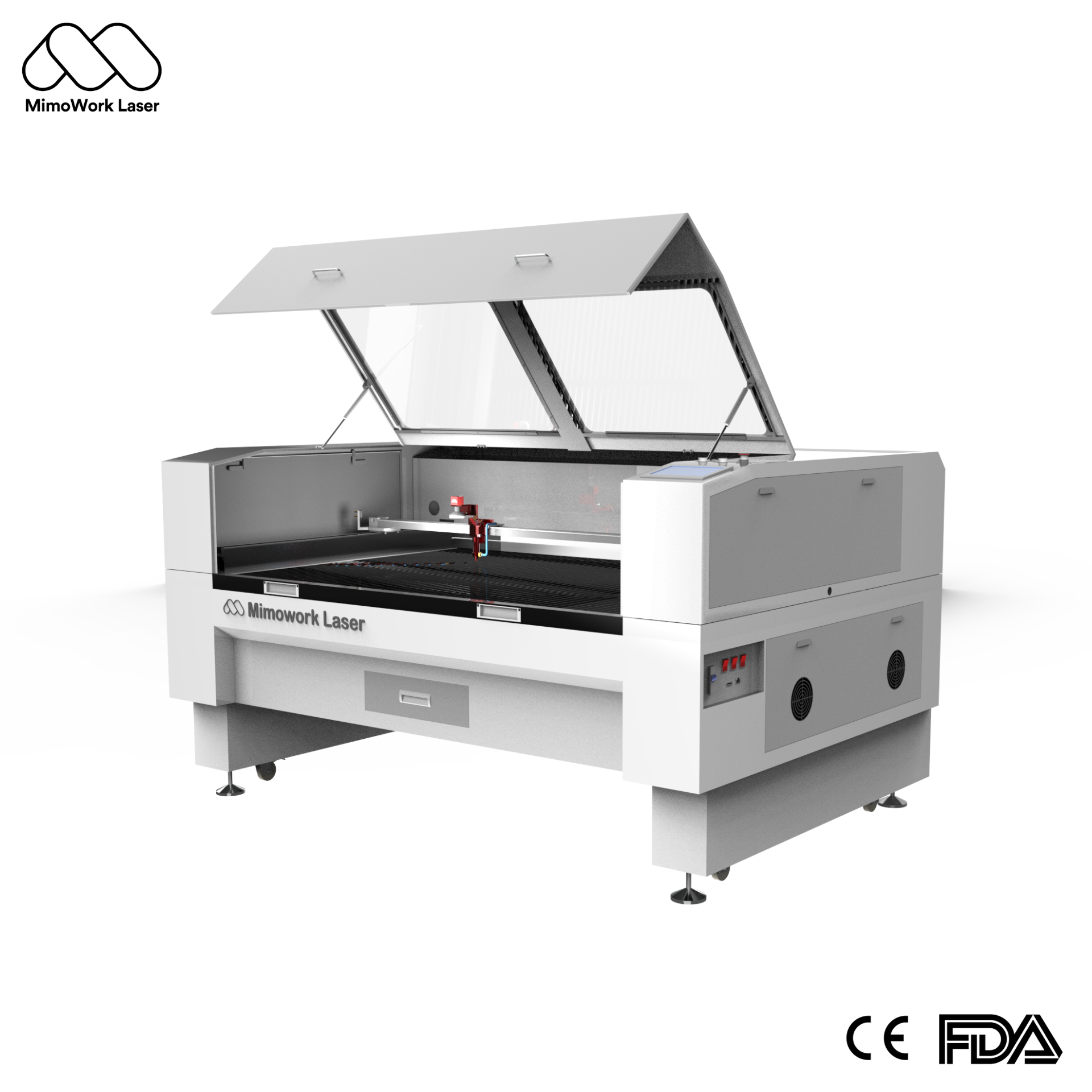
The MimoWork Contour Laser Cutter 130 is worth evaluating for projects involving intricate outlines and repeated model components. Its listed working area is 1300 × 900 mm, with honeycomb or knife-strip worktable options on the relevant configuration.For balsa applications, this format can accommodate multiple parts within one cutting layout while keeping the equipment footprint more manageable than a large-format system.
Consider this model when your work includes aircraft ribs, small structural elements, and detailed craft components. Confirm the available laser source, power configuration, and cutting performance for your target thickness before finalizing the selection.
For larger layouts and higher production demands, a flatbed system offers more room for nesting multiple components and processing larger sheets.
The MimoWork 130L has a listed working area of 1300 × 2500 mm and uses a CO2 laser source, with available power options depending on the configuration. Its documented mechanical features include servo motor drive and a choice of knife-blade or honeycomb worktables.
A larger machine is particularly useful when several parts can be arranged on one sheet. Better nesting can reduce unused material and operator handling, while a suitable motion system helps maintain consistency across repeated jobs.
For production planning, compare the usable cutting area, sheet-loading method, extraction capacity, and demonstrated cutting speed rather than choosing by bed size alone.
The worktable affects how thin balsa sheets are supported during cutting.
Honeycomb worktable: Provides distributed support for lightweight sheets and small components, helping prevent narrow pieces from dropping through large gaps.
Knife-strip worktable: Supports material on individual slats while reducing contact with the underside. It can be useful for larger components and layouts where support marks need to be managed.
Autofocus can simplify setup when supported by the machine and appropriate for the application. However, it should not be assumed to be a standard feature on every configuration. Check the available options and how the system handles thin or uneven wood sheets.
Related guide:https://www.mimowork-laser.com/blog/best-laser-woodworking-machines-guide
Balsa is widely used in lightweight aircraft structures. Laser cutting can produce wing ribs, fuselage formers, bulkheads, and other components that need consistent geometry. Accurate slots and joining features can also simplify assembly.
For these projects, prioritize fine features, repeatable dimensions, and minimal heat damage over maximum cutting speed.
Architectural studios and model-making workshops use balsa to build lightweight representations of walls, frames, roofs, and structural assemblies. Laser processing allows designers to produce repeated parts and intricate patterns directly from digital drawings.
A larger worktable is valuable when components must be nested across a full sheet or when several prototype sets are produced in one run.
Laser-cut balsa can be used for geometric sculptures, classroom construction kits, puzzles, and hands-on engineering projects. Digital cutting files make it easier to update designs and reproduce components for different groups.
For educational production, ease of operation, effective extraction, accessible maintenance, and consistent results are just as important as raw cutting speed.
There is no universal maximum thickness. It depends on laser power, optical setup, wood density, moisture content, and the required edge quality. A 60W–150W machine may suit many common projects, but the maximum workable thickness should be established through material testing. Request a sample cut using the thickest stock you expect to process regularly.
Start with clean, flat material and a correctly focused beam. Test different combinations of power and speed, use appropriate air assist, and make sure smoke is removed efficiently. Excessive power and unnecessarily slow cutting can increase charring. Inspect the narrowest features as well as the main outlines before approving a production setting.
Common formats include SVG, DXF, and AI, depending on the machine’s control software and workflow. Prepare vector paths for cutting, close shapes where necessary, and remove duplicate lines that could cause the laser to pass over the same area more than once. Confirm units, scale, line assignments, and kerf compensation before processing the full sheet.
Choosing the best laser cutter for balsa wood starts with the parts you need to produce, the thicknesses you process, and the accuracy your assemblies require. A compact or mid-size CO2 system may suit detailed model work, while a larger flatbed machine can improve sheet utilization and batch productivity.
Compare laser power, motion control, worktable support, air assist, and fume extraction as one integrated system. Before making a decision, ask MimoWork to test your balsa samples and cutting files. A material test can help establish practical settings, verify edge quality, and identify the configuration that best fits your production requirements.
News | Sep-30-2026
News | Oct-16-2026