Blog
In a field that evolves daily, staying ahead means staying informed.
Explore in-depth articles designed to help you solve complex challenges,
maximize your machine’s ROI.
Stay ahead in a competitive market.


In a field that evolves daily, staying ahead means staying informed.
Explore in-depth articles designed to help you solve complex challenges,
maximize your machine’s ROI.
Stay ahead in a competitive market.
News | Oct-28-2026 | Mimowork
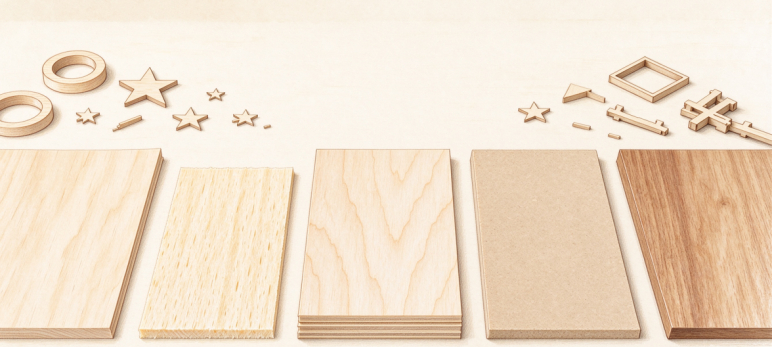
The best wood for laser cutting has consistent density, suitable moisture content, minimal internal defects, and a composition compatible with laser processing. Basswood plywood, balsa wood, and Baltic birch plywood are popular choices for model making, crafts, and precision components, while MDF works well for certain engraving and prototyping applications.
However, no single wood performs equally well in every application. Dense hardwoods may require more laser energy, resin-rich timber can produce additional smoke and uneven edges, and plywood adhesives can affect cutting quality and safety. Choosing the right material helps reduce incomplete cuts, excessive charring, and wasted sheets.
This guide explains how to evaluate wood before processing, compares suitable materials, identifies woods and boards to avoid, and shows how to optimize cutting results with a MimoWork CO2 laser system.
Wood density influences how laser energy interacts with the material. Denser wood generally requires more energy to cut through a given thickness, while lightweight wood may cut more easily but can be vulnerable to overheating and damage around delicate features.
Consistency is just as important as density. Knots, grain changes, voids, and uneven layers can cause variations in cutting resistance, leading to incomplete cuts or dark patches.
When selecting good wood for laser cutting, inspect the entire sheet rather than judging it by appearance alone. Look for uniform thickness, a relatively consistent grain structure, and minimal defects in critical cutting areas.
Wood naturally contains moisture, and variations in moisture content affect its processing behavior. Excess moisture can consume energy during evaporation and contribute to inconsistent cutting. Very dry material may cut efficiently but can still scorch or ignite if exposed to excessive laser energy.
For predictable results, use properly stored material with consistent moisture content. Keep sheets away from damp environments, allow them to acclimate when necessary, and test samples before processing a full batch.
There is no single moisture percentage that guarantees optimal results for every wood species, thickness, and laser configuration. Material consistency and test-cut performance are more useful than relying on one universal number.
Resins and natural oils can influence how wood responds to laser heating. Some resin-rich areas produce darker deposits, sticky residue, or uneven edge finishes. These characteristics can increase cleaning requirements and make consistent results more difficult to achieve.
However, resin content alone does not determine whether a wood species is suitable. Grain structure, density, moisture, thickness, and processing settings also matter.
Inspect the material for resin pockets and surface contamination. Effective air assist and fume extraction help manage debris and smoke, but they do not make an otherwise unsuitable material safe to process.
Plywood consists of multiple veneer layers bonded together with adhesive. The wood veneers may cut readily, while the adhesive layers can behave differently under laser exposure.
Uneven glue distribution, internal gaps, and inconsistent bonding can leave uncut bridges or create dark spots along the cut edge. Adhesive composition also affects whether the material is appropriate for laser processing.
Choose plywood with documented composition and suitability for laser cutting. Avoid unknown boards, especially those with undisclosed chemical treatments or coatings. A smooth surface does not guarantee consistent internal construction.
Basswood plywood is a useful starting point for beginners and experienced makers who need lightweight components with relatively uniform surfaces. It is commonly used for craft projects, architectural models, decorative panels, and small structural parts.
Its suitability depends on veneer quality, adhesive consistency, and sheet thickness. Good-quality material can deliver clean outlines and detailed features without the pronounced grain variation found in some solid woods.
For buyers comparing the best wood for laser cutting, basswood plywood is worth testing when ease of processing and repeatable results matter more than maximum structural strength.
Balsa is valued for its low density and lightweight structure. It is widely used in aircraft models, lightweight frameworks, educational kits, and prototypes.
Because balsa is relatively easy to cut, it can be processed with moderate laser power when the thickness and material characteristics are suitable. However, thin sections and narrow connectors can be damaged by excessive heat.
Use a carefully tuned cutting process and support delicate sheets properly. Balsa is an excellent option for lightweight structures, but its softness makes it less suitable when the finished component needs high impact resistance or substantial load-bearing capacity.
Baltic birch plywood is popular for precision components, enclosures, jigs, and interlocking assemblies. Its layered construction can provide useful strength and relatively consistent thickness.
Cutting performance still depends on veneer quality, the number of layers, adhesive composition, and sheet thickness. Internal voids or glue variations can affect the finished edge, even when the outer surface appears flawless.
For laser cutting plywood, Baltic birch is worth considering when parts need greater rigidity than lightweight balsa or basswood can provide. Confirm the board’s adhesive composition and run test cuts to verify that internal layers separate cleanly.
Medium-density fiberboard (MDF) is manufactured from wood fibers bonded with resin. Its relatively uniform structure eliminates many of the natural grain variations found in solid timber, making it useful for signs, templates, decorative panels, and prototypes.
MDF can produce consistent engraving details and predictable geometry, but its density and binder composition influence cutting speed and edge discoloration. Some grades also produce substantial smoke and residue.
Select MDF specifically documented as suitable for laser processing, and review its binder composition and safety information. Effective extraction is essential, and the material should never be assumed safe simply because its surface is smooth.
Bamboo panels, cherry, and maple can be attractive choices for personalized gifts, premium signage, decorative objects, and detailed craft products.
Bamboo is a grass rather than a conventional wood, and laser-processing results vary with its laminated construction, adhesive, and surface finish. Cherry and maple offer distinctive grain patterns, but their greater density can require slower cutting or higher power compared with lightweight woods.
For these materials, begin with a small test piece. Evaluate engraving contrast, edge color, cutting completeness, and the amount of finishing required before moving into batch production.
Avoid plywood with undisclosed adhesive formulations, unsuitable chemical treatments, or coatings that have not been verified for laser processing. Some materials can release hazardous fumes or corrosive substances when heated.
PVC-containing materials are particularly unsuitable because laser exposure can release hydrogen chloride and other hazardous decomposition products. Unknown composite boards should not be processed until their composition has been confirmed.
Do not assume that every inexpensive plywood board contains dangerous glue. The practical rule is to verify the material rather than judge safety by price or appearance.
Pine and fir can contain resin pockets and uneven grain, which may contribute to smoke, darkened edges, or inconsistent cutting. Knots and resin-rich areas are particularly challenging when a design requires clean, narrow features.
These species are not automatically prohibited in every form. Suitability depends on the specific stock, finish, machine, and application. However, heavily resinous or visibly contaminated boards are poor candidates for precision work.
Test representative samples, use appropriate air assist and extraction, and maintain close supervision because wood cutting carries a fire risk.
Pressure-treated wood may contain preservatives designed to protect it against insects, fungi, or environmental exposure. Laser heating can release hazardous decomposition products, and the treatment chemistry may be unsuitable for the machine and workplace.
Do not laser-cut pressure-treated timber unless the exact treatment and process have been explicitly assessed and approved by qualified safety personnel. For typical workshops, untreated wood documented as suitable for laser processing is the safer choice.
Solid wood with large knots, cracks, resin pockets, or irregular grain can produce inconsistent results. Plywood with internal voids may leave sections connected even when the visible cutting path appears complete.
These defects are particularly problematic for interlocking parts, thin structural members, and repeated production runs.
Inspect sheets before cutting and position critical components away from obvious defects whenever the layout allows. For demanding work, choose more uniform stock instead of trying to compensate for unpredictable material variations with additional laser power.
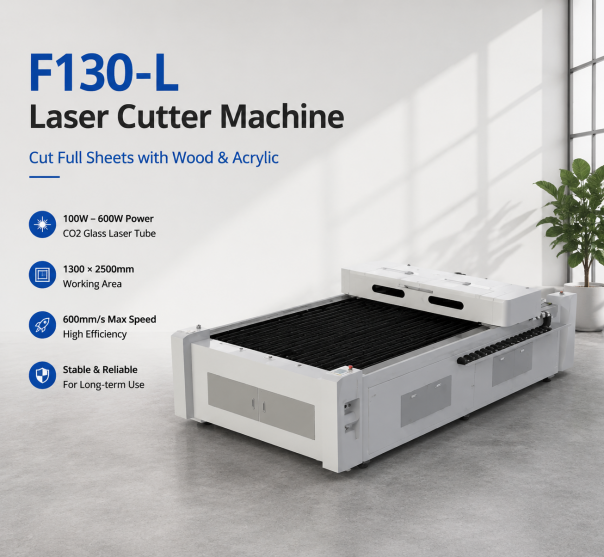
CO2 lasers are widely used for cutting and engraving wood. The appropriate power and speed depend on the species, density, thickness, laser source, lens, and desired edge quality.
Lower-density materials may cut quickly but can scorch if the beam moves too slowly. Dense hardwoods and multilayer plywood may require more energy to achieve complete separation.
Use a test matrix to compare power and speed combinations. Check whether the cut passes completely through the material, whether small details remain intact, and whether the edges require excessive finishing.
MimoWork offers different CO2 laser configurations for varying material sizes and production needs. Choose the machine based on the thickest regular stock, required working area, and expected throughput rather than power alone.
Air assist directs airflow toward the cutting point, helping remove debris and limit heat buildup around the kerf. Proper adjustment can reduce excessive discoloration and support more consistent cutting.
The ideal airflow depends on the material and setup. Excessive airflow is not always beneficial, and air assist cannot eliminate every burn mark. Start with the manufacturer’s recommended settings and adjust them through controlled testing.
Honeycomb worktables provide distributed support for many thin sheets and small parts. Knife-strip worktables can be useful for larger components and applications where reducing contact with the underside is important.
Select the worktable according to part size, material stability, and the likelihood of small pieces falling through gaps. Ensure the sheet remains flat during processing.
A properly sized fume extraction system removes smoke and airborne contaminants, helping reduce residue on the workpiece and inside the machine. Clean the work area regularly, inspect filters as recommended, and never leave an operating laser unattended.
Related guide:https://www.mimowork-laser.com/blog/best-laser-woodworking-machines-guide
Check the sheet thickness, focus position, and consistency of the internal veneer layers. Increase cutting energy gradually through controlled adjustments to power and speed, and verify that the material is suitable for laser processing.
If uncut bridges appear repeatedly in specific locations, inspect the plywood for internal voids or inconsistent adhesive layers. Repeated passes may help in some applications, but they can also increase charring. Test the complete setup before processing a production batch.
Light surface discoloration can often be reduced with fine sanding or suitable finishing methods, depending on the product. Masking tape may help protect some surfaces from smoke deposits, provided the tape is compatible with laser processing.
For severe charring, adjust the cutting parameters, focus, air assist, and extraction before the next run. Prevention is usually more efficient than sanding every component after processing.
Hardwood is solid timber with natural grain variation, knots, and density differences. Plywood contains multiple veneer layers joined with adhesive, so cutting performance depends on both the wood and the bonding material.
Hardwood can produce attractive natural edges but may cut unevenly where grain or density changes. Plywood often offers more consistent sheet dimensions, although internal voids and adhesive layers can affect cutting quality.
The best choice depends on the required strength, appearance, dimensional consistency, and verified material compatibility.
Choosing the right wood for laser cutting starts with consistent material quality, suitable moisture content, predictable internal structure, and verified chemical composition. Basswood plywood and balsa are useful for lightweight models and crafts, while Baltic birch plywood, MDF, and selected hardwoods serve different structural and decorative needs.
Avoid unverified composites, unsuitable chemical treatments, and materials with unknown coatings or adhesives. Then match laser power, speed, air assist, worktable support, and extraction to the material rather than relying on a single preset.
Before committing to full production, test your actual wood samples and cutting files. MimoWork can help evaluate cutting quality and machine configuration, making it easier to select a CO2 laser system that fits your materials, applications, and production requirements.
News | Sep-4-2026
News | Aug-17-2026