Blog
In a field that evolves daily, staying ahead means staying informed.
Explore in-depth articles designed to help you solve complex challenges,
maximize your machine’s ROI.
Stay ahead in a competitive market.


In a field that evolves daily, staying ahead means staying informed.
Explore in-depth articles designed to help you solve complex challenges,
maximize your machine’s ROI.
Stay ahead in a competitive market.
News | Oct-3-2026
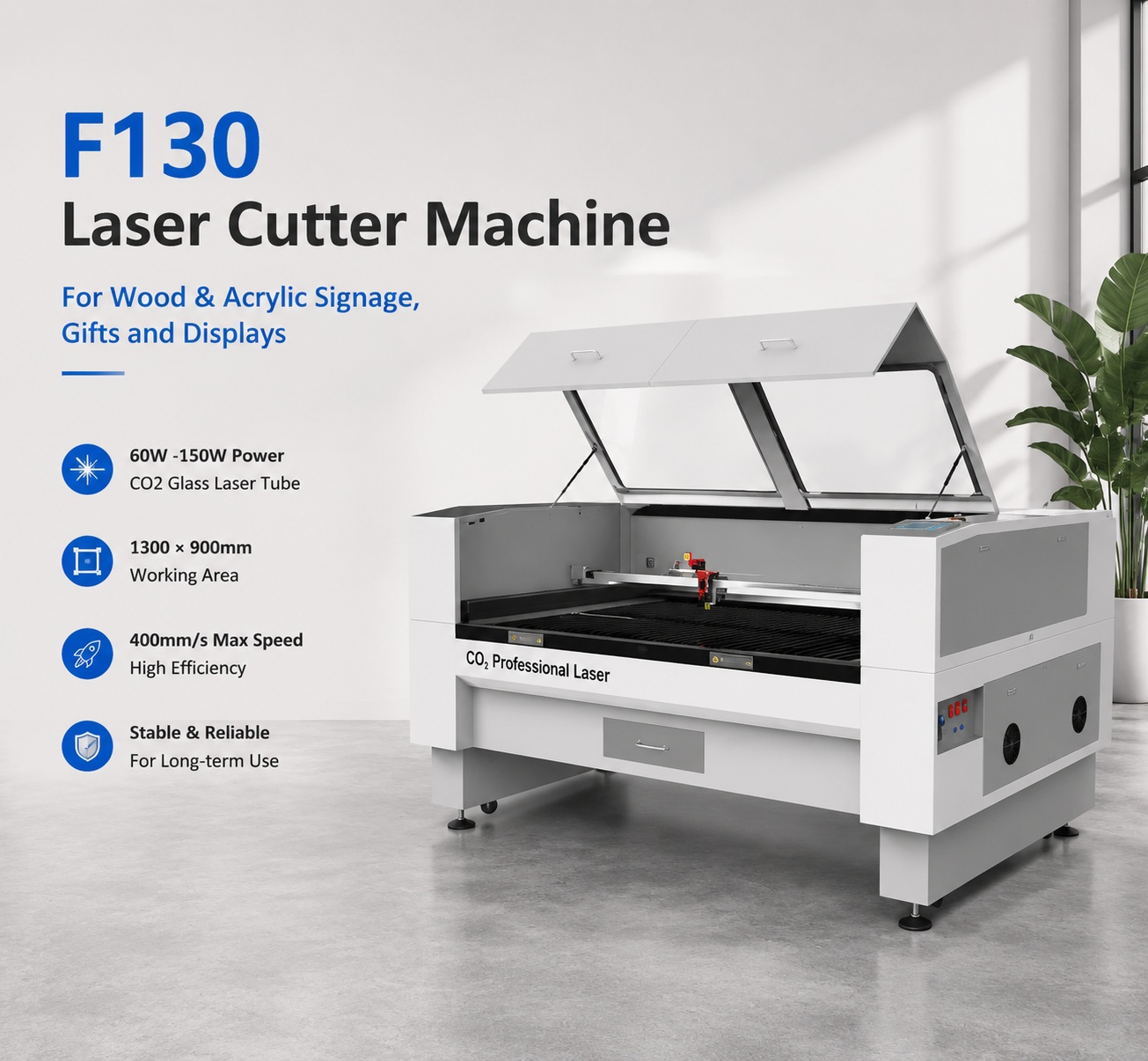
Quick Answer: The best CNC laser cutter for wood is not necessarily the machine with the highest wattage or largest working area. Buyers should match laser power, bed size, motion accuracy, autofocus, exhaust capacity, software compatibility, and production speed to the thickness and type of wood they actually process. In many wood-cutting applications, a CO2 Laser Cutter is widely considered a suitable solution because it can efficiently cut and engrave materials such as plywood, MDF, acrylic, and solid wood. For commercial users, the right machine should also reduce setup time, handle repeat production consistently, and leave enough capacity for future orders.
Wood is one of the most approachable materials for laser processing, but that does not mean choosing a machine is simple.
A small craft business may primarily engrave plywood and create personalized products. A signage company may cut large sheets of MDF or plywood. A furniture component manufacturer may need repeatable cutting across hundreds of parts.
Those businesses can all process wood with lasers, but their machine requirements are very different.
The phrase “CNC laser cutter for wood” is therefore useful as a starting point, not as a complete specification.
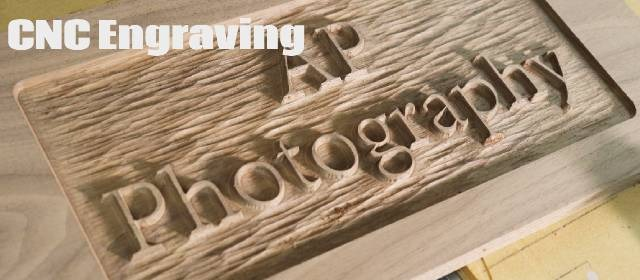
Wood is an organic material with significant variation.
Two sheets labeled with the same material name can respond differently because of density, moisture, resin content, grain structure, glue layers, and surface treatment.
Plywood is an obvious example. The outer veneers may cut differently from the internal layers, and the adhesive between layers can affect smoke, edge appearance, and cutting behavior.
TWI notes that wood, MDF, and birch plywood are common laser-cutting materials, while harder and denser woods generally require more laser power than softer materials.
This is why a buyer should not ask only, “How thick can the machine cut?”
A better question is, “How efficiently can this machine process the wood products my business actually sells?”
Laser power determines how much optical energy is available to the process.
For wood cutting, power affects the ability to process thicker or denser material and can influence the speed at which a cut can be completed.
However, power should be evaluated alongside speed.
A lower-power machine may be capable of cutting a certain sheet after multiple passes. That may be acceptable for a hobbyist. In a commercial environment, the additional processing time may become a major cost.
This is why the best machine for a production business is often the one that provides enough power to complete common jobs efficiently rather than merely proving that a material can technically be cut.
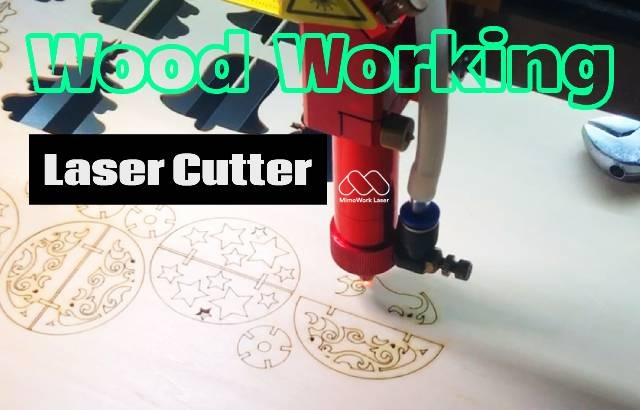
Bed size affects workflow.
If a business normally processes small, personalized products, an oversized machine may provide little benefit.
But if the company regularly cuts signage, cabinet components, decorative panels, or large templates, a larger working area can reduce the need to divide files into smaller sections.
| Buyer requirement | Smaller bed | Larger bed |
| Small personalized products | Usually sufficient | May be unnecessary |
| Large signage | More restrictive | More suitable |
| Batch production | Depends on product size | More room for nesting |
| Sheet processing | Limited | Better for larger sheets |
| Workshop footprint | Easier | Requires more space |
| Future production expansion | May become restrictive | More headroom |
The correct bed size should be based on the largest commonly processed workpiece, not simply the largest size that looks impressive on a product specification sheet.
Speed is another area where buyers can easily focus on the wrong number.
A machine’s maximum motion speed does not necessarily equal its practical cutting speed.
The actual cutting process is constrained by material thickness, laser power, focus, acceleration, path complexity, and processing settings.
For example, a machine may move rapidly during positioning but use a substantially lower speed when cutting dense plywood.
For commercial purchasing, the more useful metric is therefore throughput.
Ask how long a representative production file takes from loading to finished part.
If possible, test the actual wood species and thickness rather than relying only on advertised maximum speed.
Wood products often contain detailed geometry.
A laser can produce narrow kerfs and precise shapes, making it suitable for intricate designs and repeatable components. TWI identifies narrow kerf width and dimensional accuracy as important characteristics of laser cutting.
But the machine’s mechanical system still matters.
A production machine should maintain consistent positioning across repeated jobs. Belts, rails, motors, bearings, frame rigidity, and motion control all contribute to this.
For a business producing one-off decorative products, small differences may not matter much. For a company cutting interlocking components, even small dimensional errors can create assembly problems.
Wood sheets are not always perfectly flat.
Warping, variation in thickness, and differences between materials can make manual focusing more complicated.
An autofocus system can help establish the correct working height automatically. Depending on the design, the machine may measure or detect the material and adjust the table or focusing position accordingly.
That can be particularly useful when switching between plywood, MDF, hardwood, and thinner decorative sheets.
The value becomes greater when several operators share the same machine because a standardized focusing process can reduce differences between operators.
Wood processing creates smoke, particles, and odors.
A production machine therefore needs an appropriate exhaust system rather than relying on general room ventilation alone.
OSHA’s industrial ventilation guidance emphasizes the principle of capturing airborne contaminants at or near their source instead of allowing them to disperse throughout the workplace.
For a wood laser cutter, the enclosure and extraction path should work together.
The machine should capture smoke efficiently, maintain appropriate airflow, and allow filters, ducts, fans, or other exhaust components to be inspected and maintained.
The machine is only one part of a CNC laser production system.
A commercial buyer should consider how files move from design software to the laser controller.
The workflow may involve CAD software, vector design applications, nesting tools, raster engraving software, and machine-control software.
If operators spend too much time converting files or correcting incompatible formats, machine productivity can be reduced even when the laser itself is fast.
| Feature | Why it matters for wood processing |
| Laser power | Determines available cutting capacity |
| Bed size | Defines practical workpiece dimensions |
| Motion system | Affects positioning and repeatability |
| Autofocus | Simplifies height adjustment |
| Air assistance | Helps manage heat and debris during cutting |
| Exhaust | Removes smoke and airborne contaminants |
| Cooling system | Supports stable laser operation |
| Software | Controls job preparation and machine workflow |
| Maintenance access | Influences downtime |
| Service support | Important for commercial uptime |
This table is more useful than comparing machines based only on wattage.
Different woods can behave differently.
Softwoods may be easier to process, while dense hardwoods require greater energy. Plywood introduces adhesives and layered construction. MDF has a relatively uniform structure but can produce significant smoke and edge discoloration.
The buyer should therefore create a “material list” before purchasing.
For each material, record thickness, expected finish, cutting speed requirement, and whether the material is primarily cut or engraved.
Then use that list when comparing machines.
Purchase price is only one part of ownership cost.
A machine that is inexpensive but requires frequent manual adjustments, slow processing, difficult maintenance, or excessive operator intervention can become expensive through lost production time.
Commercial buyers should consider:
Machine cost + installation + ventilation + consumables + maintenance + operator time + downtime.
That broader calculation provides a better picture of value.
Higher power makes sense when the business repeatedly encounters one of three situations.
The first is material thickness. If customers increasingly request thicker wood products, additional power can provide useful capacity.
The second is production volume. If the machine operates continuously and cutting time is limiting output, more available power can improve throughput for appropriate materials.
The third is product expansion. A business planning to move from engraving thin plywood into larger structural components may want more capacity from the beginning.
The important point is that higher power should support a documented business requirement.Related Guide:Best Laser Woodworking Machines for Cutting and Engraving: Buyer’s Guide
There is no single power level that is best for every wood application. The appropriate power depends on material type, thickness, desired speed, bed size, and production volume.
Yes. Laser systems can be used for both raster engraving and vector cutting. The required settings differ substantially between the two operations.
Yes, particularly when processing different material thicknesses or sheets that are not perfectly uniform. Autofocus can reduce manual height adjustment and make repeated jobs more consistent.
Laser processing of wood produces smoke and airborne contaminants. An appropriate exhaust and ventilation system is therefore an important part of a commercial installation. OSHA guidance emphasizes source capture and suitable ventilation for processes that generate fumes and airborne contaminants.
No. A larger bed can be valuable for sheet processing and large products, but it also requires more floor space and may increase the overall machine investment. The bed should match actual product dimensions and future production plans.
Choosing a CNC laser cutter for wood requires more than comparing laser wattage.
The right machine should match the materials, thicknesses, product dimensions, production volume, required finish, operator workflow, and available workspace.
For a small personalization business, a compact system may provide everything necessary. For a signage or fabrication business, a larger bed and greater cutting capacity may be more important. For a growing manufacturer, repeatability, autofocus, exhaust, software integration, and service support can become as important as laser power.
The best purchase is ultimately the machine that fits the complete production process rather than the machine with the most impressive specification.
News | Sep-30-2026
News | Sep-21-2026