Blog
In a field that evolves daily, staying ahead means staying informed.
Explore in-depth articles designed to help you solve complex challenges,
maximize your machine’s ROI.
Stay ahead in a competitive market.


In a field that evolves daily, staying ahead means staying informed.
Explore in-depth articles designed to help you solve complex challenges,
maximize your machine’s ROI.
Stay ahead in a competitive market.
News | Nov-6-2026 | Mimowork
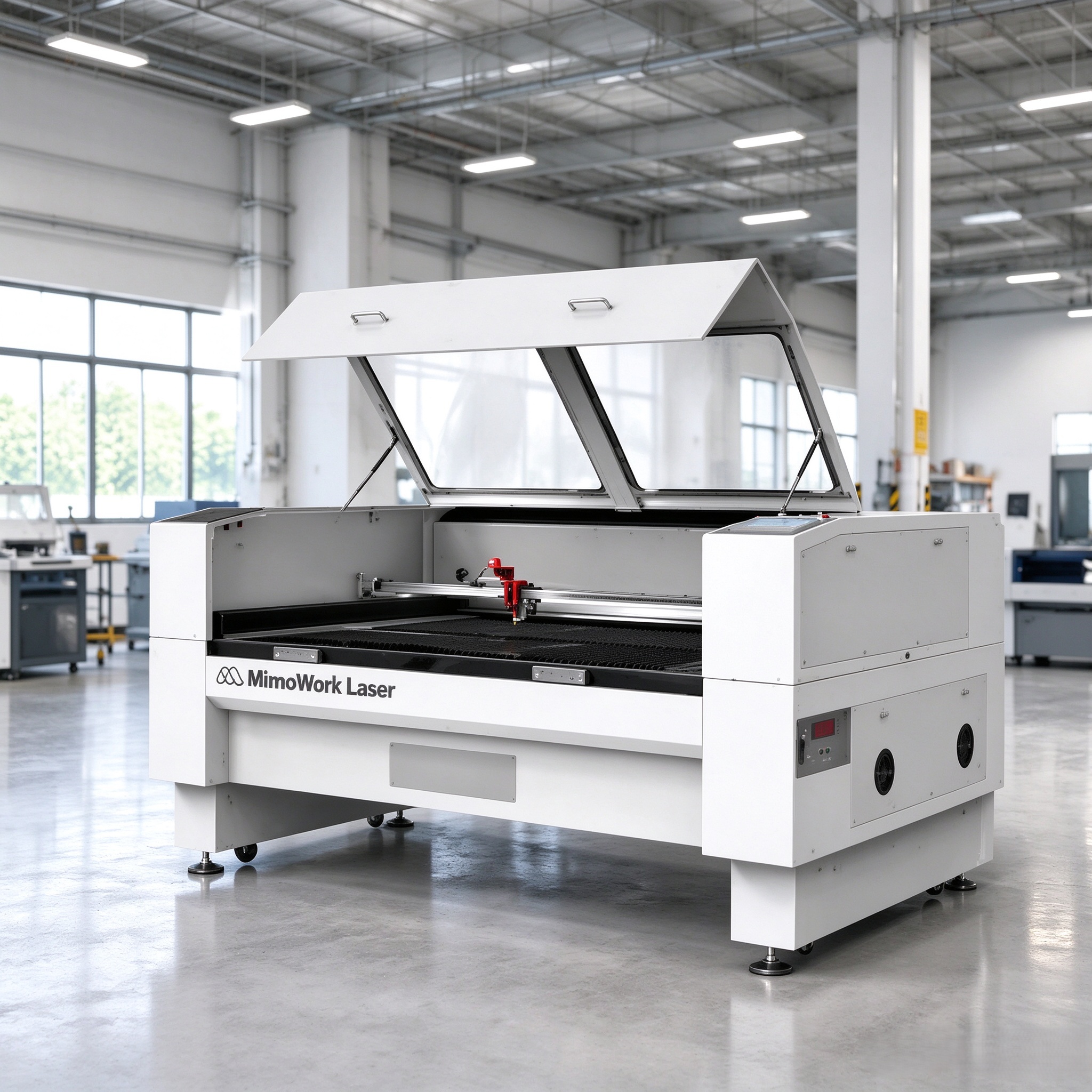
The best industrial CO₂ laser cutting machine is not always the one with maximum laser power or the largest working bed. The optimal setup aligns with your factory’s material range, sheet dimensions, daily throughput, and required cutting finish.
For manufacturers processing wood, acrylic, MDF, leather and textiles, five core factors govern your decision: laser power, working area, motion system, material feeding mechanism and fume extraction. A workshop focused on large acrylic signage will prioritize a spacious cutting bed, while textile producers gain more value from an auto roll-feeding system.
Before purchase, map out your highest-volume materials and check how the laser fits into your existing production workflow. A well-matched configuration boosts throughput without overspending on unnecessary features.
Small hobby lasers and factory-grade systems serve completely different goals. In batch manufacturing, cutting repeatability, material yield, machine uptime and labor efficiency directly decide the unit cost of finished parts.
Traditional manual cutting and fixed die-cutting slow down production when you run frequent design revisions or custom-shaped parts. CO₂ laser cutting delivers non-contact processing for approved non-metals. It produces intricate contours and repeatable cuts without custom cutting dies, cutting down tooling changeover time for custom orders.
That said, cutting speed depends heavily on material type, thickness, laser parameters and graphic complexity. Higher laser power does not guarantee better results for every substrate.
Raw material is one of the biggest production expenses, especially for acrylic sheets, plywood, leather and textiles. Laser cutting lets you nest multiple components on a single sheet or roll. Paired with nesting software, you minimize blank space between parts and raise material utilization rates. The actual cost savings depend on part geometry, sheet size, kerf width and production scheduling. For irregular leather blanks or textile patterns, nesting layout is just as critical as cutting speed.
Batch production demands predictable, repeatable outcomes. Minor shifts in laser focus, positioning or process parameters cause inconsistent edge quality and dimensional errors. A rigid machine frame, stable motion system and well-maintained optics are the foundation of reliable long-run cutting. Factory buyers also need to plan for service access, cooling, spare parts availability and operator training. Stable mass production relies on the whole system, not just the laser source.
Related guide:Understanding the 50W CO2 Laser: Capabilities, Applications, and Considerations
Choose upgrades based on your biggest production bottleneck. Below are the core specs to evaluate:
Select laser power according to your material type, thickness and required edge finish. Thin acrylic and fabric do not need the same power as thick MDF or plywood. Misconfigured high power causes charring, wide kerfs and surface damage.
| Material | Core Selection Focus | What to Verify |
| Acrylic | Thickness & edge polish | Cutting speed, flame-polished edge quality, working area |
| Plywood / MDF | Thickness & board composition | Cutting penetration, char level, fume extraction performance |
| Leather | Fine detail & consistency | Focus stability, cutting speed, nesting layout |
| Fabric / Textiles | Throughput & material handling | Cutting speed, feeding system, pattern repeatability |
Best practice: Run test cuts on your actual production samples before locking in power. Coatings, glue layers, density and moisture all change cutting results.
The working area defines the maximum sheet size you can process in one setup. A larger bed removes the need to split oversized artwork into multiple cuts and supports denser nesting for batch orders. Still, bigger is not always better. Compare the bed size against your standard sheet dimensions, floor space, loading workflow and typical part sizes. A shop cutting medium acrylic lettering does not require the same large-format bed as a factory producing full-size wooden decorative panels.
Manual repositioning of roll textiles creates downtime and raises labor costs. An auto-feeding system continuously advances fabric and flexible roll stock through the cutting zone, minimizing repeated manual positioning for long production runs.
Before investing in auto feed, confirm:
Auto feeding delivers the strongest ROI for high-volume textile roll jobs. For sheet materials, a simple loading bench is often more practical.
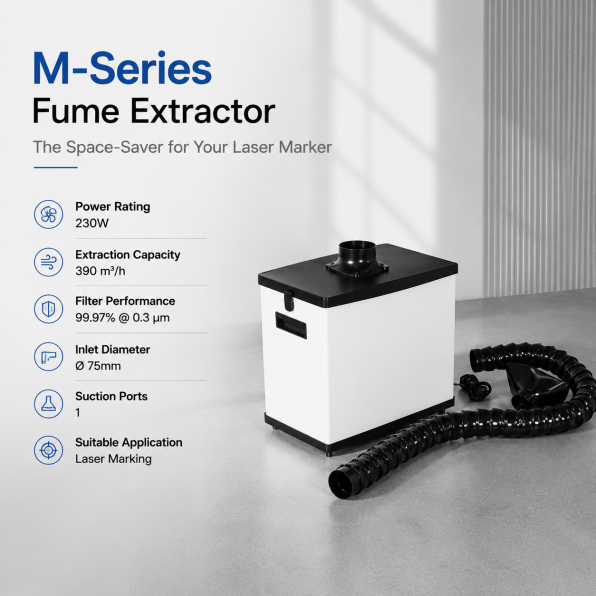
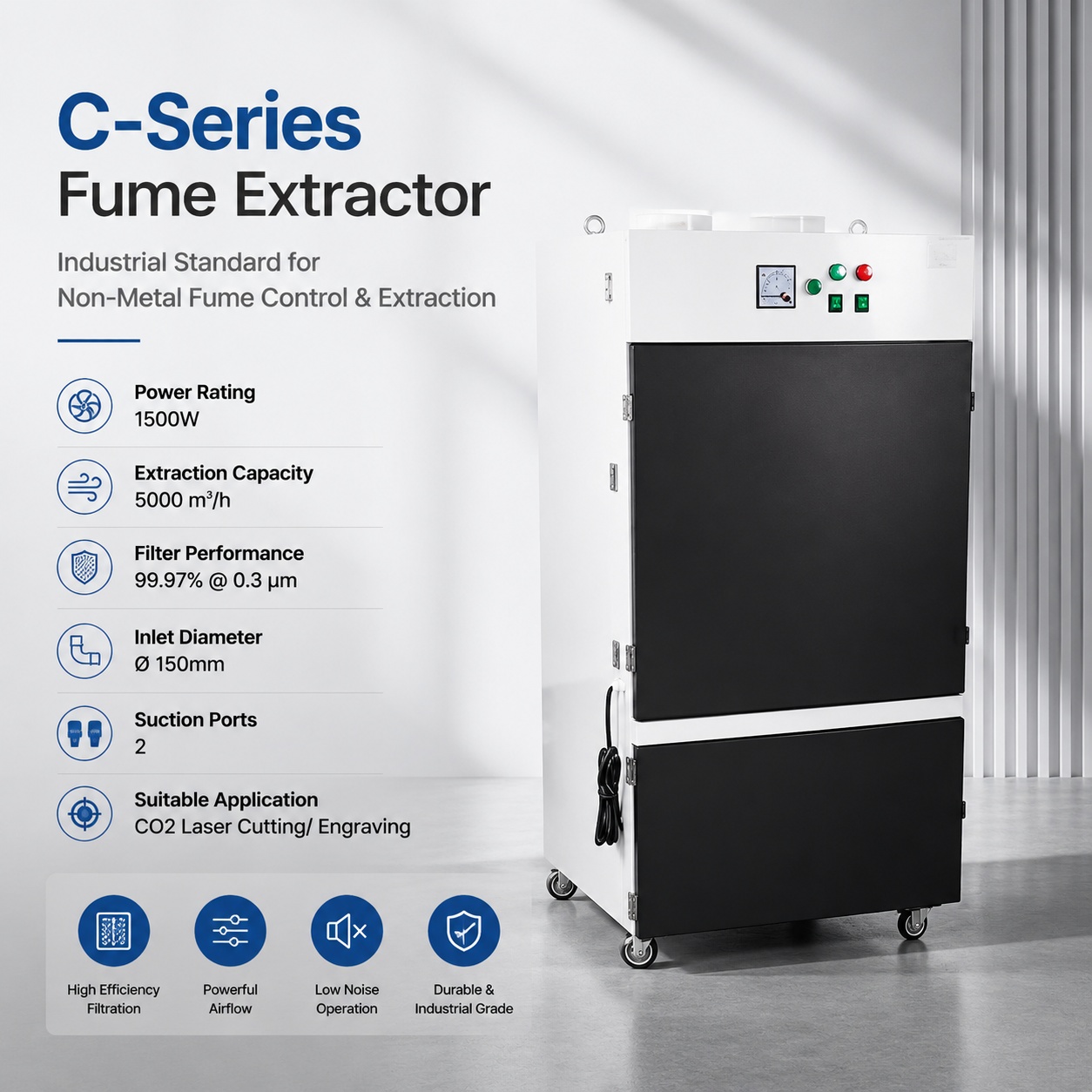
Cutting wood, acrylic, leather and textiles releases smoke, fine particulates and material-specific volatile fumes. A properly sized fume extractor captures contaminants at source and maintains consistent airflow inside the laser enclosure. Do not select an extractor only by its advertised free-air airflow rating; test airflow under real ducting resistance. Filter combinations must match your materials, since smoke composition varies widely between acrylic, wood and synthetic fabrics.
Frame rigidity and motion hardware determine positioning stability and cut repeatability. For intricate acrylic signage, wood decor and complex textile patterns, consistent movement is non-negotiable. When comparing machines, review bed design, drive components, positioning precision, maintenance requirements and CAM software compatibility. Always validate performance with your real production files, instead of relying purely on datasheet parameters.
Pick your laser setup around your primary production workload, rather than buying based only on peak power claims.
| Factory Type | Core Production Needs | Recommended Configuration Focus |
| Acrylic & Signage Factory | Large panels, 3D lettering, display components | Suitable bed size, matched power, edge polish control |
| Wood & Furniture Factory | Plywood, MDF, decorative wood parts | Cutting penetration, large-format bed, heavy-duty extraction |
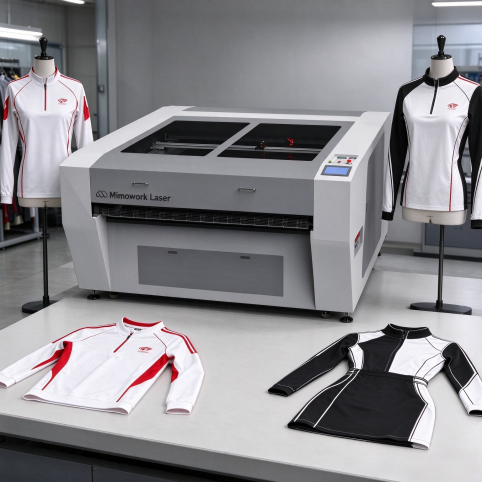
| Textile & Apparel Factory | Roll fabric, repeating cut patterns | Auto feeding system, stable tension control |
| Leather & Upholstery Factory | Irregular blanks, intricate cutouts | High-precision motion, flexible nesting software |
Signage shops often process large acrylic sheets for letters, display stands and decorative panels, mixing large-format cuts and fine detailed graphics. Your laser bed needs to fit your standard sheet size while holding consistent cutting quality across the whole table. For mixed acrylic thicknesses, test laser power and cutting parameters together to balance speed, edge finish and yield.
Wood lasers are widely used for decorative panels, furniture components, craft models and custom woodwork. Different timber types and engineered boards react differently to laser heat; density, adhesive, moisture and thickness all change cutting results. A large working bed works well for full-size panels, while robust fume extraction is critical because wood cutting generates heavy smoke and particulates. Always test your actual plywood / MDF stock.
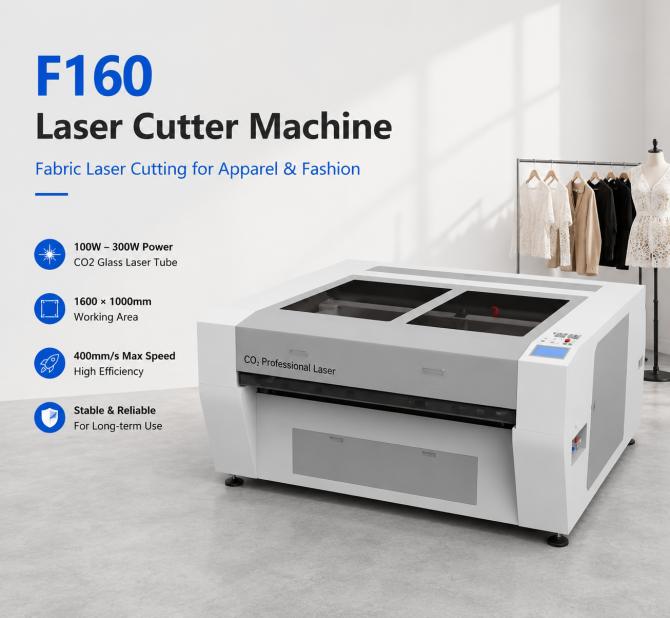
Textile factories usually run repeated patterns on long fabric rolls. Evaluate fabric width, feeding stability, pattern complexity and daily output. Roll-fed production benefits most from an automatic feeding system to cut manual handling. Test edge quality, cutting speed and heat-seal performance on your exact fabric before mass adoption.
Leather cutting features irregular raw stock, variable thickness and inconsistent surface quality. Laser cutting eliminates the cost of custom steel dies for every unique shape, ideal for upholstery parts, accessories and custom leather goods. Since leather yield directly impacts profit, nesting and layout planning are just as important as laser precision.
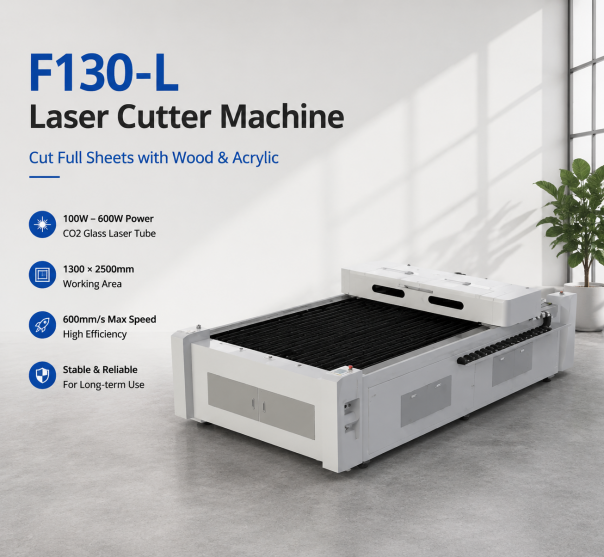
MimoWork supplies industrial CO₂ laser cutting systems dedicated to non-metal processing. Multiple bed sizes and power tiers fit diverse material sizes and throughput targets. When comparing CO₂ laser cutters for factory use, evaluate working area and laser power together, rather than treating them as separate specs.
The correct configuration still depends on your material type, thickness, finish requirement and production volume. Material cutting tests are strongly recommended before final order confirmation. MimoWork also offers custom laser solutions. You can tailor working area, laser power and accessories to match your sheet dimensions and production process.
Power selection depends on your material, thickness, cutting speed and required edge finish. Thin fabric and acrylic have different requirements compared to thick plywood and MDF. The most reliable method is sample cutting under your real production conditions.
A bigger bed accepts full-size raw sheets, removes artwork splitting work and allows denser part nesting in one run. The benefit only applies if it matches your standard sheet sizes and available factory floor space.
CO₂ lasers are widely used for both wood and acrylic, but cutting performance varies by material composition, thickness and process parameters. Always validate material compatibility and run sample tests before mass production.
Auto roll feeding eliminates repeated manual positioning of fabric rolls and delivers a steady cutting workflow. The actual labor savings depend on fabric width, feed speed, daily production volume and your line layout.
Calculate total operating cost, not just upfront machine price. Key metrics:
A credible ROI forecast uses real production data and cutting tests, to decide whether a larger bed, higher power or extra automation brings positive returns.
Selecting industrial laser equipment is a production decision, not a simple comparison of laser power ratings. Working area, material compatibility, motion stability, feeding automation and fume extraction all shape your final output. The best CO₂ laser cutting machine for your factory is the one that meets your daily material and throughput requirements without unnecessary extra cost.
Start by identifying your highest-volume materials and part sizes. Validate cutting performance, bed size and automation choices with sample production tests. With a well-tuned configuration, CO₂ laser systems deliver stable cutting quality, cut manual labor and unlock flexible custom production for non-metal processing factories.