Blog
In a field that evolves daily, staying ahead means staying informed.
Explore in-depth articles designed to help you solve complex challenges,
maximize your machine’s ROI.
Stay ahead in a competitive market.


In a field that evolves daily, staying ahead means staying informed.
Explore in-depth articles designed to help you solve complex challenges,
maximize your machine’s ROI.
Stay ahead in a competitive market.
News | Oct-27-2026 | Mimowork
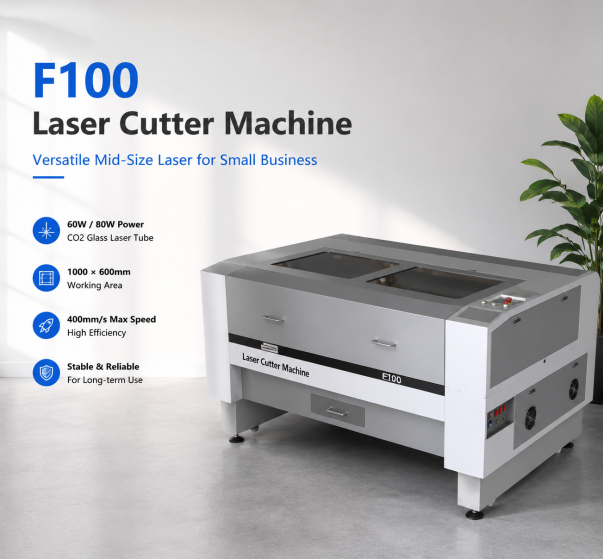
Choosing the right laser cutting machine can make a significant difference in production efficiency, product quality, and long-term operating costs. Whether you are a beginner exploring personalized crafts or a professional looking to improve manufacturing capabilities, a CO2 cutter can be a worthwhile investment for the right applications.
However, not every user needs the same machine. Cutting materials, processing thickness, production volume, workspace requirements, and budget all influence whether this technology is a sensible choice. Understanding its capabilities and limitations before purchasing can help you avoid unnecessary expenses and select equipment that supports your goals.
A CO2 cutter is a laser processing machine that uses a carbon dioxide gas laser source to generate an infrared beam. Mirrors and focusing optics direct the beam onto a material, where concentrated energy heats and removes material along a programmed cutting path.
Unlike mechanical cutting tools, laser cutting does not require a blade to contact the workpiece. This reduces tool wear and makes it possible to produce intricate patterns, detailed contours, and repeatable designs.
CO2 laser systems are commonly used for non-metallic materials, including acrylic, wood, plywood, paper, leather, and many fabrics. Depending on the machine configuration, they can support both cutting and engraving tasks, making them useful for a wide range of creative and commercial applications.
Material compatibility is one of the most important considerations when deciding whether to purchase a CO2 cutter. Although these machines can process many materials, results vary depending on material composition, thickness, coatings, and machine settings.
| Material | Common Applications | Important Considerations |
| Acrylic | Signs, displays, decorative products | Suitable settings can produce clean edges; thickness affects cutting speed. |
| Wood and plywood | Crafts, furniture components, personalized gifts | Grain, resin, moisture, and adhesive layers can affect the finish. |
| Leather | Accessories, labels, fashion products | Confirm the leather type and avoid materials containing unsuitable synthetic coatings. |
| Fabric and textiles | Garments, textile patterns, upholstery components | Some fabrics develop sealed edges, while others may discolor or behave differently under heat. |
| Paper and cardboard | Packaging, invitations, prototypes | Thin materials require careful settings to reduce scorching and fire risks. |
| Cork | Decorative items, gaskets, craft products | Density, thickness, and composite construction affect cutting quality. |
A CO2 laser is not a universal solution for every material. Bare metals generally require a different laser technology for effective cutting, while glass and stone are typically engraved rather than cut with standard CO2 systems. Materials such as PVC and vinyl should not be processed because they can release hazardous gases and corrosive byproducts.
Before production, verify material safety and test representative samples using the intended machine configuration.
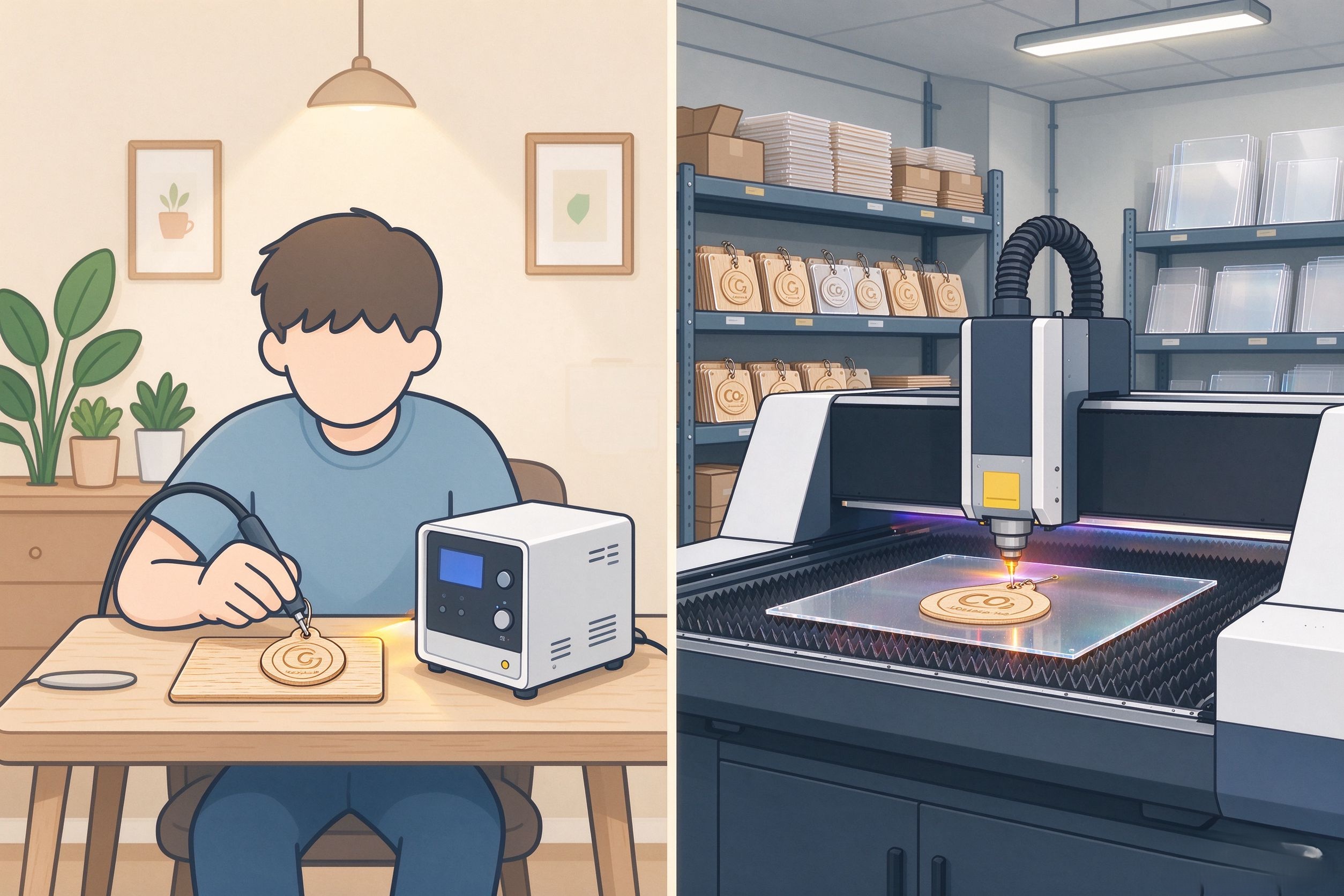
For beginners, a CO2 cutter can be a worthwhile purchase if the planned projects require capabilities beyond those of basic craft tools or entry-level laser systems.
Versatile project options: One machine can support several suitable materials, allowing users to experiment with signage, home décor, gifts, prototypes, and small-batch products.
Detailed designs: Computer-controlled movement allows intricate patterns, lettering, and repeated shapes to be produced with consistent positioning.
Room to grow: Users who begin with small custom projects may eventually expand into personalized products or commercial production without changing the fundamental processing technology.
Beginners should also account for the learning curve. Material testing, focus adjustment, ventilation, machine maintenance, and software settings all affect the final result.
The purchase price is only one part of the investment. Installation, extraction equipment, cooling where required, replacement components, and suitable workspace arrangements can add to the total cost.
For occasional engraving on thin wood or similar materials, a less expensive machine may be sufficient. If acrylic cutting, larger projects, or more demanding production requirements are central to your plans, a CO2 system may offer greater practical value.
For established businesses and production workshops, the decision depends on throughput, repeatability, material requirements, and the cost of producing each finished part.
A properly configured machine can reduce manual cutting work, improve design consistency, and support more efficient material layouts. Businesses involved in signage, packaging, textiles, leather goods, and customized products may benefit particularly from these capabilities.
Professional buyers should evaluate more than maximum laser power. The motion system, working area, software compatibility, cooling capacity, extraction system, and maintenance support can all influence productivity.
A machine that produces a fast cut but requires frequent adjustments or generates excessive scrap may not deliver the best overall return. Requesting sample tests and comparing actual cycle times is often more useful than relying solely on advertised specifications.
The cost of a CO2 cutter varies significantly according to laser power, work area, construction quality, automation, and included accessories. Small hobby machines generally cost less than equipment designed for continuous commercial production, while industrial configurations can require a substantially larger investment.
Instead of comparing purchase prices alone, consider the total cost of ownership.
| Cost Factor | What to Evaluate |
| Initial purchase | Laser source, machine structure, controller, and included accessories |
| Installation | Delivery, positioning, electrical requirements, and setup |
| Ventilation | Fume extraction, ducting, and filtration where necessary |
| Cooling | Chiller or other cooling equipment required by the configuration |
| Maintenance | Cleaning, alignment, replacement optics, and laser tube replacement where applicable |
| Operating expenses | Electricity, consumables, labor, and maintenance downtime |
| Material waste | Failed cuts, testing, rejected parts, and inefficient layouts |
For business users, a useful way to estimate value is to compare the total investment with the savings and additional contribution generated by the machine.
For example, if automation reduces manual processing time or allows a workshop to complete more orders, those improvements may offset the equipment cost over time. The actual payback period depends on order volume, margins, utilization, and operating expenses, so it should be calculated using realistic production figures.
Selecting the right equipment starts with understanding the work you expect it to perform.
List the materials you will process most frequently and identify their typical thicknesses. A machine suitable for thin fabric patterns may not meet the requirements of thick acrylic or plywood.
Test the actual material, including its coatings, adhesives, and composite layers, rather than relying on broad material categories alone.
Laser power influences cutting capability, but higher power does not automatically mean better results. Appropriate power depends on the material, thickness, required edge quality, and processing speed.
Ask suppliers to demonstrate the intended application and document the settings and results for representative samples.
Choose a bed size that accommodates your largest regular workpiece and the way materials are loaded and positioned.
A larger working area can improve flexibility, but it may also increase equipment costs and space requirements. Consider both the machine footprint and the clearance needed for maintenance and material handling.
Check whether the machine supports your design files, preferred design software, and production workflow. Reliable file transfer, job positioning, and repeatable settings can save considerable time when processing multiple orders.
For professional users, nesting and batch-processing capabilities may also improve material utilization.
Laser cutting can produce smoke, particles, and hazardous fumes depending on the material being processed. Appropriate extraction, filtration where needed, fire prevention, protective enclosures, and interlocks are essential considerations.
Never process unidentified materials or assume that a material is safe simply because it can be cut successfully. Confirm the composition and relevant safety information before use.
Ask about routine maintenance, replacement parts, warranty coverage, training, and technical assistance. For commercial applications, access to dependable support can reduce downtime and make production planning more predictable.
Before committing to a purchase, estimate the financial value the machine could generate under normal working conditions.
Start by calculating the total upfront investment, including the machine, installation, ventilation, and other required accessories. Next, estimate monthly operating expenses and the expected number of usable finished products.
Then compare the new workflow with your current process. Consider labor savings, reduced outsourcing, material utilization, production capacity, and the additional revenue that can realistically be generated.
A simple payback calculation is:
Payback period = Initial investment ÷ Monthly net benefit
Here, monthly net benefit means the additional contribution and verified savings after accounting for incremental operating expenses. If production demand is inconsistent or the machine will sit idle for long periods, the payback period will be longer.
It is also sensible to account for maintenance, unexpected downtime, and changes in demand rather than basing the decision on an ideal production scenario.
A CO2 cutter can be a valuable investment for hobbyists, small businesses, and professional manufacturers who regularly process compatible non-metallic materials. Its combination of detailed cutting, engraving capabilities, and application flexibility makes it useful across many industries.
However, the best purchase is not necessarily the most powerful or expensive model. It is the machine that matches your materials, workload, available workspace, safety requirements, and budget.
Before buying, test real samples, compare the complete ownership cost, and confirm that the machine can achieve your required quality and production speed. With a clear understanding of your needs, you can make a more confident decision and choose equipment that delivers practical long-term value.
Related Guide: Best CO2 Laser Engraver for Small Business: A Practical Buying Guide
A standard CO2 Laser Cutter is primarily designed for non-metallic materials and is generally not suitable for directly cutting bare metal. For metal-cutting applications, fiber laser systems are usually the more appropriate choice because they are better suited to processing reflective metals and conductive materials.
Yes. It can be suitable for businesses producing signs, customized gifts, acrylic products, textile components, or other compatible items. The decision depends on demand, operating costs, workspace, and the machine’s ability to meet production requirements.
Confirm material compatibility, cutting thickness, working area, required speed, edge quality, safety features, ventilation, maintenance needs, and technical support. Testing representative samples is one of the most effective ways to validate whether a machine suits your application.
News | Oct-13-2026