Blog
In a field that evolves daily, staying ahead means staying informed.
Explore in-depth articles designed to help you solve complex challenges,
maximize your machine’s ROI.
Stay ahead in a competitive market.


In a field that evolves daily, staying ahead means staying informed.
Explore in-depth articles designed to help you solve complex challenges,
maximize your machine’s ROI.
Stay ahead in a competitive market.
News | Nov-18-2026 | Mimowork
A laser wood carving machine helps manufacturers cut, engrave, and customize wood products with digital precision. From decorative panels and furniture components to signage and personalized gifts, laser processing can handle detailed patterns without relying on conventional cutting tools.
For workshops and production facilities, the main advantages are flexible design changes, accurate detail, and efficient processing of flat materials. However, wood density, moisture, thickness, and adhesive composition all affect the result. Understanding these factors is essential before selecting a machine.
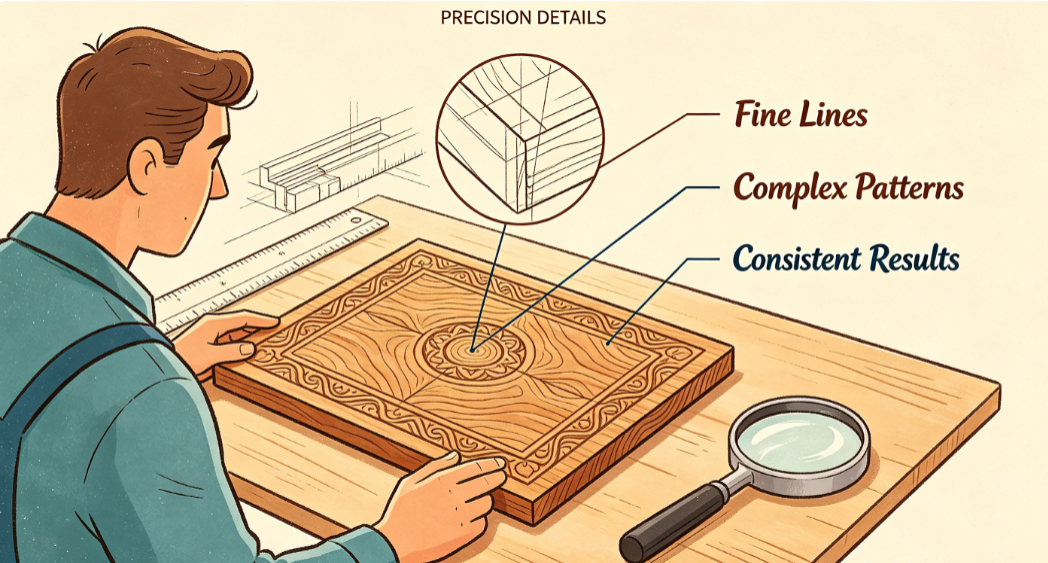
A focused laser beam can reproduce fine lines, text, logos, and intricate patterns that may be difficult to achieve consistently with some conventional cutting methods.
This is useful for decorative panels, product branding, inlays, and customized components. The final detail depends on spot size, focus, material characteristics, and processing settings. Very small features should be tested on the actual wood species before production.
Laser processing does not require a cutting bit to press against the workpiece. This avoids mechanical cutting forces and eliminates the need to replace worn cutting bits for the laser process itself.
The non-contact method can be useful for thin sheets and delicate designs that may shift or deform under mechanical pressure. However, workpieces still need suitable support and positioning to prevent movement during processing.
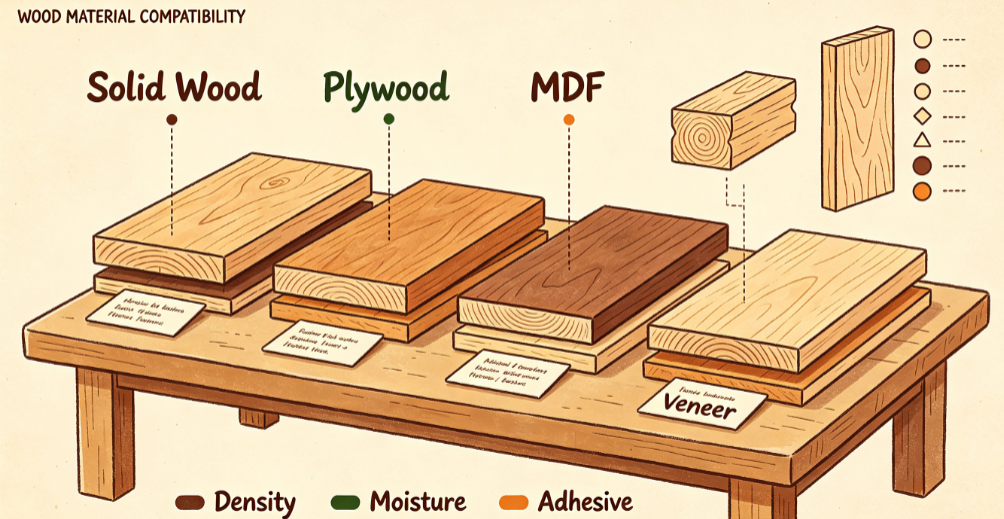
A CO2 laser wood carving machine can process many commonly used wood materials, including solid wood, plywood, MDF, veneer, and selected engineered boards.
The results vary according to density, resin content, moisture, glue composition, and surface treatment.
| Wood material | Typical laser applications | Points to check |
| Solid wood | Engraved patterns, signs, decorative parts | Grain, density, and moisture |
| Plywood | Sheet cutting and decorative panels | Adhesive layers and internal voids |
| MDF | Signs, models, and flat components | Resin composition and smoke extraction |
| Veneer | Fine engraving and selected thin cuts | Material thickness and handling |
Not every board behaves the same way. Adhesives and coatings can affect cutting quality and emissions, so manufacturers should test the specific material grade they intend to use.
Traditional production may require dedicated cutting dies or specially shaped tools for different designs. Laser processing uses digital files, making it easier to switch between patterns without manufacturing a new physical tool for every design.
This can benefit workshops that produce customized signs, decorative products, or short-run components. The machine still requires suitable maintenance, cleaning, alignment, and parameter adjustment, but design changes can be handled within the digital workflow.
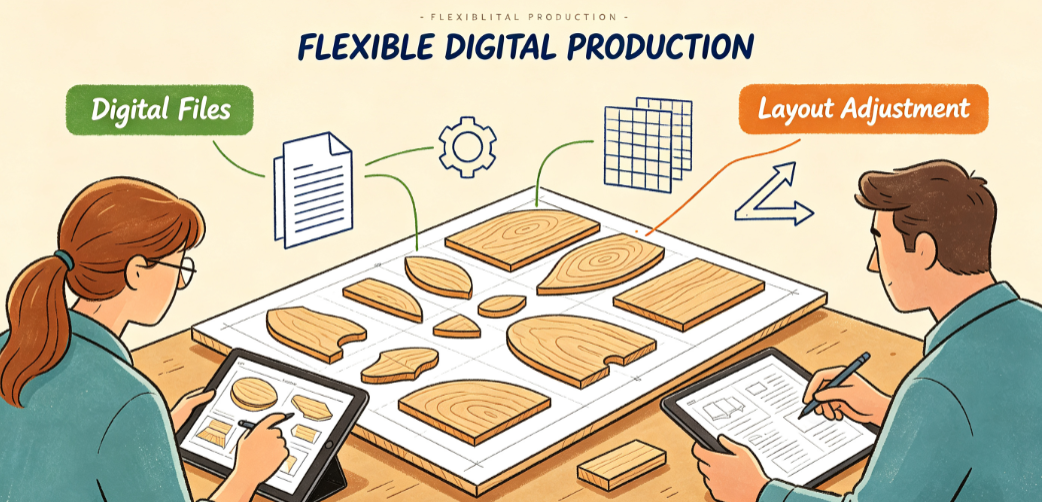
A laser wood engraving machine can work from vector graphics and supported image files. Operators can adjust text, dimensions, patterns, and layouts before processing.
For batch production, multiple parts can be arranged on one sheet to improve material utilization. Nesting efficiency depends on part geometry, spacing requirements, sheet dimensions, and the cutting path.
This digital workflow is particularly useful when product designs change frequently or customers request personalized details.
Laser cutting can produce narrow kerfs and detailed outlines without the same mechanical tool marks associated with some cutting methods. This is useful for decorative shapes and components with complex contours.
Wood is an organic material, however, and laser cutting can leave darkened or carbonized edges. The appearance varies with wood species, thickness, power, speed, focus, and air assistance. If a light-colored edge or minimal discoloration is important, sample testing and parameter adjustment are necessary. Additional sanding or finishing may still be required.
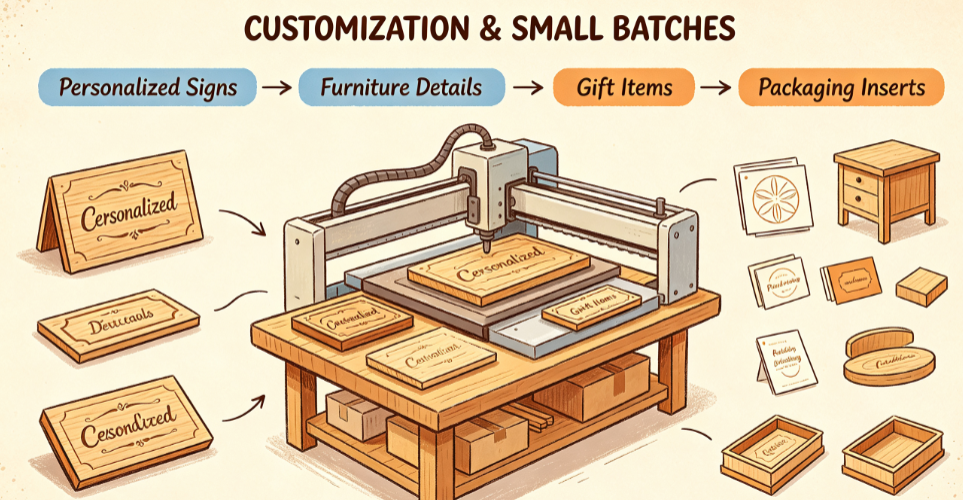
A digital laser workflow makes it practical to process different designs in the same production session. Manufacturers can create personalized signs, engraved gifts, furniture details, packaging inserts, and decorative components without changing physical cutting tools for each design.
For businesses handling frequent design changes, this flexibility can help shorten preparation time between orders. Actual productivity still depends on loading, unloading, engraving coverage, cutting speed, and the complexity of each job.
Related guide: Wood Laser Technology: Precision Cutting and Engraving for Modern Fabrication
The machine should match the material dimensions, processing thickness, required edge quality, and expected production volume. A larger machine or higher-power laser is not automatically more suitable for every workshop.
Power affects cutting capability and processing speed, but the required configuration also depends on wood density, moisture, adhesive composition, and the desired edge finish.
For many industrial wood applications, manufacturers may evaluate CO2 laser configurations in the 80W–300W range. Thicker materials or higher-throughput requirements may call for other configurations. These figures are starting points for evaluation, not guaranteed cutting limits.
The working area should accommodate the largest material sheet and the expected nesting layout. A small bed may suit compact products, while larger panels require more loading space.
| Machine configuration | Working area | Typical consideration |
| MimoWork F130 | 1300 × 900 mm | Medium-size sheets and varied workshop applications |
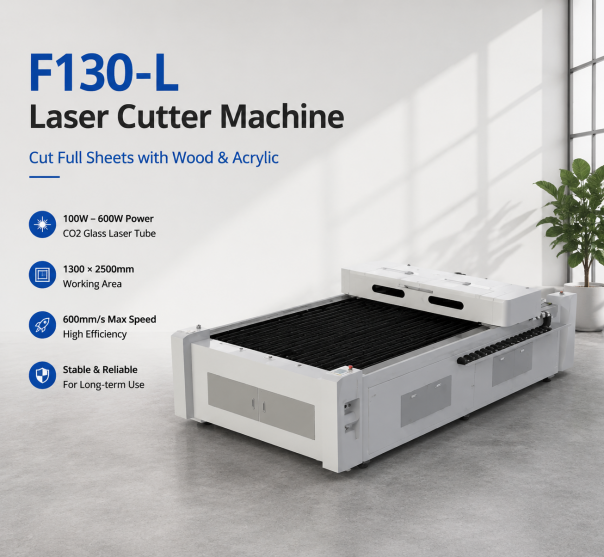
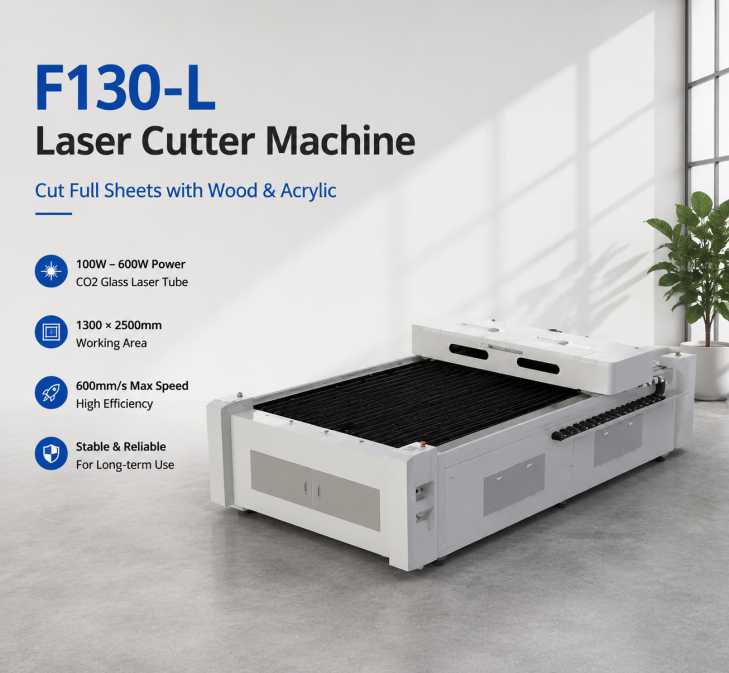
| MimoWork F130-L | 1300 × 2500 mm | Larger panels and long-sheet processing |
The F130 supports 60W–150W configurations, while the F130-L supports 100W–600W configurations. The appropriate setup depends on material type, thickness, cutting requirements, and production targets.
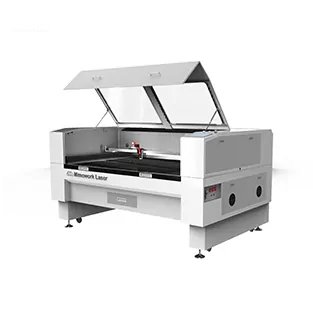
Wood cutting and engraving generate smoke, fine particles, and potentially irritating gases. An appropriate extraction system should be selected based on the material, machine layout, and processing volume.
Wood is also combustible. Operators should maintain suitable air assistance and fire-prevention procedures, keep the work area clean, and monitor processing. Laser cutting should not be left unattended.
Yes. A laser engraving hardwood application may include surface engraving, decorative details, and cutting of suitable thicknesses. Hardwood density and species affect processing speed and edge appearance, so test the actual material before setting production parameters.
A CO2 laser can process many types of plywood and MDF, but the results depend on board thickness, adhesive, resin, and material quality. Test the specific board and provide suitable fume extraction.
The two processes serve different needs. Laser systems are useful for detailed engraving, two-dimensional cutting, and sheet-based designs. CNC routers are often better suited to deep milling, shaping, and certain three-dimensional operations. Some manufacturers use both technologies for different production stages.
Consider sheet dimensions, daily workload, required cutting thickness, loading frequency, and extraction requirements. A desktop system may suit small projects, while an industrial wood laser cutter is more appropriate when larger work areas, higher power, or sustained production capacity are required.
Choosing a wood laser system based on power or working area alone can lead to unexpected edge discoloration, slow cutting, or inconsistent engraving. Material testing provides a more practical basis for machine selection.
Send MimoWork your wood samples, cutting or engraving files, wood species, material thickness, sheet dimensions, and production goals. The team can evaluate engraving detail, cutting quality, edge discoloration, and processing feasibility, then discuss a suitable laser power, working area, and machine configuration for your manufacturing needs.
News | Nov-15-2026