Blog
In a field that evolves daily, staying ahead means staying informed.
Explore in-depth articles designed to help you solve complex challenges,
maximize your machine’s ROI.
Stay ahead in a competitive market.


In a field that evolves daily, staying ahead means staying informed.
Explore in-depth articles designed to help you solve complex challenges,
maximize your machine’s ROI.
Stay ahead in a competitive market.
News | Oct-2-2026
Quick Answer: CO2 laser autofocus systems automatically determine or set the correct distance between the focusing optics and the workpiece, reducing manual setup and helping maintain consistent processing conditions. For businesses handling different material thicknesses, frequent job changes, or production batches, autofocus can reduce setup time and make the workflow more repeatable. It is not a substitute for proper calibration, lens selection, or material testing, but it can remove one of the most repetitive setup tasks from everyday production.
Focus is one of the least visible variables in laser cutting and engraving, yet it can have a major effect on the result.
A laser can have sufficient power, an accurate motion system, and good material settings, but if the focal position is wrong, the energy density at the work surface changes. The result may be a wider kerf, reduced cutting efficiency, poor engraving contrast, excessive charring, or inconsistent results across a batch.
This is why autofocus has become an important feature for commercial laser users.
A laser beam is not equally concentrated throughout its entire path.
The focus lens brings the beam toward a small focal region. The exact location of that focal region relative to the material surface influences how concentrated the laser energy is when it interacts with the workpiece.
For thin, flat materials, the setup can be relatively straightforward. But commercial production rarely consists entirely of perfectly uniform sheets.
Materials can vary in thickness. Some may be warped. Some jobs require different lenses. A workshop may process plywood in the morning, acrylic in the afternoon, and thicker stock later in the day.
Manual focusing works, but it introduces another variable into the workflow.
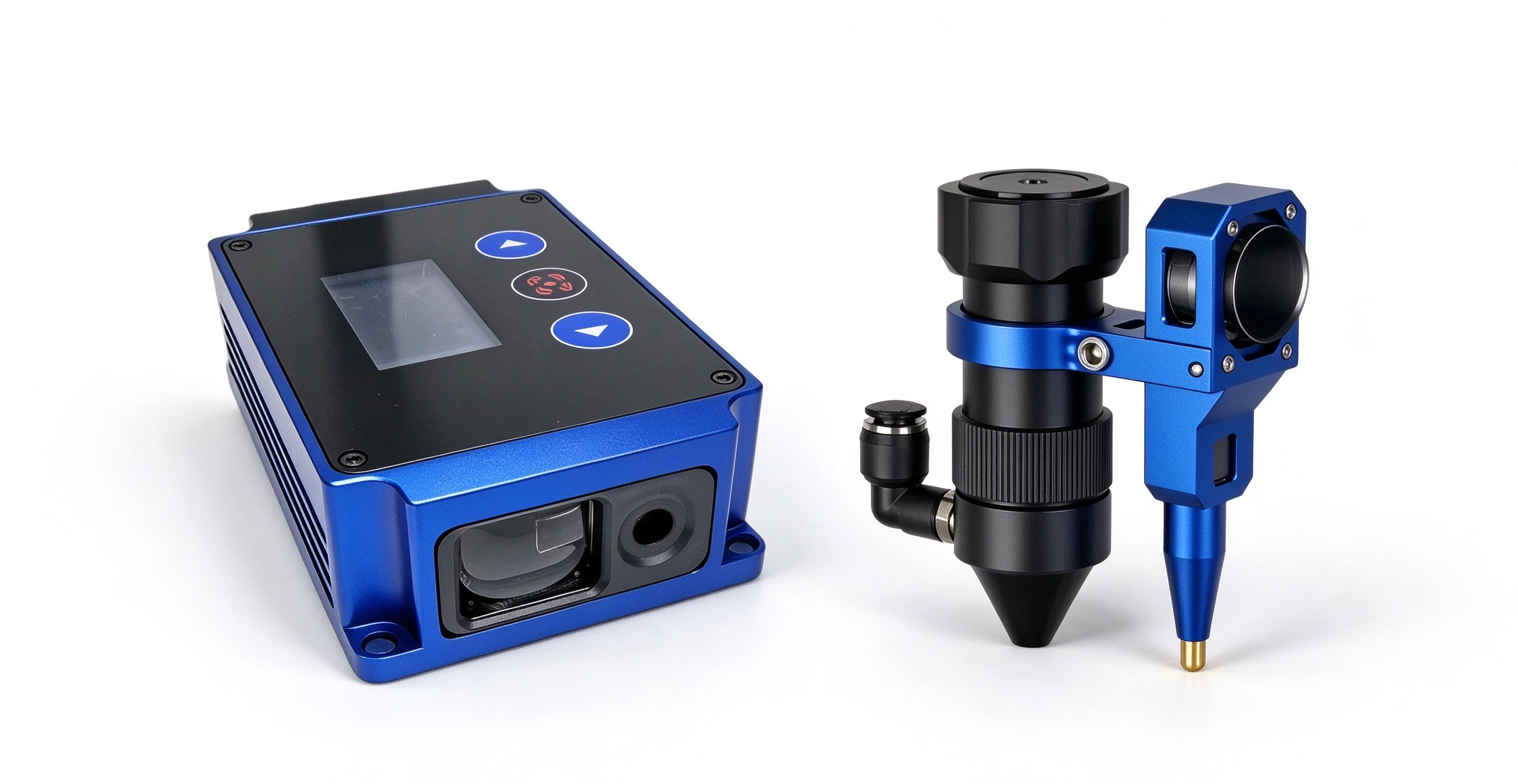
Different machines use different autofocus mechanisms.
Some systems use a physical probe or plunger. Others use sensors or measurement systems to determine the material position. In a table-based configuration, the machine may automatically move the worktable until the correct relationship between the material and focusing system is established.
The underlying objective is the same: establish a repeatable focal position without requiring the operator to manually measure and adjust the material height for every job.
| Factor | Manual focus | Autofocus |
| Initial simplicity | High | Moderate |
| Operator involvement | Higher | Lower |
| Job changeover | More manual | Faster |
| Repeated production | Requires repeated setup | More repeatable |
| Different thicknesses | Manual adjustment | Automated adjustment |
| Risk of setup inconsistency | Higher | Lower when calibrated correctly |
| Calibration requirement | Basic | Still required |
| Suitability for commercial production | Good | Strong |
Autofocus should not be viewed as replacing operator knowledge. It changes where that knowledge is used.
Instead of repeatedly measuring table height, the operator can spend more time selecting appropriate material settings, checking the material, and monitoring production quality.
Imagine a workshop processing ten jobs per week.
Manual focus may not represent a significant burden.
Now imagine the same workshop processing dozens of orders every day. Each job requires loading a different material thickness, confirming the focus position, adjusting the bed, checking the result, and beginning production.
The time spent on each individual adjustment may be small. Across hundreds of jobs, however, those small delays become part of production overhead.
Autofocus addresses this type of friction.
The value is not necessarily measured by seconds saved on one job. It comes from reducing repeated manual steps across the entire production workflow.
Consistency is particularly important when a business produces batches.
Suppose a workshop is cutting the same design from multiple sheets. If the material height varies slightly from sheet to sheet and the focus is manually adjusted inconsistently, processing results may vary.
An autofocus system can establish a more consistent starting condition.
That does not guarantee identical results. Material density, flatness, moisture, surface coatings, and other variables can still change the process. But removing focus variation from the equation makes troubleshooting easier.
When something changes, the operator has fewer uncontrolled variables to investigate.
This is one of the most important misconceptions to avoid.
An autofocus system still depends on correct calibration.
The operator should therefore understand how the system detects the material, what conditions can interfere with detection, and how calibration is maintained.
Dust, debris, reflective surfaces, unusual material shapes, or accessories can sometimes affect the process depending on the autofocus design.
The correct focal position also depends on the optical configuration.
Different lenses can provide different working distances and beam characteristics. A lens chosen for a particular cutting or engraving application should therefore be considered together with the autofocus system.
This becomes important when a workshop changes from detailed engraving to thicker cutting.
Autofocus helps establish the correct height, but it does not decide which lens is best for the job.
That remains part of the process planning.
Autofocus becomes particularly useful in production environments with frequent material changes.
For example, custom-product manufacturers may process different thicknesses throughout the day. Sign shops may alternate between acrylic, wood, and coated materials. Small fabrication businesses may receive orders with different sheet specifications.
The more frequently the material changes, the more useful automated focusing becomes.
It is also valuable when a business needs multiple operators to run the same machine. Reducing manual setup steps can make standard operating procedures easier to follow.
Autofocus should not be evaluated as a simple yes-or-no checkbox.
Ask how the system detects material height, whether calibration is straightforward, what material shapes it supports, whether the autofocus can work with different lenses, and how the machine handles unusual or uneven workpieces.
| Autofocus evaluation point | Why it matters |
| Detection method | Determines how the system establishes material height |
| Calibration procedure | Affects long-term consistency |
| Lens compatibility | Important when different applications require different optics |
| Material thickness range | Determines practical usefulness |
| Uneven-material handling | Important for real-world workpieces |
| Control software | Determines how much operator intervention is needed |
| Maintenance | Sensors and mechanisms must remain clean and functional |
| Manual override | Useful when automatic detection is unsuitable |
A machine with an autofocus function is not necessarily better if the autofocus system is difficult to calibrate or poorly matched to the company’s production workflow.
A productive laser workflow normally involves more than simply loading material and pressing Start.
The operator prepares the file, confirms the material, selects the appropriate lens and parameters, loads the workpiece, establishes focus, verifies positioning, and begins processing.
Autofocus simplifies one part of that chain.
That makes it particularly useful when the company is trying to standardize production. Standardization becomes more valuable as the business adds operators, increases order volume, or begins producing repeat batches.
For businesses that change materials or material thicknesses frequently, autofocus should be evaluated as part of the complete laser cutting system rather than as an isolated feature. The working area, laser power, motion system, software, and focusing mechanism all affect how useful autofocus will be in daily production.
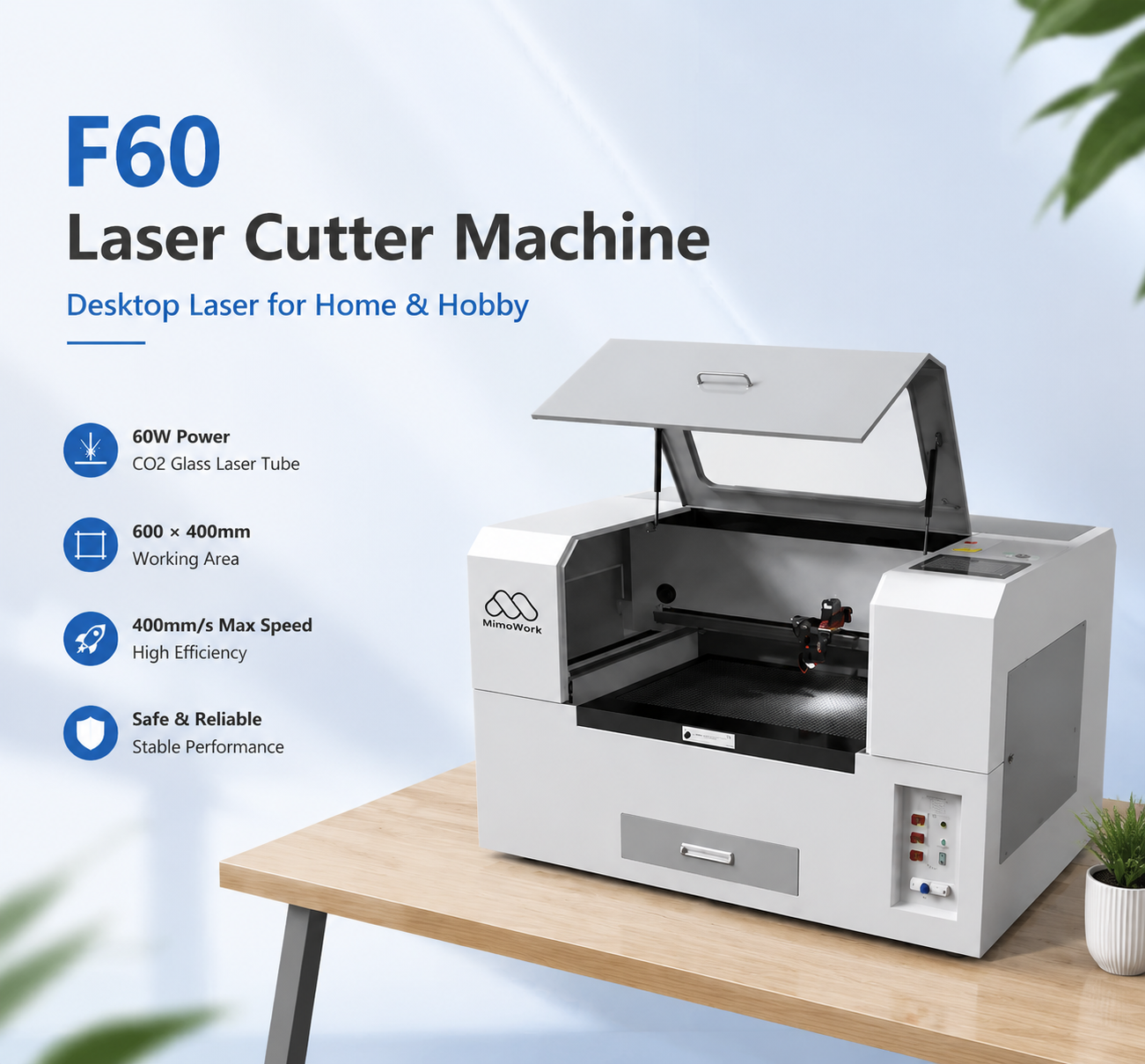
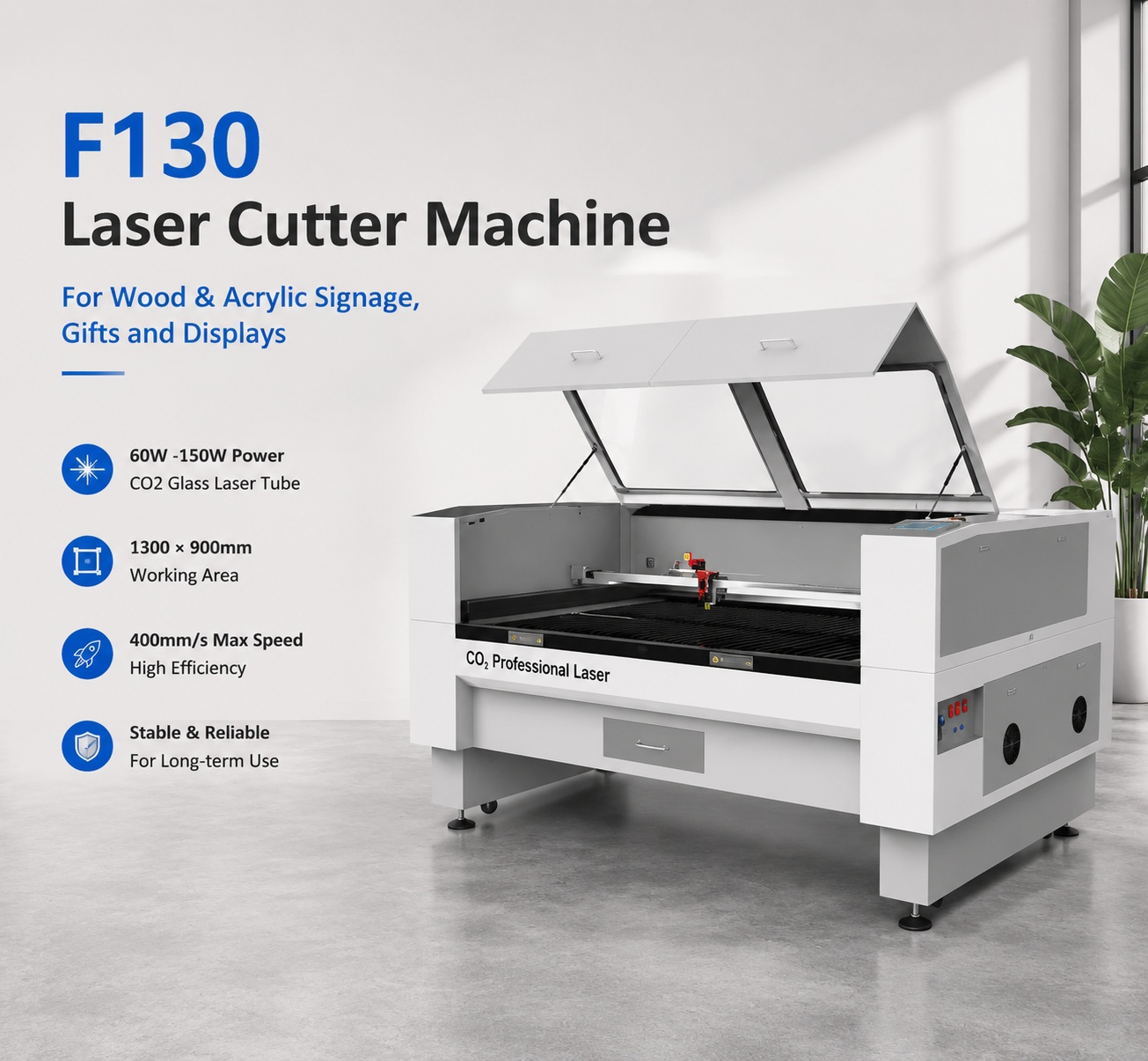
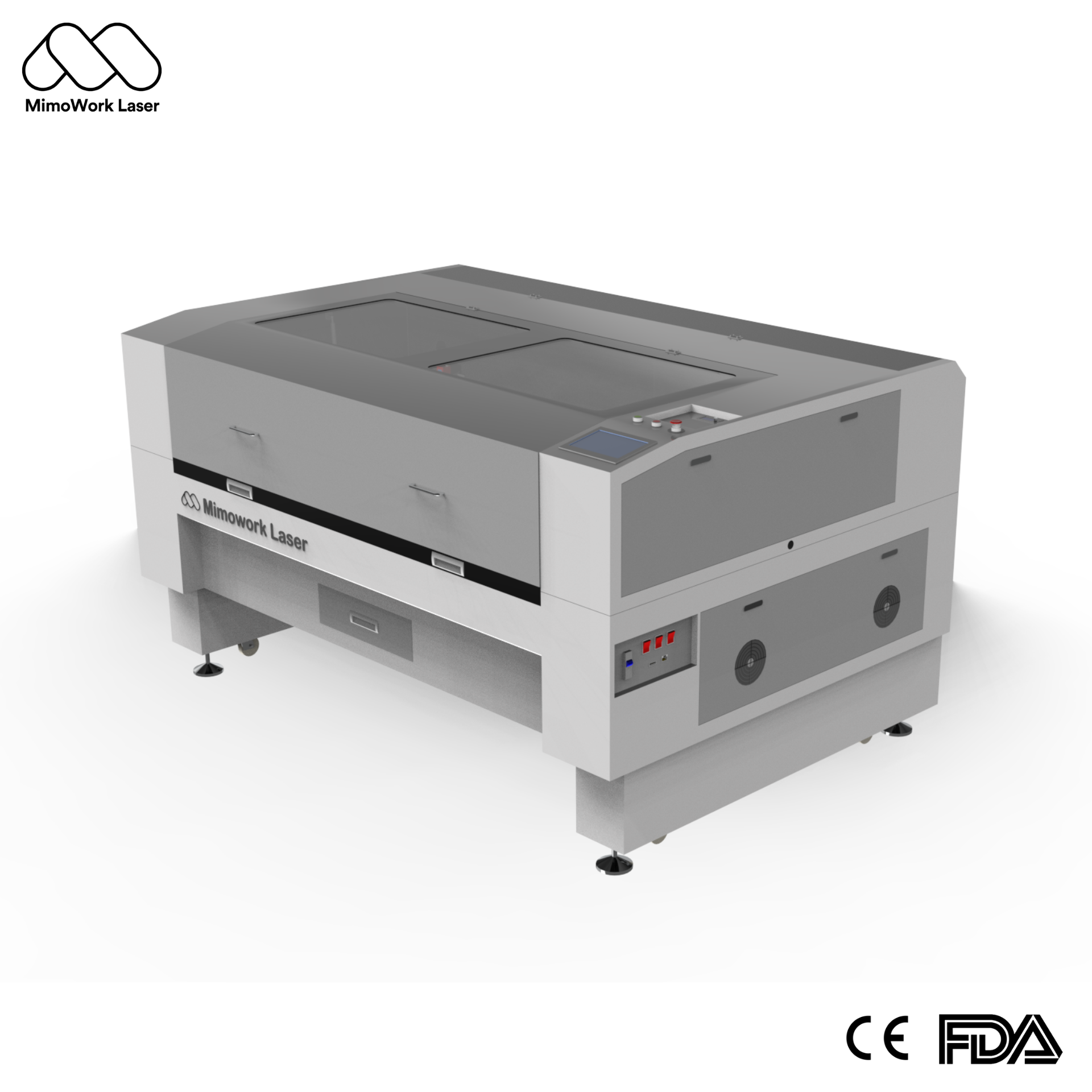
For more general-purpose cutting and engraving, MimoWork’s F130 Laser Cutter is a practical option to consider. It provides a 1300 × 900 mm working area, supports 60W–150W laser power, and can be equipped with autofocus for applications where material thickness changes make manual focusing inconvenient. This configuration can be useful for businesses working with materials such as wood, acrylic, fabric, and other compatible sheet materials.
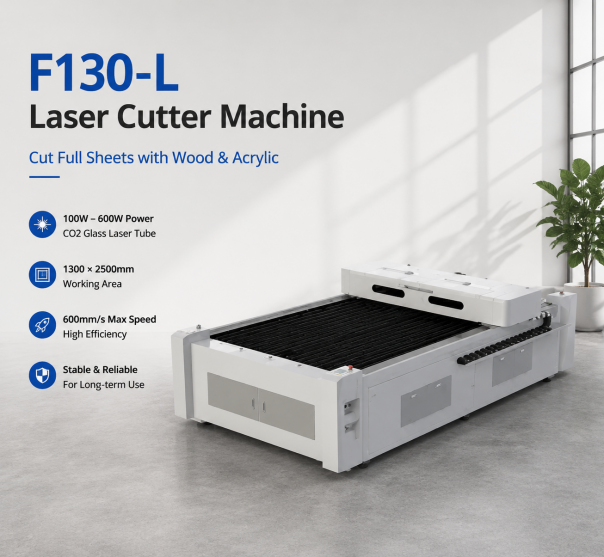
For larger-format production, the MimoWork F130-L Laser Cutter offers a 1300 × 2500 mm working area with a 100W–600W power range and autofocus capability. The larger bed makes it more suitable for businesses that regularly process oversized sheets or need a larger continuous working area while still benefiting from automated focusing.
The choice between the two depends less on autofocus itself and more on the production workflow around it. The F130 can make sense when a more compact working format is sufficient, while the F130-L is worth considering when larger materials, higher power requirements, or longer cutting jobs are part of the workflow. In both cases, autofocus is most valuable when it is integrated into a laser system whose working area and power configuration already match the materials being processed.
It automatically establishes the appropriate relationship between the focusing optics and the material, reducing the need for manual height adjustment before processing.
No. Manual focusing can work well, especially for simple workflows involving consistent material thickness. Autofocus becomes more valuable when a business frequently changes materials or needs repeatable production.
It can help maintain the intended focal position, which is an important variable in cutting. However, cutting quality also depends on power, speed, lens selection, material properties, air assistance, and other parameters.
Yes. An autofocus mechanism still needs to be correctly calibrated. Manufacturer documentation commonly includes calibration procedures because the automatic system must accurately establish its reference position.
That is one of its main practical advantages. Depending on the machine design, the system can adjust the worktable or focusing position to accommodate different material heights.
Autofocus is not simply a convenience feature. For commercial laser users, it can become part of a broader effort to make production more repeatable, particularly when a CO2 Laser Cutter is used for different wood materials and thicknesses.
The greatest benefit appears when operators frequently change material thicknesses, run repeated batches, or need to reduce manual setup.
However, buyers should look beyond the presence of an autofocus button. Detection method, calibration, lens compatibility, material handling, software integration, and maintenance all determine how useful the feature will be in actual production.
A good autofocus system removes repetitive adjustment without removing the operator’s control over the process.
Related Guide:Best Laser Woodworking Machines for Cutting and Engraving: Buyer’s Guide
News | Sep-4-2026
News | Jul-16-2026