Blog
In a field that evolves daily, staying ahead means staying informed.
Explore in-depth articles designed to help you solve complex challenges,
maximize your machine’s ROI.
Stay ahead in a competitive market.


In a field that evolves daily, staying ahead means staying informed.
Explore in-depth articles designed to help you solve complex challenges,
maximize your machine’s ROI.
Stay ahead in a competitive market.
News | Nov-14-2026 | Mimowork
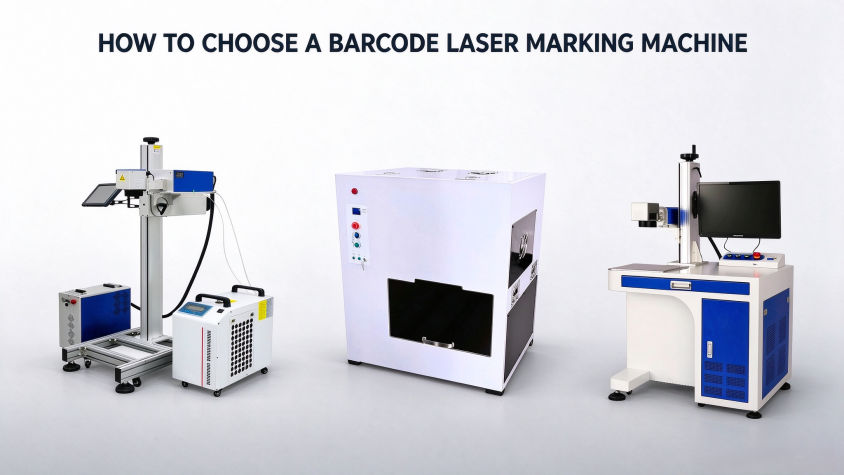
Barcode laser marking is widely used in industrial traceability because it creates permanent codes directly on product surfaces without relying on ink, labels, or adhesives. For manufacturers evaluating a barcode laser marking machine, the key decision is not simply which machine costs less. It is which laser source can produce readable, durable marks on the target material while meeting production requirements.
Fiber, UV, and green lasers each offer different advantages. The right choice depends on material compatibility, marking contrast, production speed, durability requirements, and integration needs.
This guide explains the factors that influence barcode laser marking machine costs, compares the three main laser sources, and outlines practical checks buyers should complete before selecting a system.
Machine cost depends on more than the laser source. Material compatibility, marking speed, production integration, and verification requirements all affect the overall investment.
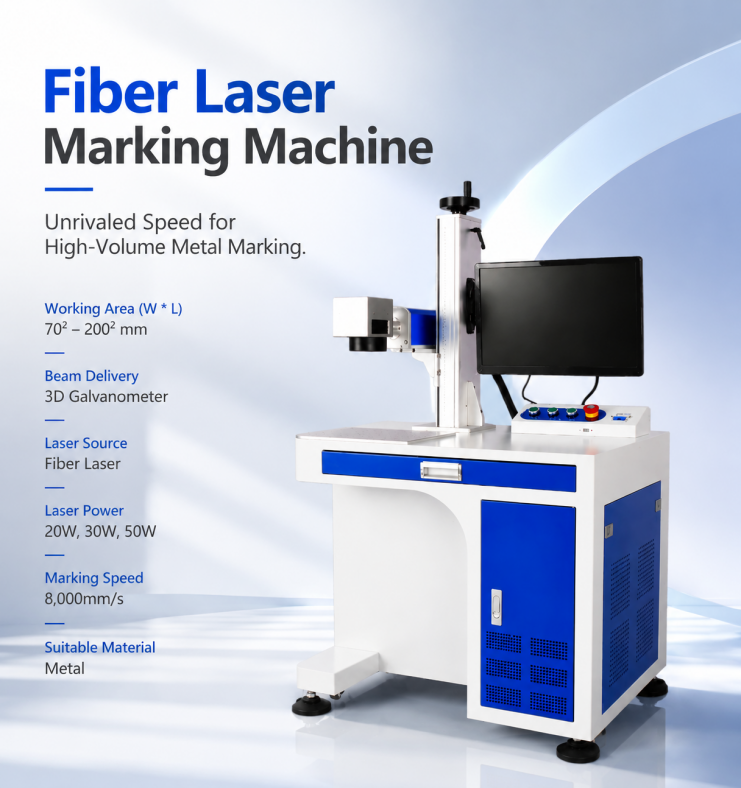
Fiber lasers are suitable for many metal applications. They can produce durable, high-contrast marks on materials such as steel, aluminum, and anodized surfaces.
UV lasers are useful for heat-sensitive materials. Their photochemical marking process helps minimize thermal damage to plastics and electronic components.
Green lasers work well with reflective metals and glass. Their 532 nm wavelength offers advantages for materials that are difficult to mark with other laser sources.
Sample testing is essential before purchasing. Barcode readability, surface integrity, and durability should be validated under actual production and handling conditions.
The cost of a barcode laser marking machine depends on the requirements of the marking application. Two systems with different laser sources or configurations may have significantly different costs, even if both are used to mark barcodes.
Buyers should evaluate the following factors rather than comparing equipment prices alone.
| Cost Factor | What Buyers Should Evaluate |
| Laser source | Fiber, UV, and green lasers have different applications and equipment costs. |
| Material compatibility | The laser must produce readable marks on the specific metal, plastic, glass, or other material being processed. |
| Marking speed | Production volume and cycle-time requirements influence the required system configuration. |
| Integration requirements | Automated production lines may require additional integration and workflow considerations. |
| Mark verification | Barcode scanning and quality inspection requirements should be considered before selecting equipment. |
The laser source is one of the main factors affecting equipment cost. Fiber lasers are commonly considered for metal marking, while UV and green lasers are used for applications requiring different material interactions.
For example, a manufacturer marking stainless steel components may have different equipment requirements from one marking delicate electronic parts or reflective metal surfaces.
Choosing a laser based only on its purchase price can lead to poor marking results if the source is not suitable for the material.
Production requirements also influence equipment selection.
A manufacturer processing large volumes of components may prioritize marking speed and consistency. A smaller production operation may place greater emphasis on material flexibility and marking quality.
The appropriate system should meet the required production cycle without compromising barcode readability.
Barcode marking is often part of a wider manufacturing and traceability process. Equipment may need to work alongside existing production workflows, inspection procedures, and barcode verification systems.
Buyers should consider these requirements early because they can affect the overall system configuration and investment.
There is no single laser source suitable for every barcode marking application. Fiber, UV, and green lasers differ in wavelength, material interaction, and marking performance.
Fiber lasers are widely used for direct marking on metals and some engineered plastics. They can create durable, high-contrast marks on materials such as steel, aluminum, and anodized aluminum.
For manufacturers producing metal components that require permanent identification, fiber laser marking can be an effective option.
Stainless steel components
Aluminum parts
Anodized aluminum surfaces
Selected engineered plastics
Important limitation: Fiber lasers may produce poor contrast on bare reflective metals such as gold, silver, and copper. They can also create thermal damage on heat-sensitive plastics if the marking parameters are not appropriate.
UV lasers use a photochemical marking process that helps minimize thermal damage. This makes them suitable for applications where material integrity and marking precision are important.
They are often considered for plastics, electronic components, and selected delicate materials.
PVC and PET materials
PCB and electronic components
Silicon wafers
Glass containers and crystal surfaces
Suitable biocompatible medical device materials
Green lasers operate at a wavelength of 532 nm. They can offer advantages when marking reflective metals such as gold, silver, and copper, which can be challenging for other laser sources.
They are also suitable for certain glass and crystal marking applications, including subsurface engraving.
Gold, silver, and copper
Glass containers
Crystal surfaces
Selected high-performance plastics
Important limitation: Green laser systems generally have the highest equipment cost among the three options discussed here. They may also have slower cycle times for high-volume production applications.
The following comparison summarizes the main differences between the three laser sources.
| Comparison | Fiber Laser | UV Laser | Green Laser |
| Main applications | Metals and selected engineered plastics | Heat-sensitive plastics and electronic components | Reflective metals, glass, and crystal |
| Typical materials | Steel, aluminum, anodized aluminum | PVC, PET, PCB, silicon wafers, selected glass | Gold, silver, copper, glass, crystal |
| Main advantage | Durable marking on many metal surfaces | Minimizes thermal damage | Suitable for reflective materials |
| Main limitation | May struggle with bare reflective metals and heat-sensitive plastics | Higher upfront cost; abrasion resistance may be lower than fiber | Higher equipment cost and potentially slower production cycles |
| Common consideration | Metal traceability | Precision and material integrity | Reflective materials and glass marking |
Choose a fiber laser when marking metal components is the primary requirement.
Consider a UV laser when working with heat-sensitive plastics or electronic components.
Consider a green laser when marking reflective metals or glass and crystal surfaces.
The final choice should always be based on sample marking results using the actual material and barcode specifications.
Laser marking can create permanent identification directly on a product surface. However, permanence does not automatically guarantee long-term barcode readability.
A barcode may remain visible but become difficult to scan if abrasion, chemical exposure, heat, or surface changes affect its contrast and structure.
Manufacturers should evaluate durability under the conditions their products will actually experience.
Components that are frequently handled, transported, or assembled may experience surface friction. Abrasion testing helps determine whether the barcode remains readable after repeated contact.
Industrial components may be exposed to cleaning agents, solvents, oils, or other chemicals. Testing should reflect the substances used in the actual manufacturing or operating environment.
Some products experience elevated temperatures during manufacturing, sterilization, or normal operation. Buyers should verify that the barcode remains readable after the relevant heat exposure.
Visual inspection alone is not enough. A barcode must be readable by the scanning equipment used in the production or traceability process.
Where applicable, manufacturers can use barcode quality grading standards such as ISO/IEC 15415 to evaluate 2D barcode quality.
The most reliable approach is to test the marked sample after the full cleaning, handling, and operating cycle.
Before purchasing a barcode laser marking machine, buyers should request sample testing with the exact material and marking requirements of their application.
A sample produced on a similar-looking material may not provide a reliable indication of actual production performance.
| Evaluation Item | What to Confirm |
| Material specification | Test the exact alloy, coating, or plastic grade used in production. |
| Barcode dimensions | Confirm that the marked code meets the required size and layout. |
| Marking contrast | Check whether the barcode can be distinguished clearly from the surrounding surface. |
| Scanner compatibility | Test readability with the scanning equipment used in the production process. |
| Surface integrity | Check for discoloration, deformation, cracking, or other unwanted surface changes. |
| Cleaning resistance | Verify that the barcode remains readable after the required cleaning process. |
| Documentation | Record the marking parameters and sample test results for future reference. |
A sample should not be approved simply because the barcode looks clear immediately after marking. It should also pass the relevant scanning and durability checks.
Traditional barcode identification may rely on printed labels, ink, or adhesives. Direct laser marking creates identification on the product surface itself.
This approach can offer several operational advantages.
Laser marking does not require barcode ink, labels, or adhesives for the marking process. This can reduce the need to purchase, store, and replace these consumables.
When the laser source and marking parameters are appropriate for the material, the resulting code can provide durable identification throughout product handling and use.
Laser-marked barcodes can be incorporated into manufacturing identification and scanning workflows, helping connect product information with inspection and traceability processes.
Direct marking avoids certain problems associated with labels, such as peeling, adhesive failure, or label damage.
However, consumable-free marking does not automatically guarantee barcode readability. Material compatibility, marking quality, and verification remain essential.
Laser marking can create durable, permanent identification on many metal surfaces, including steel and aluminum. Actual durability depends on the metal, surface condition, laser source, and marking parameters. Abrasion and chemical resistance should be tested for the intended application.
Yes. UV lasers are often suitable for heat-sensitive plastics because their photochemical marking process helps minimize thermal damage. The exact plastic grade should still be tested before equipment selection.
UV and green lasers can be considered for glass and crystal applications, depending on the required marking effect. Green lasers can support subsurface engraving, while UV lasers are suitable for certain glass and crystal surfaces. Sample testing is necessary to determine the appropriate solution.
No. Direct laser marking creates the barcode on the material surface, so the marking process does not require ink, labels, or adhesives.
Compare equipment based on the laser source, material compatibility, marking speed, integration requirements, and verification needs. A lower initial price may not represent the best choice if the machine cannot produce readable and durable barcodes on your actual materials.
Selecting a barcode laser marking machine requires more than matching a laser source to a material category. Manufacturers need to confirm that the equipment can produce readable barcodes, preserve surface integrity, and maintain marking quality under actual production conditions.
Mimowork Laser supports application evaluation through sample marking tests. Before recommending a laser system, the marking result can be assessed against the material requirements and barcode scanning performance, including after the relevant cleaning and handling cycle.
Request a free sample marking test with Mimowork Laser. Validate your barcode marking application before making an equipment investment.
News | Nov-10-2026
News | Sep-14-2026